Support

Damascus International Airport

About the Airport

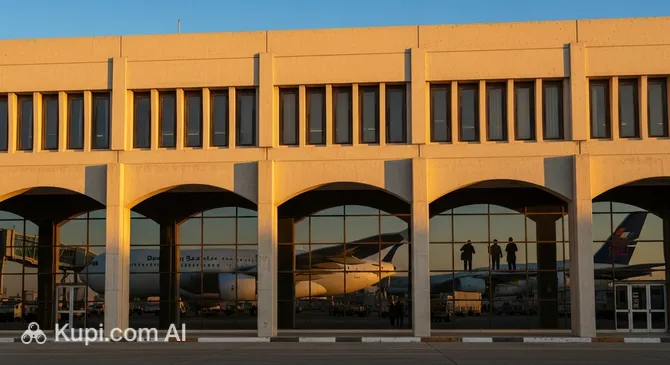
Damascus International Airport. Source: Kupi.com Binoculars

Damascus International Airport is the main air gateway to Syria, opening the way for travellers to one of the oldest cities in the world. The terminal complex is located southeast of the capital and combines modern infrastructure with elements of traditional Islamic architecture, creating a special atmosphere from the very first minutes of your stay. It is the country's key transport hub, connecting Damascus with the region and the world. Spacious halls and convenient navigation make the stay here comfortable for both arriving tourists and transit passengers.

IATA Code DAM
ICAO Code OSDI
City Damascus
Distance to centre 30 km
Status International
Passengers per year ~1.8 million (estimated)
Schedule Airport online flight board

Features and Infrastructure

The airport has two terminals, one of which serves international flights and the other domestic flights. The terminal building is designed to ensure maximum passenger convenience: Duty Free shops operate here, where you can purchase both global brands and local souvenirs, as well as cosy cafes and restaurants. For those who value enhanced comfort, VIP lounges are available.

Transport accessibility to the airport is ensured by a high-speed motorway connecting it to the centre of Damascus. Travellers can use taxi services or shuttle buses running to the city. Parking zones for private vehicles and car rental points are also provided on the premises, allowing tourists to flexibly plan their routes around the country.

Contact Information

Finding verified and up-to-date contact information for Damascus International Airport can be challenging. Official communication channels are often limited. Below is the most commonly known information; however, it is recommended to contact your airline directly regarding all key issues (flight status, baggage allowance rules).

  • Official airport website: Currently, the airport does not have a stable official website for passengers. The most accurate schedule information is provided by airlines.
  • Information desk phone: +963 11 540 0000. Please note that getting through on this number may be difficult.
  • Airport address: Damascus International Airport, Airport Road, Damascus, Syria.
  • Email: There is no public email address for general inquiries.
  • Airport social media: There are no official, actively maintained social media pages for passenger information.
  • Lost luggage information: For all questions related to lost or damaged luggage, you should apply directly to your airline's representative office at the airport.
  • Passenger support contacts: The best way to get support is to contact the customer service of the air carrier you are flying with.

How to Get to the Airport

Damascus International Airport (DAM) is located approximately 30 kilometres southeast of the centre of Damascus. You can get there in several ways, each having its own advantages depending on your budget, time, and comfort preferences. The trip from the city centre usually takes from 30 to 50 minutes, but travel time may increase due to traffic conditions.

Public transport is the most budget-friendly way to get to the airport. Special shuttle buses run between key points in the city centre (often from the Baramke bus station) and the airport. The fare is low, but it is worth noting that this option may not be the most convenient, especially if you have a lot of luggage. There is no direct rail or metro connection to the airport.

Taxi or private transfer is the most popular and convenient way to drive to the airport. You can easily find a taxi in the city or order one through your hotel. It is highly recommended to use official services and agree on the fare in advance or ensure the driver has switched on the meter. Booking a private transfer is an excellent option for those who value comfort, travel with family, or want to be sure of a fixed price.

For those who prefer maximum freedom of movement, car rental is available. Representative offices of both local and international rental companies operate in Damascus. Damascus International Airport has parking where you can leave a car for a short or long term. This is convenient if you are travelling in your own or a rented car.

In general, the choice of transport depends on your priorities: bus for economy, taxi for speed and comfort. Always allow extra time for the journey, especially during peak hours. For travel within the region, you can also consider alternative air hubs, such as Beirut-Rafic Hariri International Airport or Queen Alia International Airport.

Terminals and Map

Damascus International Airport (DAM) has a structure that is quite simple and easy for passengers to understand. It consists of one main passenger terminal which serves both domestic and international flights. Such an organisation significantly simplifies navigation, as all main zones — check-in, departure, and arrival — are located in one building, and travellers do not need to worry about transfers between terminals.

The airport layout is logical and intuitive. The departure zone is located on the upper level and includes check-in counters, passport control, and security screening points. After completing formalities, passengers enter the general waiting area with boarding gates. The arrival zone is located on the lower level, where passport control, baggage claim belts, and customs inspection are situated. Due to the airport being the main air gateway to Syria, navigational signs are generally presented in Arabic and English, which helps to orientate easily.

The time required to complete pre-flight procedures may vary depending on the flight load and time of day. As a general recommendation, it is worth arriving at the airport at least 2-3 hours before departure for an international flight. This time is usually sufficient for a calm check-in, baggage drop, as well as passport and customs control without unnecessary haste.

To navigate the terminal, simply follow the standard signs for "Departures" or "Arrivals". Since all services are concentrated in one building, getting lost is practically impossible. The main advice is to check your check-in counter number on the information boards in advance and follow the step-by-step signs to the boarding gate. The compactness of the airport makes it convenient for passengers who are not used to huge transport hubs.

Airport History

Damascus International Airport (DAM) has been the main air gateway to Syria and one of the key transport hubs of the Middle East for many decades. Its history began in the mid-1970s when it was built to replace the old Al-Mezzeh airport, which could no longer cope with the growing passenger flow. The new airport was designed on a grand scale and officially opened for flights, becoming a symbol of the modernisation of the country's transport infrastructure and its openness to the world.

The main stage of the airport's development occurred in the first decades after its opening. It was originally built with two runways and a terminal that was modern for its time, with architecture inspired by Islamic motifs. The airport quickly became an important hub for the national carrier Syrian Arab Airlines and also attracted many international carriers, connecting Damascus with cities in Europe, Asia, and Africa. This contributed to the development of tourism and business ties in the region.

Throughout its history, the airport has been repeatedly modernised to meet international standards of aviation safety and passenger service quality. Work was carried out to update navigation equipment, repair runways, and expand waiting areas. One of the airport's calling cards for a long time was its duty-free shop, which was considered one of the largest and most diverse in the world, serving as an attraction in itself for transit passengers.

Among interesting facts from the airport's history, it can be noted that its terminal was designed by French architects who sought to combine modern functionality with elements of traditional Syrian architecture. In its best years of operation, the airport served millions of passengers a year, playing a central role in the economic and cultural life of the country, remaining the gateway to one of the oldest continuously inhabited cities in the world.

Services and Facilities

Damascus International Airport (DAM) offers passengers a basic set of services; however, it is important to understand that their availability and range may be limited, and quality may differ from familiar international standards. Several cafes and snack bars operate in the terminal, where you can drink coffee and have a bite to eat. Typically, they serve local cuisine and simple snacks. There are shops, including a Duty Free zone, but the selection of goods in them may not be extensive.

For a more comfortable wait for a flight, VIP lounges may be available, offering a quieter atmosphere. Regarding modern amenities, it is worth being prepared for the fact that wireless internet (Wi-Fi) may work unstably or be unavailable. It is recommended to have alternative options for connecting to the network. Power outlets for charging devices can be found in the terminal, but their number is limited.

Currency exchange points and bank branches operate in the terminal building, where travellers can exchange money for local currency. In case of need, a medical point works around the clock at the airport, ready to provide first aid.

The airport is equipped to receive passengers with special needs. Basic services are provided for passengers with reduced mobility as well as mother and child rooms. Nevertheless, it is strongly recommended to notify your airline in advance about the need for special assistance to guarantee its provision.

There are no hotels within the airport territory itself, but several accommodation options can be found in its vicinity. There are no specialised conference halls or business centres in the terminal. For business meetings, it is better to consider the facilities of hotels in Damascus.

Where to Eat

Passengers departing from Damascus International Airport (DAM) can find several cosy places to have a snack or a full meal before their flight. Although the choice of establishments here does not compare with major global hubs, the airport has cafes and small eateries where you can spend time comfortably and enjoy a final taste of hospitable Syria.

The main food outlets are concentrated in the main departure hall, both in the public zone (landside) and after passport control (airside). Local cafes are ideal for a quick bite. Here, you will most likely find not only standard sandwiches but also fresh local pastries, for example, manakish with cheese or aromatic zaatar. You can count on a portion of juicy falafel or even a small shawarma. Of course, you will be offered traditional Arabic coffee with cardamom, tea with mint, and other hot and cold drinks.

If time allows, you can find an establishment for a more substantial meal. In the small restaurants at the airport, you may be offered local dishes. This is a great opportunity to try a classic kebab, various mezze appetisers, or other traditional Syrian dishes. Prices at the airport are expectedly higher than in the city, and the opening hours of establishments are usually adapted to flight schedules, especially international ones.

Travellers with specific dietary needs, such as vegetarians or those looking for gluten-free dishes, may find it harder to find a wide selection. In such cases, it is recommended to carry your own snacks. At the same time, practically all food at the airport will be Halal, which corresponds to local cultural and religious norms.

Travel Tips

Travelling through Damascus International Airport will be easier and more pleasant if you prepare for its features in advance. Follow these tips to make your experience as comfortable as possible.

Arrival time at the airport. We recommend arriving at the airport at least 3-4 hours before the departure of international flights. This will give you enough time to complete all formalities without haste, as control procedures may take longer than expected. Always check your airline's recommendations.

Check-in and security. Be prepared for several stages of security checks. Keep your passport, visa, and ticket handy. Pack liquids in your hand luggage in accordance with international rules (containers up to 100 ml in a transparent bag) to speed up the screening process.

Seat selection on the plane. If the airline allows you to select a seat in advance, take advantage of this opportunity. Window seats will give you beautiful views during takeoff and landing, while aisle seats provide more freedom of movement during the flight. Seats in the emergency exit row usually offer extra legroom.

Hand luggage. It is forbidden to take sharp objects, weapons, flammable liquids, and aerosols in large volumes in hand luggage. Ensure that all valuables, documents, medicines, and electronics (laptops, power banks) are with you in the aircraft cabin.

Transit passengers. If you have a connecting flight, find information about your next boarding gate immediately upon arrival. If you are leaving the transit zone, check the visa requirements of Syria for citizens of your country in advance.

Customs control. When entering and exiting, be prepared to declare cash currency exceeding the established limit, as well as expensive items (jewellery, professional equipment). Keep receipts for all major purchases made in the country. It is recommended to familiarise yourself with current customs regulations beforehand.

Saving time and money. To save time, check in for your flight online if possible. To avoid unnecessary expenses, take an empty water bottle with you, which can be filled after passing security. Currency exchange in the city is often more favourable than at the airport.

Flight delays. In case of a flight delay, contact your airline's representative counter. Depending on the length of the wait, you may be provided with drinks, meals, or even hotel accommodation. Watch for information on departure boards and announcements over the public address system.

Reached the end of the page?

That means the route is fully explored