Support

Qamishli Airport

About the Airport

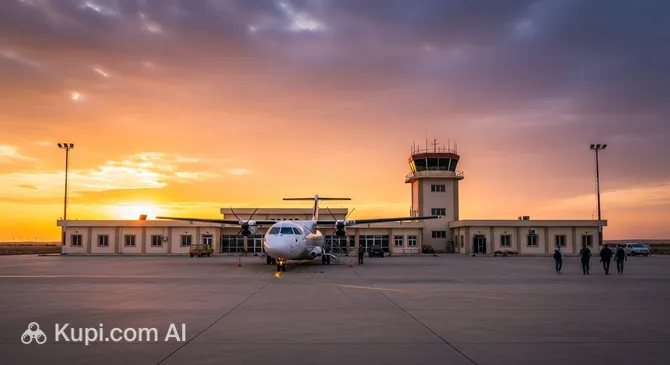
Qamishli Airport. Source: Kupi.com Binoculars

Qamishli Airport is not merely a transport hub but the key aerial gateway to northeastern Syria, connecting this ancient and distinctive region with the rest of the world. Located practically within the city limits, it spares travellers from exhausting transfers, allowing them to immerse themselves in the atmosphere of local hospitality almost immediately after landing. Despite its modest size, the airport plays a vital role in the life of the region and is distinguished by a calm, almost home-like atmosphere, unlike large, congested hubs.

IATA Code KAC
ICAO Code OSKL
City Qamishli
Distance to Centre 3 km
Status International / Domestic
Annual Passengers Data not published
Schedule Check airline websites

Airport Features and Advantages

An undeniable advantage of the airport is its unique location. Situated just 3 kilometres from the city centre, it allows passengers to reach their hotel or destination in a matter of minutes. This significantly saves time and money on taxi fares, making travel logistics as simple and convenient as possible.

The compactness of the terminal ensures high speed of service. There are no confusing corridors or needs to use shuttles between gates here: the check-in, security, and boarding zones are within walking distance of each other. This makes Qamishli Airport ideal for those who value time and prefer to avoid the hustle and queues characteristic of large international airports.

Contact Information

Finding accurate and up-to-date contact information for Qamishli Airport (KAC) can be challenging. Below is a summary of available data and recommendations for travellers.

  • Official Website: Currently, Qamishli Airport does not have an official website. We recommend checking flight information on the websites of the airlines operating flights to this airport.
  • Information Desk Phone: There is no publicly available phone number for the airport information desk. For information regarding schedules, flight status, or other inquiries, please contact your airline directly.
  • Airport Address: Qamishli Airport, Qamishli city, Syria.
  • Email: The contact email address for the airport is not published in open sources.
  • Social Media: Official social media pages for the airport are non-existent.
  • Lost Luggage Information: For all issues related to lost or damaged luggage, you should contact the representative office of the airline you travelled with directly.
  • Passenger Support: Passenger support is also provided by the carrying airlines. Please contact your airline's customer service to resolve any issues that arise.

How to Get to the Airport

Getting to Qamishli International Airport (KAC) from the centre of Qamishli is straightforward, as it is located just a few kilometres away. The main and most convenient method for travellers is a taxi, but other options exist.

Taxi and Transfer

The simplest and most reliable way to reach the airport is to use a taxi service. A trip from the central part of Qamishli usually takes about 15–20 minutes. The cost is generally quite affordable, however, it is strongly recommended to agree on the price with the driver in advance to avoid misunderstandings. Many hotels can also assist with organising transfers for their guests, which is a convenient and safe option.

Public Transport

The public transport system in the city can be unpredictable for tourists. Theoretically, one can reach the airport via local shared taxis (minibuses) that run along the main streets. This option is suitable for budget-conscious and experienced travellers ready for a bit of adventure. However, it is worth noting that they do not have a strict schedule, and route information may only be available on the spot.

Car Rental and Parking

Local car rental companies may operate in Qamishli. If you prefer to move around independently, it is better to book a car in advance. Having a car gives you the freedom to travel not only around the city but also its surroundings. Qamishli Airport has a parking area where you can leave your vehicle for the duration of your trip.

Tips for Travellers

When planning a trip to Syria, it is worth considering alternative routes. Sometimes it may be more convenient to fly into one of the airports in neighbouring Turkey, for example, into Mardin Airport (MQM) or the larger Diyarbakir Airport (DIY), and continue the journey by land from there. Always allocate extra time for the road to the airport, especially if departing during peak hours.

Terminals and Map

Qamishli Airport (KAC) is a small and compact terminal complex consisting of a single passenger terminal. This building serves all flights—both domestic and the few international ones—which significantly simplifies navigation for travellers. Thanks to this, there is no need for transfers between terminals, as all operations are concentrated in one place.

The structure of the terminal is intuitive. Departure and arrival zones are located within the same building, typically on the ground floor, and are clearly marked. The process for departing passengers is standard: entrance, check-in counters, security screening area, and boarding gates. Due to the small size of the airport, all key points are within walking distance of each other, and getting lost here is practically impossible.

Although the exact time for completing formalities may vary, passengers are advised to arrive at the airport well in advance. This will allow you to complete flight check-in and pre-flight security screening without rushing. The main advice for navigation is to follow the signs. Given the compactness of the terminal, you will easily find everything you need, from check-in counters to the boarding gate, without unnecessary effort.

Airport History

The airport of Qamishli (KAC) was opened in 1977 and, since its inception, has become the main air port in the northeast of Syria. It was originally created to improve the transport accessibility of the region and ensure reliable domestic air connections with the capital and other major cities of the country. For decades, it functioned as an important regional hub, serving primarily domestic flights.

The main stage of the airport's development was not so much its physical expansion as the growth of its strategic role. In periods when land transport in the region became difficult, Qamishli Airport turned into a vital artery. It took on the main burden of transporting passengers, as well as delivering food and essential goods, ensuring uninterrupted connection of the region with the rest of the country.

Large-scale reconstructions comparable to the modernisation of major international hubs have not been carried out at the airport. Its development has focused on maintaining and updating existing infrastructure to ensure flight safety and stable capacity. Scheduled repairs of the runway and terminal were conducted to meet operational requirements.

The main achievement of Qamishli Airport can be considered its resilience and ability to continue operations even in the most difficult times, confirming its status as a key transport facility for the entire region. An interesting fact is that, being relatively small in size, it plays a disproportionately large role in the economic and social life of the northeastern part of the country, remaining the only "aerial gateway" for many.

Services and Amenities

Qamishli Airport (KAC) is a small regional airport providing passengers with a basic set of services necessary for a comfortable wait for their flight. The terminal infrastructure is focused on meeting the essential needs of travellers before departure.

For passengers, there are small cafes and kiosks operating where one can buy snacks, refreshments, and essential items. The selection here is not as wide as in major international hubs, but sufficient to have a bite before the journey. The main waiting halls are equipped with standard seating. Information regarding the availability of separate VIP lounges is limited, so one should expect general zones for all passengers.

Options for connecting to Wi-Fi and the number of charging stations for electronic devices may be limited. Travellers are recommended to carry a portable charger (power bank) with them. Banking services and currency exchange points within the terminal may also be absent or have irregular operating hours, so it is better to settle financial matters in the city beforehand.

Generally, a medical point operates on the airport territory to provide first aid. Passengers with children and travellers with reduced mobility are advised to contact the airline in advance to clarify details and request assistance upon arrival at the airport, as specialised infrastructure may be minimal.

Specialised business services, such as conference rooms, and hotels directly within the airport building are absent. The nearest hotels and business centres are located in the city of Qamishli, which can be reached by taxi.

Where to Eat

When planning a flight through Qamishli Airport (KAC), it is important to consider that this is a small regional terminal, so the choice of dining establishments here is quite limited. Options for a snack are focused on the basic needs of passengers waiting for their flight and are not comparable to the assortment of large international hubs.

Typically, one or several small cafeterias or buffets operate on the airport premises. They are located in the main public zone (before security control) and possibly in the sterile departure zone. Here, travellers can purchase drinks—tea, coffee, water, juices—as well as light snacks. The assortment usually includes packaged snacks, pastries, sandwiches, and perhaps simple local sweets. Finding a full hot lunch or dinner will likely be difficult, so if you need a substantial meal, it is better to do so before arriving at the airport.

Opening hours of establishments are usually tied to the flight schedule, and they may be closed during quiet periods. Prices for food and drinks, as in most airports around the world, will be higher than in city cafes. Travellers with specific dietary needs (vegetarians, vegans, people with gluten intolerance) are strongly recommended to bring their own snacks, as specialised dishes are most likely absent from the menus of local cafes.

Travel Tips

To ensure your journey through the aerial gateway of Qamishli proceeds as comfortably and stress-free as possible, it is worth familiarising yourself with some features and advice in advance. Proper preparation will help save time, nerves, and even money, making the start of your adventure in Syria pleasant and organised.

Arrival Time and Control. We recommend arriving at the airport well in advance, especially if you have an international flight. The optimal time is 2.5–3 hours before departure. This will give you a sufficient buffer for check-in, baggage drop, and pre-flight security screening, which can be quite thorough. Keep your passport, visa (if required), and flight tickets handy to speed up the process.

Hand Luggage. Pay close attention to the rules for carrying hand luggage. Standard restrictions apply to liquids (in containers no larger than 100 ml, packed in a transparent bag), sharp objects, and certain electronic devices. Power banks and lithium batteries are generally allowed only in hand luggage. To avoid delays at security, check your airline's requirements in advance.

Seat Selection and Savings. When checking in online, you have the opportunity to select a seat. Window seats offer beautiful views during takeoff and landing, while aisle seats allow you to stand up freely without disturbing neighbours. To save money, try to book tickets in advance and consider travelling light with only hand luggage if the fare permits.

Transfers and Flight Delays. If you have a connecting flight at Qamishli Airport, verify in advance whether you will need to collect your luggage and undergo check-in again. In case of a delay or cancellation, do not panic. First, approach your airline's representative counter for information on the flight status and further actions. Keep all receipts for food and drinks if the delay is significant—the airline may compensate for these expenses.

Customs Control. When entering or leaving the country, you will need to pass through customs control. To avoid misunderstandings, familiarise yourself in advance with the current customs regulations regarding the import and export of currency, personal items, souvenirs, and other goods. Declare all items subject to declaration so that the procedure passes quickly and without problems.

Reached the end of the page?

That means the route is fully explored