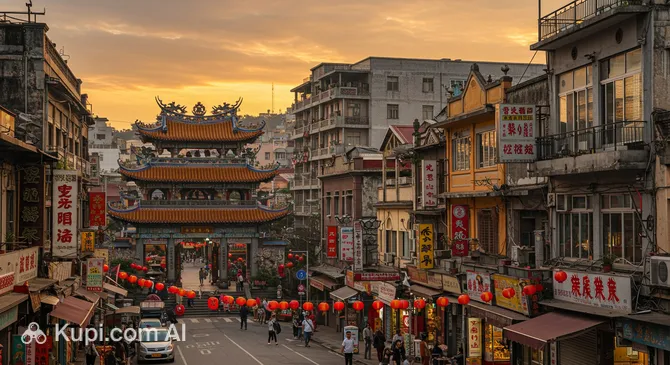
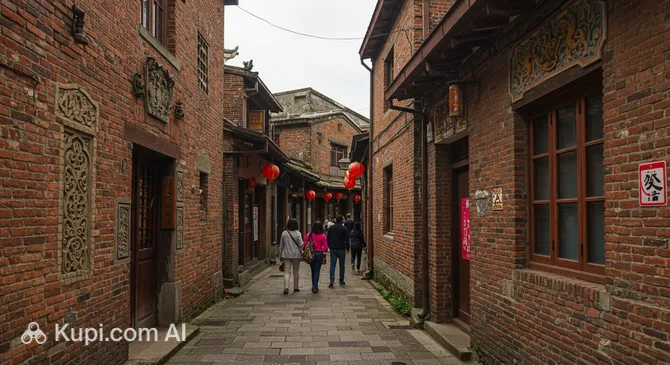
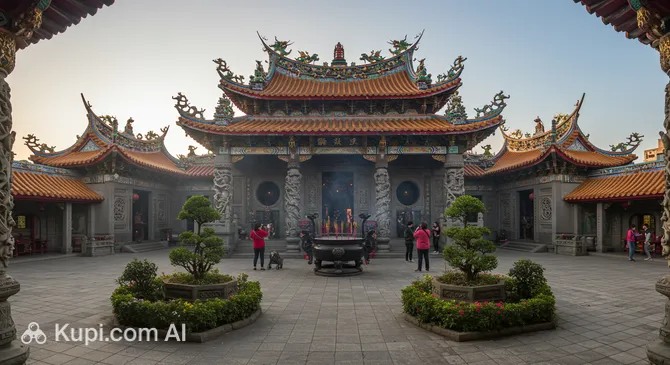
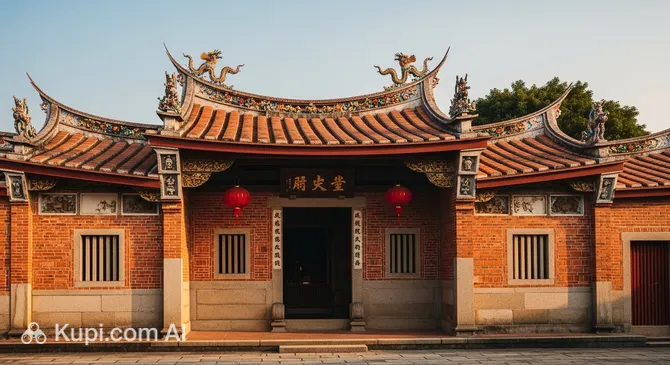
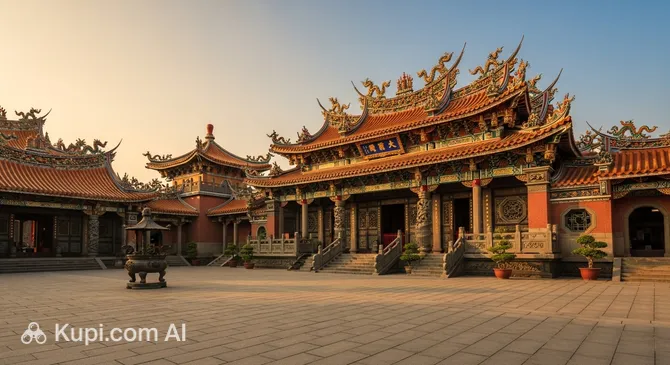
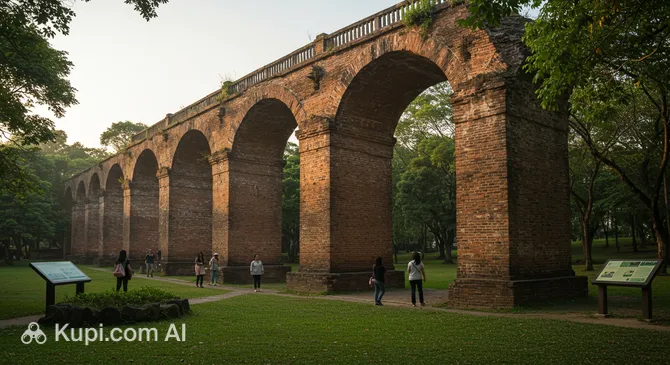
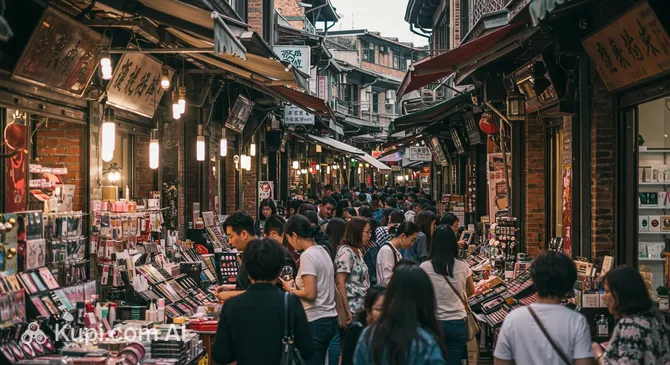
Lukang is a charming city located on the northwestern coast of Taiwan, in Changhua County, right on the shores of the Taiwan Strait. This city is literally steeped in history; many ancient buildings and architectural masterpieces have been preserved here, carefully guarding memories of the past and traditional ways of life. Lukang is famous for its authenticity, unique character, and an incredibly friendly atmosphere that immediately makes you feel at home.
Lukang. Illustration.
Source: Kupi.com AI
With a population of about 85,423, Lukang is a medium-sized city where tranquility and coziness reign. Despite its size, Lukang plays an important role in the region and is known as a center for crafts and gastronomy. It is here that you can fully experience the spirit of old Taiwan, strolling through narrow, winding streets and peering into traditional temples and artisan workshops. One of the main attractions is Lukang Old Street, where every house tells its own story and the air is filled with the aromas of local delicacies.
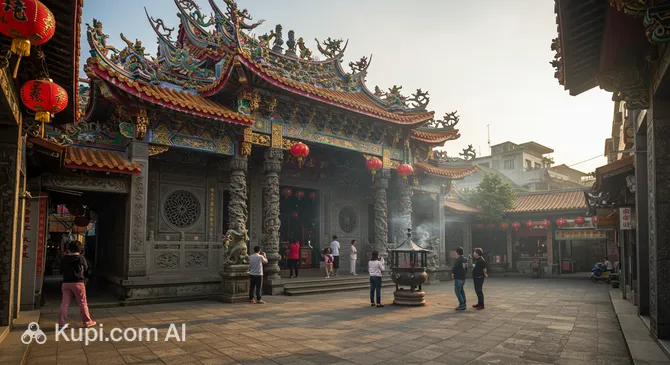
The city is also famous for its Longshan Temple, one of the oldest and most revered in Taiwan, which impresses with its exquisite architecture and rich decoration. Another unique feature of Lukang is its traditional markets, where you can find unique handmade souvenirs and try authentic local dishes.
If you want to immerse yourself in the living history of Taiwan, enjoy the fresh sea air, and get to know the island's unique culture, Lukang is undoubtedly worth your visit. This city will give you unforgettable impressions and allow you to touch the true spirit of Formosa.
In Lukang, you can expect a warm climate with notable seasonal variations in precipitation. Summer, especially from June to August, is characterized as the hottest time of the year with average temperatures around 27-28°C and the highest number of rainy days. Winter months, such as January and December, offer milder and drier weather with average temperatures around 17-19°C and minimal rainfall. Spring and autumn are transitional seasons with comfortable temperatures and a moderate amount of rain.
To better plan your trip and learn more about seasonal features, you can explore detailed information on the Lukang climate page.
Average monthly temperature
Average monthly precipitation
Interesting Facts
In addition to its famous temples and historical streets, Lukang, one of Taiwan's oldest cities, hides many curious details and stories that make it truly special. This city is a real treasure box of surprises for the attentive traveler.
Nine Turns Lane. Illustration.
Source: Kupi.com AI
Traveler photos:
The name of the city Lukang (鹿港) literally translates to "Deer Harbor." This is because in the 17th century, during the Dutch presence in Taiwan, Lukang's port served as an important center for the export of deer hides, which were hunted by local aboriginal tribes. This detail serves as a reminder of the city's rich trading history.
One of the most photographed and unusual attractions in Lukang is Nine Turns Lane (Jiuqu Lane). This narrow, winding street was designed this way not just for aesthetics: it was believed that its many bends protected residents from strong monsoon winds and, according to local beliefs, from evil spirits, which were thought to only travel in straight lines.
In Lukang, there is a unique Gentlemen's Alley (Mo Ru Xiang), whose name can be translated as "Don't Touch Breast Alley." This is a very narrow passage between houses, so tight that it's difficult for two people walking toward each other to pass without touching. Legend has it that men, showing respect, would yield the way to women by pressing against the wall to avoid awkward contact.
The city is famous not only for its history but also as an outstanding center of traditional crafts. The skill of local wood and stone carvers is especially evident in the rich decor of numerous temples. For instance, shrines such as Xinzhu Temple or Husheng Temple are true storehouses of Taiwanese religious art and artisanal traditions.
Lukang is a real paradise for foodies seeking authentic Taiwanese flavors that are hard to find in other parts of the island. Local specialties include "niu she bing" (牛舌餅), literally "ox-tongue biscuit," which, despite the name, is a sweet crispy pastry, and "feng huang gao" (鳳眼糕)—exquisite almond cakes in the shape of a phoenix eye.
How to Get There
As a historic city, Lukang does not have its own airport or railway station, but thanks to Taiwan's developed transport network, getting here is easy. The journey usually involves a transfer in nearby major cities. You can find all the details and plan your route by visiting the how to get to Lukang city page.
The nearest and most convenient air hub is Taichung International Airport (RMQ). It's important to note that this airport is not in Lukang itself, but in Shalu, about 27 km from the center of Lukang. This is the main airport of the region, handling both domestic and international flights. A taxi ride from here will take about 40–50 minutes. There are also bus routes connecting the airport to neighboring cities, where you can transfer to transport going to Lukang.
An alternative for travelers, especially those arriving from other regions of Asia or the islands, could be Tainan Airport (TNN). It is located in Tainan, approximately 128 km from Lukang. This is a regional hub, and the journey from it will require more time: first you need to get to the railway station, and then take a train to Changhua or Taichung, from where buses run to Lukang.
For clarity, here is summary information on the main airports through which you can reach the region:
Regarding railway connections, there is no train station in the city of Lukang itself. Tourists usually take trains to the station in Changhua (the nearest large TRA regular train station) or to the High Speed Rail (HSR) station in Taichung. The distance from Changhua to Lukang is only about 10–12 km, and this journey is easily covered by regular buses or taxis in 20–30 minutes. Special "Taiwan Tourist Shuttle" buses run from the HSR station in Taichung, taking passengers directly to the historical center of Lukang.
Lukang can also be reached by intercity buses from major Taiwanese cities, such as Taipei. This is a budget-friendly and quite comfortable way to enjoy the island's views along the way. The roads in this region are of excellent quality, so a trip by car or bus will be pleasant.
Main Attractions
Lukang, an ancient port city in Taiwan, carefully preserves its rich historical and cultural heritage. A walk through its streets is a true journey through time, where every corner tells a story. Among the many interesting places, several key attractions stand out that should not be missed.
One of the city's most revered shrines is Xinzhu Temple. This magnificent temple attracts not only pilgrims but also tourists with its exquisite architecture, vibrant decorations, and atmosphere of peace. Here you can learn about traditional religious rituals and admire the craftsmanship of the local artisans who created its unique appearance. The temple is an important center of spiritual life in Lukang.
Xinzu Temple. Illustration.
Source: Kupi.com AI
Traveler photos:
The famous Nine Turns Lane (Jiuqu Lane) adds a unique flavor to old Lukang. This narrow, winding street is a real labyrinth, created, according to legend, to protect against strong winds and to confuse pirates. Today, walking along it is a great pleasure: you can see traditional houses and small shops and feel the spirit of the old city. Each curve reveals something new and interesting.
Nine Turns Lane. Illustration.
Source: Kupi.com AI
Traveler photos:
Among Lukang's architectural gems is Heqi Villa. This is a beautifully preserved example of a traditional Chinese manor built by a wealthy family. The villa is interesting for its complex layout, elegant courtyards, carved wooden elements, and a rich history reflecting the life of well-to-do citizens of the past. A visit to the villa allows for a deeper understanding of the cultural traditions and daily life of old Lukang.
Lukang Heqi Villa. Illustration.
Source: Kupi.com AI
Traveler photos:
An important educational and cultural center of the past was the Wenkai Academy. Founded for teaching classical sciences, it played a significant role in the intellectual life of the region. Today, this historical building attracts visitors with its architecture and the opportunity to touch the history of education in Taiwan. This place serves as a reminder of the pursuit of knowledge, which has always been valued in the local culture.
Wenkai Academy. Illustration.
Source: Kupi.com AI
Traveler photos:
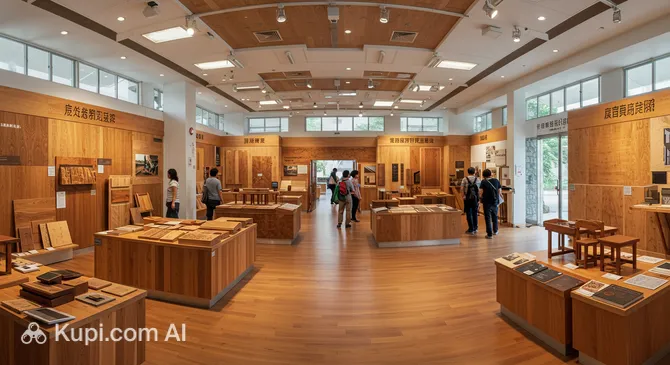
It is also worth noting the Lukang Culture Center, which often hosts exhibitions and events showcasing the region's modern and traditional art. For those who want to dive deeper into the history of crafts, the Juanmu Wood Veneer Experimental Station will be of interest. These sites complete the picture of Lukang's multifaceted cultural heritage.
Local Cuisine
The gastronomy of Lukang is a true discovery for connoisseurs of authentic Taiwanese cuisine, where special attention is paid to the freshness of ingredients—especially seafood—and the preservation of traditional recipes passed down through generations. A trip to Lukang would be incomplete without experiencing its culinary delights.
Among the dishes that are a must-try are the famous oyster omelet (蚵仔煎, o-a-tsian), hearty ba-wan meat balls (肉圓, ba-wan), which are steamed or fried, and fragrant shrimp rolls. These dishes are often prepared using unique local recipes that give them a distinctive taste, set apart from counterparts in other regions of Taiwan. Many of Lukang's delicacies are difficult to find elsewhere, making the gastronomic experience here particularly valuable.
For beverages, be sure to try the classic Taiwanese bubble tea with its many variations. Freshly squeezed juices from local fruits are also popular. For those who prefer alcoholic drinks, local beer is available and perfectly complements a meal.
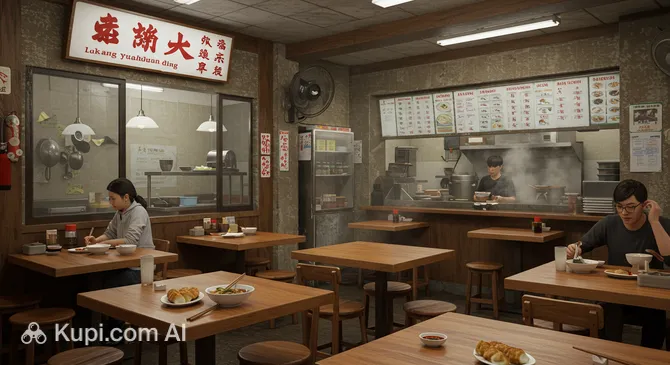
The food culture in Lukang is closely tied to street food. Bustling night markets and small family shops offer a huge variety of snacks prepared right before your eyes. This is a great opportunity to immerse yourself in the local atmosphere and try many dishes at affordable prices. Of course, the city also has restaurants offering a more formal setting. For example, you can visit the Yuanhuan Ding Lukang Noodle Restaurant to try traditional noodle dishes.
Lukang's gastronomic scene attracts tourists with its diversity and authenticity. The city is known for its culinary festivals and fairs, where you can not only enjoy the rich flavors and aromas of local cuisine but also purchase fresh products at farmers' markets. This lively and festive spirit, bringing locals and visitors together in their love for good food, makes Lukang a must-visit destination for foodies.
Travel Tips
Welcome to Lukang! This historical city in Taiwan is full of charm and cultural treasures. To ensure your trip goes smoothly and leaves only pleasant impressions, we have prepared some practical tips.
Clothing and Essentials:
The climate in Lukang is subtropical, with hot and humid summers (May–September) and mild, drier winters. In summer, choose light, breathable clothing made of natural fabrics, and don't forget a raincoat or umbrella for downpours, especially during typhoon season. In winter, a sweater or light jacket will be useful. Comfortable shoes are your best friend for walking Lukang's ancient streets and temples. Bring sunscreen, a hat, and repellent. For electrical appliances, you will need an adapter (Taiwan uses Type A and B sockets, 110V voltage). When visiting temples, such as the famous Longshan Temple, show respect and cover your shoulders and knees.
City Transport:
Lukang is a relatively small city, and many of its attractions, especially in the historical center, are easily covered on foot. The main form of public transport is buses, connecting different parts of the city and nearby settlements. There is no metro or tram in Lukang. Taxis are available, but it's recommended to have your destination address written in Chinese or use a translation app. Car rental may not be practical for getting around Lukang itself due to its narrow streets, but it could be useful if you plan to explore the Changhua County countryside.
Finances: Currency, Cards, and Tipping:
The official currency of Taiwan is the New Taiwan Dollar (TWD or NT$). You can exchange currency at banks or authorized exchange points; it's better to do this in advance in a larger city or upon arrival at the airport. Credit and debit cards (Visa, Mastercard) are accepted in most hotels, large shops, and restaurants. However, at traditional markets, small snack bars, and souvenir shops, cash is preferred. ATMs are quite common. Tipping culture in Taiwan is not as prominent as in some other countries; it is usually included in restaurant bills (10% service charge). Tipping in taxis is not expected, but you can round up the amount.
Health and Safety:
Lukang is considered a safe city for tourists. Nevertheless, always observe standard precautions: watch your belongings, especially in crowded places, and avoid walking in poorly lit and deserted areas after dark. Pharmacies (藥局 - yàojú) are in the city, but not all pharmacists speak English, so it's useful to have a basic set of medicines with you. If medical assistance is needed, major hospitals are located in the county administrative center—Changhua City. It is highly recommended to obtain medical insurance before your trip.
Communication: Language and Internet:
The main language of communication is Mandarin Chinese, and the local Taiwanese Hokkien dialect is also common. English is not very widely spoken among the local population, except for staff at tourist sites and some hotels. Learn a few basic phrases in Mandarin, such as: 你好 (Nǐ hǎo – Hello), 谢谢 (Xièxie – Thank you), 不客气 (Bú kèqì – You're welcome), 多少钱? (Duōshao qián? – How much?). For convenience, you can use a translation app. A SIM card with internet access can be purchased at the airport or from local operator stores (e.g., Chunghwa Telecom, Taiwan Mobile). Free Wi-Fi (often under the iTaiwan network) is available in many public places, hotels, and cafes.
Local Etiquette and Socializing:
Taiwanese people are known for their friendliness and politeness. Greetings usually involve a slight nod; handshakes are more common in business settings. When communicating, try to be calm and avoid raising your voice. It is considered impolite to point with your finger. When entering a private home or some temples, it is customary to remove your shoes. If invited to someone's home, a small gift is appropriate. Respect for elders is highly valued in Taiwanese culture.
What to Avoid:
To ensure your stay is comfortable and avoids misunderstandings, try to avoid discussing sensitive political topics. Also, while eating, never stick your chopsticks vertically into a bowl of rice—this is associated with funeral rituals and is considered a very bad omen.
Lukang Specialties: Street Food and Crafts:
Lukang is famous for its rich culinary scene and traditional crafts. Be sure to stroll down Lukang Old Street (鹿港老街), where you can try famous local delicacies like ba-wan meat balls (肉圓), oyster omelets (蚵仔煎), sweet ox-tongue biscuits (牛舌餅), and various seafood. It's also a great place to buy unique handmade souvenirs reflecting the city's rich cultural heritage.
We hope these tips help you better prepare for your trip and enjoy every moment spent in amazing Lukang. We wish you an unforgettable journey!
Entertainment & Nightlife
Lukang, known for its rich historical heritage and cultural attractions, also offers its guests more tranquil but cozy evening entertainment. Although the city is not famous for boisterous nightclubs like the major metropolises, you can find pleasant places to relax after a busy day.
Evening Lukang enchants with its atmosphere. The main nightlife is concentrated not so much in specialized districts but around traditional snack bars, small bars, and restaurants that hospitably welcome visitors until late in the evening. A stroll through the ancient streets, such as the famous Nine Turns Lane, can be a wonderful start to the evening, allowing you to enjoy the city's special aura by lamplight. Many local restaurants offer traditional Taiwanese dishes, and some stay open late.
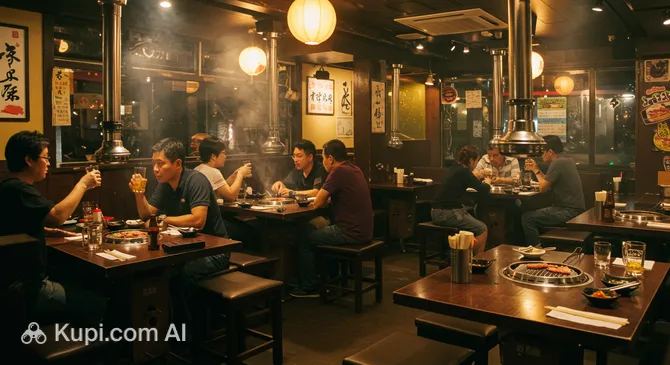
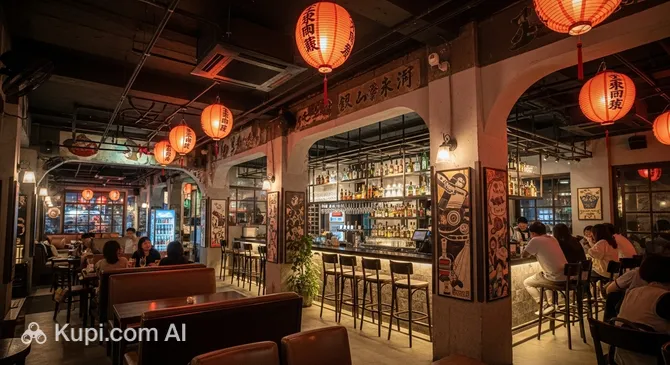
For those looking for a more lively atmosphere, Lukang has several bars where you can have a good time. For example, you can stop by Xiuxiu Jiu Yakiniku Bar, known for its relaxing environment, or visit Lukang Kitchen Bar, where you can enjoy drinks and light snacks. The atmosphere in such establishments is usually friendly and casual, with a mixed crowd of both locals and tourists. The dress code is generally casual. Bars are usually open until midnight or slightly later, especially on weekends.
Xuxiujiu Yakiniku Bar. Illustration.
Source: Kupi.com AI
Traveler photos:
Practical tips for evening leisure in Lukang:
Timing: It is best to start your evening walk or bar visit after 7:00-8:00 PM. Keep in mind that many establishments may close earlier than in larger cities.
Prices: Prices in Lukang bars and restaurants are generally moderate, making evening leisure affordable.
Transport: At night, the main way to get around is by taxi. Public transport may have a limited schedule in the late hours. You can order a taxi through apps or ask the staff at your hotel or establishment.
Safety:Lukang, like Taiwan in general, is considered a safe city. However, it is always worth observing standard precautions, especially during night walks in secluded places. Keep your valuables with you and be mindful of your surroundings.
Lukang Kitchen Bar. Illustration.
Source: Kupi.com AI
Traveler photos:
During the day, Lukang offers plenty of cultural and historical entertainment. You can visit numerous temples, such as Xinzhu Temple or Husheng Temple, explore historical buildings like Heqi Villa or Wenkai Academy. For museum lovers, the Health Museum or Lukang Culture Center will be interesting. And for a peaceful break in nature, Longten Park is a great choice. These places allow you to dive deeper into the unique atmosphere of this ancient city.
Parks & Museums
Lukang is a city where history comes alive at every turn, but it also offers its guests cozy green corners for relaxation and interesting cultural spaces. Here, you can harmoniously combine nature walks with immersion into the city's rich heritage.
Although Lukang is primarily known for its historical buildings, it also offers oases of tranquility. The main place to escape the city bustle and enjoy nature is Longten Park. This well-maintained park serves as the city's main green zone, offering residents and tourists an ideal space for leisurely walks, morning jogs, or family picnics. You can find shaded alleys, comfortable benches, and play areas here, making it a popular spot for relaxation and active outdoor recreation. Its significance to the city cannot be overstated, as it is practically the only large park providing such an opportunity in the historic center.
Longteng Park. Illustration.
Source: Kupi.com AI
Traveler photos:
The cultural life of Lukang is rich and diverse. A visit to the Health Museum is highly recommended; it tells the story of the human body and a healthy lifestyle in an interactive and engaging way. The museum's exhibits will be interesting for both adults and children. Another unique spot is the Juanmu Wood Veneer Experimental Station. Here you can learn about the traditional art of woodworking, see amazing pieces by local masters, and even try your hand at the craft. For those who want to understand local culture and art more deeply, a visit to the Lukang Culture Center is recommended, where exhibitions and events introducing the region's history and contemporary creativity are regularly held.
In addition to museums, Lukang is famous for its numerous historical and architectural monuments. Walking through the city is a journey through time in itself. Look out for iconic sites like the ancient Xinzhu Temple or the majestic Husheng Temple. These temples are not only important religious centers but also outstanding examples of traditional architecture, striking in their beauty and detail.
Husheng Temple. Illustration.
Source: Kupi.com AI
Traveler photos:
For those seeking authentic experiences and wanting to see less-known corners of the city, we suggest walking along Nine Turns Lane. Its winding structure and ancient houses create a unique atmosphere. Also, check out Gentlemen's Alley (Mo Ru Xiang)—a narrow passage that holds many stories and legends of old Lukang.
Getting Around
Public transport in Lukang is mainly represented by a bus network that connects various parts of the city and provides links to nearby communities. For a small historical city like Lukang, buses are a convenient and affordable way to get around, allowing tourists to reach key attractions.
The fare payment system for buses is quite simple. The most convenient option for tourists is using smart cards, such as EasyCard (悠遊卡) or iPASS (一卡通). These cards are widely used throughout Taiwan and can be used not only for paying for public transport but also for purchases in some shops. Cards can be topped up at 24-hour convenience stores (e.g., 7-Eleven, FamilyMart) and at some bus stations. Payment in cash directly to the driver is also possible, but in this case, it is recommended to have the exact amount, as change may not be given. The fare is usually low and depends on the distance.
You can purchase EasyCard or iPASS smart cards at airports, major railway stations, and most convenience stores. To validate your ticket, you must tap your card against the reader when entering the bus, and sometimes when exiting (depending on the fare system of the specific route—watch for instructions or the behavior of other passengers). Buses in Lukang usually run from early morning until evening, but it is better to check the exact schedule locally or using online maps and transport apps that can provide real-time information.
In addition to buses, other ways of getting around are popular in Lukang. Taxis are easy to find, especially in tourist zones, but they will cost more than public transport. Given the compactness of Lukang's historical center, many tourists prefer to get around on foot or rent a bicycle. Bicycle rental is a great option for a leisurely tour of the city's narrow streets and temples. In some places, you can also find traditional rickshaws offering short sightseeing trips, which can be an interesting experience.
Accommodation
In the city of Lukang, travelers will find a variety of accommodation options to suit different preferences and budgets. There are budget-friendly guest houses and hostels, ideal for economical tourists, as well as more comfortable mid-range hotels. You can also find apartments for short-term rent, offering more space and a homey feel.
For a full immersion in the atmosphere of the ancient city, many tourists prefer to stay in the historical part of Lukang. Staying near iconic sites like Nine Turns Lane or the ancient temples allows for easy exploration of the main attractions on foot. The areas adjacent to the main tourist routes usually offer a good choice of housing and convenient access to cafes and shops.
Nine Turns Lane. Illustration.
Source: Kupi.com AI
Traveler photos:
While large international hotel chains may not be widely represented in Lukang, the city is famous for its authentic local hotels and cozy family-run pensions. These establishments are often located in traditional buildings and offer a unique living experience. It is recommended to check reviews and offers on popular booking platforms to find the best option.
Booking tip: Lukang is a popular destination, especially on weekends and during local festivals. Therefore, to ensure the best choice and prices, it is recommended to book your accommodation in advance, especially if your trip falls during the peak tourist season.
The price range for accommodation in Lukang varies from budget options to mid-range and higher-class offers, though luxury resorts are few. You can book your stay through well-known international online platforms like Booking.com or Agoda, as well as directly through hotel websites or by contacting them by phone if that option is available. Some small guest houses may accept bookings through local tourist information centers.
Nearby Cities
For those looking to explore the surrounding area, Lukang serves as an excellent starting point for day trips to several interesting nearby locations:
Taichung, as one of Taiwan's largest cities, attracts travelers with its diverse cultural institutions, including the National Taiwan Museum of Fine Arts and the National Museum of Natural Science. The city is also known for its vibrant night markets, such as Fengjia, and modern architecture, providing an interesting contrast to Lukang's historical charm.
A trip to Changhua offers the opportunity to see the majestic Great Buddha statue on Baguashan Mountain, which provides breathtaking panoramic views of the area. Additionally, this city is rich in historic temples and offers a more relaxed pace of life compared to Taichung.
Shalu, located closer to the coast, may interest those who appreciate seaside landscapes and fresh seafood. It is a great place to experience the atmosphere of a coastal Taiwanese town and its local traditions.
Yuanlin offers visitors a chance to dive into the atmosphere of a typical Changhua County city. Here you can explore local markets, visit traditional temples, and stroll through city parks, getting a glimpse into the everyday life of the region.
The town of Hemei, located in close proximity to Lukang, presents a wonderful opportunity for a short excursion. Here you can get to know the life of a neighboring community, perhaps discovering local craft workshops or unique culinary delights characteristic of this small town.
These nearby destinations provide an insight into the diverse culture and landscapes of the region.
Shopping & Souvenirs
Lukang offers tourists a unique shopping experience where centuries-old craft traditions, mouth-watering local delicacies, and modern goods blend harmoniously. The city is rightfully proud of its historic streets, where you can find authentic handmade items, antiques, and the famous Lukang sweets. This is not a place for chasing global luxury brands, but rather for a deep immersion into local culture through its diverse goods.
The main magnet for shopping enthusiasts in Lukang is undoubtedly its historical center. Special attention should be paid to Nine Turns Lane (Jiuqu Lane)—a narrow, winding street literally dotted with charming little shops. Here they sell traditional snacks, aromatic tea, original souvenirs, and products by local artisans. A walk through Lukang's ancient streets turns into an exciting adventure, with interesting shops and workshops to discover at every turn.
Although Lukang is better known for its traditional shops, modern retail outlets can also be found here. If you are looking for a more familiar shopping format, check out the Dapan Goods and Food Mall (Lukang). It offers a wide range of various goods, including food and daily necessities, making it a convenient place for comprehensive shopping.
Dapan General Merchandise and Food Market (Lukang). Illustration.
Source: Kupi.com AI
Traveler photos:
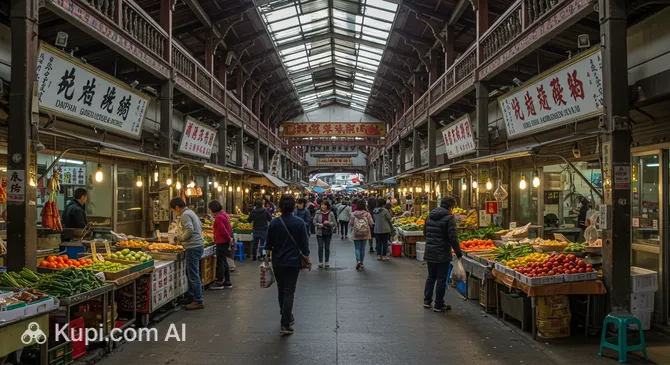
Markets play an important role in Lukang's commercial life, adding a special flavor. In addition to the numerous street stalls with food and souvenirs found on the old streets, the city has more specialized locations. For example, the Lukang Cosmetics Wholesale and Retail Market may interest those looking for local or popular Asian cosmetic brands. Traditional markets also offer the freshest products and authentic local delicacies, creating a unique atmosphere of bustling trade.
Lukang Cosmetics Wholesale Market. Illustration.
Source: Kupi.com AI
Traveler photos:
You should definitely bring something back from Lukang that reflects its rich history and unique culture. Popular souvenirs include traditional Lukang sweets, such as "ox-tongue biscuits" (niu she bing) and other original confectionery. Wooden items are highly valued—the city has strong, centuries-old traditions of carving; you might look for products from the Juanmu Wood Veneer Experimental Station. Small temple attributes, elegant calligraphy, traditional painted lanterns, and, of course, local tea also make excellent mementos of your trip.
Most shops in Lukang, especially in tourist areas, operate daily, usually from 10:00-11:00 AM to 9:00-10:00 PM. Small private shops and markets may have more flexible schedules. Large shops and shopping centers usually accept credit cards (Visa, MasterCard), but in markets and small shops, it is preferable to have cash (Taiwanese dollars) with you, as it is the most common payment method.
Foreign tourists in Taiwan can take advantage of the convenient VAT refund system (Tax Free) when making purchases over a certain amount in participating shops. Usually, such shops are marked with a "Tax Free Shopping" sign. Don't forget to check the conditions and obtain the necessary documents (your passport and a special Tax Free form) directly at the time of purchase to process the tax refund at the airport when leaving the country without any issues.