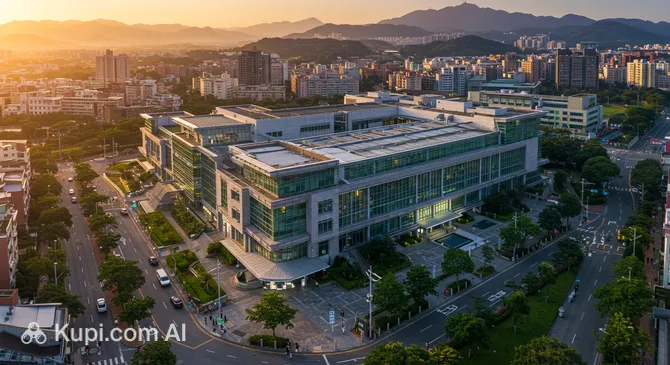
Zhubei is a dynamic and fast-growing city located on the northwestern coast of the island of Taiwan. As the administrative center of Hsinchu County, it has transformed from a modest agricultural settlement into a modern technological hub. With a population exceeding 211,000, the city attracts professionals from all over the world thanks to its proximity to the famous Hsinchu Science and Technology Park—the heart of the country's semiconductor industry.
Zhubei. Illustration.
Source: Kupi.com AI
Geographically, the city stretches across a fertile plain washed by the Fengshan and Touqian rivers and borders the Taiwan Strait to the west. It harmoniously combines modern residential complexes with remnants of traditional landscapes that are gradually giving way to futuristic architecture. The rich history of the city can be traced through its rapid transformation from bamboo groves to its status as one of the region's most advanced "smart" cities.
Although Zhubei is primarily known as a business and residential center for engineers, it offers a comfortable environment with developed infrastructure, wide avenues, and cozy green zones. It is an excellent place to see the modern face of the island and feel the rhythm of economic success without sacrificing the convenience and tranquility of suburban life.
Weather Overview
Zhubei is characterized by a humid subtropical climate that brings hot summers and mild, pleasant winters. The warmest period is July, when the average temperature is around 28°C, and daytime highs often exceed 30°C. During this time, humidity is quite high, which is typical for the northwestern coast of the island.
Winter months, such as January and February, offer mild weather with average temperatures around 15–16°C. This is an excellent time for walking, as there are no severe frosts here. Expect warm summers with occasional tropical downpours and cool, dry winters that may be accompanied by winds from the Taiwan Strait. It is worth studying the city's climate in more detail before your trip, especially during the typhoon season from June to September.
The autumn months—October and November—are considered the most comfortable for tourists. During this time, the temperature stabilizes around 21–24°C, and rainfall decreases significantly, allowing for long periods outdoors and exploring the surroundings without the exhausting heat.
Average monthly temperature
Average monthly precipitation
Interesting Facts
"Northern Bamboo": The name of the city Zhubei (竹北) literally translates to "Northern Bamboo," recalling the thick bamboo groves that were the area's main resource before large-scale development began.
Transport Paradox: Although the high-speed rail station is called "Hsinchu," it is territorially located in Zhubei, making the city the most important transport hub for the entire northern part of the island.
Rapid Growth: Zhubei is considered one of Taiwan's fastest-growing cities; in just ten years, its population increased by more than 50,000 people due to the influx of highly qualified specialists.
County Capital: The city is officially the administrative center of Hsinchu County and governs 30 surrounding villages and settlements.
How to Get There
Zhubei boasts excellent transport accessibility, being a key link in the communication network of northern Taiwan. The city is located at the intersection of major highways and railway lines, making it easy to reach from both the capital and the southern regions of the island. Detailed information on how to get to this technological center will help you plan your route most effectively.
Zhubei does not have its own airport. Most travelers arrive via Taoyuan International Airport (TPE), from which the journey by taxi or bus takes about 40–60 minutes. You can also use Songshan Airport in Taipei, connecting your trip with a transfer to the high-speed train.
The city's main pride is the Hsinchu HSR high-speed train station, located directly in Zhubei. A trip from Taipei on such a train takes only about 30 minutes, making the city accessible even for short visits. Also, in the western part of the city, the standard Zhubei (TRA) railway station operates, serving suburban and regional routes.
Station
Passenger traffic
Distance
Xinfeng railway station
7
4 km
Hsinchu TRA station
8
5 km
Liujia Station
7
5 km
Hsinchu HSR station
9
5 km
Zhunan railway station
8
20 km
Main Attractions
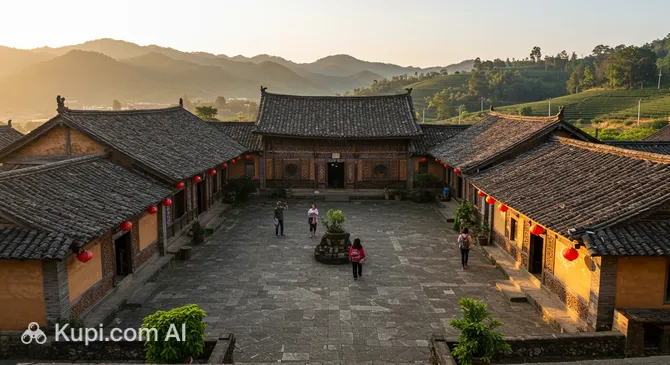
One of the most colorful spots on the city map is the Xin Tai House Hakka Cultural District. This is a unique place where old red-brick houses and mud-brick buildings have been preserved amidst modern skyscrapers. The district allows visitors to touch the traditions of the Hakka people and see how the heritage of the past is carefully preserved in the heart of a technological center.
Xin Tile House Hakka Cultural District. Illustration.
Source: Kupi.com AI
Traveler photos:
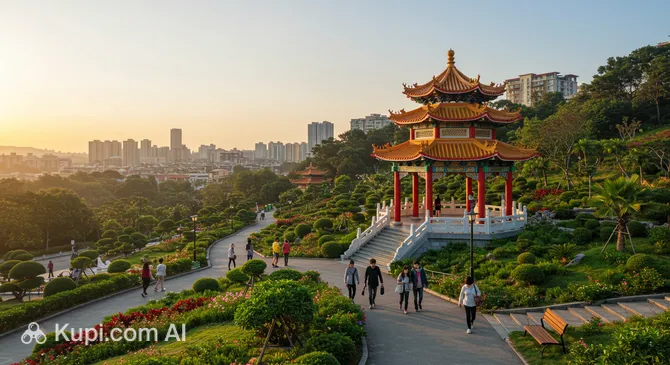
For those looking for a relaxing break in the fresh air, Shengsuo Park is an ideal choice. This modern recreational area with well-kept paths and green lawns is a favorite spot for local residents to stroll. Here, you can enjoy the silence, have a small picnic, or simply observe the slow pace of city life away from the noise of the main roads.
Shengsuo Park. Illustration.
Source: Kupi.com AI
Traveler photos:
Inquisitive travelers should visit the Jisheng Health Culture Museum. Please note that visiting this establishment is possible by appointment only. The museum's exhibition introduces visitors to modern technologies in medicine and wellness, offering an interactive look at maintaining health and active longevity.
Local Cuisine
Zhubei's cuisine is an appetizing mix of traditional Hakka flavors and modern Taiwanese gastronomic trends. Special attention should be paid to seafood, which is delivered straight from the Taiwan Strait. In local restaurants, be sure to try oyster omelets and beef meatballs—dishes that have become the hallmark of regional cuisine.
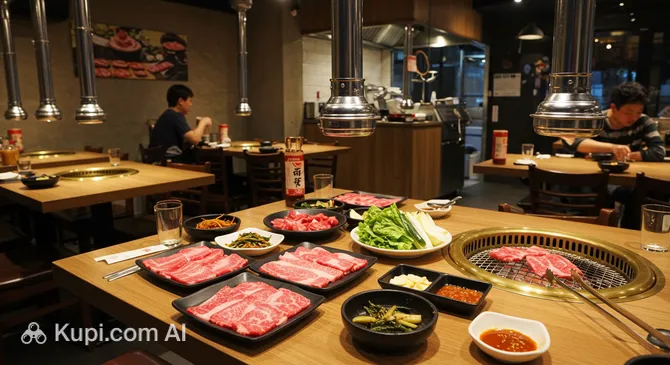
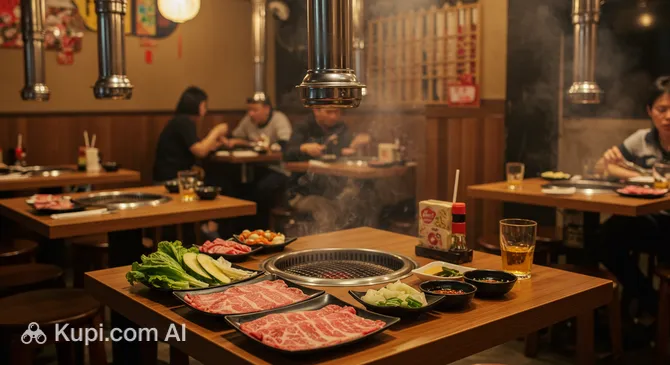
For lovers of meat delicacies and interactive dining, the city offers excellent Japanese grill restaurants. A popular spot is Gokujo Yakiniku, where guests can grill marbled beef or fresh seafood over an open flame right at their table.
Gokujo Yakiniku. Illustration.
Source: Kupi.com AI
Traveler photos:
Another noteworthy establishment is Mori Mori Yakiniku, which is famous for its atmosphere and the quality of its ingredients. Dinner in such places is often complemented by traditional bubble tea or refreshing fruit teas, which locals love to drink at any time of day. Street food is also widely represented at night markets, where you can find everything from deep-fried squid to exotic taro desserts.
Mori Mori Yakiniku. Illustration.
Source: Kupi.com AI
Traveler photos:
Travel Tips
If you are planning to visit Zhubei, these practical tips will help you feel confident and get the most out of your trip.
Clothing and belongings: In summer, take light cotton clothing and sunglasses, as humidity and temperatures can be high. In winter (December-February), a windbreaker or a light sweater will come in handy. For visiting temples, choose conservative clothing that covers shoulders and knees.
Transport: The fastest way to move between cities is by HSR trains. For travel within the city, use buses or taxis. Be sure to purchase an EasyCard—it is your universal key to transport and small purchases.
Finances: The official currency is the New Taiwan Dollar (TWD). While cards are accepted in hotels and malls, only cash is used in markets and small cafes. There are many ATMs in the city, and they work around the clock.
Health and safety: The city is very safe. It is not recommended to drink tap water—use bottled water instead. Pharmacies are easy to find by the green cross, and many pharmacists understand basic English.
Communication: The main language is Mandarin Chinese. Staff in hotels and large malls speak English, but for communicating in taxis or at markets, it's better to have a translation app handy.
Local etiquette: Taiwanese people are very polite. Greet people with a slight nod and a smile. When passing business cards or money, use both hands—it is a sign of respect.
What to avoid: Do not leave chopsticks vertically in a bowl of rice, as this resembles a funeral rite. Avoid loud conversations on public transport—silence is valued here.
Additional tip: Visit the city on a weekday if you want to avoid queues at popular restaurants, as many residents from neighboring regions come here on weekends.
May your journey to this modern corner of Taiwan be comfortable, interesting, and full of pleasant discoveries!
Entertainment & Nightlife
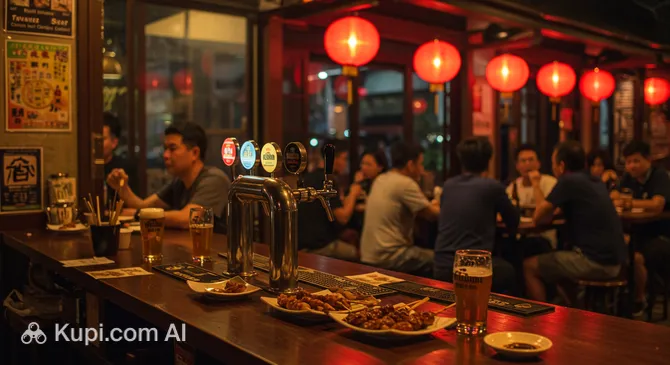
Nightlife in Zhubei is more relaxed and respectable than in bustling Taipei, catering primarily to young professionals and expats. Most evening entertainment is concentrated in cozy gastro-pubs and craft beer establishments. A popular spot is Huan Ju Tang Skewers and Craft Beer, where you can spend an evening in a laid-back atmosphere enjoying quality drinks and light snacks.
Huan Ju Tang Skewers & Craft Beer. Illustration.
Source: Kupi.com AI
Traveler photos:
For those who appreciate the "skewers and foam" format, the Skewers and Beer establishment is an excellent choice. Such places often become social hubs for tech company employees after the workday. If you crave more vibrant entertainment, nightclubs, or large-scale concerts, locals usually head to neighboring Hsinchu or Taipei, which are just a short high-speed train ride away.
Daytime entertainment includes attending sporting events and modern shopping complexes. A key venue for sports fans is the Hsinchu County Second Stadium, which frequently hosts matches and competitions. You can also take a stroll along the Green Riverway promenade, which is beautifully illuminated in the evening and becomes an ideal place for safe night walks.
Hsinchu County Second Stadium. Illustration.
Source: Kupi.com AI
Traveler photos:
Parks & Museums
Connoisseurs of culture and art should visit the Hsinchu County Museum of Art. This modern space serves as the main venue for exhibitions by local artists and cultural events reflecting the dynamic spirit of the region. The museum is interesting not only for its exhibits but also for its modern architecture, which is harmoniously integrated into the urban landscape.
For nature lovers in an unusual format, the city offers unique specialized galleries. Be sure to stop by the Moyun Aquatic Plant Aquarium. This place is more like an art studio where living underwater landscapes are created from rare species of aquatic plants, striking in their beauty and detail.
You can continue your acquaintance with the world of flora and fauna at the 101 Aquarium exhibition store, where many exotic fish are presented. As for classic walks, the riverbanks and the nearby Xinfeng coastal ecological park provide excellent opportunities for birdwatching and outdoor recreation.
101 Aquarium. Illustration.
Source: Kupi.com AI
Traveler photos:
Getting Around
Public transport in Zhubei is organized as efficiently as possible for the convenience of residents and visitors. The basis of internal communication is an extensive network of bus routes connecting the main residential quarters, the HSR station, and the neighboring city of Hsinchu. Buses run on schedule, and during peak hours, intervals are reduced for the convenience of technology company employees.
To pay for travel in Zhubei, as throughout the island, it is most convenient to use contactless EasyCard or iPass cards. You can purchase and top them up at any 24-hour convenience store. It is important to remember to tap the card against the validator twice: when entering the bus and when exiting, so that the system correctly calculates the fare depending on the distance.
As an alternative to public transport, taxis and the Uber service are popular and available at any time of day. The city is also actively developing its bike-sharing system, and the well-equipped paths along the Touqian and Fengshan rivers make cycling not only a means of transportation but also a great way to see the sights in the fresh air.
Accommodation
Accommodation in Zhubei is primarily oriented toward business travelers and specialists; however, tourists will also find worthy options. The main range of housing is represented by modern mid-range and business-class hotels, as well as apartments for long-term stays. Most high-end hotels are concentrated in the Hsinchu HSR station area, providing maximum convenience for those planning to travel actively around the island.
For a more budget-friendly stay, you can consider guesthouses and small hotels near the old Zhubei railway station. The atmosphere here is more authentic, and accommodation prices are significantly lower than in the new business districts. Due to the city's specifics as a tech hub, there are almost no resort hotels, but the quality of service in city hotels traditionally remains high.
It is recommended to book accommodation in advance, especially during large technological conferences at the Science Park or during national holidays when the demand for rooms increases sharply. Most hotels are available through popular international booking systems, and payment by bank card is widely accepted.
Nearby Cities
Zhubei serves as an excellent starting point for exploring the northern part of the island, offering travelers easy access to colorful neighboring towns. Just a few minutes away is the city of Hsinchu, known as the "Windy City." There, you should visit the island's oldest zoo, the majestic City God Temple, and try the famous rice noodles at the local market.
For those who prefer natural beauty and tranquility, a trip to Xinfeng is a great choice. This destination is famous for its mangrove forests and coastal ecological parks, where you can walk along picturesque wooden boardwalks. Also worth noting is Hukou, where the "Old Street" with unique early 20th-century architecture has been preserved, as well as the town of Baoshan, known for its tea plantations.
The city's surroundings are so diverse that they allow you to change scenery daily: from bustling markets to quiet coastal areas. Don't miss the opportunity to explore this region more deeply, as every direction will give you new impressions of Taiwan's culture and nature.
Shopping & Souvenirs
Shopping in Zhubei is a modern experience centered around the latest shopping complexes. The main shopping opportunities are in the high-speed rail station area, where large malls are located. Here you can find both international clothing brands and huge electronics stores, which is quite logical for a city neighboring the country's main technology park.
If you are looking for something more traditional, head to the local food markets in the central part of the city. They sell fresh fruits and vegetables grown on farms in Hsinchu County. High-quality Taiwanese tea, local sweets, and, of course, the latest gadgets and technical accessories are often brought as souvenirs from Zhubei.
Shopping centers are usually open from 11:00 to 22:00, and bank cards are accepted almost everywhere. However, in markets and small shops, you will definitely need cash. Foreign tourists can use the Tax Free system in large malls for purchases over 2000 TWD—don't forget to bring your passport to process the tax refund right on the spot.