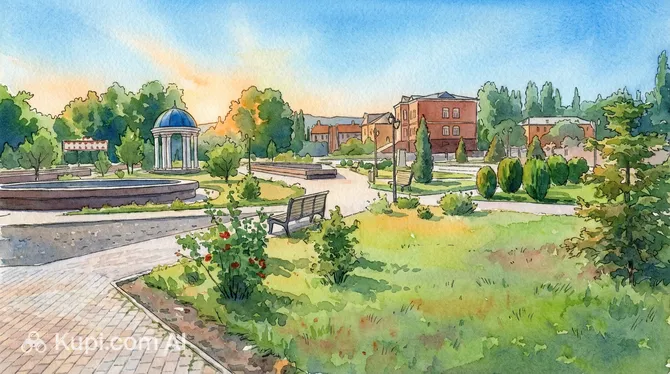
Khovaling is an amazing and authentic corner in the southern part of Tajikistan, located in the Khatlon region. The settlement, known since the 8th century AD, has preserved its identity and traditional way of life, making it extremely attractive for those seeking the genuine, unvarnished culture of the East. In 2024, the village received a new official name—Munk, which became an important milestone in its long history.
Khovaling. Illustration.
Source: Kupi.com AI
Geographically, the town is situated in one of the highest and most inaccessible regions of the country, stretching across the picturesque interfluve of the Kyzylsu and Yakhsu rivers. Surrounded by the ranges of the Western Pamir, such as the Vakhsh and Hazrati Shoh, Khovaling offers travelers breathtaking panoramas and the purest mountain air. You can learn more about the heritage of these places by exploring the pages of the history of this region.
Today, about 10,600 people live here, and the district itself is famous for its healing springs and unique natural riches. Khovaling is a place for those who appreciate silence, the majesty of the mountains, and the hospitality of the locals. We invite you to take a journey to this region to personally see its untouched beauty and touch ancient traditions.
Weather Overview
The climate in Khovaling is of a pronounced continental mountain character. Given the high-altitude location of the town among the ranges of the Western Pamir, travelers should be prepared for significant seasonal temperature changes. Before your trip, be sure to check current information on the weather in Khovaling to choose the right gear.
Winters here are harsh and snowy: in January, the average temperature drops to -6.8°C, and at night frosts can reach -11°C and below. Spring brings heavy rainfall, especially in March and April, which often makes movement on mountain roads difficult. Summer, on the contrary, is very pleasant and moderately warm: in July, the average temperature is about +20°C, and daily maximums rarely exceed a comfortable +25°C, making this period ideal for hiking.
Autumn in the region is dry and sunny, especially in August and September, when precipitation is minimal. However, as early as October, the first frosts begin, and the weather becomes unpredictable. When planning your visit, remember that in mountainous areas, weather conditions can change abruptly during the day, so even in summer, a light jacket in your backpack will not be redundant.
Average monthly temperature
Average monthly precipitation
Interesting Facts
Khovaling is a place with a rich past and unique features that can surprise even an experienced traveler.
Ancient Roots: Although the modern Khovaling district was formed in 1930, the settlement itself has been known to historians since the 8th century AD.
New Name: Very recently, on April 30, 2024, the village of Khovaling was officially renamed Munk, reclaiming its historical name.
High-Altitude Status: The district is considered one of the most inaccessible in the country, situated among the majestic ranges of the Western Pamir.
Natural Pharmacy: The region is famous for its healing springs and the production of ecologically pure honey, which is considered one of the best in Tajikistan.
Precious Depths: The lands around Khovaling have long been known for deposits of precious metals, which in the past made the region an important center for explorers.
How to Get There
Getting to high-altitude Khovaling is an adventure in itself, requiring advance planning. The primary and fastest way to connect with this remote corner of the country is by air. If you value your time and want to see mountain ranges from a bird's-eye view, you should study information on how to get to Khovaling from the capital beforehand.
The regional Khovaling Airport is at the disposal of travelers. This small airfield specializes in receiving light aircraft and helicopters performing flights from Dushanbe. Despite its modest size, the airport plays a key role in the life of the district, providing a connection to the outside world in the conditions of a complex mountain relief.
Ground communication with the town is carried out via local roads that wind along river valleys. Travel by car can be difficult, especially in winter when the passes are covered with snow. There is no rail service in this mountainous area, so most tourists choose either a flight or renting an SUV with an experienced local driver.
Station
Passenger traffic
Distance
Kulob Railway Station
—
75 km
Danghara Railway Station
45,000
91 km
Vahdat Station
—
99 km
Yavan Railway Station
—
107 km
Sangtuda Railway Station
—
109 km
Main Attractions
The main spiritual and historical center of attraction in the region is the Mausoleum of Sultan Huwaysi Karani. This sanctuary, located about 17 kilometers from the center of Khovaling in the village of Hazrati Sultan, is an important pilgrimage site. It is closely linked to Muslim traditions and attracts believers as well as history buffs with its special energy and ancient architecture.
For lovers of active recreation and nature, the Khovaling region is a true paradise. The mountain landscapes of the Western Pamir offer unlimited opportunities for mountaineering and trekking. Walks along the banks of the Kyzylsu and Yakhsu rivers allow you to see the pristine nature of Tajikistan, where mountain ranges meet turbulent water flows, creating ideal conditions for landscape photography and ecotourism.
The high-mountain settlements of the district are also of great interest to tourists. Here, you can see how the traditional lifestyle of the Tajik highlanders has been preserved. Picturesque mountain trails lead to springs hidden from sight, which locals consider healing. Exploring these places requires a certain level of physical fitness but rewards travelers with unique views and a sense of complete harmony with nature.
Local Cuisine
The culinary traditions of Khovaling are saturated with the aromas of spices and the hospitality of the mountain region. Here, you can try classic Tajik dishes in their most authentic execution. Be sure to taste the local plov, which is prepared in every home according to its own secret recipe, as well as hearty lagman, which warms you up after long walks on mountain trails.
The famous Khovaling honey is the pride of the region. Thanks to the clean mountain air and a variety of wild melliferous plants, this product has a unique taste and healing properties. Locals often offer it with tea along with fresh flatbreads (lepeshkas), and this combination is considered the best dessert in these parts.
The food culture here is centered around the hearth and traditional teahouses (choykhonas). There are no pretentious restaurants in Khovaling, but the food at the markets and in small local cafes is always fresh and prepared from natural products. A meal in these places is not just eating, but a whole ritual of communication, where a guest is always offered the best seat and a cup of aromatic green tea.
Travel Tips
A trip to Khovaling is a journey to one of the most original corners of Tajikistan. To make your visit to this mountain region comfortable and leave only pleasant memories, use our practical tips.
Clothing and items: When going to the mountains, choose layered clothing. Even in summer, evenings can be cool. Be sure to bring reliable trekking shoes and sunscreen. When visiting the Mausoleum of Sultan Huwaysi Karani, follow a modest dress code: covered shoulders and knees; women are advised to have a headscarf.
Transport: The best way to move between settlements is to rent an SUV with a local driver. Public transport runs rarely, and mountain roads require driving experience.
Finances: Only cash Somoni is accepted in Khovaling. There are practically no ATMs here, and cards are not accepted. Exchange money in advance in Dushanbe or other major cities.
Health and Safety: Pack a first-aid kit with basic medicines, as the selection in local pharmacies may be limited. Drink only bottled or boiled water.
Communication: The main language of communication is Tajik; many people understand Russian. English is not widely spoken. It is recommended to buy a SIM card in Dushanbe, as Wi-Fi in guest houses is not always available.
Local Etiquette: Greet people politely by placing your right hand over your heart—this is a sign of respect. Always ask for permission before taking photos of local residents.
What to avoid: Do not plan trips on mountain roads after dark. Avoid arguments on political or religious topics.
A sweet souvenir: Be sure to buy local honey before leaving—it is the best gift from Khovaling, which is famous for its quality.
Khovaling will reward the patient traveler with its sincerity and incredible views. The main thing is to be open to new experiences and respect the traditions of this ancient land!
Entertainment & Nightlife
Entertainment in Khovaling is fundamentally different from typical urban leisure. You won't find noisy nightclubs or karaoke bars here; instead, the town offers immersion in the silence and majesty of nature. The main "nightlife" here is contemplating the incredibly bright starry sky, which, due to the high altitude and lack of light pollution, looks simply fantastic.
During daylight hours, leisure activities are focused on active recreation. Hiking on the slopes of the Vakhsh range, horseback riding, and exploring nearby villages allow you to feel the rhythm of local life. The atmosphere in establishments (mostly small teahouses) is very calm and friendly, where it is customary to spend time over slow conversations and tea.
Safety in the region is high, and locals are always ready to help a guest. During the day, it's worth visiting cultural sites or simply walking along mountain rivers. If you plan on returning late from hikes, it is recommended to hire a local guide, as the mountainous terrain requires good knowledge of the trails. Taxis here are most often private cars, and it's best to arrange trips in advance through your hosts.
Parks & Museums
Nature is the main "park" and "museum" of Khovaling. The entire region, stretching between the Vakhsh and Hazrati Shoh ranges, represents a unique natural exhibition. Artificial galleries are not needed when majestic cliffs rise around you, and the swift Yakhsu and Kyzylsu rivers roar in the valleys. A walk along any of the trails in the vicinity of the town is a journey through a living museum of geology and botany.
In terms of cultural heritage, the most important site is the Mausoleum of Sultan Huwaysi Karani. Although formally a religious shrine, in terms of its significance and architecture, it serves as the region's main historical monument. Visiting the mausoleum allows you to touch the centuries-old history of Islamic culture in Tajikistan and see the craftsmanship of ancient builders.
The surrounding landscape of the Western Pamir forms a unique atmosphere where every village seems like an open-air ethnographic museum. Here you can observe traditional farming methods and architecture that has not changed for centuries. Ecotourism enthusiasts should definitely take time to explore the local valleys, which in spring turn into blooming gardens created by nature itself.
Getting Around
The transport system in Khovaling reflects its status as a remote mountain settlement. There is no metro or tram system, and the main means of communication with the rest of the world is the regional airfield. Air flights are the most reliable and fastest way to reach the district center, especially during periods when mountain roads become difficult to pass due to weather conditions.
To move around the village and the district, locals and tourists most often use shuttle taxis (marshrutkas) or private drivers. Public transport operates without a strict schedule, focusing on occupancy. The fare is usually low, but the price of a taxi ride should be agreed upon in advance, as meters are not used in cars.
Tourists planning to explore the surroundings or go to the Mausoleum of Sultan Huwaysi Karani are recommended to rent a high-clearance vehicle with a driver. Local roads run along river valleys and require driving skills in mountainous terrain. Payment for transport services is accepted exclusively in cash, so always have a sufficient amount in Somoni with you.
Accommodation
The hotel infrastructure in Khovaling is currently under development, so travelers should expect an authentic but modest reception. There are no large chain hotels here; the main choice of accommodation is concentrated in the private sector and small guest houses. This type of accommodation allows you to get as close as possible to the daily life of the locals and experience the famous Tajik hospitality.
The most convenient accommodation options are guest houses in the central part of the village, from where it is easiest to organize trips to attractions or flights from the local airport. Given the remoteness of the region, conditions in such houses may be basic, but the hosts usually try to provide guests with everything they need, including home-cooked meals.
An important tip for booking: due to the limited number of places and the lack of global accommodation search systems in this area, it is recommended to plan your stay in advance. This is best done through specialized travel agencies in Dushanbe or by contacting the district administration directly. This guarantees you a place to stay, especially during the peak season (summer and early autumn) when mountain tourism enthusiasts arrive in the region.
Nearby Cities
Khovaling is an excellent starting point for those who want to explore the untouched nature and authentic settlements of the Khatlon region. Although the mountainous relief makes travel between towns long, the surroundings hide many interesting places worthy of a traveler's attention.
Just 40 kilometers away is the town of Rogun, known for its large-scale engineering projects. It is also worth paying attention to Muminobod, the road to which passes through picturesque passes. Each of these directions will allow you to see different facets of life in Tajikistan—from industrial achievements to quiet rural landscapes.
City
Population
Distance
Roghun
44,100
40 km
Langar
9,666
42 km
Muminobod
14,100
45 km
Rabot
13,053
57 km
Navobod
26,321
57 km
We strongly recommend not limiting yourself to the village itself and taking at least one day trip. Exploring neighboring districts will help you get a full impression of the diversity of the Western Pamir landscapes and the hospitality of the people living in this harsh but beautiful region.
Shopping & Souvenirs
Shopping in Khovaling is primarily an introduction to local crafts and the gifts of nature. You won't find large shopping centers with global brands here, but you will be able to purchase truly unique items. Trade life is centered around the local market and in small shops where the atmosphere of a traditional oriental bazaar is preserved in its original form.
The main souvenir that you should definitely bring back from Khovaling is local honey. It is famous throughout Tajikistan for its quality and aroma. Also, pay attention to handmade items from local artisans: textiles with traditional embroidery or household items that will be an excellent reminder of the trip.
Most shops and stalls operate from early morning until sunset. Payment is made in cash in the local currency (Somoni), as card terminals are very rare here. If you need specific goods or electronics, it is better to purchase them in advance in Dushanbe, as the assortment in the village is limited to basic necessities and locally produced food.