Support

Caykara

About

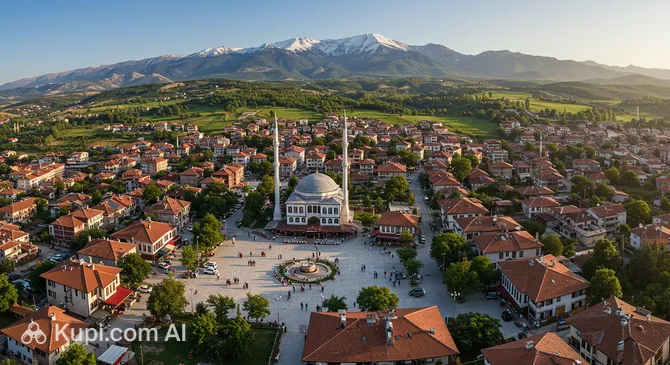
Çaykara is a true natural oasis, nestled in a picturesque valley of the Black Sea region. Located in the east of Trabzon Province, this town attracts travelers with its unique mountain resort atmosphere and stunning views. If you are planning to visit Turkey for its natural beauty, this green corner will be a real discovery for you.

Çaykara. Illustration.
Source: Kupi.com AI

Spreading at an altitude of over 1,000 meters above sea level, the town offers guests coolness and freshness even during the summer season. The landscapes here are mesmerizing: rushing rivers, waterfalls, tea plantations, and dense forests surround the settlement on all sides. With a population of about 16,000 people, Çaykara maintains a cozy and intimate feel, allowing travelers to take a break from the noise and bustle of large metropolises.

Time seems to slow down here, providing an opportunity to enjoy the peace. The distinctive history of Çaykara can be traced in the traditional way of life and the sincere hospitality of the locals. This place is ideal for those who want to get acquainted with the authentic culture of the Black Sea and try local cuisine.

The town is an important tourist hub due to its proximity to the famous Uzungöl Lake, which is considered the jewel of the region. Active recreation enthusiasts will find many activities here: from hiking mountain trails and swinging above the clouds to fishing in crystal-clear waters. Çaykara is that very corner where you can find harmony with nature and where you will certainly want to return.

Weather Overview

The climate in Çaykara is largely determined by its location in the mountainous area of the Black Sea region. A humid and cool atmosphere prevails here, which keeps the town immersed in greenery all year round. Travelers should keep in mind that the weather here is quite temperamental, and a clear sky can quickly be replaced by fog or precipitation.

Summer in this region is mild and refreshing, making it an ideal place to escape the heat. In the warmest months, July and August, the average temperature is a comfortable 17–18°C, and maximum values rarely exceed 21°C. However, even in the height of the season, rain occurs very often: statistics record up to 24 days with precipitation per month, so waterproof clothing and comfortable shoes are absolutely necessary.

The winter period here is truly chilly. In January and February, the average temperature hovers around 0°C, with nighttime frosts reaching -3°C possible. Spring and autumn arrive gradually, with moderate temperatures ranging from 7°C to 15°C, but they maintain high humidity. Before your trip, be sure to check the current weather in Çaykara to be ready for any of nature's surprises.

Expect moderately warm but humid summers with frequent rain and cool winters that lend the mountain landscapes a special, rugged beauty.

Average monthly temperature

Average monthly precipitation

Interesting Facts

Beyond its well-known natural beauty, Çaykara hides many fascinating details and stories that make a trip here truly unforgettable. Here are a few facts that will help you see this town and its surroundings from a new perspective:
  • The Lost City of Santa. In the vicinity of Çaykara lie the ruins of the ancient Greek settlement of Santa. In the Middle Ages, it was a prosperous mining center, and today people come here for the atmospheric stone buildings and striking photographs steeped in the spirit of antiquity.

  • The Mystical Lake. The region's main attraction, Uzungöl Lake, is famous not only for its views but also for its folklore. It is considered one of the most photographed places in Turkey and has inspired locals to create many legends about mysterious spirits and fairy-tale creatures inhabiting the dense forests around it.

  • Tea Traditions. Çaykara is home to unique high-altitude plantations. The most aromatic tea is grown here, and locals happily invite guests to participate in the harvest, sharing secrets of the craft passed down through generations.

  • A Stone Chronicle. The architectural heritage of the past is carefully preserved in the region: ancient arched bridges spanning rushing rivers, rock monasteries, and ancient mosques. The traditional Laz villages add a special flavor, where you can still see an authentic way of life and the work of folk craftsmen.

How to Get There

When planning a trip to this picturesque mountain region, it is important to think through your route in advance. Çaykara is located away from noisy metropolises, so the path here usually lies through the major transport hubs of the Black Sea coast. You can learn more about all the ways to get to the city, but the most popular option remains a flight followed by a trip by car or bus.

There is no airport in the town of Çaykara itself, so travelers fly into neighboring provinces. The most convenient option is Trabzon Airport (TZX), located in the city of Trabzon. It is a major international hub receiving many flights. It is located just 47 km from Çaykara. A trip by taxi or transfer along the scenic highway will take about 1 hour 30 minutes, allowing you to enjoy views of the coast and mountains.

An alternative could be the new Rize-Artvin Airport (RZV), built on an artificial island. It is located approximately 69 km from Çaykara. This is a modern regional airport, from where the journey to the destination will take about 2 hours. It is also worth mentioning Batumi Airport (BUS), located in neighboring Georgia (the city of Batumi), about 149 km away. This option is suitable for those planning to combine a visit to two countries, but take into account the time for crossing the border.

For convenience, here is summary information on the main airports:

AirportPassenger trafficDistance
Trabzon Airport3.5 mln47 km
Rize-Artvin Airport1.1 mln69 km
Erzurum Airport1.0 mln118 km
Erzincan Airport431 273130 km
Batumi Airport1.2 mln149 km

Railway communication in this mountainous region is poorly developed, and there is no train station in the town of Çaykara itself. The nearest stations are located at a considerable distance and, as a rule, in neighboring states, which makes traveling by train not the most practical way to reach the resort directly. One of the closest points is the Zugdidi station, located in the city of Zugdidi (Georgia) at a distance of about 238 km. The path from there will require crossing the border and a long trip by bus or taxi.

Also geographically relatively close is the Imeretinsky Kurort (Olympic Park) station in the city of Sochi (Russia), at a distance of about 297 km. However, due to complex logistics and the need to cross several borders, this route is rarely used by tourists heading to Çaykara. Travelers are recommended to prioritize car transport or buses running from Trabzon.

Below is a table of the nearest railway hubs for reference:

StationPassenger trafficDistance
Zugdidi238 km
Sukhumi Railway Station200 000259 km
Sukhumi Bus and Railway Stations250 000259 km
Gudauta Station50 000263 km
New Athos Railway Station40 000264 km

Main Attractions

Çaykara is a treasure trove of natural wonders, where every corner breathes tranquility and mountain majesty. The main pearl of the district is undoubtedly Uzungöl Lake. This picturesque mountain lake, formed by a landslide that blocked a riverbed, has become a true symbol of the entire Black Sea region. The mirror-like water, reflecting steep green slopes and the elegant minarets of the local mosque, creates a landscape of incredible beauty. Tourists come here to stroll along the well-kept embankment, rent a boat, or simply enjoy a traditional Turkish breakfast with a view of the water.

For those who want to rise higher to the clouds and touch history, the Sultan Murat Plateau (Sultan Murat Yaylası) is a must-visit. Located at an altitude of over 2,000 meters, this place is named after the Ottoman Sultan Murat IV, who, according to legend, stayed here with his army upon returning from a campaign. Today, the plateau attracts travelers with its endless green meadows and the chance to see the famous "sea of clouds," when thick fog spreads below the mountain peaks, creating a mystical atmosphere.

Fans of unique architecture should see the Hapsiyaş Bridge (Hapsiyaş Köprüsü), also known as the "Tiled Bridge" (Kiremitli Köprü). Built in 1935 over the rushing Solaklı River, this bridge stands out for its unusual wooden construction and red tiled roof, making it a rare example of such craftsmanship in the region. It is an incredibly photogenic location that allows you to appreciate the skill of local builders of the past and take atmospheric souvenir photos.

Nature and trekking enthusiasts should head to the Demirkapı Plateau and the higher glacial lakes known as the "Seven Lakes" (Yedigöller). This route is for those seeking solitude away from mass tourist trails. Here, among rugged rocks and bright alpine flowers, you can feel the full power of the Pontic Mountains. The crystal-clear icy water of the lakes and the profound silence of the highlands leave an indelible impression on everyone who dares to make the journey to these peaks.

Local Cuisine

A gastronomic journey to Çaykara is an immersion into the authentic flavors of the Black Sea region, where every dish is infused with the aromas of the mountains and the freshness of alpine meadows. Local cuisine is characterized by heartiness and simplicity, emphasizing natural products: fresh milk, cornmeal, butter, and fish. Here, food is not just about satisfying hunger, but a part of the culture, closely linked to nature and the traditional way of life.

The main gastronomic symbol that every guest must try is kuymak (or muhlama). This incredibly filling dish, resembling a fondue, is made from cornmeal, plenty of butter, and a special local cheese that stretches into long strings when melted. Traditionally, kuymak is served for breakfast in copper pans, and it is customary to eat it by dipping pieces of fresh bread directly into the hot cheese mass.

Since Çaykara is rich in mountain rivers and lakes, fish holds a special place on the menu. The signature of local restaurants is river trout (alabalık). The fish is prepared simply but with taste: it is usually fried in butter or grilled, preserving the tenderness and juiciness of the meat. A lunch with fresh trout on the riverbank or with a view of Uzungöl Lake is a local classic.

Fans of pastries and street food should look out for items made from cornmeal. The famous cornbread (mısır ekmeği) is served here at almost every table; it features a dense texture and golden color. In local markets and bakeries, you can find pies with various fillings: from spicy herbs and spinach to homemade cottage cheese. Those with a sweet tooth will enjoy desserts based on honey and nuts, which the region is so rich in.

No meal in Çaykara is complete without traditional Turkish tea. This region is the center of the country's tea production, so the drink here is always fresh, robust, and aromatic. Tea is drunk from small glass cups ("bardaks") at any time of day. Locals often invite tourists not just for tea but also to show the process of harvesting tea leaves on the mountain slopes.

The food culture here encourages unhurriedness. The most popular format is the "village breakfast" (serpme kahvaltı), which can last for hours. Restaurants and cafes are usually located in picturesque spots—by the water or on elevations with panoramic views. It is also worth checking out farmers' markets, where you can buy natural honey, butter, and cheeses as a delicious souvenir.

Travel Tips

Preparing for a trip to Çaykara requires considering the specifics of the mountain climate and the local way of life. To ensure your journey to the "heart" of the Black Sea region goes smoothly and leaves only pleasant memories, we have gathered the most important and tested practical recommendations.

  1. Clothing and Gear. Mountain weather is unpredictable: bright sun can turn into heavy rain and fog in minutes. Even if you travel in summer, be sure to bring a raincoat, a waterproof windbreaker, and a warm sweater for evening walks. Shoes should be comfortable with non-slip soles; trekking boots are ideal. When visiting mosques, women will need a headscarf and modest clothing; men should also avoid entering in shorts above the knee.

  2. Transport and Getting Around. There is no metro or tram in the town and its surroundings. The main public transport is minibuses (dolmush) running between Çaykara, Trabzon, and Uzungöl. However, to see high-altitude plateaus and waterfalls, it is highly recommended to rent a car (preferably with high ground clearance). This will give you freedom of movement, as long-distance taxis can be expensive, and apps like Uber practically don't work here.

  3. Finance and Payment. The local currency is the Turkish Lira (TRY). In the tourist center by Uzungöl Lake and in large hotels, cards are accepted without problems, but in small mountain villages, souvenir stalls, and cafes on the plateaus, you can only pay with cash. ATMs are available in Çaykara center, but it's better to withdraw money in advance in Trabzon. Tips in restaurants are welcome (about 5–10% of the bill) but are not a strict obligation.

  4. Health and Safety. Çaykara is a safe and peaceful area. Pharmacies are marked with the "Eczane" sign; they operate standard hours, but there is always one on-duty pharmacy at night (the address is usually posted in the window of any closed pharmacy). The main precaution concerns roads: mountain serpentines are often shrouded in thick fog, so drivers should be extremely careful and not exceed the speed limit.

  5. Connectivity and Internet. In hotels and cafes in the tourist zone, Wi-Fi works stably, but as you climb higher into the mountains, the mobile network signal may disappear. We recommend buying a local SIM card (Turkcell or Vodafone) at the airport or in Trabzon. Be sure to download offline maps of the area in advance, as navigation in the canyons sometimes fails. Hotel staff know English, but in everyday life, locals speak predominantly Turkish; an online translator will be very useful.

  6. Local Etiquette. Residents of the Black Sea region are known for their hospitality, but they are quite conservative. It is customary to greet sellers and staff upon entering. If you are invited into a home, be sure to remove your shoes at the doorstep. Refusing offered tea can be perceived as disrespect, so it's better to drink at least one small glass ("bardak"), thanking the host with a gesture—placing your hand over your heart.

  7. What to Avoid. You should not take photos of locals (especially women) without their explicit permission. Also, avoid overly revealing clothing (short tops, mini-skirts) outside the Uzungöl Lake tourist zone to avoid attracting undue attention and to show respect for the region's traditions. Public alcohol consumption outside restaurants in the town center is also not welcomed.

  8. Useful Life Hack. If you plan to buy local delicacies—honey, tea, or cheese—try to do it not at the busiest tourist spots by the lake, but in the small shops of Çaykara itself or at farms along the mountain road. Prices will be lower there, and product quality is often higher and more authentic.

Çaykara is a place where nature dictates its own rules, and if you accept them by preparing in advance, this land will reveal its best side to you. May your journey be filled with fresh mountain air, delicious tea, and unforgettable views!

Entertainment & Nightlife

Entertainment and nightlife in Çaykara differ significantly from the typical rhythm of Mediterranean resort towns. If you are looking for noisy nightclubs, foam parties, and bars with loud European music, this region may surprise you with its silence. Çaykara is a conservative and peaceful corner where evening leisure is steeped in coziness, the aroma of tea, and the sounds of traditional music.

The epicenter of the entire district's evening life is the area around Uzungöl Lake. As darkness falls, the embankment comes to life: the illumination of the mosque and hotels turns on, reflecting in the dark water, and tourists head out for a leisurely promenade. There are no designated "red-light districts" or bar streets here. All activity is concentrated around the lake and on the main streets of the village, where souvenir shops, cafes, and restaurants stay open late.

The atmosphere in Çaykara's establishments is exceptionally friendly and family-oriented. The crowd here is a mix of locals and tourists from various countries who came for the nature. The dress code is casual but respectful of local traditions: "casual" and warm layers (it gets chilly here in the evenings) are the most appropriate choice. Alcohol is not served in most places, as the region is quite religious; however, a bar menu can be found in some restaurants at large hotels.

The main evening entertainment is dinner accompanied by live music. Local musicians masterfully play the kemençe (Pontic lyre), and often a quiet evening turns into a spontaneous celebration where guests and staff dance the "horon"—an energetic circle dance. Among the popular places to experience this flavor, the Inan Kardeşler restaurant complex is often highlighted, famous for its trout and wooden architecture atmosphere, as well as the Migron Restaurant, which offers a panoramic view of the lake at night.

Those looking for a more relaxed time should visit the numerous tea gardens (Çay Bahçesi) or hookah lounges located by the water. It is customary here to sit for hours on soft pillows, drink Turkish tea from "bardak" glasses, smoke nargile (hookah), and engage in unhurried conversations while watching the fog descend from the mountains. Prices in establishments right by the lake can be higher than the national average ("tourist markup"), but dinner costs become more affordable slightly away from the water.

In terms of safety, Çaykara and the Uzungöl area are among the safest places in Turkey. You can walk safely late at night even alone. However, remember that public transport (dolmush) stops running quite early, at sunset. If you stay late in a restaurant far from your hotel, it's better to arrange a transfer in advance or ask the staff to call a taxi, as catching a car on the street at night can be problematic.

As for daytime entertainment, it is inextricably linked with nature and culture. There are no large theaters or amusement parks in the town. During the day, tourists visit the observation deck overlooking the valley, stop by the small Uzungöl History Museum (Dursun Ali İnan Müzesi), which houses regional household items and ethnographic exhibits, or go for walks along eco-trails around the lake.
Parks & Museums

Çaykara and its surroundings are, first and foremost, a realm of pristine nature, where the boundaries between manicured parks and wild forests are practically blurred. Although this small mountain district does not abound with classic museums and galleries, it offers travelers a unique opportunity to get acquainted with the living history and ethnography of the region right under the open sky, among green valleys and architectural monuments.

The main green zone and center of attraction is Uzungöl Nature Park (Uzungöl Tabiat Parkı). This is a protected territory encompassing the famous lake and the dense spruce forests surrounding it. The park is equipped with convenient walking paths, observation decks, and picnic areas, making it an ideal place for leisurely strolls. Here you can observe the rich flora of the Black Sea, see rare birds, and enjoy fresh mountain air saturated with the scent of pine needles.

Another significant natural area is the Sultan Murat Plateau (Sultan Murat Yaylası). While it is not a city park in the traditional sense, this territory serves as the main outdoor recreation spot for locals and tourists. The endless alpine meadows turn into a huge green venue for festivals and folk celebrations in the summer. This place is interesting for those who want to see the real life of shepherds and enjoy breathtaking panoramic views.

In cultural terms, the jewel of the district is the Dursun Ali İnan Museum (Dursun Ali İnan Müzesi), located in the Uzungöl area. This private ethnographic museum was created by a local enthusiast who dedicated his life to collecting artifacts from the region. The exposition includes ancient household items, agricultural tools, traditional clothing, and jewelry, as well as a unique collection of intricately shaped tree roots. Visiting the museum allows for a deep dive into the history and traditions of the people of the Eastern Black Sea.

Since there are no large galleries in Çaykara, the role of cultural sites is fulfilled by historical architectural structures, such as the Hapsiyaş Bridge and old wooden mosques. These objects, scattered along the Solaklı River valley, are true monuments of folk architecture. Inspecting them gives an idea of the skill of local builders who for centuries erected reliable and beautiful structures without the use of nails, harmoniously integrating them into the harsh mountain landscape.

For those seeking corners hidden from tourist eyes, we recommend heading to the Garester Plateau (Garester Yaylası). It is located significantly higher than Uzungöl Lake and offers perhaps the most impressive view of the valley from above. There are fewer people here than below, and you can enjoy the majesty of the mountains, which are the main natural "museum" of this region of Turkey, in complete silence.

Getting Around

The public transport system in Çaykara is significantly different from what tourists are used to in large metropolises. You won't find subways, trams, or trolleybuses here. Since the town is small and located in a mountainous area, the entire transport network is based on road transport. To move around the city center, travel to Uzungöl Lake, or to neighboring settlements, buses and local shared taxis, called "dolmush" here, are used.

The most popular and convenient form of transport for tourists is the dolmush. These are minibuses that run along specific routes but without strictly fixed stops outside the center. They connect Çaykara with the area's main tourist magnet—Uzungöl Lake—as well as with the provincial center of Trabzon. Dolmush are easy to recognize by the signs on the windshield indicating the direction. Intervals depend on the season: in summer, transport runs frequently, filling up with tourists, while in winter there are fewer trips.

Municipal buses from Trabzon also run to the district. These are larger and more comfortable vehicles operating on a schedule. Unlike private minibuses, they stop only in strictly designated places. This is a reliable option for those planning a budget trip to Çaykara from the airport or the provincial center; however, they are not suitable for trips high into the mountains or to remote plateaus.

The fare payment system here has its own peculiarities. In private dolmush (minibuses), cash is still the rule. Payment is made to the driver upon entering or exiting, so tourists are strongly advised to have small Turkish lira bills with them. Large municipal buses use a cashless system: the fare is paid using a Trabzon Kart transport card, which can be purchased at kiosks and terminals in Trabzon. Finding card sales points in Çaykara itself can be problematic, so it's worth taking care of topping up your balance in advance.

If you prefer comfort and independence from schedules, a taxi is a good alternative to public transport. Taxi stands are usually located in the town's central square and near popular hotels. Cars are equipped with taximeters, but for long-distance trips (for example, to waterfalls or the Sultan Murat Plateau), it makes sense to agree on a fixed price with the driver in advance. Ride-hailing apps in this mountainous terrain are unstable or do not work at all.

For those who want to explore the surroundings on their own, the best solution is to rent a car. Car sharing is not developed in Çaykara, so it's better to rent a car upon arrival at the airport or from major rental agencies in Trabzon. Having your own vehicle, preferably with high ground clearance, will give you access to the most picturesque and hard-to-reach corners where public transport does not reach.

An important tip for planning trips: transport in the mountains finishes work quite early. The last dolmush from Uzungöl to Çaykara or from Çaykara to Trabzon may leave around 17:00–19:00, especially in low season. Always check the return trip time with the driver before getting off. To stop a minibus on the road, just raise your hand—drivers here are attentive and willingly pick up passengers.

Accommodation

The choice of accommodation in Çaykara and its surroundings differs significantly from the usual "all-inclusive" format on the Mediterranean coast of Turkey. Here, among the mountains and forests, eco-tourism prevails, so the foundation of the hotel base consists of cozy wooden bungalows, small family pensions, and boutique hotels. The architecture of most buildings blends harmoniously into the landscape: natural wood and stone are the main materials, creating an atmosphere of warmth and comfort even on cool evenings.

The majority of tourists seek to stay in the Uzungöl Lake area, which is located about 20 km from the administrative center of Çaykara. Staying here allows you to wake up with a view of the famous mosque and the water's surface, but keep in mind that this is the most expensive and busiest zone. During peak season, it can be quite noisy due to the abundance of vacationers. For those seeking peace and more affordable prices, Çaykara city center itself or the small villages along the road to the lake are excellent options. From here, it is easy to reach the sights by car without overpaying for the "view from the window."

Apart-hotels and private villas are particularly popular in the region. This is because Çaykara is often visited by large families, especially from Middle Eastern countries, for whom having multiple rooms and their own kitchen is important. For lovers of complete solitude, there are also accommodation options on high-mountain plateaus (yaylas), for example, on the Sultan Murat Plateau. Conditions there may be more spartan, but the chance to spend the night literally above the clouds compensates for any inconvenience.

The price range varies from budget to high, with costs depending heavily on the season.

  • Budget segment: Small pensions and motels in the center of Çaykara or away from tourist paths.
  • Mid-range: Standard rooms in hotels without a lake view, but with good service and breakfasts.
  • High-end: Spacious wooden cottages and suites with panoramic windows on the first line by the water.

Booking tip: The summer months (July and August) are peak times. The demand for quality accommodation during this period is colossal, and prices can increase several times. It is highly recommended to book your stay 2–3 months before the trip. Large international platforms are convenient for finding options, but remember that many small family guesthouses may only be listed on local sites or maps, and sometimes it is more profitable to contact them directly.

Nearby Cities

For those who want to explore the surrounding area, Çaykara serves as an excellent starting point for day trips to several interesting nearby places:

Just an hour's drive away is Trabzon—the historical and cultural center of the province. It's worth coming here to see the ancient Hagia Sophia Cathedral, converted into a mosque, stroll through the colorful market, and feel the rhythm of a large seaside city. Trabzon offers great shopping opportunities and a chance to get acquainted with the architectural heritage of different eras, including the city fort and the Atatürk Pavilion.

Gastronomy lovers must visit Akcaabat. This city is famous throughout the country for its meatballs—"Akçaabat köfte." After a hearty lunch at one of the many coastal restaurants, it's pleasant to walk along the well-kept embankment, enjoying the sea breeze and views of the Black Sea.

If you want to dive into the world of tea, head east to Rize. The city is surrounded by steep slopes covered with emerald tea plantations. Here you can visit the botanical garden, learn the secrets of growing Turkish tea, and enjoy the even more humid and lush subtropical nature of the region.

CityPopulationDistance
Surmene27 42821 km
Of43 49922 km
Arakli49 49626 km
Arsin34 83134 km
Rize141 14339 km

These nearby destinations provide insight into the diverse culture and landscapes of the region.

Shopping & Souvenirs

Shopping in Çaykara is not about chasing global brands but rather a cozy immersion into the traditions and flavors of the Black Sea region. This small town cannot boast of huge retail spaces, but it is ideal for buying authentic souvenirs and natural products. Here, shopping becomes an extension of cultural discovery: you buy what locals have been producing for centuries, putting their heart and skill into it.

The main shopping zones are concentrated in two locations. The first is Çaykara city center itself, where shops selling essentials, clothing, and utensils are located along the main street. The second zone, most popular with travelers, is in the vicinity of Uzungöl Lake. Here, on busy streets and along the embankment, dozens of souvenir shops operate, offering handmade items and local delicacies.

Fans of modern shopping should know that there are no large shopping centers in Çaykara itself. For branded clothing, electronics, and a wide selection of mass-market goods, you will have to head to the administrative center of the province—Trabzon, located about an hour's drive away. Large malls such as Forum Trabzon are located there, where you can find familiar European shops and entertainment.

The markets and small farm stalls add a special flavor to local trade. Weekly bazaars are places where you can buy the freshest seasonal fruits, vegetables, and greens grown in ecologically clean mountain areas. A lively atmosphere prevails here: sellers are eager to let you taste the goods, and although language can be a barrier, friendliness and sign language always help in making a purchase.

As souvenirs from Çaykara, people most often bring back gastronomic gifts. The signature of the region is Turkish tea, the plantations of which can be seen along the road. Be sure to buy a jar of local honey (chestnut or high-mountain flower honey are considered among the best in Turkey). Local cheese and butter for making kuymak, traditional knives from the neighboring town of Sürmene, and handmade wooden kitchen utensils are also popular.

Most shops in the town are open from 09:00 to 19:00–20:00. In the tourist zone by Uzungöl Lake, souvenir stalls and markets may stay open late, especially in the summer season. Credit cards are accepted in large stores and tourist spots, but for purchases at the market or in small shops in the mountains, you should have cash liras with you.

The Tax Free system is practically non-existent in the local shops of Çaykara. You can only use this service in the large shopping centers of Trabzon or chain stores with the corresponding Global Blue stickers in the windows, so do not count on a VAT refund when buying souvenirs in the mountains.

Nearby cities

Reached the end of the page?

That means the route is fully explored