Support

Dikili

About

Dikili is a true paradise on the Aegean coast, where the turquoise waters meet golden sandy beaches stretching for over 40 kilometers. Nestled in western Turkey in the Izmir province, the town is famous for its picturesque views, warm climate, and an atmosphere of serene relaxation. It harmoniously combines natural beauty with the slow-paced rhythm of resort life.
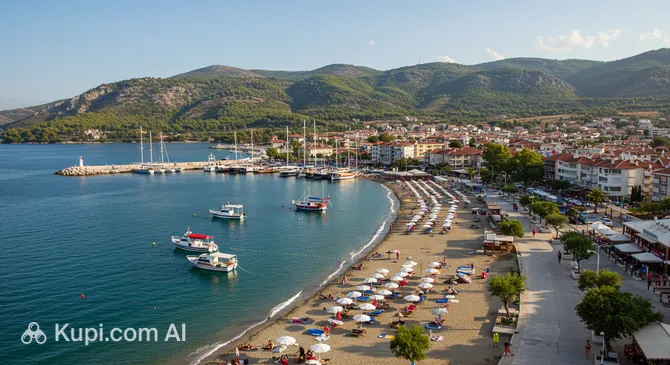
Dikili. Illustration.
Source: Kupi.com AI

Pine groves, olive orchards, and crystal-clear seas create a sense of comfort and peace in Dikili. With a population of about 44,000 people, the town has a special charm: it is large enough to offer a variety of entertainment and amenities, yet it retains a cozy and friendly feel. Dikili serves as the administrative center of the district of the same name and is one of the popular summer resorts in the Izmir region.

The main attractions drawing travelers to Dikili are its magnificent beaches, perfect for a relaxed holiday. For those who enjoy an active lifestyle, boat trips and diving opportunities are available. The town also captivates with its sincere hospitality and the chance to enjoy simple pleasures, such as a cup of fragrant Turkish coffee on the promenade or a leisurely stroll through its streets.

If you are looking for a peaceful and memorable getaway on the Aegean coast, Dikili is an excellent choice, offering the perfect blend of natural beauty, warm seas, and Turkish hospitality.

You can find more interesting facts on the history of Dikili page.
Weather Overview

The weather in Dikili is characterized by a warm Mediterranean climate. Summers here are hot and mostly dry, with average temperatures in July and August reaching 26°C, while maximums can rise above 30°C. Rainfall during the summer months is minimal. Winters in Dikili are mild, with average temperatures around 8-11°C in January and December, and a more significant amount of precipitation compared to summer—up to 5 mm and about 13-14 rainy days per month. Spring and autumn are transitional seasons with comfortable temperatures and moderate rainfall. Expect a hot, sunny summer with very rare rain and cool, wetter winters. For more detailed information, you can explore the climate of Dikili.

Average monthly temperature

Average monthly precipitation

Interesting Facts

In addition to its beautiful beaches and welcoming atmosphere, Dikili holds many surprising stories and features that not every traveler knows. Here are just a few interesting facts about this charming corner of Turkey:

  • Not far from Dikili is the picturesque Aşıklar Waterfall (Aşıklar Şelalesi), which locals consider a place of power for lovers. Legend has it that its waters bring happiness in love, and stories of meetings at the waterfall have been passed down through generations.

  • The ancient Çandarlı Castle (Çandarlı Kalesi) rises in the town's vicinity. It once served as a reliable defense for the coast against pirate raids and witnessed many historical events. Today, it is a popular spot for history enthusiasts and those looking for impressive views of the Aegean Sea.

  • Dikili is famous for its centuries-old olive groves and is a recognized center for the production of high-quality olive oil in the region. Some local farmers even offer tours where they share the secrets of growing olives and traditional harvesting methods.

  • The town often serves as a venue for vibrant cultural festivals. At these events, you can immerse yourself in the atmosphere of Aegean traditions, enjoy folk music and dancing, get to know the work of local craftsmen, and taste homemade treats and fragrant tea.

How to Get There

The most convenient way to reach the charming resort town of Dikili on Turkey's Aegean coast is by air, using one of the nearest airports. While Dikili does not have its own airport, several air hubs are located within a reasonable distance.

The main international gateway for traveling to Dikili is Adnan Menderes Airport (IATA: ADB), located in the city of Izmir. This is a major international airport receiving many flights from various countries. The distance from Izmir Airport to Dikili is approximately 90 km. A trip by taxi or rental car will take about 2.5-3 hours, depending on traffic conditions. You can also reach Dikili from Izmir by bus, though this may take a bit longer.

Another convenient option is Koca Seyit Airport (IATA: EDO), located in Edremit (also known as Edremit-Körfez). This regional airport is much closer, about 54 km north of Dikili. The travel time by car or taxi from here is about 1.5-2 hours. Koca Seyit Airport primarily handles domestic flights, along with some international charters during the tourist season.

From either of these airports, you can reach Dikili by taxi, pre-booked transfer, or by renting a car, which offers more freedom of movement around the region. It is also worth checking for bus routes connecting the airports with Dikili or the nearest major towns, from where you can easily reach your destination.

For your convenience, here is a summary of the main airports used to reach Dikili:

AirportPassenger trafficDistance
Balikesir Koca Seyit Airport260 53354 km
Izmir Adnan Menderes Airport11.5 mln90 km
Chios Airport270 000104 km
Canakkale Airport219 760125 km
Ikaria Airport55 000162 km

Main Attractions

Dikili, a charming resort town on the Aegean coast, offers its guests not only magnificent beaches but also the chance to touch history and enjoy natural beauty. Here, everyone will find something to their liking, whether it's a peaceful holiday by the sea or exploring ancient ruins.

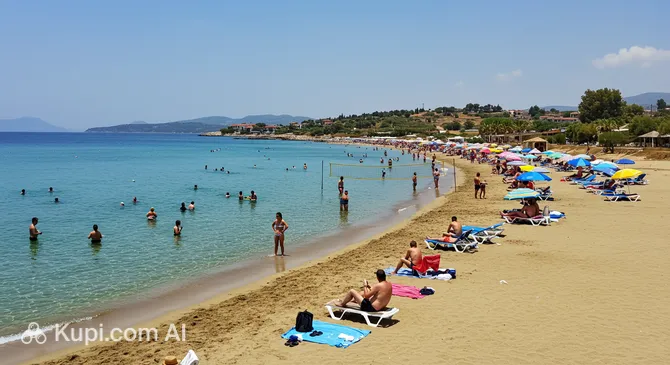
One of the main draws for tourists is the Blue Flag Public Beach. This award signifies high standards of water and coastal cleanliness, as well as the availability of the necessary infrastructure for a comfortable stay. The spacious beach with golden sand and a gentle entry into the sea is ideal for families with children and anyone who values a high-quality beach experience.

Blue Flag Public Beach. Illustration.
Source: Kupi.com AI

Traveler photos:

History buffs should visit the ruins of the ancient city of Atarneus, located near Dikili. It was once a thriving Greek polis, mentioned even by Aristotle. Today, you can see the remains of ancient structures, walk through places where life buzzed thousands of years ago, and imagine the grandeur of ancient civilization. This site attracts visitors with its atmosphere and the opportunity to connect with the past.

For those seeking communion with nature, Nebiler Waterfall (Nebiler Şelalesi), also known as the Waterfall of Lovers (Aşıklar Şelalesi), is an interesting destination. Set in a scenic area, it offers cool relief on a hot day and beautiful views. Near the waterfall, you can often find small caves and thermal springs, making it an even more attractive spot for relaxation and wellness.

Equally interesting is a trip to the village of Bademli, famous for its olive groves and the production of high-quality olive oil. From here, you can take a boat excursion to picturesque bays and islands, such as Kalem (Kalem Adası) and Garip (Garip Adası), with their crystal-clear water and secluded beaches. This is a wonderful opportunity to enjoy untouched nature and local flavor.

Local Cuisine

Dikili is a true gastronomic paradise for lovers of fresh seafood and authentic Aegean cuisine. Local dishes are based on the freshest ingredients, generously seasoned with fragrant extra virgin olive oil, which is produced and highly valued here. A journey to Dikili promises unforgettable culinary experiences, where every meal becomes a small discovery.

Be sure to try "midye dolma"—mussels stuffed with rice and spices, which are a signature of local coastal cafes. Another iconic dish is fresh fish, caught by local fishermen and masterfully grilled with olive oil and aromatic herbs. Don't miss the chance to enjoy a variety of "meze"—small appetizers made from vegetables, legumes, and seafood, perfect for starting a meal or as an accompaniment to drinks.

Among drinks, the traditional Turkish anise-flavored spirit raki is particularly popular; it is often diluted with water and served with meze and fish dishes. You can also enjoy light local white wines that perfectly complement the taste of fresh seafood. For non-alcoholic options, look for fresh-pressed juices, especially from seasonal fruits like figs and pomegranates, and of course, aromatic Turkish tea and coffee.

The food culture in Dikili is very diverse. Locals and tourists alike love to dine in cozy restaurants on the promenade, where the freshest catches of the day are served. The town's farmers' markets are a separate delight: here you can find an abundance of fresh vegetables, fruits, homemade pastries, and sweets with honey and nuts, such as baklava and lokum. Street vendors will offer you hot simit—a traditional Turkish sesame bagel, perfect for a quick snack. In summer, Dikili often hosts gastronomic festivals where you can dive deeper into the world of Aegean cuisine and even participate in culinary workshops.

Travel Tips

Planning a trip to charming Dikili? These practical tips will help make your journey through this coastal Turkish town as comfortable and enjoyable as possible, allowing you to fully enjoy its beauty and hospitality.

  1. Seasonal Clothing and Essentials: Dikili has a Mediterranean climate with hot, dry summers and mild, rainy winters.
    • In summer (June-September): Bring light, breathable clothing made of natural fabrics (cotton, linen), swimwear, sandals, a hat, sunglasses, and high-SPF sunscreen. Evenings can be slightly cooler, so a light sweater or shawl will come in handy.
    • In spring and autumn (April-May, October-November): The weather is changeable. You'll need both light clothes and something warmer—a sweater, jacket, and closed shoes. Rain is possible, so a small umbrella or raincoat is a good idea.
    • In winter (December-March): Warm clothing is necessary, including a jacket, sweaters, trousers, and waterproof shoes.
    • Always: Comfortable walking shoes are a must! Don't forget an adapter for electrical appliances (Turkey uses type F sockets). If you plan to visit mosques in other regions, women should bring a scarf to cover their heads and clothing that covers shoulders and knees.
  2. Getting Around Town: Dikili is a relatively small town, and many parts of it can easily be explored on foot, especially the promenade and central streets.
    • Dolmush (Shared Taxis): This is a popular and inexpensive way to travel both within the city and to neighboring villages or beaches.
    • Taxis: Readily available, but always clarify the fare in advance or ensure the driver turns on the meter.
    • Car Rental: Can be a good option if you plan to explore the Izmir province independently. However, a car is not always necessary for moving solely within Dikili, and parking can be difficult during peak season.
  3. Financial Matters: The official currency is the Turkish Lira (TRY).
    • Currency Exchange: It's best to exchange money at banks or official exchange offices (döviz bürosu). Rates at airports are usually less favorable.
    • Bank Cards: Credit and debit cards (Visa, Mastercard) are accepted in many hotels, restaurants, and large shops. However, it's always useful to have some cash for small purchases, markets, or small cafes. Check with your bank regarding potential cross-border transaction fees.
    • ATMs: Common, and you can usually withdraw Lira with international cards.
    • Tipping: In restaurants and cafes, it's customary to leave a tip of 5-10% of the bill if service is not included. You can round up the fare for taxi drivers.
  4. Health and Safety:
    • Pharmacies (Eczane): Easily identified by a green cross. Every pharmacy displays information about the duty pharmacy (nöbetçi eczane) open at night and on weekends. Basic medicines can be bought without a prescription.
    • Medical Assistance: If needed, visit a local clinic (sağlık ocağı) or hospital (hastane). Ensure you have valid travel insurance.
    • Safety: Dikili is considered a peaceful and safe resort. Nevertheless, take standard precautions: watch your belongings in crowded places, don't leave valuables unattended on the beach, and avoid poorly lit or deserted streets late at night.
    • Water: It is recommended to drink bottled water.
  5. Language and Communication: The official language is Turkish.
    • English Language: In the tourism sector (hotels, restaurants, large shops), many people speak English. However, in small shops or when interacting with local residents, English proficiency may be limited.
    • Useful Phrases: Learn a few basic Turkish phrases: "Merhaba" (Hello), "Teşekkür ederim" (Thank you), "Lütfen" (Please), "Evet" (Yes), "Hayır" (No). This is always appreciated by locals.
    • Internet and SIM Cards: Wi-Fi is available in most hotels and many cafes. A local SIM card with internet access can be purchased at mobile operator shops (e.g., Turkcell, Vodafone, Türk Telekom).
  6. Local Etiquette and Traditions: Turkish people are very hospitable.
    • Greetings: A slight nod of the head or a handshake (with men) are common forms of greeting.
    • Respect for Elders: Show respect to older people.
    • Photography: Always ask permission before photographing locals, especially women and in religious sites.
    • Dress Code: When visiting mosques (if you plan to go outside Dikili), women should cover their heads, shoulders, and knees; men should wear trousers and a shirt with sleeves. Standard beachwear is appropriate on the beaches.
  7. What to Avoid:
    • Avoid excessive public displays of affection. While Dikili is a resort town, over-demonstrating feelings in public can be perceived differently.
    • Do not openly criticize local customs, religion, or national symbols. Respecting the country's culture is always welcomed.
  8. Extra Tip—Enjoy the Local Cuisine: Be sure to try the fresh seafood the Aegean coast is famous for. Visit the local market (pazar) to buy fresh fruits, vegetables, olives, cheeses, and traditional sweets. It's a great way to feel the town's atmosphere and taste real Turkish delicacies.

We hope these tips help you plan an unforgettable holiday in Dikili. We wish you vivid impressions, warm seas, and pleasant discoveries in this hospitable corner of Turkey!

Entertainment & Nightlife

Evening and night in Dikili offers guests a relaxing atmosphere typical of resort towns on Turkey's Aegean coast. There are no noisy districts with massive night clubs like in big cities, but there are plenty of cozy spots where you can spend a pleasant time after sunset.

Most evening life is concentrated along the promenade and on the city's central streets. You will find many bars, cafes, and restaurants, many of which offer live music or simply a pleasant background melody. Some establishments stay open until late at night, especially during the peak tourist season. Instead of loud discos, places where you can enjoy a drink, conversation, and the sea breeze prevail. The atmosphere in such venues is usually casual and friendly, with a mixed crowd of both tourists and locals. There is usually no specific dress code; a neat resort style is welcomed.

The best time for evening walks and visiting local spots is after 20:00-21:00, when the daytime heat subsides. Prices in Dikili's bars and restaurants are generally moderate. Moving around the city center is easy on foot. If your accommodation is further away, you can always use taxi services; taxi stands are usually found in busy areas, or you can ask your hotel or restaurant to call one for you. Dikili is considered a fairly safe town, but standard precautions after dark are always advisable.

While Dikili is more focused on peaceful relaxation, there is also plenty to do during the day. In addition to famous beaches like the Blue Flag Public Beach, you can explore the surrounding areas, visit local markets, or simply enjoy leisurely walks around town. Cultural programs may include visiting small local exhibitions if any are being held during your visit.

Parks & Museums

Dikili is a charming coastal town in Turkey that attracts tourists not only with its beaches but also with the opportunity to immerse themselves in the relaxed atmosphere of the Aegean coast. While the town may not boast an abundance of large parks or world-famous museums, it offers its own unique ways to enjoy nature and get to know the local culture.

The main natural attraction and center of gravity in Dikili is undoubtedly its coastline. Among the beaches, the Blue Flag Public Beach stands out. This award indicates clean water and high-quality infrastructure, making it an ideal spot for family vacations, swimming, and sunbathing. Here, tourists can enjoy the crystal-clear waters of the Aegean Sea and golden sand. Beyond this beach, the entire Dikili coastline offers picturesque views and opportunities for walks.

As for cultural heritage, you might not find large museum complexes in Dikili as you would in major metropolises. However, the town itself is a kind of living museum. Strolling through its streets, you can see examples of traditional Aegean architecture. To understand the local culture more deeply, pay attention to the small craft shops and observe the daily life of the residents. Occasionally, seasonal exhibitions or cultural events may be held in the town, which are best discovered on-site.

For a more authentic experience, check out the local market (if it is operating during your visit), where you can find fresh produce, olives, olive oil, and handmade items from local artisans. Also, don't miss the chance to dine at one of the seaside taverns, enjoying fresh seafood and sunset views—it's a wonderful way to experience the hospitality and culinary traditions of Dikili.

Getting Around

Public transport in Dikili is primarily represented by shared taxis, known as dolmush, and local buses. These modes of transport provide connections both within the city and with nearby settlements and beaches, making them a convenient choice for tourists wishing to explore the surroundings.

Dolmush is perhaps the most common and flexible way to travel short and medium distances in Dikili. They follow established routes, but their big advantage is the ability to stop a dolmush almost anywhere along the way—simply signal to the driver. Fares are usually paid in cash directly to the driver upon boarding. Rates are generally fixed and depend on the distance of the route.

City and suburban buses also serve Dikili, connecting it with more distant areas or neighboring towns. Information about routes and bus schedules is best checked at local bus stops, the bus station (if available), or by asking locals. To pay for the fare on buses, a special regional transport card may be required, or cash payment to the driver might be possible.

The payment system for public transport in Dikili is quite simple. In dolmushes, payment is usually made in cash. For trips on municipal buses, if they use a card system, transport cards can typically be purchased and topped up at special kiosks or certain shops. It is recommended to have small change in cash for convenience, especially in dolmushes.

Tourists should keep a few practical points in mind. To use a dolmush, just raise your hand when you see an approaching minibus indicating your desired direction (usually written on a sign in the windshield). There are no tickets in the traditional sense—you pay the driver. Public transport usually starts operating early in the morning and runs until evening. However, the frequency of service may decrease late at night and depending on the season.

As an alternative to public transport, taxi services are always available in Dikili. Taxi stands can be found in central and tourist areas, or a car can be ordered by phone. For leisurely rides around town and along the coast, bicycle rental may be suitable if offered. If you plan to explore the region more actively and visit remote attractions, consider renting a car.

Specific or unique types of transport, such as subways, trams, or cable cars, are generally not found in Dikili, which is typical for small resort towns. The main emphasis is on the functionality and accessibility of buses and dolmushes for the daily needs of residents and visitors.

Accommodation

When planning a trip to Dikili, you will find a variety of accommodation options to suit different preferences and budgets. The town offers everything from cozy family guesthouses and apartments, perfect for those seeking home comforts, to small mid-range hotels. You can find both budget-friendly options and more comfortable offers.

Most tourist accommodation is concentrated along the scenic coastline, providing easy access to beaches like the popular Blue Flag Public Beach and offering beautiful views of the Aegean Sea. The city center is also a convenient area to stay, with cafes, restaurants, shops, and essential infrastructure nearby. The choice of neighborhood depends on your preference for being close to the sea or the heart of town life.

Blue Flag Public Beach. Illustration.
Source: Kupi.com AI

Traveler photos:

Regarding prices, Dikili offers options for every wallet—from budget guesthouses to mid-range hotels. Popular online platforms are convenient for booking accommodation, offering a wide selection and the ability to compare prices. You can also consider direct booking through hotel websites or by phone, especially if you are looking for special offers or prefer personal contact.

It is highly recommended to book your accommodation in advance, especially if your trip is planned for the peak tourist season, which usually falls in the summer months. During this time, demand for lodging increases significantly, and the best options can be snapped up quickly.

Nearby Cities

For those looking to explore the surrounding area, Dikili serves as an excellent starting point for day trips to several interesting nearby locations. Here are some ideas for short journeys:

Izmir: Only 76 km from Dikili lies Izmir, Turkey's third-largest city and a vibrant metropolis on the shores of the Aegean Sea. This city is rich in history, as evidenced by the ancient Agora and Kadifekale Castle. Izmir also offers a modern atmosphere with its famous Kordon promenade and the colorful Kemeraltı Bazaar, making it a wonderful place for cultural enrichment and shopping.

Manisa: Approximately 69 km away is Manisa, a city with deep Ottoman roots and a rich historical heritage. Main attractions in Manisa include the majestic Sultan Mosque and the impressive Muradiye complex. The city is also known for its annual Mesir Macunu festival, dedicated to a traditional healing paste, which adds a unique flavor to your visit.

Edremit: If you prefer nature and more peaceful relaxation, Edremit (about 59 km away) is an excellent choice. This town serves as a gateway to the gulf of the same name and the picturesque foothills of Mount Ida (Kaz Dağları). Edremit and its surroundings attract nature lovers with opportunities for hiking and enjoying beautiful landscapes.

For a more complete list of nearby cities and their features, see the table below:

CityPopulationDistance
Bergama103 18526 km
Mytilene27 87129 km
Aliaga95 39231 km
Ayvalık71 06332 km
Gomec13 89435 km

These nearby destinations offer a great opportunity to better understand the diverse culture, history, and natural landscapes of the region surrounding Dikili, making your journey even more fulfilling.

Shopping & Souvenirs

Shopping in Dikili is a pleasant addition to a beach holiday, offering the chance to purchase local goods and souvenirs. The town is not famous for large shopping malls or exclusive boutiques, but here you can find authentic Turkish products, fresh food, and essential items. The main focus is on small shops, stalls, and local markets.

The main shopping spots in Dikili are concentrated in the city center and along the promenade. Walking along the main streets, you will find many small shops offering clothing, beach accessories, jewelry, ceramics, and textiles. This is where you can feel the local color and find interesting items to remember your trip by.

There are no large modern shopping centers typical of big cities in Dikili. Shopping here is more traditional, centered around small private shops and stalls. This allows for a closer look at the local trading culture and for finding unique goods.

Special attention should be paid to local markets (pazars), which are an important part of Turkish trading culture. In Dikili, as in many Turkish towns, markets are held periodically where farmers sell fresh fruits, vegetables, olives, cheeses, and other local delicacies. You can also find textiles, clothing, shoes, and various souvenirs at attractive prices. This is a great place to dive into the atmosphere of real Turkey and try your hand at bargaining.

Traditional Turkish souvenirs are well worth bringing back from Dikili. Popular items include olive wood products and locally produced olive oil, natural soaps, high-quality Turkish textiles (towels, tablecloths, bed linen), ceramics with national patterns, spices, Turkish tea and coffee, and the famous sweets—Turkish delight (lokum) and baklava. Don't forget the "Eye of Fatima" (nazar boncuk)—a popular protective amulet.

Shops in Dikili usually open in the morning (around 9:00-10:00) and stay open until late evening, especially during the tourist season. Some small shops may close for a short lunch break. Most shops accept bank cards, but at markets and in small souvenir stalls, it is preferable to have cash (Turkish Lira) on hand. ATMs are easy to find in the city center.

Tourists shopping in Turkey can take advantage of the Tax Free refund system when purchasing goods over a certain amount at participating stores. Such shops usually display a Tax Free sign on their doors. To claim a VAT refund, you must ask the seller for a special Tax Free receipt and present it along with your purchases and passport at customs when leaving the country.

Reached the end of the page?

That means the route is fully explored