Support

Selcuk

About

Selcuk is a charming town in western Turkey that seems to breathe history and preserves the heritage of many civilizations. Located in the Izmir province, near the Aegean coast, this small town with a population of about 36,000 people attracts travelers from all over the world with its unique atmosphere and proximity to legendary antiquities.

Selcuk. Illustration.
Source: Kupi.com AI

The main jewel of Selcuk is undoubtedly the ancient city of Ephesus, one of the best-preserved ancient metropolises in the Mediterranean. A walk through its marble streets, viewing the Library of Celsus and the grand amphitheater, transports you back thousands of years. Nearby are other iconic sites: the House of the Virgin Mary, revered as the place of her last days, and the majestic Basilica of Saint John, built, according to legend, over the tomb of the apostle.

Selcuk is not just a starting point for excursions, but also a place where you can feel the calm rhythm of Turkish provincial life, enjoy local cuisine, and experience warm hospitality. A visit to this town promises an unforgettable immersion into the history and culture of the region.

You can find more interesting facts on the history of Selcuk page.

Weather Overview

The climate in Selcuk is characterized by hot and dry summers, as well as mild and rainier winters, typical of the Mediterranean region. In the summer months, especially in July and August, the average air temperature stays around 29°C, while maximums can reach 35°C and above. During this time, precipitation is extremely rare; for example, in July and August, the number of rainy days tends to zero. In winter, from December to February, the weather remains mild: the average temperature is approximately 8-10°C. January is the wettest month, bringing about 5 mm of precipitation and roughly 13 rainy days. Spring and autumn offer comfortable weather, ideal for walking and exploring the sights, with average temperatures ranging from 16°C in April to 20°C in October.

Thus, when planning your trip, expect hot and predominantly dry summers and mild, wetter winters in Selcuk. For more detailed information on weather conditions by month, you can visit the Selcuk Climate page.

Average monthly temperature

Average monthly precipitation

Interesting Facts

In addition to its world-famous ancient ruins, Selcuk hides many curious details and stories that make it even more attractive to travelers. This town and its surroundings are full of surprising discoveries for the attentive tourist.

Ephesus. Illustration.
Source: Kupi.com AI

Traveler photos:

  • Selcuk is often called the "city of storks." Every spring, many of these graceful birds fly here, and their nests can be seen on the tops of minarets, ancient columns, and even on platforms specially installed for them. Storks have become the unofficial symbol of the town, adding to its special charm.

  • Every year in the winter months, usually in January, Selcuk hosts the traditional Camel Wrestling Festival. This colorful and exciting spectacle, rooted in the region's nomadic past, attracts many spectators and is one of the largest such events in the Aegean part of Turkey.

  • The small picturesque village of Sirince, located just a few kilometers from Selcuk and famous for its fruit wines, gained unexpected worldwide fame in 2012. According to some esoteric theories, this place was supposed to be one of the few to survive the predicted "end of the world" by the Mayan calendar, which caused a real tourist boom.

  • Ancient Ephesus, the main historical jewel of the region, was once a bustling port city on the shores of the Aegean Sea. However, due to the gradual silting of the harbor by the Little Maeander River (known in antiquity as the Cayster), the sea receded several kilometers. This natural phenomenon was one of the significant reasons for the gradual decline of this once-great ancient metropolis.

How to Get There

When planning a trip to the ancient ruins of Ephesus and holy sites, it is important to think through your route in advance. The town has good transport accessibility, and you can find all the ways to reach the town to choose the most suitable option.

The most popular way to reach the region is by air. There is no airport in the town of Selcuk itself, but you can fly into the international Adnan Menderes Airport (IATA: ADB), located in the city of Izmir. This is the largest hub in the region, receiving many flights from around the world. The airport is located only 42 km from Selcuk. The journey by taxi or rental car will take about 45–60 minutes. You can also reach Selcuk from the airport via the IZBAN suburban train or by bus, making this the most convenient option for tourists.

Another possible option is flying into Milas-Bodrum Airport (IATA: BJV), located in the city of Bodrum. The distance to Selcuk is about 82 km. This airport is often chosen by tourists who combine a beach holiday on the coast with excursions. The drive from here will take approximately 1.5–2 hours. It is worth considering that a transfer from Bodrum will be more expensive than from Izmir due to the greater distance.

For clarity, here is summary information for the main airports:

AirportPassenger trafficDistance
Izmir Adnan Menderes Airport11.5 mln42 km
Milas-Bodrum Airport4.4 mln82 km
Ikaria Airport55 00095 km
Leros Airport27 60699 km
Kalymnos Island National Airport13 000116 km

Railway transport is also an excellent way to reach Selcuk, especially if you are coming from Izmir or Denizli. The town has its own railway station located in the center. State Railways (TCDD) trains and IZBAN suburban trains (from Tepeköy station) arrive here regularly. A train trip is not only budget-friendly but also a scenic way to travel, allowing you to enjoy views of the Aegean nature.

In addition, Selcuk is connected to other Turkish cities by an extensive network of bus routes. Intercity buses arrive at the bus station (otogar), from where it is easy to reach any point in the town or nearby attractions using local dolmush minibuses.

Main Attractions

Selcuk is a true treasure trove for history lovers, where every stone breathes antiquity. The town and its surroundings are famous for world-renowned monuments that attract travelers from across the globe. Here are just a few of the main attractions that are definitely worth a visit.

Undoubtedly, the main jewel is ancient Ephesus, one of the best-preserved ancient cities in the Mediterranean and a UNESCO World Heritage site. A walk through its marble streets, past ruins of temples, public buildings, and the impressive theater, allows you to immerse yourself in the atmosphere of a once-flourishing metropolis. The scale of Ephesus is striking, and you can easily spend several hours exploring it, discovering new details of the daily life of its ancient inhabitants.

Ephesus. Illustration.
Source: Kupi.com AI

Traveler photos:

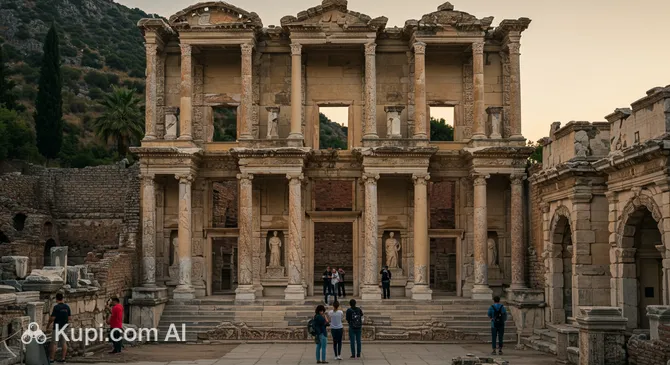
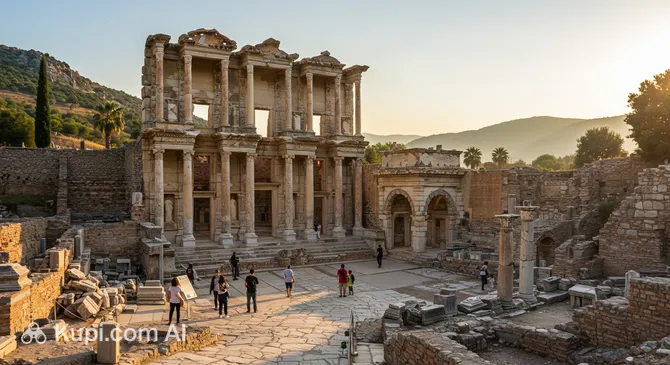
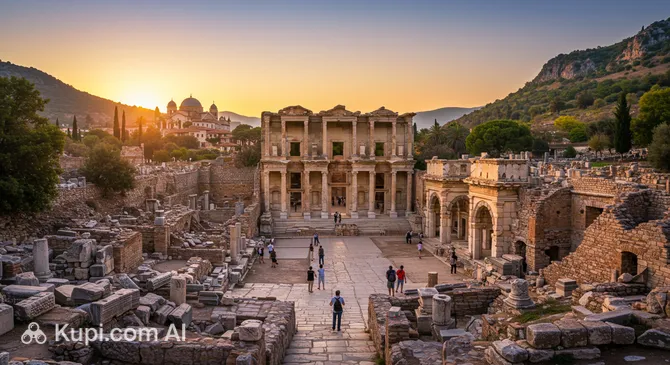
One of the most photographed and symbolic structures in Ephesus is the Library of Celsus. Its magnificent two-tiered facade, carefully restored by archaeologists, serves as the hallmark of the ancient city. Built in honor of Roman Senator Tiberius Julius Celsus Polemaeanus, the library once stored about 12,000 scrolls, making it one of the largest book repositories of the ancient world.

Library of Celsus. Illustration.
Source: Kupi.com AI

Traveler photos:

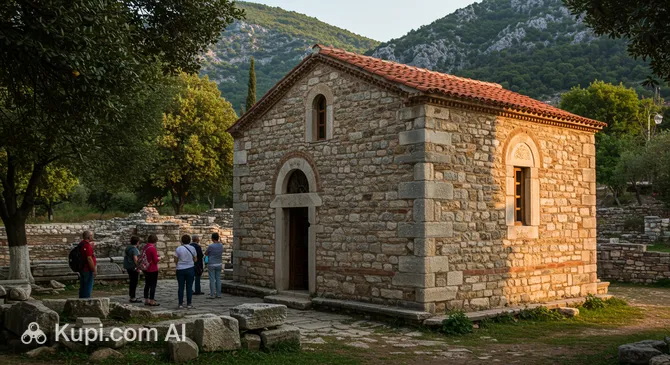
Near Ephesus, on the slopes of Mount Nightingale (Bülbüldağ), lies the House of the Virgin Mary. This small stone chapel is revered as the place where the Virgin Mary spent her final years. Every year, thousands of Christian and Muslim pilgrims flock here to pray and feel the peaceful atmosphere of this holy place. It is believed that the water from the spring near the house has healing properties.

House of the Virgin Mary. Illustration.
Source: Kupi.com AI

Traveler photos:

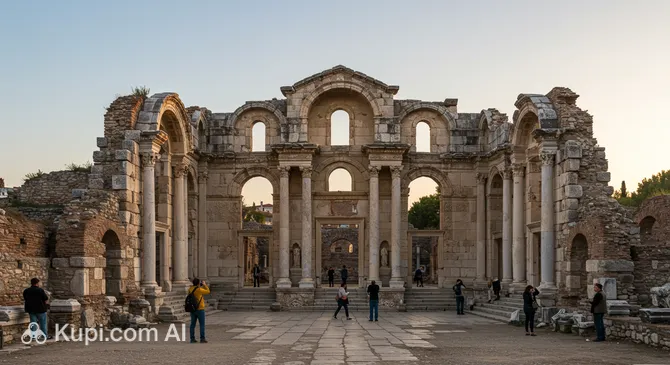
Another iconic landmark in Selcuk is the majestic ruins of the Basilica of Saint John. Built in the 6th century by Emperor Justinian, it stands, according to tradition, on the burial site of John the Apostle. Although only fragments of walls and columns remain of its former grandeur, the scale of the structure is still impressive today. From the hill where the basilica is located, you can enjoy a panoramic view of Selcuk, the Ayasuluk Fortress, and the ruins of the Temple of Artemis.

Basilica of Saint John. Illustration.
Source: Kupi.com AI

Traveler photos:

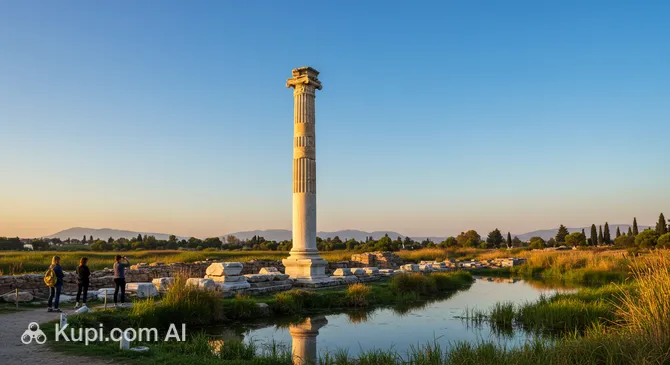
And, of course, one cannot forget the legendary Temple of Artemis, one of the Seven Wonders of the Ancient World. Unfortunately, from the grand structure that once surpassed the Parthenon in size, only the foundation and one restored column remain today. Nevertheless, visiting this site allows you to touch great history and imagine the scale and splendor of the temple dedicated to the patron goddess of Ephesus.

Temple of Artemis. Illustration.
Source: Kupi.com AI

Traveler photos:

Local Cuisine

The gastronomic scene in Selcuk is a delightful journey into the world of Aegean Turkey's cuisine, where the freshness of local products, olive oil, and aromatic herbs play the leading role. Here, traditions are closely intertwined with hospitality, offering tourists an unforgettable taste experience. The region's cuisine is characterized by lightness and variety, making it attractive to all kinds of gourmets.

Be sure to try çöp şiş — small skewers of marinated lamb or beef grilled over charcoal, which are the hallmark of the region. No less popular is gözleme — thin flatbreads with various fillings, from cheese and spinach to potatoes and minced meat, prepared right in front of you. Also, look out for dishes prepared with olive oil — zeytinyağlılar, such as stuffed peppers or artichokes, which are served cold and are perfect for a hot day.

As for drinks in Selcuk, as in all of Turkey, fragrant Turkish tea (çay) and strong Turkish coffee (Türk kahvesi) are consumed everywhere. In the heat, ayran — a yogurt-based drink — is perfectly refreshing. Special attention should be paid to the local fruit wines from the nearby village of Sirince. You can visit one of the many wine producers, such as the Kirkinca Wine House in Sirince, to taste and purchase unique wines made from mulberry, peach, or cherry. For lovers of stronger drinks, the traditional choice is rakı — an anise-flavored spirit that is usually diluted with water and served with meze appetizers.

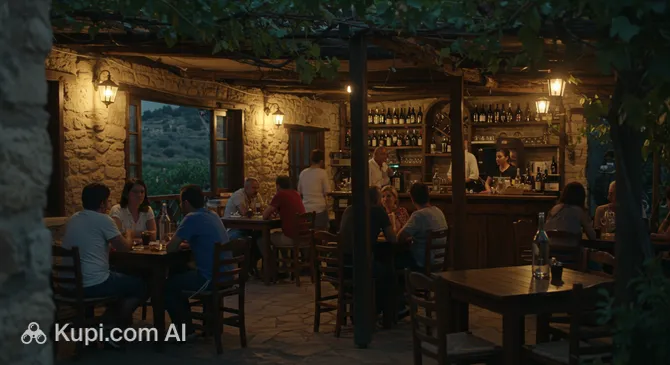
Şirince Kırkınca Wine House. Illustration.
Source: Kupi.com AI

Traveler photos:

The food culture in Selcuk is diverse. Locals and tourists can enjoy a meal in traditional lokantas, which serve home-style Turkish food at affordable prices, or choose one of the restaurants with a more refined menu, such as Old House Rest & Cafe or Ateş Büfe. Street food is also popular: you can buy fresh simits (sesame rings), corn, or chestnuts here. Local markets delight with an abundance of fresh fruits, vegetables, olives, and cheeses, allowing you to touch the true flavors of the region.

Gastronomic Selcuk is not only about delicious food but also about a special atmosphere. Try tender kebabs, enjoy the freshness of Aegean mezes, and don't forget the unique Sirince fruit wines. The town's gastro scene combines simplicity and sophistication, offering authentic dishes in cozy family restaurants and the opportunity to discover the richness of the Turkish culinary tradition.

Travel Tips

Planning a trip to charming Selcuk? To ensure your journey goes smoothly and leaves only pleasant impressions, we have prepared some practical tips. They will help you navigate the town better and enjoy its unique atmosphere and rich history.

  1. Clothing and Essentials: The climate in Selcuk is Mediterranean: summers are hot and dry, while winters are mild and rainy. In summer (May-September), bring light, breathable clothing, a hat, sunglasses, and sunscreen. In winter (November-March), layered clothing, a light jacket or sweater, and possibly waterproof outerwear will be useful. Comfortable shoes are critically important, as you will be walking a lot, especially when exploring ancient Ephesus. When visiting religious sites (e.g., the House of the Virgin Mary, Isa Bey Mosque), modest clothing covering shoulders and knees is required; women may need a scarf to enter mosques. Don't forget an adapter for electrical appliances (Turkey uses type F sockets).

  2. Getting Around: Selcuk is a small town, and many of its central areas, including major attractions, can easily be explored on foot. For trips to more distant sites like Ephesus, Sirince, or Pamucak Beach, it is convenient to use dolmush — shared minibuses that run frequently and are inexpensive. There are also bus routes connecting Selcuk with Izmir and other cities. Taxis are available, but it is recommended to agree on a price in advance or make sure the driver turns on the meter. Renting a car can be a good option if you plan to actively explore the surroundings.

  3. Finances: The official currency is the Turkish Lira (TRY). You can exchange currency at banks or exchange offices (döviz bürosu); the rate at the airport is usually less favorable. Credit and debit cards (Visa, Mastercard) are accepted in most hotels, large restaurants, and shops. However, it's always useful to carry some cash for small purchases, dolmush fares, or markets. ATMs are common. An approximate daily budget (excluding accommodation) could range from 50 to 100 USD, depending on your preferences. Tipping (bahşiş) is welcomed: 5-10% in restaurants if service is not included, and small amounts for taxi drivers and hotel staff.

  4. Health and Safety: Pharmacies (eczane) are easy to find and marked with a green cross. Some operate 24/7 on a rotating schedule (nöbetçi eczane). For minor ailments, you can consult a pharmacist. For serious problems, visit local clinics or hospitals in Selcuk or Izmir. It is strongly recommended to have travel medical insurance. Selcuk is generally a safe town. Observe standard precautions: watch your belongings in crowded places and drink bottled water.

  5. Communication: The official language is Turkish. In tourist areas, hotels, and restaurants, many people speak English. Learn a few basic phrases in Turkish: "Merhaba" (Hello), "Teşekkür ederim" (Thank you), "Lütfen" (Please), "Evet/Hayır" (Yes/No). A local SIM card can be purchased at service provider stores (Turkcell, Vodafone, Türk Telekom) with a passport. Wi-Fi is available in most hotels and cafes.

  6. Local Etiquette: Turks are very hospitable. A simple "Merhaba" is appropriate. Handshakes are common when meeting. Dress modestly in public areas and especially when visiting religious sites. If you are invited for tea (çay), it is a sign of hospitality, and it's polite not to refuse. Before taking photos of people, especially older generations, politely ask for permission.

  7. What to Avoid: Showing disrespect to Mustafa Kemal Atatürk, the founder of the Republic of Turkey, or the Turkish flag is considered a serious offense. Also, try not to openly criticize local customs, religion, or politics.

  8. Extra Tip: Be sure to visit the Saturday market in Selcuk. It is a wonderful opportunity to immerse yourself in local flavor, buy fresh fruits, vegetables, olives, cheeses, textiles, and souvenirs at good prices, and observe the daily life of the townspeople.

Selcuk is an amazing place where history comes alive at every turn. We hope these tips make your trip even more comfortable and fulfilling. We wish you unforgettable impressions as you discover this beautiful corner of Turkey!

Entertainment & Nightlife

While Selcuk is primarily known for its ancient wonders, the town does not fall asleep at sunset; instead, it offers its guests a cozy and calm atmosphere for evening relaxation. Here you won't find noisy nightclubs or neon-lit districts like in major metropolises. Instead, Selcuk charms you with the opportunity to spend the evening in a relaxed setting, enjoying delicious food and local hospitality.

The main evening life in Selcuk is concentrated in its center, on the streets around the main square and along the road leading to the Basilica of Saint John. There are many restaurants and cafes here, many of which have outdoor terraces. The atmosphere is friendly and family-oriented, perfect for a leisurely dinner or a glass of local wine. Establishments usually stay open until late evening, offering local Aegean and Turkish cuisine, as well as more familiar European options. The dress code is generally casual and relaxed. For example, you can have a pleasant dinner at Old House Rest & Cafe, known for its cozy atmosphere and traditional dishes.

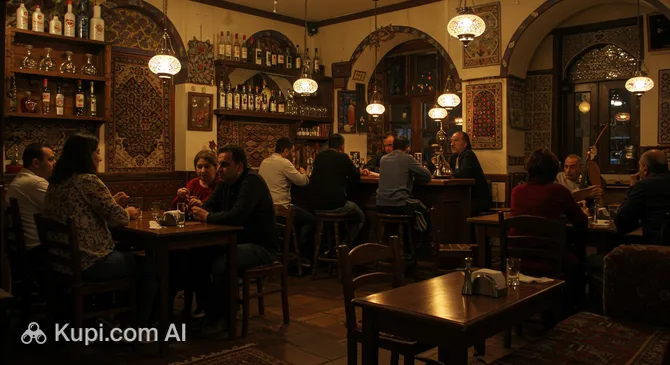
For a more authentic and romantic evening, many tourists and locals head to the nearby picturesque village of Sirince, famous for its fruit wines and charming atmosphere. In the evening, it is particularly beautiful here: narrow cobbled streets are lit by the soft light of lanterns, and aromas and quiet music drift from numerous wine houses and small restaurants. You can visit colorful venues like the Kirkinca Wine House in Sirince or Sirince Mahzen Ayios to taste unique local wines made from mulberry, cherry, melon, and other fruits, while enjoying the unique atmosphere of the old village. Keep in mind that getting to and from Sirince in the evening is most convenient by taxi, as regular dolmush buses may stop running or run much less frequently late at night.

Şirince Mahzen Ayos. Illustration.
Source: Kupi.com AI

Traveler photos:

Evening establishments in Selcuk and Sirince are usually open until 11:00 PM or midnight, and some may stay open a bit longer, especially during the peak tourist season (from June to September). It's best to arrive for dinner or visit bars around 8:00 PM - 9:00 PM. Prices in most places are moderate, allowing you to enjoy dinner or drinks without excessive spending. Walking around the center of Selcuk at night is safe. For trips to Sirince or more remote areas, you can use taxi services; it is recommended to clarify the fare in advance or ensure the driver turns on the meter. Overall, Selcuk is a quiet and safe town, but standard precautions, such as watching your personal belongings, are always appropriate.

During the day, Selcuk offers a rich cultural program, with the main entertainment centered around its unique historical heritage. Visitors dedicate their time to exploring the grand ancient city of Ephesus, which is part of the Ephesus Archaeological Site, and visit the House of the Virgin Mary, Ayasuluk Fortress, or the Ephesus Museum. There are no large amusement parks, theaters with regular productions, or bustling night markets in the Western sense here, as the primary value and attraction of Selcuk are its priceless historical monuments, which are best viewed in daylight.

Thus, evening in Selcuk is an ideal place for those who appreciate quiet rest, delicious food, and the opportunity to enjoy the charm of a small Turkish town after a busy day of excursions. It is not a center of wild nightlife, but rather a cozy and soulful continuation of your acquaintance with the rich culture and history of this amazing region of Turkey.

Parks & Museums

Selcuk offers travelers a unique combination of historical immersion and cultural discovery, where ancient ruins harmoniously blend into picturesque landscapes. While the town is not famous for traditional urban parks, its surroundings and historical complexes provide vast spaces for walking and contemplation, and its museums house priceless artifacts from the past.

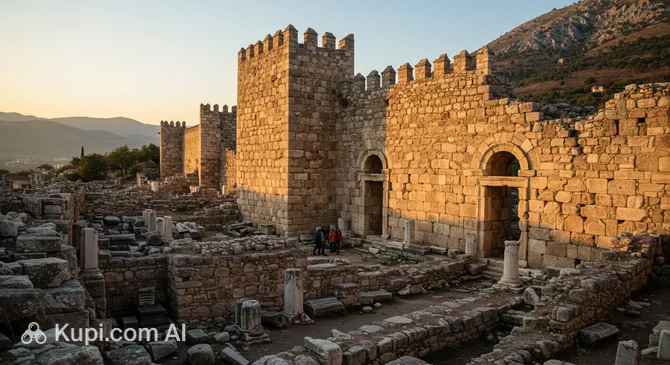
Instead of classic parks, Selcuk invites you to explore the extensive territories of its historical monuments, which are essentially green zones in their own right. The primary site is undoubtedly the Ephesus Archaeological Site. This is not just ruins, but an entire ancient city spread over a large area, where walking along ancient streets among pines and olive trees gives a sense of touching eternity. Another significant natural and spiritual area is the territory around the House of the Virgin Mary on Mount Nightingale (Bülbüldağ), where you can enjoy silence and tranquility surrounded by lush greenery. It is also worth climbing Ayasuluk Hill, where the Ayasuluk Fortress and the Basilica of Saint John are located. This spot offers breathtaking panoramic views of the surroundings, and the grounds themselves are a pleasant place for a walk.

Ephesus Archaeological Site. Illustration.
Source: Kupi.com AI

Traveler photos:

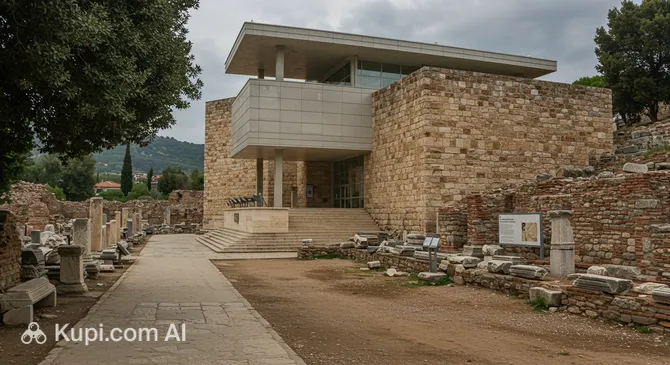
Regarding museums, a key role in preserving and showcasing the region's rich heritage is played by the Ephesus Museum, located directly in the town of Selcuk. Its halls house unique artifacts found during excavations in Ephesus, including the famous statues of Artemis of Ephesus, frescoes, mosaics, and household items of the ancient Ephesians. This museum is a must-visit for those who want to deeply understand the history and culture of the ancient city. The Ephesus Archaeological Site itself can be rightfully considered a huge open-air museum where every stone tells its own story.

Ayasuluk Fortress. Illustration.
Source: Kupi.com AI

Traveler photos:

In addition to these main sites, cultural immersion in Selcuk continues with visits to the ruins of the Temple of Artemis, one of the Seven Wonders of the Ancient World, and the majestic Isa Bey Mosque, which is a beautiful example of Seljuk architecture. For family leisure and an introduction to Turkish culture in miniature, the Cetin Miniature Village, which features models of famous Turkey landmarks, might be of interest.

For an authentic experience, we suggest allocating enough time for a leisurely exploration of Ephesus, turning off the main tourist paths onto side streets. And to better understand the daily life of modern Selcuk, drop by the local Saturday market — it is a vibrant and colorful place where you can not only buy fresh produce and souvenirs but also feel the true atmosphere of a Turkish town.

Getting Around

Getting around Selcuk and its immediate surroundings is quite simple, even though the town does not boast an extensive metro or tram system like major metropolises. The core of public transport here consists of dolmush minibuses, while regular taxis and rail connections are also available for trips to more distant points.

The main and most popular type of transport for tourists and locals in Selcuk is the dolmush. These small minibuses run on clearly defined routes, linking the town center with key attractions such as ancient Ephesus (about 3 km away), the picturesque village of Sirince (about 8 km away), and Pamucak Beach. Dolmush stops are usually marked, but they can often be hailed with a wave of the hand almost anywhere along the route. Payment is made in cash directly to the driver; the fare is low and depends on the distance. The schedule for dolmushes is flexible; they depart as they fill up or at short intervals, especially during the day and in the tourist season.

There is a railway station in Selcuk, making it a convenient point for traveling to larger cities, such as Izmir, including Adnan Menderes Airport. Trains are a comfortable and relatively inexpensive way to reach Izmir. Tickets can be purchased at the ticket office at the station. It is recommended to check the schedule in advance, as trains do not run as frequently as dolmush buses.

Taxis in Selcuk are also available and can be a convenient option for door-to-door trips, especially if you are traveling with luggage or late at night. Taxi stands are usually found in the town center and near major tourist sites. It is important to agree on the fare in advance or ensure the driver turns on the meter to avoid misunderstandings. A taxi ride will naturally cost more than a dolmush.

The center of Selcuk itself is quite compact, and many interesting places, such as the Basilica of Saint John or the Ephesus Museum, are within walking distance of each other. For more independent exploration of the surroundings, you might consider renting a car; rental company offices are located both in Selcuk and at the nearby Izmir airport. Some tourists also prefer to rent bicycles for short trips, for example, to Ephesus. Overall, the transport system in Selcuk is simple and straightforward, allowing tourists to easily plan their movements and enjoy all the beauties of this historical region.

Accommodation

In Selcuk, travelers will find various accommodation options to suit different preferences and budgets. The town offers a wide selection, from cozy family pensions (pansiyon) and small hotels, often managed by locals and offering an authentic experience, to more modern boutique hotels. Apartments and guesthouses are also available for those who prefer more independence and home-like comfort. There are few luxury resorts of global chains here; the emphasis is on more intimate and personalized service.

Most housing options are concentrated in the center of Selcuk, providing easy access to major historical landmarks such as the Basilica of Saint John and the Isa Bey Mosque, as well as restaurants, shops, and the bus station. This is a convenient area for those who want to be in the center of things and have everything they need at hand. An alternative is the charming mountain village of Sirince, located a few kilometers from Selcuk. Here, you can find unique boutique hotels and pensions in restored old houses, offering a more secluded and romantic atmosphere among vineyards and fruit orchards.

Regarding the price range, in Selcuk, you can find budget options, mid-range accommodation, and more exquisite boutique hotels. In general, accommodation prices here are quite affordable compared to major tourist centers in Turkey. It is recommended to book accommodation in advance, especially if your trip falls during the high tourist season (spring and autumn, as well as the summer months), as popular places can be snapped up quickly. For booking, you can use popular online platforms, hotel websites, or contact them directly to clarify details and possible special offers.

Nearby Cities

For those who want to explore the surroundings, Selcuk serves as an excellent starting point for day trips to several interesting nearby locations. For example, very close by is Torbali (about 27 km), where you can get a glimpse of modern, non-tourist life in the region and its agricultural traditions. A bit further, about 44 km away, is Aydin, the capital of the province of the same name, known for its ancient ruins such as the ancient city of Tralles and as the center of a fertile land famous for its figs. Of course, you should consider a trip to Izmir (about 56 km) — a large and dynamic metropolis on the Aegean coast, offering a rich historical heritage (ancient Smyrna), bustling bazaars, the beautiful Kordon waterfront, and many cultural events. Below is a more detailed list of some available destinations, indicating the population and distance from Selcuk:

CityPopulationDistance
Kusadasi113 58014 km
Ortaklar12 96014 km
Söke120 21722 km
Ozdere15 00022 km
Davutlar9 64525 km

These nearby destinations allow for a more complete picture of the diverse culture, history, and landscapes of Turkey's Aegean region, complementing the experience of visiting Selcuk itself.

Shopping & Souvenirs

Shopping in Selcuk is more of a pleasant addition to a rich excursion program than an end in itself. The town is not a major commercial hub, but you can find interesting souvenirs, products by local craftsmen, and experience the flavor of traditional Turkish trade. The main focus should be on authentic goods reflecting the region's history and culture.

The primary shopping opportunities are concentrated in the town center. Walking along main streets like Cengiz Topel Caddesi and Atatürk Caddesi, as well as around the main square, you will find many small shops. They sell souvenirs, handmade items, ceramics, textiles, and traditional Turkish sweets. The atmosphere here is calm, ideal for a leisurely selection.

There are no large modern shopping malls in Selcuk. Shopping here is more traditional, centered around small private shops and local markets, which gives it a special charm and allows you to get closer to the local culture.

The most vibrant place for shopping and getting to know local life is the weekly Saturday market (Cumartesi Pazarı). It is a true kaleidoscope of colors, aromas, and sounds. Here you can find everything from the freshest fruits, vegetables, olives, cheeses, and spices to textiles, clothes, shoes, household goods, and, of course, souvenirs. The market is a great place to bargain and pick up something memorable at a good price.

As souvenirs from Selcuk, it is worth bringing back items that remind you of its rich historical past. Miniature copies of Ephesus landmarks (such as the Library of Celsus or the amphitheater), magnets, and postcards are popular. Pay attention to the work of local artisans: ceramics with traditional patterns, small carpets (kilims), onyx, and leather products. Don't forget Turkish textiles — high-quality towels (peshtemal) or scarves. Among edible souvenirs, local honey, olive oil, spices, and Turkish sweets (Turkish delight, baklava) are popular. Special attention should be given to fruit wines from the neighboring village of Sirince — they can be purchased both in the village itself and in some shops in Selcuk. Of course, don't forget the traditional Turkish amulet against the evil eye – "nazar boncuk."

Shops in Selcuk are usually open from 9:00 AM - 10:00 AM until 7:00 PM - 8:00 PM, and during the tourist season, some souvenir stalls may stay open longer. The market operates on Saturday from early morning until around mid-day. Most tourist-oriented shops accept credit cards (Visa, Mastercard), however, at the market and in small stalls, it is preferable to have cash in Turkish Liras. ATMs are easy to find in the town center.

For tourists shopping in Turkey, there is a VAT refund system (Tax Free). If you make purchases of a certain amount in participating shops (look for the relevant sign), you can arrange a tax refund when leaving the country. To do this, you need to obtain a special receipt from the shop and present it along with the goods at customs at the airport.
Reached the end of the page?

That means the route is fully explored