Support

Leros Airport

About the Airport

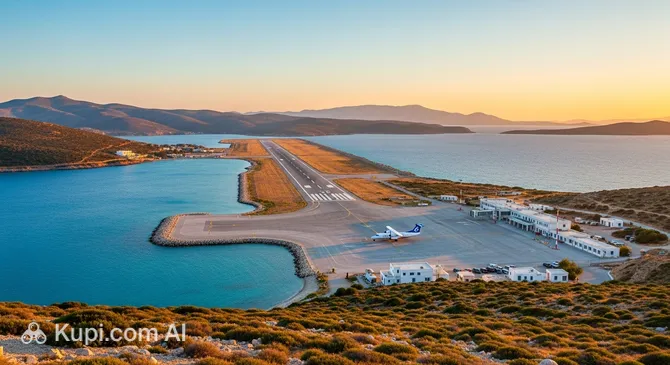
Leros Airport. Source: Kupi.com Binoculars

Leros Island Municipal Airport (LRS) is your aerial gateway to the cozy world of the Dodecanese islands. Opened in 1984, this small airport, located in the northern part of the island in the Partheni area, serves as the main arrival point for travelers seeking to discover authentic Greece. Despite its modest size, the airport plays a key role in the island's transport connections, especially during the summer tourist season. Its compactness and small runway, designed for aircraft with a capacity of up to 50 people, create a special atmosphere of a secluded and peaceful arrival.

IATA Code LRS
ICAO Code LGLE
City Leros
Distance to center about 6.5 km to Agia Marina town
Status domestic
Annual Passengers approx. 36,100 (2019)
Popular Airlines Olympic Air, Sky Express
Schedule "Leros Airport" online board

The main advantage of Leros airport is its simplicity and convenience. Thanks to the small size of the terminal, which resembles a cozy family home, check-in and baggage claim are very quick, allowing you to start your holiday without delay. The airport handles only domestic flights, connecting Leros primarily with Athens, as well as with neighboring islands such as Rhodes, Kos, and Astypalea. Infrastructure is minimal — there is a small café and a ticket office, which emphasizes the calm and leisurely rhythm of island life. This is the perfect choice for those who value time and prefer to avoid the hustle and bustle of major transport hubs.

Contact Information

  • Official Website: www.lrs-airport.gr
  • Information Desk Phone: +30 22470 22275
  • Address: Partheni, Leros, 85400, Greece
  • Email: You can contact the airport via the contact form on the official website.
  • Social Media: Leros Airport is managed by Fraport Greece, which maintains official pages on Facebook, X (Twitter), Instagram, and other networks.
  • Lost Luggage Information: If you lost items on the plane, contact your airline directly. If items were lost within the terminal, use the lost and found form on the airport's official website.
  • Passenger Support Contacts: For general questions and support, use the main information desk phone number.

How to Get to the Airport

Getting to the municipal airport of Leros (LRS), located in the northern part of the island near the village of Partheni, is quite simple, although transport choices are limited due to the island's small size. The trip from major settlements such as Platanos, Agia Marina, or Lakki usually takes 15 to 25 minutes depending on your location and road conditions.

Public Transport. The most budget-friendly way to move around the island is via the local KTEL bus network. Routes connect key settlements, however, direct bus service to the airport may be irregular or unavailable, especially during the low season. Schedules change frequently, so it is strongly recommended to verify current information on site, for example, at the bus station in Lakki or at tourist offices. This option is suitable if you have light luggage and plenty of time to spare.

Taxi and Transfer. A taxi is the most convenient and fastest way to get to the airport. Taxi ranks are located in all major villages, and a car can also be called by phone. The cost of the trip will be higher than the bus, but it ensures comfort and "door-to-door" delivery. for greater peace of mind, you can pre-book a private transfer through your hotel or an online service, especially if you have an early or late flight.

Car or Scooter Rental. Many tourists in Greece prefer renting transport for freedom of movement. By renting a car or scooter, you can not only explore every corner of the island at your own pace but also easily reach the airport at the required time. Rental points are located in Lakki, Alinda, and other tourist zones. Check with the company if it is possible to return the vehicle directly at the airport.

Airport Parking. There is a small parking lot near the Leros airport terminal. Typically, at such island airports, parking is free or inexpensive, making it convenient for those arriving in their own or rented car. There are usually enough spaces, as the airport handles a small number of flights.

It is also worth noting that many travelers reach Leros via a combined route: flying to a larger neighboring airport, for example, Kos Airport (KGS), and taking a ferry from there. This option often offers a greater number of flights and can be more economical.

Terminals and Map

Leros Airport (LRS) is a small regional airport served by one compact terminal. Its size and simple structure make it extremely convenient for travelers, eliminating the stress common to major aviation hubs. This single terminal handles all arriving and departing flights, mainly domestic ones connecting the island with mainland Greece.

The terminal layout is extremely simple. In fact, it is a single-story building where all key zones are within walking distance of each other. The arrival and departure zones are located under one roof but on different sides of the building. Upon arrival, passengers enter a small hall with a single baggage claim belt. The departure zone consists of several check-in counters, a security checkpoint, and a small waiting hall with a boarding gate. Getting lost here is practically impossible.

Thanks to the airport's compactness, all procedures are very quick. Usually, check-in and security screening take no more than 15-20 minutes. It is recommended to arrive at the airport approximately 1–1.5 hours before departure. During the peak tourist season (July-August), it is worth arriving a little earlier, about 2 hours prior, to avoid potential queues that may arise before a full flight departs. Since there is only one terminal, there is absolutely no need for transfers between terminals.

The main navigation tip is not to worry. Everything is intuitive, and signs will help you orient yourself. Check-in counters are right at the entrance, and after them is the security checkpoint leading to the waiting lounge. This is an ideal example of an airport where everything is designed for passenger convenience and peace of mind, allowing you to start or end your island holiday without unnecessary hassle.

Airport History

The municipal airport of Leros, officially named "Dodecanese", was opened in 1984. Its construction was an important step for the development of infrastructure and transport accessibility of this picturesque corner of Greece. From the very beginning, the airport's main task was to ensure reliable air connections with the mainland, primarily with Athens, which contributed to the growth of tourism and the improvement of the quality of life for the local population.

The history of the location where the airport is situated dates back to World War II. In Partheni Bay, near where the runway is located, there was an Italian naval seaplane base. This area was one of the key strategic sites during the Battle of Leros in 1943. Thus, the modern civil airport was built on land with a rich military past, adding to its historical significance.

Since its opening, Leros Airport has functioned as a small regional hub. Its runway has a relatively modest length, which imposes limitations on the types of aircraft it can accept — mainly turboprop liners flying domestic routes. For many years, projects for the modernization and expansion of the airport have been discussed, including extending the runway so that it can accommodate larger aircraft and international charters. These plans highlight the island's ambition for the further development of the tourism industry.

Although Leros Airport cannot boast records for passenger traffic or the number of flights, its main achievement is the stable fulfillment of its core mission — to be a reliable aerial gateway to the island. For a remote Dodecanese island dependent on tourism and maritime connections, having its own airport is of immense economic and social importance. Interesting fact: the airport received its second name, "Dodecanese", in honor of the archipelago of which Leros is a part.

Services and Amenities

Leros Airport (LRS) is a small regional airport, so the range of services here is focused on meeting basic passenger needs. The terminal is compact and convenient, allowing you to quickly orient yourself before departure or upon arrival at this picturesque island in Greece.

There is a small buffet in the terminal building where you can have a snack, drink coffee, or enjoy soft drinks while waiting for your flight. The assortment usually includes sandwiches, local pastries, and light snacks. Shopping opportunities are quite modest: there are no large Duty Free shops here, but you can find basic souvenirs and essential items.

Free Wi-Fi is available for passengers in the main terminal area. The number of power outlets for charging electronic devices may be limited, so it is worth bringing a portable power bank. There are no full-fledged bank branches or currency exchange points at the airport, however, an ATM is usually available for withdrawing cash in Euros.

The airport is equipped to receive passengers with reduced mobility — ramps and accessible toilets are available. If you require assistance with boarding or disembarking, it is recommended to contact your airline in advance. For travelers with small children, changing tables are provided in the restrooms. In case of need, there is a first aid point in the terminal. There are no separate VIP lounges; all passengers wait for their flight in the general hall.

There are no hotels within the airport territory itself. The nearest hotels and apartments are located in the towns of Lakki, Platanos, and Alinda, which can be reached by taxi or rental car in approximately 15–20 minutes. Due to the compact size and regional status of the airport, conference halls and business centers are not provided here.

Dining

Leros Airport (LRS) is a small regional air terminal serving the island, so the choice of dining establishments here is quite limited and corresponds to its compact size. Travelers should not expect a variety of restaurants and cafés as in major international airports, but there is an opportunity to have a snack before departure.

The main and, as a rule, the only establishment is a small snack bar or café located in the general departure hall, before passing security control (landside). After security screening (airside), there are usually no food outlets, so it is better to purchase everything you need in advance.

What you can find on the menu:

  • For a quick snack: You can buy sandwiches, chips, chocolate, and other packaged snacks here. This is an ideal option if you are short on time.
  • Local flavor: Sometimes the assortment includes traditional Greek pies, such as tiropita (with cheese) or spanakopita (with spinach). Greek coffee and the popular cold frappé coffee are also served here.
  • Drinks: Bottled water, juices, soft drinks, and coffee are available for purchase.

A full lunch or dinner is not provided at the airport. For this, it is better to visit one of the taverns in the towns of Agia Marina, Platanos, or Lakki before arriving at the airport. Regarding special dietary needs (vegetarian, vegan, gluten-free dishes), their availability is unlikely. Prices at the airport are generally slightly higher than the average on the island. The café's operating hours are usually tied to the flight schedule: it opens a few hours before the first departure and closes after the last plane leaves.

Travel Tips

To ensure your journey through the airport on Leros island goes as smoothly as possible, follow our tips. This small airport mainly handles domestic flights, making it quite convenient and simple to navigate, but knowing some nuances will help avoid unnecessary stress.

Arrival at the Airport and Check-in. For domestic flights within Greece, it is recommended to arrive at the airport approximately 1.5–2 hours before departure. This time is usually sufficient for baggage drop-off, security screening, and boarding. If possible, complete online check-in — this will save you time. Screening procedures here are standard, but due to the compact size of the terminal, lines usually move quickly.

Seat Selection and Carry-on Luggage. When flying to or from Leros, try to book a window seat. Bird's-eye views of the Aegean Sea and the islands will be a wonderful start or end to your holiday. regarding carry-on luggage, remember standard restrictions: liquids in containers no larger than 100 ml (packed in a transparent bag), and no sharp objects or other prohibited items.

Transfers and Customs Control. Most flights from Leros are operated with a transfer in Athens. If you have a connecting flight, ensure you have enough time between flights, especially if you need to collect and re-check luggage. Customs control for passengers traveling within the Schengen area is generally absent. If you are arriving from a non-Schengen country, you will have to undergo standard passport and customs checks.

Saving Time and Money. To save money, book flight tickets and airport transfers in advance, especially during the high season. Traveling light, with only carry-on luggage, will avoid baggage fees. The choice of cafés in the airport itself is limited, so you can bring a small snack (non-liquid) with you to avoid spending extra while waiting for your flight.

In Case of Flight Delay. If your flight is delayed, first contact your airline representative for information on the reasons and estimated departure time. In a small airport like Leros, leisure options are limited, but you can use the free Wi-Fi or read a book in the waiting area. Keep all receipts for food and drinks — they may be needed to claim compensation from the air carrier.

Reached the end of the page?

That means the route is fully explored