Support

Tarsus

About

Tarsus is a city where history is literally in the air, and every stone seems to hold its own ancient legend. This amazing corner is nestled in southern Turkey, in the fertile valley of the Tarsus-cay River, just a few kilometers from the azure waters of the Mediterranean Sea. This strategic location has made it an important crossroads of ancient trade routes and a meeting point for Eastern and Western civilizations for millennia.

With a population of about 340,000, Tarsus today is not just a picturesque town, but a significant administrative and cultural center of the Mersin province. It harmoniously combines the charm of old streets with the energy of a modern city, where daily life flows at the leisurely pace characteristic of southern regions.
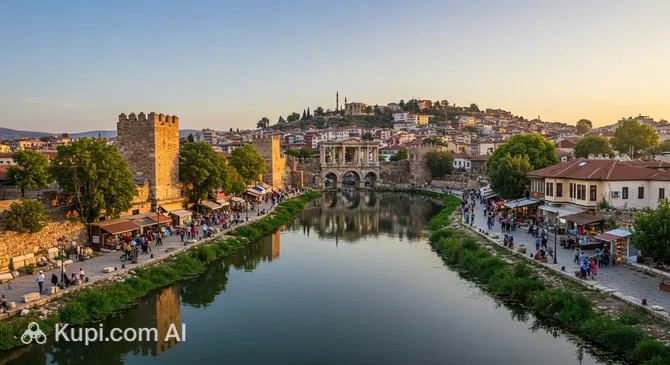
Tarsus. Illustration.
Source: Kupi.com AI

The main appeal of Tarsus for travelers lies in its rich historical heritage. The city literally breathes antiquity: here you can wander for hours through the old quarters, admiring the preserved ancient monuments and feeling like a part of centuries-old history. Tarsus is famous for its authenticity — there is no hustle and bustle of major tourist centers, but there is genuine Turkish hospitality and a unique atmosphere of tranquility that allows for a deep dive into the local culture.

If you are looking for unusual routes, value the atmosphere of antiquity, and want to experience the taste of real, unembellished life, Tarsus will be a true discovery for you. This city invites you to explore its treasures at your own pace and take home unforgettable impressions.

You can find more interesting facts on the history of Tarsus page.
Weather Overview

The weather in Tarsus is characterized by hot and mostly dry summers, and mild and wetter winters. In the summer months, especially in July and August, the average temperature can reach 27°C, with highs above 31°C, while rainfall is minimal. In winter, for example in January, the average temperature is about 8°C, with possible drops to 4°C, and a high number of rainy days. Spring and autumn offer comfortable temperatures for visiting. Expect a warm summer with little rain and cool, wetter winters. For a more detailed forecast and monthly information, you can check the climate of Tarsus page.

Average monthly temperature

Average monthly precipitation

Interesting Facts

Ancient Tarsus, one of the oldest cities in Turkey, is known not only for its iconic landmarks. It holds many amazing stories and little-known facts that can reveal its rich past in a new way.

Cleopatra Gate. Illustration.
Source: Kupi.com AI

Traveler photos:

  • Tarsus is not just an ancient city, but one of the oldest continuously inhabited spots on the world map. Its history dates back to the third millennium BC, and for centuries it was the capital of powerful Cilicia, a thriving center of ancient culture, philosophy, and trade.

  • It was here, according to legend, that the fateful meeting between the Roman general Mark Antony and the Egyptian Queen Cleopatra took place. The legendary romance that changed the course of history began in Tarsus, and Cleopatra's Gate still stands in the city in memory of this event.

  • Tarsus is the birthplace of one of the key figures of Christianity — the Apostle Paul (originally Saul of Tarsus). The place where his house is believed to have stood and the nearby St. Paul's Well attract pilgrims from all over the world. St. Paul's Church, dedicated to the city's famous native, is also located nearby.

  • The city is connected to the legend of the Seven Sleepers (Ashab al-Kahf), revered in both Christianity and Islam. According to the story, seven young men, fleeing religious persecution, fell into a miraculous sleep in a cave near Tarsus for several centuries. This cave remains an important pilgrimage site and one of the region's mysterious attractions today.

How to Get There

When planning a trip to Tarsus, one of the oldest cities in Turkey, it is important to think about the route in advance. The city is conveniently located and accessible by various modes of transport, but the main way to arrive for most tourists remains air travel, thanks to several airports in the region.

The main and most convenient option for arriving in Tarsus is Cukurova International Airport (COV). This large and modern international airport is located just 15.7 km from the center of Tarsus. Due to this proximity, a transfer to the city by taxi or bus usually takes about 40-45 minutes. Cukurova Airport serves many domestic and international flights, acting as a key air gateway for the entire region.

Another airport that can be considered, especially if your route goes through the southern regions of Turkey, is Hatay Airport (HTY). It is located in the city of Antakya, about 138.6 km from Tarsus. This is a medium-sized airport. The journey from Hatay Airport to Tarsus by car or bus will take approximately 3.5-4 hours.

For clarity, here is summary information on the main airports that can be used for a trip to Tarsus:

AirportPassenger trafficDistance
Çukurova International Airport5 mln16 km
Hatay Airport1 mln139 km
Kahramanmaras Airport243 453196 km
Nevsehir719 181208 km
Kayseri Airport1.2 mln212 km

As for rail connections, Tarsus itself has a railway station, which is part of Turkey's regional network and is actively used for trips to neighboring cities such as Adana and Mersin. If you are planning a train journey across Turkey, consider arriving at one of these major hubs and then taking a local train or bus to Tarsus. In the provided data on international transport hubs, Bat Galim station is mentioned, but it is located in the city of Haifa (Israel), nearly 300 km away, making it irrelevant for a direct trip to Tarsus.

Information about railway stations from the provided list:

In addition to air and rail links, Tarsus can be reached by intercity buses, which are well-developed in Turkey, as well as by car using the extensive Turkish road network.

Main Attractions

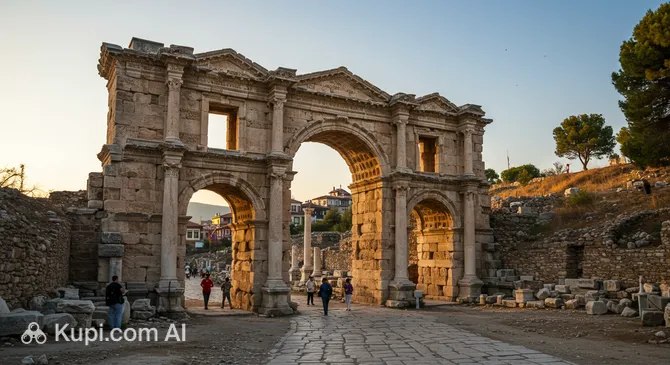
One of the most iconic landmarks in Tarsus is Cleopatra's Gate. This ancient triumphal arch, the only surviving city gate, is shrouded in legend. It is believed that the Egyptian Queen Cleopatra entered the city through this gate to meet Mark Antony. Today, it is a popular photo spot and a starting point for exploring the historical center.

Cleopatra Gate. Illustration.
Source: Kupi.com AI

Traveler photos:

An equally important historical and spiritual center is St. Paul's Church. Although the current building was constructed in the 19th century, it stands on a site traditionally associated with the house of the Apostle Paul, who was born in Tarsus. Nearby is St. Paul's Well, whose water is considered healing. This place attracts pilgrims and tourists interested in biblical history. The church currently functions as a museum.

Saint Paul's Church. Illustration.
Source: Kupi.com AI

Traveler photos:

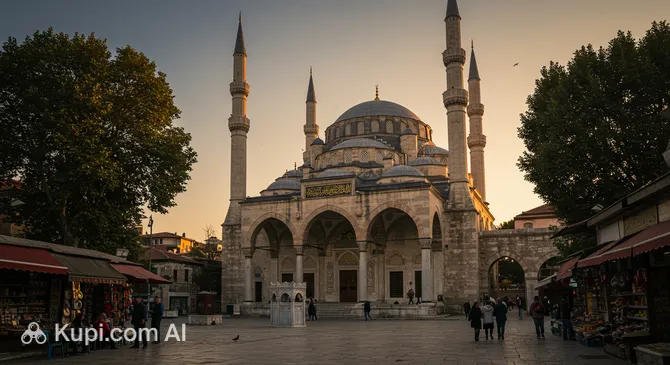
The architectural dominant of the old city is the Grand Mosque of Tarsus (Ulu Cami). Built in 1579, it is a beautiful example of Ottoman architecture. Inside the mosque are tombs that, according to tradition, belong to the Prophet Daniel (Danyal) and Caliph al-Ma'mun, making it an important place of worship and historical interest.

Tarsus Grand Mosque. Illustration.
Source: Kupi.com AI

Traveler photos:

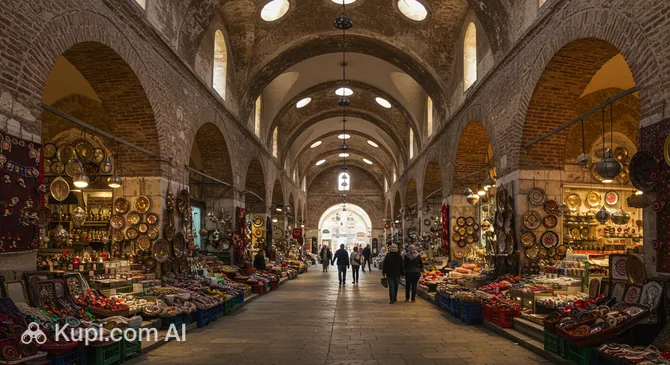
To experience the authentic atmosphere of an Eastern city, it is worth visiting the Kirkkasik Bazaar (Kırkkaşık Bedesteni). This historical covered market, built in 1579, originally served as a free canteen (imaret) and a madrasa. Its name translates as "forty spoons," which may be related to its original purpose. Today, you can find souvenirs and local handicrafts here and enjoy the flavor of an ancient trading post.

Kırkkaşık Bazaar. Illustration.
Source: Kupi.com AI

Traveler photos:

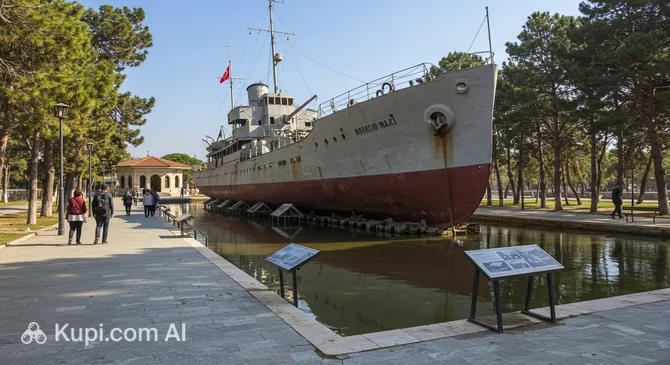
An interesting site for history buffs, especially military history, is the Minelayer Nusret and Canakkale Victory Culture Park. It features an exact replica of the famous minelayer "Nusret," which played a key role in the Battle of Canakkale (Gallipoli) during the First World War. The museum ship is located in a picturesque park dedicated to this victory, where you can learn more about the heroic events and relax.

Nusret Mine Ship and Çanakkale Victory Cultural Park. Illustration.
Source: Kupi.com AI

Traveler photos:

Local Cuisine

The cuisine of Tarsus is a vibrant reflection of its rich history and geographical location, absorbing the best traditions of Cilician, Turkish, and Mediterranean gastronomy. A trip to this city promises to be a real feast for gourmets, as the local food is famous for its variety and unique flavors.

Be sure to start your acquaintance with local delicacies with Tarsus hummus. It is prepared here according to a special recipe, achieving an incredibly delicate texture, and generously seasoned with olive oil and spices — locals claim that you won't taste anything like it anywhere else! No less famous is the Tarsus kebab — succulent, fragrant pieces of meat cooked over charcoal until crispy. It is also worth paying attention to "lahmacun" — a very thin flatbread with a spicy meat filling, often called Turkish pizza. And for dessert, definitely order künefe — a hot cheese pastry in sweet syrup, sprinkled with pistachios.

The meal will be perfectly complemented by traditional Turkish drinks. Among non-alcoholic ones, refreshing ayran (a fermented milk drink), fragrant Turkish tea served in special armudu glasses, and, of course, strong Turkish coffee are popular. Among alcoholic drinks, it is worth mentioning the anise-flavored vodka raki, which is often drunk with meze (appetizers).

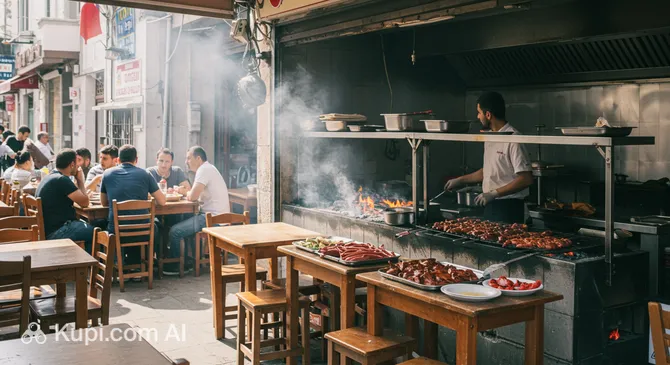
In Tarsus, you will find many options for a delicious meal: from cozy family restaurants offering home cooking to lively street cafes where you can quickly grab a snack of fresh seafood or seasonal vegetables. Locals and tourists love to visit the Kirkkasik Bazaar, where you can always find fresh fruit, aromatic spices, and homemade cheeses. To try authentic meat dishes, check out establishments such as Cigerci Yusuf, famous for its kebabs. The city's gastronomic scene is lively and diverse, offering options for every taste and budget.

Ciğerci Yusuf. Illustration.
Source: Kupi.com AI

Traveler photos:

A culinary journey through Tarsus is not just about tasting dishes, but about immersing yourself in the local culture. The city is also known for its gastronomic festivals, where you can get acquainted with the skills of local chefs and try the most unusual treats. This will undoubtedly be a bright and memorable impression of your trip.

Travel Tips

Welcome to Tarsus, a city with a rich history and a unique atmosphere! To make your journey through this amazing corner of Turkey as comfortable and memorable as possible, we have prepared some practical tips.

  1. Clothing and Essentials:

    The climate in Tarsus is Mediterranean: summers are hot and dry, while winters are mild and rainy. In summer, bring light, breathable clothing made of natural fabrics, a hat, sunglasses, and sunscreen. In spring and autumn, clothing that can be layered and a light jacket will be useful. In winter, bring warmer clothes and an umbrella or raincoat. Be sure to bring comfortable shoes for walking around historical sites with cobblestones. When visiting religious sites, such as the Ulu Cami mosque or St. Paul's Well, choose modest clothing that covers shoulders and knees; women may need a headscarf to enter the mosque. Don't forget a travel adapter for sockets (type F is used in Turkey).

  2. City Transport:

    It is convenient to get around Tarsus by city buses (belediye otobüsleri) and minibuses known as dolmush. These are affordable ways to explore the city. Taxis are also widely available; make sure the driver turns on the meter or agree on the fare in advance. Renting a car can be useful if you plan to explore the surroundings of the Mersin province, but parking may be difficult in the very center of Tarsus.

  3. Finance:

    The local currency is the Turkish Lira (TRY). You can exchange money at banks or exchange offices (döviz bürosu), where the rate is usually better than at airports or hotels. Credit and debit cards are accepted in most shops, restaurants, and hotels. International cards generally work without problems. ATMs are easy to find throughout the city. An approximate daily budget (excluding accommodation) can start from 500-800 TRY, but this depends heavily on your preferences. Tips are welcome: in restaurants, it is customary to leave about 10% of the bill if service is not included. You can also round up the fare in a taxi or leave a small tip for hotel staff.

  4. Health and Safety:

    Pharmacies (eczane) are easy to find and are marked with a green cross. A list of on-duty pharmacies (nöbetçi eczane) that are open 24/7 is usually posted on the doors of other pharmacies. If you need medical assistance, private clinics often have English-speaking staff. Be sure to take out travel insurance before your trip. The emergency number is 112. Tarsus is generally a safe city. Follow standard precautions: watch your belongings in crowded places like markets and avoid walking alone in poorly lit areas late at night.

  5. Communication:

    The official language is Turkish. English is common in tourist zones, hotels, and among the youth, but knowing a few basic phrases in Turkish will be very useful and appreciated by locals. Try learning: "Merhaba" (Hello), "Teşekkür ederim" (Thank you), "Lütfen" (Please). A local SIM card can be purchased at the stores of mobile operators (e.g., Turkcell, Vodafone, Türk Telekom) upon presentation of a passport. Wi-Fi is available in most hotels, cafes, and some public places.

  6. Local Etiquette:

    Turkish people are known for their hospitality. A simple greeting like "Merhaba" will be appropriate. A handshake is common when meeting men. Behave discreetly in public places. When visiting mosques and other religious sites, show respect, dress modestly, and keep quiet. If you are invited for tea (çay), it is a sign of hospitality — try not to refuse.

  7. Things to Avoid:

    Do not take photos of people without their permission, especially women in traditional clothing and in religious places. Show respect for the state symbols of Turkey and the figure of Mustafa Kemal Atatürk; criticism or disrespectful remarks can be taken very negatively.

  8. Additional Tip:

    Tarsus is a city with an incredibly ancient history, closely linked with the name of the Apostle Paul. To dive deeper into the atmosphere of antiquity when visiting places like St. Paul's Well or the ancient road, consider hiring a local guide. And, of course, don't miss the chance to try local culinary delights, such as the meat dish "tantuni" or the traditional "cezerye" dessert made from carrots.

We hope these tips help you plan an unforgettable trip to Tarsus and fully enjoy its unique historical heritage and hospitality!

Entertainment & Nightlife

Evening Tarsus offers guests various ways to pleasantly end a day filled with excursions and impressions. Although the city is not known for boisterous nightclubs and 24-hour parties, there is definitely a place to relax, enjoy the local atmosphere, and savor delicious food after dark. The main focus of evening life is on cozy restaurants, atmospheric bars, and cafes.

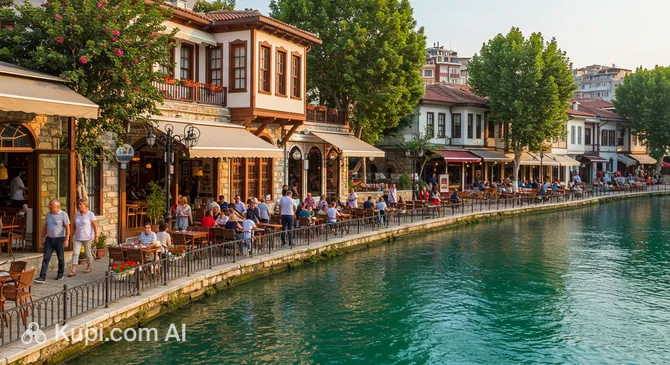
The main points of attraction for evening leisure are, first of all, the picturesque Yarenlik (promenade). Here, along the river, many restaurants and cafes are concentrated, offering both local cuisine and just the opportunity to have a cup of Turkish tea or coffee with a view of the water. Activity is also observed in the central part of Tarsus and in the area of the Tarsu Shopping Center, where some food outlets stay open until late evening.

Yarenlik Promenade. Illustration.
Source: Kupi.com AI

Traveler photos:

The atmosphere in most evening establishments in Tarsus is quite relaxed and welcoming. The crowd is mixed — local residents spending time with family and friends, and tourists. Among specific places where you can spend a pleasant evening, one might highlight, for example, the bar Cigerci Yusuf, known for its laid-back setting and a good selection of drinks and snacks. Most restaurants and bars work until midnight, and on weekends, a bit longer. The dress code is generally casual (smart casual), with the possible exception of some more upscale restaurants.

The best time for evening strolls and visiting establishments is after 8:00 PM or 9:00 PM, when the daytime heat subsides and the city fills with a special southern atmosphere. Prices in restaurants and bars in Tarsus can generally be called moderate, but they can vary depending on the level and location of the establishment. For getting around the city at night, it is recommended to use official taxi services. Make sure the driver turns on the meter or agree on the fare in advance, especially for long distances.

Regarding safety, Tarsus is generally considered a quiet and safe city for tourists. Nevertheless, in the evening and at night, you should not neglect standard precautions: avoid poorly lit and deserted alleys, and keep an eye on your personal belongings. Walks in central, well-lit, and busy areas, such as the aforementioned Yarenlik (promenade), are usually comfortable and safe.

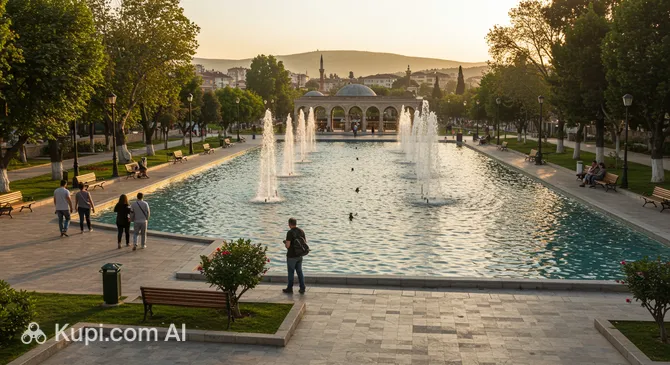
During the day, Tarsus offers its guests a rich cultural program. History and antiquity lovers will appreciate iconic places such as the legendary Cleopatra's Gate, the colorful old Kirkkasik Bazaar, or St. Paul's Church, which today functions as a museum. For leisurely outdoor relaxation, Tarsus Cultural Park is perfect, where you can walk among the greenery and take a break from the city bustle.

Tarsus Culture Park. Illustration.
Source: Kupi.com AI

Traveler photos:

Parks & Museums

Tarsus is a city with a rich history that offers its guests not only a dive into the past but also great opportunities for outdoor relaxation and getting to know unique cultural heritage. Here you will find shady parks for leisurely strolls, significant museums, and ancient monuments that tell stories of bygone eras.

For those seeking solitude with nature or just a pleasant place to relax, Tarsus offers several wonderful green zones. One of the popular spots is the Tarsus Cultural Park. It is a great space for family recreation, walks, and picnics, where you can enjoy the greenery and fresh air away from the city bustle.

Lovers of walks along the water will enjoy the Yarenlik (promenade). This picturesque embankment along the Berdan River is an ideal place for evening strolls, jogging, or simply contemplating the surrounding nature. Here you can often meet local residents enjoying the quiet atmosphere.

Another notable place combining outdoor relaxation with an educational element is the Minelayer Nusret and Canakkale Victory Culture Park. In addition to touring the historical museum ship, visitors can walk through the adjacent park area, making it an interesting spot for the whole family.

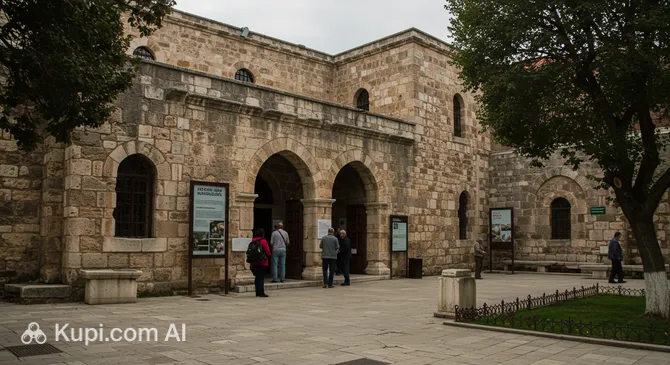
The cultural heritage of Tarsus is no less impressive. The main pilgrimage site for history and religion enthusiasts is St. Paul's Church. This ancient temple, now functioning as a museum, is associated with the name of the Apostle Paul, who was born in Tarsus. A visit to the church allows you to touch the centuries-old history of Christianity in the region.

The symbol of the city and one of its most recognizable landmarks is Cleopatra's Gate. This monumental arch, according to legend, marks the meeting place of Mark Antony and the Egyptian Queen Cleopatra. A walk to the gate is an opportunity to take memorable photos and feel the breath of ancient history.

To plunge into the authentic atmosphere of the East, you should definitely visit the Kirkkasik Bazaar. This historical market still retains its flavor. Here you can find traditional goods, handicrafts, spices, and sweets, as well as simply watch the lively trade.

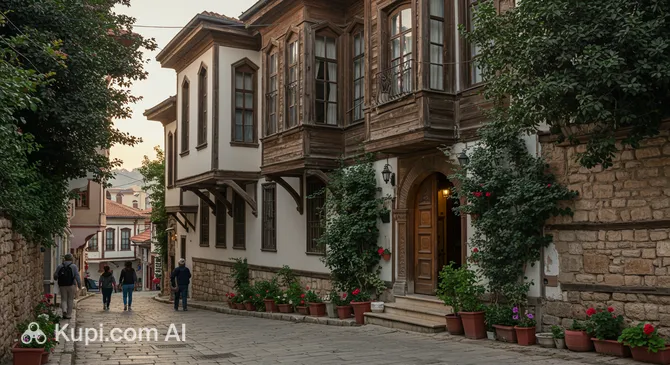
The city's architectural heritage also deserves attention. Take a walk through the old quarters to see the Historical Houses of Tarsus, many of which are perfectly preserved and demonstrate the traditional building style. No less significant an architectural monument is the Grand Mosque of Tarsus, impressive in its size and decoration.

Tarsus Historic Houses. Illustration.
Source: Kupi.com AI

Traveler photos:

For a truly authentic experience, do not limit yourself to well-known landmarks. Drop into one of the traditional eateries in the old city, such as Cigerci Yusuf, to try local delicacies. Also explore the lesser-known streets and quarters — that is where the most interesting finds are often hidden and the genuine life of the city is revealed.

Getting Around

Public transport in Tarsus is mainly represented by buses and minibuses, known as "dolmush". These two modes of transport cover most areas of the city and are the primary way of getting around for local residents and tourists.

Buses in Tarsus follow set routes and schedules. They are a more formal mode of transport compared to dolmush. A transport card is often used to pay the fare on city buses, which can be purchased and topped up at special kiosks or machines. In some cases, cash payment to the driver is possible, but having a card usually makes travel more convenient and economical. The approximate cost of a single trip on a city bus is several Turkish Liras (TRY). Schedules and routes can be checked at stops or through local information resources.

Dolmush are minibuses popular in Turkey that run along specific routes but often do not have a strict schedule and stop at the request of passengers in any permitted place. Payment in a dolmush is made in cash directly to the driver upon entry. The fare depends on the distance and usually varies from a few to a dozen Turkish Liras (TRY). This is a flexible and often faster way to get to your destination, especially if it is off the main bus routes.

Practical tips for tourists:

  • For convenience when traveling on city buses, it is recommended to purchase a local transport card if you plan to use public transport frequently.

  • Check the route and direction with the driver or other passengers, especially if using a dolmush, as the information on them might only be in Turkish.

  • Carry small cash for paying fares in dolmush.

  • Public transport usually operates from early morning until late evening, typically from 6:00-7:00 AM to 10:00-11:00 PM, but exact hours and frequency of trips may vary depending on the specific route and day of the week (intervals may be increased on weekends and holidays).

Alternatives: Taxi services are also widely available in Tarsus. Taxi stands can be found in busy areas, or you can call a car by phone or through mobile apps. The cost of a taxi ride is significantly higher than public transport and is calculated by the meter. Bicycle rental and car sharing are less common as a primary means of transportation for tourists.

Accommodation

When planning a trip to Tarsus, you will find a variety of accommodation options to suit different preferences and budgets. The city offers a choice ranging from budget hostels and cozy guesthouses that convey the local flavor to more standard mid-range hotels and short-term rental apartments. While large international hotel chains may not be as widely represented as in major metropolises, Tarsus compensates for this with the authenticity and hospitality of local establishments.

For tourists, areas located near historical attractions will be particularly convenient. The central part of the city, where iconic sites like Cleopatra's Gate, Kirkkasik Bazaar, and St. Paul's Church are located, offers a good selection of housing. Staying here will make it easy to explore the historical houses of Tarsus and be within walking distance of many interesting sites. It is also worth considering options near the Tarsus Cultural Park for pleasant strolls.

Tarsus Historic Houses. Illustration.
Source: Kupi.com AI

Traveler photos:

The price range for accommodation in Tarsus varies from budget options to mid-range levels. It is recommended to book accommodation in advance, especially if your trip falls during the peak tourist season or during local holidays, to ensure the best choice and prices. Popular online platforms are convenient for searching and booking, and direct booking at some hotels is also an option.

Nearby Cities

For those who want to explore the surrounding area, Tarsus serves as an excellent starting point for day trips to several interesting nearby locations:

CityPopulationDistance
Mersin1 814 46825 km
Seyhan792 53633 km
Kuyuluk16 07339 km
Adana1 765 98140 km
Camliyayla8 67944 km

A trip to Mersin, located just 25 km away, will reveal a lively port city on the Mediterranean Sea. Here you can walk along the beautiful waterfront, enjoy fresh seafood in numerous restaurants, and explore historical sites such as the ruins of the ancient city of Soli-Pompeiopolis. Mersin also attracts visitors with modern shopping centers and opportunities for beach relaxation.

Adana, located about 40 km from Tarsus, is one of the largest cities in Turkey and offers a rich cultural and gastronomic experience. The city is world-famous for its magnificent cuisine, especially the renowned Adana kebab. Among the main attractions are the ancient stone bridge Taskopru over the Seyhan River and the impressive Sabanci Central Mosque, one of the largest in the Middle East. A walk along the Seyhan River and a visit to the Adana Archaeological Museum will also leave a vivid impression.

These nearby destinations, as well as other cities from the list, allow for a deeper acquaintance with the diverse culture, history, and landscapes of the Cukurova region, offering travelers many options for exciting day trips from Tarsus.

Shopping & Souvenirs

Tarsus offers travelers a combination of traditional and modern shopping. Although the city is not a major commercial center, you can find interesting local goods, handicrafts, and feel the flavor of an Eastern bazaar. Local textiles, spices, and handmade items are particularly famous.

The main shopping areas are concentrated in the city center. Walk through the streets adjacent to historical landmarks, such as the Kirkkasik Bazaar, where you will find many small shops and stalls. The city's main avenues also offer a good choice of various shops.

For those who prefer a modern shopping format, Tarsus has the Tarsu Shopping Center. It features both Turkish and international brands of clothing, shoes, and electronics, as well as a food court and entertainment areas. It's a great place for comfortable shopping in any weather.

Tarsu Shopping Mall. Illustration.
Source: Kupi.com AI

Traveler photos:

Be sure to visit local markets to experience the authentic atmosphere. Kirkkasik Bazaar (Kırkkaşık Bedesteni) is a historical covered market built back in Ottoman times. Here you can find traditional fabrics, carpets, spices, copperware, jewelry, and other products of local craftsmen. It is not just a place for shopping, but a real attraction that immerses you in the history of the city.

Kırkkaşık Bazaar. Illustration.
Source: Kupi.com AI

Traveler photos:

As souvenirs from Tarsus, it is worth bringing back traditional Turkish goods: colorful ceramics, small carpets or kilims, famous Turkish delight, various spices, olive oil-based soap, as well as "nazar boncuk" evil eye amulets. Pay attention to copper products and textiles with local patterns.

Most shops in Tarsus operate from 9:00-10:00 AM until 7:00-8:00 PM. Small shops may close for a lunch break. Shopping centers are usually open longer, until about 10:00 PM. Major stores and shopping centers accept bank cards, but in markets and small shops, it is better to have cash Turkish Liras on hand.

Tourists shopping in Turkey can use the VAT refund system (Tax Free). Look for shops with the corresponding logo. To process the tax refund, you will need to fill out a special check at the time of purchase and present it together with the goods and the cash receipt at customs at the airport when leaving the country.

Reached the end of the page?

That means the route is fully explored