Support

Al Ain National Museum

About

In the heart of the ancient Al Ain oasis lies a place where the region's centuries-old history comes to life—the Al Ain National Museum. It is the oldest cultural institution in the UAE, founded in 1969 at the initiative of Sheikh Zayed bin Sultan Al Nahyan. The museum serves as a bridge between the past and present, telling the story of the people who have inhabited these lands over the last 8,000 years.
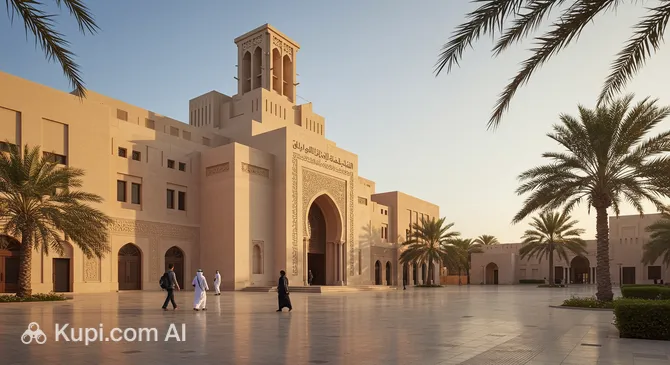
Al Ain National Museum
Al Ain National Museum. Иллюстрация. Источник: Kupi.com AI

The museum's exhibition covers a vast period—from the Stone Age to the founding of the federation in 1971. It houses thousands of artifacts discovered during local archaeological excavations, including unique items from UNESCO World Heritage sites. The museum building is located right next to the historic Sultan Fort, which gives the entire complex a special atmosphere of authenticity.

Following a major renovation, the museum has been transformed into a high-tech space with interactive galleries. Visitors can see not only ancient tools and jewelry but also rare diplomatic gifts presented to the country's leaders. It is the perfect starting point for those who want to understand the origins of Emirati culture and see how the harsh desert transformed into a prosperous nation.

Contacts

To confirm the latest information about special exhibitions or to book an organized tour, you may contact the museum staff directly. We recommend checking availability in advance, especially if you plan to visit as part of a large group or during public holidays.

Below are the primary contact details for reaching the complex administration:

How to contactContact
AddressCentral District - Hai Al Hisn - Абу-Даби - Объединенные Арабские Эмираты
Phone+971 3 711 8383
Websitealainmuseum.ae

What to Do

A visit to the museum offers a captivating journey through the millennia. In the archaeological section, you can see 5,000-year-old Mesopotamian pots and exquisite jewelry found in Bronze Age tombs. Of particular interest is the gallery dedicated to the falaj system—an ancient irrigation method that allowed arid lands to be transformed into blooming oases as early as a thousand years BC.

The ethnographic part of the museum immerses you in the traditional life of Emiratis. It features reconstructions of living quarters, ancient medical instruments, and items related to education and agriculture. Photographs from the mid-20th century vividly demonstrate the striking changes that have taken place in the appearance of Al Ain and Liwa in just a few decades.

Be sure to set aside time to explore the mud-brick Sultan Fort. Its massive towers and gates are a beautiful example of traditional Arabian architecture. After touring the main exhibition, you can check out the temporary displays or stroll through the grounds where the remains of ancient wells are preserved, making the visit educational for visitors of all ages.

Getting There

The National Museum is located in the heart of the Hai Al Hisn central district, making it easily accessible for most travelers. If you are driving from Abu Dhabi, the journey via the E22 highway takes about an hour and a half (approximately 130 km), while the drive from Dubai via scenic roads takes about two hours. Free on-site parking is available for visitors traveling by car.

For those who prefer public transport, regular buses (lines 143 and 145) run from Abu Dhabi’s central bus station. Upon reaching the Al Ain bus station, you can transfer to a local bus or take a taxi, which will bring you to the museum's doors in just 10–15 minutes.

Due to its convenient location near the Al Ain Oasis, many tourists prefer to reach the museum on foot or by bicycle as part of a walk through the historic center. Look for signs leading to Sultan Fort, which is located in the immediate vicinity of the museum building.

Ближайший город: Al Ain

History & Facts

The history of this site began in 1969, when Sheikh Zayed bin Sultan Al Nahyan initiated the creation of a space to preserve the region's unique discoveries. It was the first museum in the United Arab Emirates, designed to document the nation's journey from ancient settlements to the formation of a modern state.

Initially, the collections were housed within the walls of the Sultan Fort, built in 1910 by Sheikh Sultan bin Zayed. Later, in 1971, a purpose-built building was opened adjacent to it. The choice of location was not accidental: Al Ain has historically been a crossroads of civilizations, preserving traces of life dating back more than 8,000 years, from the Stone Age to the early Islamic period.

In 2018, the museum closed for an extensive renovation to transform into a modern cultural space. The updated project by Dabbagh Architects carefully integrated historical layers—such as the 800 AD aflaj irrigation system and the 1960s Harat Al Hosn residential quarter—into a single narrative, reopening the renovated halls to the public in 2025.

Time Needed

To leisurely explore all the thematic galleries and walk through the surrounding grounds with the historic fort, you will typically need 1.5 to 3 hours. If you plan to study the archaeological artifacts in detail and view the interactive presentations, your visit may take longer.

For travelers with children or those who wish to combine their museum visit with a walk through the neighboring oasis, we recommend setting aside half a day. This will allow you to enjoy the exhibition at a relaxed pace and take atmospheric photos against the ancient walls of Sultan Fort.

Working Hours

The museum is open to visitors daily from 10:00 AM to midnight, allowing you to plan your visit even for the evening hours when the heat subsides. Please note that following the major renovation in 2025, the schedule may be adjusted depending on the season or special cultural events.

Before your trip, we strongly recommend visiting the museum's official website or calling the contact number to confirm the current opening hours and the accessibility of specific sections of the fort.

10:00–00:00

Nearby

Exploring the surroundings of the National Museum allows you to dive deeper into the atmosphere of the "Garden City" and see how carefully cultural heritage is preserved here. Most points of interest are within walking distance or a few minutes' drive.

A walk through the historic center of Al Ain will reveal majestic forts and cozy corners that hold the memory of past generations:

NameDistance
Al Ain Oasis1.2 km
Al Ain Palace Museum1.4 km
Oud Al Touba Shopping Center1.6 km
Al Ain Clocktower1.7 km
Al Jahili Fort2.2 km
Al Salam Grand Resort3.1 km
Qasr Al Muwaiji4.9 km

Reached the end of the page?

That means the route is fully explored