Support

Clifton Suspension Bridge

About

The Clifton Suspension Bridge is not just an engineering structure, but a true symbol of the city of Bristol and one of the most recognizable landmarks in the United Kingdom. This majestic suspension bridge, spanning the picturesque Avon Gorge, connects the districts of Clifton and Long Ashton. Its elegant silhouette has become the city's calling card and a testament to the outstanding engineering achievements of the 19th century.

The structure, designed by the genius engineer Isambard Kingdom Brunel, is striking in its scale and grace. The total length of the bridge is about 230 meters, with a main span of 190 meters. Rising 76 meters above the water, the bridge offers visitors breathtaking panoramic views of the river, the gorge, and the cityscape. A walk across it allows one to fully appreciate both the beauty of the surrounding nature and the boldness of the engineering.
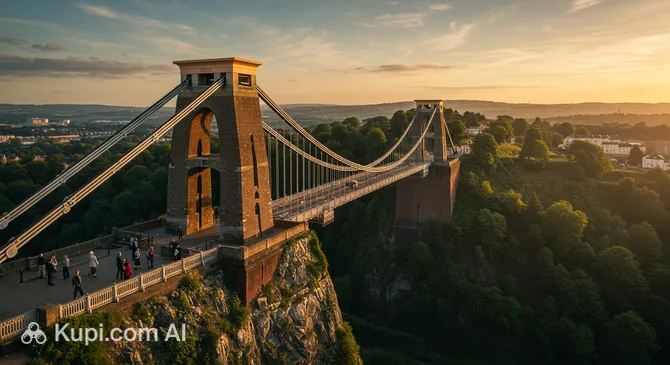
Clifton Suspension Bridge. Illustration.
Source: Kupi.com AI

Traveller photos:

Construction of the bridge, which began in 1831, was long and fraught with difficulties, and it only opened in 1864, after the designer's death. Today, the Clifton Suspension Bridge is not only an important transport artery but also a popular tourist site attracting travelers from all over the world. It blends harmoniously into the natural landscape, creating an unforgettable sight at any time of day, especially when the evening illumination is turned on.

Contacts

Since the Clifton Suspension Bridge is a public structure, finding a single phone number or email address for tourist inquiries can be difficult. Direct contact details for general questions are typically not listed in open sources.

For the most accurate and up-to-date information regarding bridge visits, including visitor center schedules, access conditions, available tours, or special events, it is highly recommended to contact the official tourism portals for the city of Bristol. This is where all the latest information for travelers is published.

How to contactContact
AddressBristol BS3 2JX, UK
Phone+44 117 974 4664
Websitewww.cliftonbridge.org.uk

What to Do

A visit to the Clifton Suspension Bridge is, first and foremost, an opportunity to enjoy incredible views. The main activity for tourists is a leisurely stroll along the bridge's pedestrian paths. From here, breathtaking panoramas of the Avon Gorge and the city of Bristol open up. This spot is particularly popular with photographers, as at sunset or in the morning mist, the scenery becomes truly magical. The bridge is also popular with cyclists who can cross it while admiring the surroundings.

For those who want to delve deeper into the history of this engineering marvel, there is a visitor center located next to the bridge. There, you can learn interesting facts about the structure's long and challenging construction. Additionally, other attractions are in the immediate vicinity. You can head up to the Clifton Observatory, which houses a unique camera obscura that projects a panorama of the surroundings onto a special screen. Nearby are also the famous Bristol caves, including Giant's Cave, which can be visited as part of a tour.

Besides self-guided walks, organized tours are available for visitors. Free tours are held on weekends and public holidays, starting from the Bristol side of the bridge and lasting about an hour. This is a great way to learn more about the history and architectural features from knowledgeable guides. Separate tours can be booked for large groups. The bridge also becomes a central point of attraction during the annual Bristol International Balloon Fiesta, when dozens of balloons rise into the sky, creating an unforgettable spectacle.

Getting There

Getting to the Clifton Suspension Bridge, one of the main icons of Bristol, is quite easy as it is located just 2.5 kilometers west of the city center. Thanks to numerous tourist signs, it is easy to find. For those who enjoy walking, the journey from the center takes about 45 minutes and makes for a pleasant addition to exploring the city. Of course, you can always take a taxi—the fastest way to reach your destination.

The most convenient and recommended method is public transport. Bus No. 8 runs regularly from the center of Bristol or Temple Meads railway station. It departs approximately every 10 minutes, making the trip very convenient. You should get off at the Clifton Village stop, which is just a few minutes' leisurely walk from the bridge.

If you prefer traveling by train, the nearest railway station is Clifton Down. From there, you can walk to the bridge in about 20–25 minutes. For those who choose to arrive by car, there is parking near the bridge. However, keep in mind that parking spaces are limited, so to avoid extra hassle, especially on weekends and public holidays, it is better to opt for public transport.

Nearest city: Bristol

History & Facts

The history of the Clifton Suspension Bridge is a story of a bold dream and engineering genius. The idea of connecting the banks of the Avon Gorge emerged back in the mid-18th century, but it only became a reality in the following century. The project was undertaken by the outstanding British engineer Isambard Kingdom Brunel, for whom this bridge was his first major independent project. Construction began in 1836 and immediately faced numerous difficulties, including financial problems and technical delays, stretching the process over decades.

Unfortunately, Brunel himself never saw his creation completed—he passed away in 1859. After his death, fellow engineers decided to finish the bridge in memory of his talent and contribution to the development of the United Kingdom. To complete the work, chains from another of Brunel's bridges, which was being dismantled at the time, were even used. The ceremonial opening of the Clifton Suspension Bridge took place on December 8, 1864, and since then, it has become an integral part of Bristol's cityscape and a true monument to its creator.

Beyond its architectural and historical value, the bridge also went down in history in a completely unexpected way. It was here that the world's first bungee jump took place on April 1, 1979. Several daredevils from the Oxford University Dangerous Sports Club jumped from a height of 76 meters, forever etching the Clifton Suspension Bridge into the annals of extreme sports and attracting a completely new audience.

Time Needed

When planning a visit to the Clifton Suspension Bridge, you should aim for a duration of 30 minutes to several hours, depending on your interests. If your goal is simply to walk across this famous structure, enjoy panoramic views of the Avon Gorge, and take some memorable photos, 30–40 minutes will be quite enough. This is enough time to walk leisurely from one end of the bridge to the other and back, fully experiencing its grandeur and the beauty of the surrounding landscapes.

If you want to do more than just walk and wish to dive deeper into the history of this place, it is worth setting aside 1 to 2 hours. This will be enough time to stop by the visitor center located nearby after your walk. There, you can learn fascinating details about the design and long-term construction of this miracle of engineering created by Isambard Kingdom Brunel. Such a visit will provide a more comprehensive understanding of the landmark's significance to Bristol and the entire United Kingdom.

If you want to explore all the surrounding attractions, feel free to allocate half a day for your visit. Near the bridge is the Clifton Observatory, where you can see a unique camera obscura. From there, the descent begins into the famous Giant's Cave, which involves a journey through a tunnel with 130 steps leading to a viewing platform in the cliffside. Considering the time to explore these sites and perhaps relax in the observatory's cafe, your visit to this iconic location could take significantly longer.

Working Hours

One of the main advantages of the Clifton Suspension Bridge is its accessibility. The bridge itself is open to pedestrians and transport 24/7 year-round, allowing you to plan your visit at any convenient time. Walking across it is free, and no advance booking is required. This makes the bridge an ideal spot for both morning walks and evening strolls when the illumination, which operates from dusk until midnight, is turned on.

For those who want to learn more about the history of the structure, a visitor center is located near the bridge. It is open to visitors daily from 10:00 to 17:00, and admission is free. The center features exhibits on the bridge's construction and its creator. It is worth noting that the nearby Clifton Observatory may have its own schedule, so it is recommended to check for current opening hours on official websites or at Bristol tourist information centers before visiting.

Open 24/7

Nearby

Visiting the Clifton Suspension Bridge is just the beginning of your acquaintance with one of Bristol's most picturesque areas. The surroundings of this famous structure are rich with interesting sites, from green parks to historical museums. A stroll through them will allow you to immerse yourself deeper in the city's atmosphere and make your journey more fulfilling and memorable.

By taking the time to explore nearby attractions, you can get a fuller picture of Bristol's cultural and historical heritage. Many of them are within walking distance, making the bridge an ideal starting point for a fascinating walk. Below is a list of interesting places located nearby.

NameDistance
Clifton Suspension Bridge Museum0.2 km
Cabot Tower1.5 km
SS Great Britain1.5 km
Bristol Museum & Art Gallery1.6 km
Broad Quay Caribbean Bar2.2 km
M Shed2.2 km
The Aquatic Store2.3 km

Reached the bottom of the page?

Looks like you know this route inside out