Support

The Roman Baths

About

The Roman Baths are a unique historical and architectural complex located in the city of Bath, near Bristol, in the United Kingdom. This magnificent monument features beautifully preserved ruins of ancient thermal baths built by the Romans on the site of the country's only natural hot mineral springs. Today, it is one of the region's most famous and visited attractions, drawing over a million tourists from around the world every year with its rich history and ancient atmosphere.

The complex consists of several key parts: the Sacred Spring, the ruins of a Roman temple, the baths themselves, and a modern museum housing numerous artifacts found during excavations. Most of the ancient structures are located below modern street level, allowing visitors to literally step back in time and explore original Roman pools, remains of an ancient heating system, and stone masonry that is nearly two thousand years old.
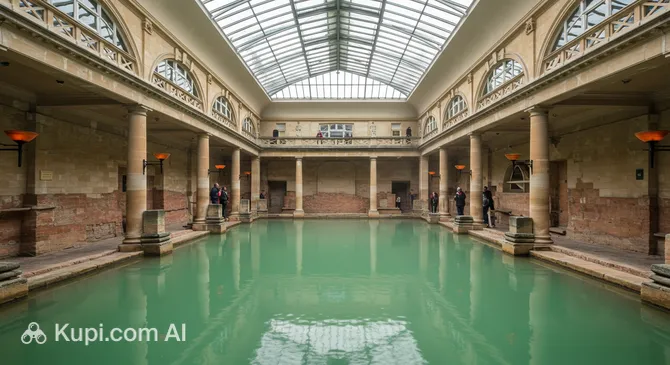
The Roman Baths. Illustration.
Source: Kupi.com AI

Traveler photos:

Visiting the Roman Baths is a true journey through time. Here, you can not only see how the famous Roman thermae were constructed but also learn about the lives and rituals of the people of that era. The museum's collection includes thousands of Roman coins thrown into the Sacred Spring as offerings to the gods, as well as curses inscribed on lead tablets. Although bathing in the historical pools is prohibited today, the grandeur and historical significance of this site leave an unforgettable impression.

Contacts

To plan your visit and check up-to-date information on opening hours, ticket prices, or special events, it is recommended to contact the complex administration. All the necessary contact information is provided below.

How to contactContact
AddressAbbey Churchyard, Bath BA1 1LZ, UK
Phone number+44 1225 477785
Websitewww.romanbaths.co.uk

What to Do

During a visit to the Roman Baths, visitors can fully immerse themselves in history while exploring the well-preserved complex. You can walk across ancient stone pavements, view the Great Bath filled with thermal water, and explore the museum exhibits. The museum houses unique artifacts found during excavations, including coins, jewelry, statues, and the famous lead curse tablets that Romans threw into the Sacred Spring.

Exploring the complex is more than just a walk through ruins; it is a true journey through time. You can walk around the perimeter of the baths, where statues of Roman emperors and governors are installed, and admire the architecture. From here, you also get a magnificent view of the neighboring Bath Abbey. A highlight is the Sacred Spring itself, from which hot mineral water still flows—the central element around which the baths were originally built.

You can round off your visit in the elegant Grand Pump Room, which is adjacent to the complex. Here, guests have the unique opportunity to sample the famous mineral water from a special fountain, which contains 43 different minerals. Additionally, live music is often played in this historic hall, and you can enjoy a traditional afternoon tea, making the visit even more memorable.

Getting There

While this attraction is closely associated with Bristol, the Roman Baths are actually located in the neighboring city of Bath. It is situated about 20 kilometers to the southeast, and getting there from Bristol is quite simple, making it an ideal destination for a day trip.

The most convenient and fastest way to travel is by train. Regular services depart from Bristol Temple Meads station and arrive at Bath Spa station in just 15–20 minutes. Alternatively, you can travel by bus or car, which takes about 30–40 minutes, though you should keep in mind that traffic may affect your journey time.

Upon arrival at Bath Spa railway station, the complex is within easy walking distance. A stroll through the city's picturesque streets takes no more than 5–10 minutes. The entrance to the Roman Baths is located in Abbey Church Yard, in the heart of the historic center, right next to the majestic Bath Abbey, so you certainly won't miss this iconic site.

Nearest city: Bristol

History & Facts

The history of the Roman Baths dates back to the pre-Roman era, when local Celtic tribes revered the hot springs as a sacred site. They built a shrine dedicated to the goddess Sulis, whom they believed to be the guardian of the healing waters. With the arrival of the Romans in the 1st century AD, the site was further developed. Recognizing the potential of the springs, the invaders did not destroy the shrine but integrated it into their own culture, identifying the goddess Sulis with their own goddess, Minerva. This marked the beginning of the construction of a grand bathing complex, which included a caldarium (hot bath), tepidarium (warm bath), and frigidarium (cold bath), as well as temple buildings and relaxation halls.

The complex was used extensively until the Romans departed from the United Kingdom in the 5th century, after which it gradually fell into disrepair and was partially destroyed. Throughout the Middle Ages, the area was rebuilt several times, but the true renaissance for the site came in the 18th century. During this period, when water-based treatments became fashionable, architects John Wood the Elder and his son John Wood the Younger built elegant Neoclassical pavilions over the ruins. Later, colonnades and the famous Grand Pump Room were added, turning Bath into one of the country's premier social resorts.

The modern appearance familiar to tourists visiting from Bristol and other cities was acquired in the 19th century following extensive restoration and archaeological work. It was then that many original Roman elements, which now lie below the level of the modern street, were fully excavated and restored. Thus, the current Roman Baths represent a unique blend of authentic Roman masonry, Georgian elegance, and Victorian additions, making them more than just ruins—they are a living chronicle spanning nearly two thousand years of history.

Time Needed

To fully and leisurely explore the Roman Baths historical complex, it is recommended to set aside 1.5 to 2.5 hours. This time is usually sufficient to see all the main halls, including the Great Bath and the ruins of the ancient temple, as well as to visit the adjacent museum without rushing.

The visit is organized as a self-guided tour with an audio guide, which is included in the ticket price and available in several languages. This allows guests to explore the complex at their own pace, studying exhibits of interest in detail—from ancient Roman coins to unique artifacts found during excavations. The audio guide offers several themed routes, making the visit engaging for both adults and children.

If you want to make the most of your experience, you should also plan time to visit the elegant Grand Pump Room. Here, you can not only relax in a historic setting but also taste the famous mineral water that gave life to this place. By allocating about two hours for your visit, you will be able to fully enjoy the atmosphere of this unique historical monument without missing any important details.

Working Hours

The Roman Baths are open to visitors year-round, except for December 25th and 26th. Standard opening hours are daily, usually from 9:00 to 18:00, with the last entry allowed at 17:00. However, please note that the schedule may change depending on the season, especially during holidays or special events. Therefore, it is highly recommended to check the latest information on the attraction's official website before planning your visit.

To guarantee entry and avoid long queues, especially during the peak tourist season, it is best to book tickets online in advance. This will not only save you time but also allow you to choose the most convenient time slot for your visit. Electronic tickets can be presented directly at the entrance, making the visiting process as comfortable as possible.

9:00 – 18:00

Nearby

A visit to the Roman Baths is undoubtedly the highlight of any trip to Bath. However, to get a complete picture of this amazing city, it is worth spending time exploring its surroundings as well. The historic center is so compact that many iconic landmarks are literally just a few steps away, allowing you to enrich your journey with new impressions and discoveries.

A walk through the neighboring streets will reveal other gems of Georgian architecture and important historical monuments, each telling the story of this unique corner of the United Kingdom in its own way. Exploring nearby attractions won't take much time but will allow you to dive deeper into the city's atmosphere and see why its entire center has been designated a UNESCO World Heritage site.

NameDistance
Sally Lunn’s Historic Eating House & Museum0.1 km
Royal Crescent0.8 km
The Holburne Museum0.8 km
Avon Valley Adventure Park8.8 km
Dyrham Park11 km
Wake The Tiger16 km
The Jam Jar17.5 km

Have you reached the end of the page?

So the route has been studied inside and out