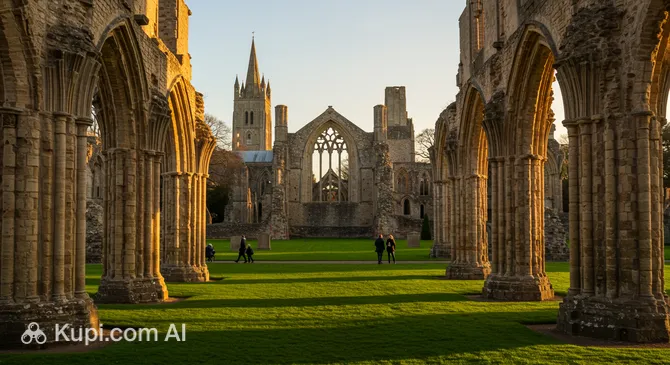
Bury St Edmunds Abbey consists of the impressive ruins of what was once one of the wealthiest and most influential Benedictine monasteries in medieval England. This iconic historical site is located in the town of Bury St Edmunds, in the county of Suffolk, in the east of the United Kingdom. Today, it attracts thousands of visitors with its centuries-old history and special atmosphere.
Traveller photos:
The history of this sacred site began long before the arrival of the Benedictines. It is believed that the first monastic community was founded here as early as the 7th century, and according to some records, the original settlement, known as Beodericsworth, emerged around 537 AD. However, the key event that defined the fate and name of the abbey was the translation of the remains of Saint Edmund, King of East Anglia and revered as a martyr, to this location in 903 AD. It was after this event that the place became known as Bury St Edmunds — \"St Edmund's town\".
In 1020, the community was transformed into a Benedictine monastery under the leadership of its first abbot, Uvius. Under Benedictine management, the abbey reached an incredible peak of prosperity, becoming a major center for pilgrimage, education, and culture, and owning vast lands. The monastery's greatness continued for centuries until November 1539, when it was closed during the Dissolution of the Monasteries by order of King Henry VIII, and its buildings gradually fell into disrepair.
Today, visitors to Bury St Edmunds Abbey can explore its majestic ruins, including the remains of the massive church and monastic buildings. A walk through the well-maintained Abbey Gardens surrounding the ruins allows you to feel the tranquility of the site and imagine its former glory. This is truly a unique opportunity to touch England's rich history and spend time in an atmosphere of peace and reflection.