Support

Southsea Castle

About

Southsea Castle is an impressive historical fortress located in the city of Portsmouth, on the south coast of the United Kingdom. It is one of the famous coastal forts built by order of King Henry VIII in 1544. The castle's main task was to protect the strategically important Portsmouth Harbour and the Solent from the south. The castle occupies a prime position on the southern tip of Portsea Island, right on the shoreline.
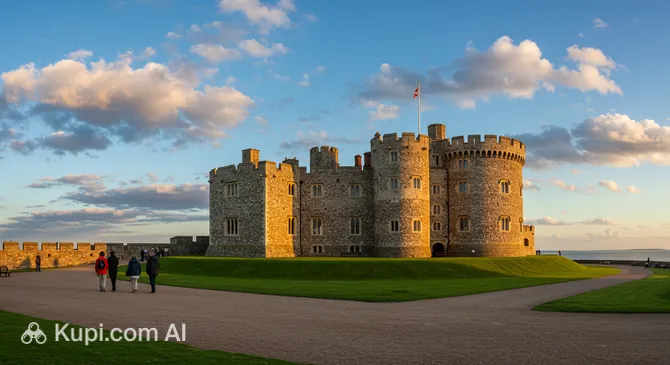
Southsea Castle. Illustration.
Source: Kupi.com AI

Traveler photos:

In the early period of its history, Southsea Castle was also known as Chaderton Castle. The structure was famous for its powerful artillery and was considered one of the best-armed castles of its time, playing a key role in the defense of the English coast.

Today, Southsea Castle is carefully preserved and has been transformed into a fascinating museum. It attracts many tourists who want to touch history and enjoy views of the strait. A visit to the castle allows you not only to learn about its military past but also to appreciate 16th-century engineering. It is one of the most significant and visited attractions in Portsmouth, offering an immersion into the region's rich history.

Contacts

For up-to-date contact information for Southsea Castle, including a phone number or email address for inquiries, it is recommended to check the attraction's official website. You can also confirm details at the Portsmouth tourist information centers upon arrival.

How to contactContact
AddressUnnamed Road, Southsea, Portsmouth, Southsea PO5 3PA, UK
Phone number+44 23 9284 1625
Websitesouthseacastle.co.uk

What to Do

Visiting Southsea Castle in Portsmouth is an immersion into the rich military history of the United Kingdom. Inside the castle, a fascinating museum exhibition awaits, detailing the centuries-old history of this fortification and its key role in protecting the English coast. You will be able to see original elements of the fortress dating back to the 16th century, as well as trace the changes made to the castle's design over subsequent eras, providing a complete picture of the evolution of defensive architecture.

Climbing the high walls of Southsea Castle, you will be rewarded with magnificent panoramic views. From here, a breathtaking picture of Old Portsmouth opens up, with its characteristic narrow, winding streets, cozy old houses, and churches. Of particular note is the lighthouse, built in 1828 on the castle's western gun platform, which remains an important navigational landmark today. From the castle grounds, you can also clearly see the round stone sea forts built on the orders of Henry VIII to strengthen coastal defenses, located about 100-150 meters from the shore.

Getting There

Southsea Castle is located in the coastal area of Southsea, on the southern tip of Portsea Island, which is part of the city of Portsmouth. Its exact address is Clarence Esplanade, Southsea, Portsmouth, Hampshire PO5 3PA, UK. This is a popular resort area, and the castle itself is a prominent part of the historical fortifications along the coast.

One of the most pleasant ways to reach the castle is a walk along the scenic seaside boulevards and esplanades of Portsmouth. Such a stroll allows you to enjoy sea views and fresh air as you gradually approach the historic structure. The castle is clearly visible from the promenade, making it hard to get lost.

If walking isn't for you or if you are coming from a more distant part of Portsmouth, you can use public transport. City buses run regularly to the Southsea area; check routes and stops nearest to Clarence Esplanade. Alternatively, taxis are always available to take you directly to the castle entrance from anywhere in the city.

Nearest city: Portsmouth

History & Facts

Southsea Castle, located in Portsmouth, is one of the UK's notable coastal fortresses with a rich history. Its construction began in 1544 by order of King Henry VIII and was overseen by the Governor of Portsmouth, Sir Anthony Knyvett. The work was carried out on a very tight schedule: by July of that same year, the first two guns were installed. By October 1544, the construction costs exceeded £3,100, with a significant portion—£1,300—sourced from the dissolution of the monasteries, which is an interesting detail regarding the financing of royal projects at the time.

Architecturally, Southsea Castle was an advanced fortification for 16th-century England. The design incorporated Italian-style elements that were already widespread in continental Europe but were a novelty for the British Isles. The core of the castle was a square central tower surrounded by thick walls. To the south, facing the sea, and to the north, the castle was strengthened with corner bastions, while the east and west sides featured specialized platforms for artillery, making it a formidable barrier for passing ships.

Throughout its centuries-long history, Southsea Castle repeatedly played an important role in coastal defense and was part of various historical events, including the English Civil War and the Second World War. This testifies to its strategic importance and the durability of its construction. In the 1680s, the castle underwent a significant reconstruction, likely updating its defensive capabilities to meet the requirements of the time.

A curious fact from the castle's history is linked to a visit by the Russian Tsar Peter the Great. On March 24 (Old Style; April 3, New Style), 1698, the young monarch, who was in England with the Grand Embassy, spent an hour touring Southsea Castle. He was brought here by boat from the flagship of Vice-Admiral Sir David Mitchell after Peter I had observed mock naval battles in the Solent. This episode highlights the international interest in English fortifications and naval power even in the late 17th century.

Time Needed

When planning a visit to Southsea Castle in Portsmouth, you should allow approximately 1-2 hours for a full tour. This time is usually enough to immerse yourself in the history of this coastal fort built by Henry VIII and enjoy its atmosphere.

During this time, you can walk along the ramparts, which offer beautiful views of the Solent and the Isle of Wight, and explore the interior rooms and exhibitions that tell the story of the castle and its role in coastal defense. If you wish to study every corner in detail, read all the information boards, or simply enjoy the views at a leisurely pace, your stay may be slightly longer.

It’s also worth noting that special events or exhibitions are sometimes held on the castle grounds, which may require extra time. Overall, Southsea Castle offers a compact yet rich historical experience, perfect for an educational stop during your journey through the United Kingdom.

Working Hours

When planning a visit to Southsea Castle in Portsmouth, it is important to check the current opening hours in advance. Typically, historical sites like this may have seasonal schedules that differ between summer and winter months. Sometimes, advance ticket booking may be required, especially during peak tourist season or for special guided tours.

As the exact opening hours and booking requirements for Southsea Castle can change, it is highly recommended to check the attraction's official website or contact the local Portsmouth tourist information center shortly before your planned visit. This will help you get the most up-to-date information and plan your visit effectively.

DayOpening hours
MondayClosed
Tuesday10:00 – 17:00
Wednesday10:00 – 17:00
Thursday10:00 – 17:00
Friday10:00 – 17:00
Saturday10:00 – 17:00
Sunday10:00 – 17:00

Nearby

A visit to Southsea Castle is undoubtedly a highlight, but you shouldn't stop there. Exploring the surrounding area will allow you to dive deeper into the atmosphere of Portsmouth and discover even more interesting spots hidden nearby. Each new discovery will add color to your journey and make your impressions more complete and memorable.

Near Southsea Castle, you will find several other notable sites that can enrich your itinerary in Portsmouth. Whether it’s diving into history at themed museums or simply enjoying a pleasant walk through scenic spots, the castle's surroundings offer various leisure options. Below is a list of some of them, including the distance.

NameDistance
The D-Day Story0.2 km
Seafront Steps0.5 km
Southsea Common0.7 km
South Parade Pier0.9 km
Portsmouth Museum and Art Gallery1.6 km
The Sally Port Inn1.8 km
The Tenth Hole1.8 km

Have you reached the end of the page?

So the route has been studied inside and out