Support

Mercator

About

The Mercator is an impressive 78-meter museum ship that has found its permanent home in the picturesque harbor of the Belgian city of Ostend. This majestic sailing vessel is not just a boat, but one of the city's main and most recognizable landmarks, consistently drawing the eyes and curiosity of tourists from all over the world.
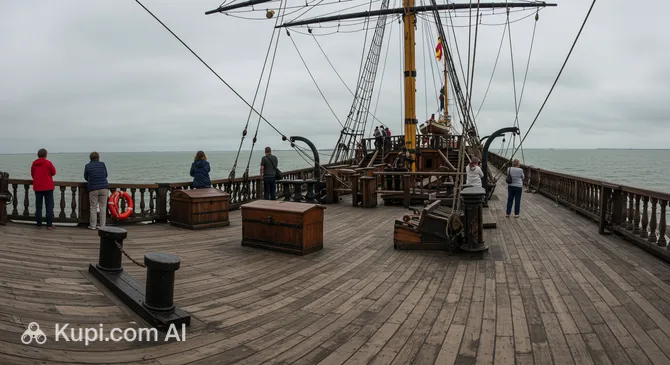
Mercator. Illustration.
Source: Kupi.com AI

Traveler photos:

The ship was named after Gerardus Mercator, the famous 16th-century Flemish cartographer and geographer whose revolutionary map projections had a massive impact on the development of navigation. Built in the shipyards of Scotland, the Mercator served as a training ship for the Belgian merchant fleet, training generations of sailors and completing many long-distance voyages before becoming a floating museum.

Today, the Mercator hospitably opens its decks to visitors. Stepping on board, you can immerse yourself in the atmosphere of maritime adventure, explore the ship's interiors—from the captain's bridge to the sailors' quarters—learn about its rich history, and discover more about how sailing ships are built. This is a unique opportunity to touch Belgium's maritime past and feel like part of a grand naval history.

Contacts

To find the most up-to-date information regarding opening hours, ticket prices, and available tours of the Mercator museum ship, it is recommended to visit its official website. You can also contact the Ostend tourist information centers, which typically provide contact phone numbers and email addresses.

How to contactContact
AddressJan Piersplein 2, 8400 Oostende, Belgium
Phone number+32 59 70 11 99
Websitewww.zeilschipmercator.be

What to Do

A visit to the Mercator museum ship is an exciting journey into the world of maritime adventure. A special route has been designed for guests, guiding you through every corner of the vessel. You can peer into the cabins where sailors and officers lived and see how daily life was organized on board during long voyages. This is a great opportunity to examine the ship's internal layout in detail and understand how its vital systems functioned.

On board the Mercator, everyone can feel like a real explorer. Head up to the captain's bridge, imagine yourself at the helm steering the ship through the waves, or look up at the three tall masts that once carried full sails. These interactive moments allow you to do more than just look; you can truly feel the spirit of maritime romance and the hardy daily life of merchant navy sailors.

To make your exploration as comfortable and educational as possible, you will be given a convenient laminated guide at the entrance to the ship. It will help you navigate the labyrinth of decks and compartments. Of particular interest are the navigational charts preserved on board, some of which—to the surprise of many visitors—are in Russian. These details add authenticity and help you dive deeper into the history of the Mercator as a training ship.

Getting There

Getting to the Mercator museum ship is quite simple, as it is located in the harbor of Ostend, a city with excellent transport links. If you are traveling through Belgium by train, Ostend is a convenient destination. Regular trains run here from major Belgian cities such as Brussels, Ghent, and Bruges.

Upon arriving at the Ostend railway station, you will be in the immediate vicinity of the harbor where the Mercator is moored. You can reach the museum ship from the station on foot—it takes about 10-15 minutes and allows you to see a bit of the area. Alternatively, you can use local public transport, which will quickly take you to your destination.

For those who prefer traveling by car, there are parking spaces available in Ostend. Several paid parking lots are located in the harbor area and near the Mercator, where you can leave your car while visiting the attraction. This makes access to the museum ship convenient for auto-tourists as well.

Nearest city: Ostend

History & Facts

The Mercator has a rich history, beginning with its service as a training vessel for the Belgian merchant fleet. From 1935 to 1960, this majestic sailing ship not only prepared future sailors but also actively participated in various scientific missions, contributing to the exploration of the world's oceans. Additionally, the Mercator was a prominent participant in many prestigious maritime events and regattas, proudly flying the flag of Belgium in various corners of the globe.

The vessel received its proud name in honor of Gerardus Mercator, an outstanding 16th-century Flemish cartographer, mathematician, and geographer. Mercator went down in history for creating a revolutionary map projection named after him. Despite some distortion of areas at high latitudes, this projection proved incredibly convenient for navigation because it preserved angles and allowed for plotting a course in a straight line on a map (rhumb lines). To this day, the Mercator projection is widely used in marine and aeronautical charts.

Gerardus Mercator himself authored many significant cartographical works. One of his famous early maps was the 1538 map of the world titled "Orbis Imago", which is considered one of the first to depict North and South America as separate continents. However, the magnum opus of his life was the monumental world map "Nova et Aucta Orbis Terrae Descriptio ad Usum Navigantium Emendate Accommodata", published in 1569. This impressive work, consisting of 18 separate sheets, measured 202 by 124 centimeters when assembled and was specifically created for the needs of sailors, significantly facilitating navigation during the Age of Discovery.

Time Needed

To fully enjoy your visit to the Mercator museum ship in Ostend, it is worth setting aside about 1-2 hours. This time is generally sufficient to leisurely follow the suggested route, explore the decks and interior spaces, and carefully examine the exhibits on display.

By planning for this amount of time, you can immerse yourself in the atmosphere of sea voyages without rushing, imagine yourself as a crew member of this historic vessel, and learn many interesting facts about its past. If you are particularly interested in maritime themes or the history of shipbuilding, you might want to stay a little longer to look at all the details and read every information stand.

Overall, the Mercator offers a compact yet experience-rich adventure. Also, consider the time needed for purchasing tickets and a short rest after your tour to ensure your visit to this iconic Belgium landmark is as comfortable as possible.

Working Hours

The Mercator museum ship is generally open to visitors for most of the year, though opening hours may vary depending on the season. For example, during the summer months (usually April to September), the museum often operates daily from 10:00 AM to 5:00 PM or 6:00 PM. During the winter period (October to March), hours may be reduced, or the museum might be closed on certain days of the week, such as Mondays. Schedule changes are also possible during public holidays or special events.

Since exact opening hours and days can change, it is highly recommended to check the latest information on the official Mercator museum ship website or the Ostend tourist portal before your visit. Generally, advance ticket booking is not required, but it might be a good idea during the peak tourist season or for group visits to avoid queues. Checking these details on official resources will help you plan your visit in the best possible way.

DayOpening hours
MondayClosed
Tuesday10:00 – 17:00
Wednesday10:00 – 17:00
Thursday10:00 – 17:00
Friday10:00 – 17:00
Saturday10:00 – 17:00
Sunday10:00 – 17:00

Nearby

Visiting the majestic Mercator museum ship is undoubtedly a highlight, but Ostend has much more to offer. Exploring the surroundings of this famous sailing vessel will allow you to dive deeper into the atmosphere of this seaside city, discover its hidden gems, and make your trip even more fulfilling and memorable.

Right next to the Mercator, you will find many interesting spots—from historic buildings to cozy parks and other cultural sites. A short walk through the neighborhood will enrich your experience and provide a more complete picture of the character and history of Ostend.

NameDistance
Church of Saints Peter and Paul0.3 km
Hotel du Bassin0.4 km
Leopold Park0.4 km
Ostend City Center0.6 km
Het Mosselhuis0.7 km
Casino Ostend0.7 km
James Ensor House0.8 km

Have you reached the end of the page?

So the route has been studied inside and out