Support

Rhondda

About

Rhondda is a picturesque corner of South Wales, located in the heart of a valley shaped over centuries by the forces of nature and human labor. This area, situated in the United Kingdom, is nestled among green hills and forested slopes, where every turn of the road reveals breathtaking new panoramas. Here, nature and history are woven into a single, stunning landscape, creating a truly unique atmosphere.
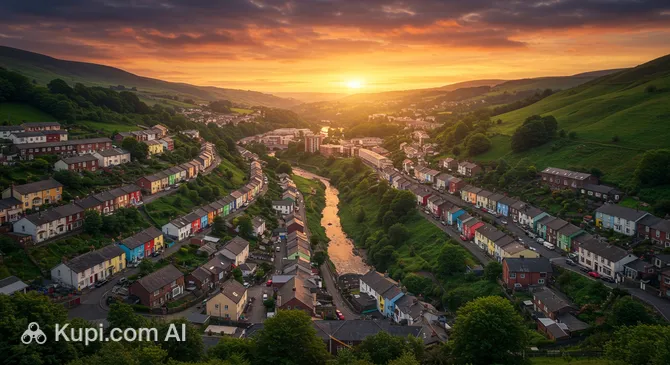
Rhondda. Illustration.
Source: Kupi.com AI

With a population of approximately 69,500 people, Rhondda is one of the region's significant residential areas. The area is famous for its distinct spirit: the heritage of working-class Wales is palpable here, where mining traditions harmoniously coexist with modern cultural initiatives. Narrow streets, cozy traditional pubs, historic buildings, and scenic parks make Rhondda attractive to those who appreciate leisurely walks and immersion in an authentic atmosphere.

Visitors to Rhondda can look forward to exploring a rich industrial heritage, enjoying the natural beauty of the valleys and hills, and experiencing the genuine hospitality of the local people. It is a place where you can feel the true history of the region and immerse yourself in the atmosphere of real Welsh life.

If you are looking for authentic Wales away from the hustle and bustle of big cities, appreciate natural beauty, and are interested in history and culture, then Rhondda is exactly the place to visit. The area offers a unique blend of past and present, creating an unforgettable character and leaving lasting impressions.

You can find more interesting facts on the Rhondda history page.

Weather Overview

The climate in Rhondda is characterized by mildness and a significant amount of rainfall throughout the year. Travelers should expect moderately warm and humid summers: average daytime temperatures from June to August stay in the 14-16°C range, with maximum values potentially reaching 19.2°C (in July). Winters here are cool and also quite damp, with average temperatures ranging from approximately 4°C to 6°C; minimum values can drop to 1.9°C (in January). Rain falls frequently throughout the year; the highest amount of precipitation (up to 5 mm per month) and the greatest number of rainy days (up to 18 per month) usually occur in the autumn-winter period, particularly in October, December, and March. For a more detailed forecast and information on weather by month, check out the Rhondda Climate page.

Average monthly temperature

Average monthly precipitation

Interesting Facts

Beyond its picturesque nature and hospitality, Rhondda holds many surprising stories and features that make this corner of the United Kingdom truly unique. Ready to learn some curious facts?

  • Rhondda was once the heart of the UK coal industry. In the 19th and 20th centuries, millions of tons of coal were shipped from here, making the area a key link in the country's industrial power. The memory of this mining past is carefully preserved in local museums and themed festivals.

  • The famous Rhondda Heritage Park is located here—it is not just an open-air museum, but a unique opportunity to descend into a real coal mine accompanied by a guide. This iconic site allows you to literally touch the industrial past of Wales.

  • The Rhondda region is famous for its rich musical traditions, especially its male voice choirs, whose performances can still be heard at local festivals. Music is an integral part of the cultural identity of these places.

  • One of the vibrant and unusual traditions is the celebration of St. David's Day, the patron saint of Wales. On this day, the area is transformed, decorated with daffodils and leeks, while the streets fill with processions and folk festivities. Local legends also add flavor, telling stories of ancient Welsh chieftains and the mystical inhabitants of the mines.

How to Get There

Reaching the picturesque valleys of Wales can be done in various ways, combining air and ground transport. Since Rhondda is located some distance from major metropolises, travel often involves a transfer at nearby transport hubs. You can find all the details and plan your perfect route on the how to get to Rhondda page, and below we will look at the main airports and stations convenient for arrival.

The closest airport to the valley is Cardiff Airport (CWL). It is important to note that there is no airport within Rhondda itself; this hub is located near the city of Cardiff, approximately 32 km from your destination. It is the main airport in Wales, serving both domestic and international flights. A taxi or car journey from here takes about 1 hour and 10 minutes, or you can use bus and rail connections with a transfer in central Cardiff.

Another popular option is Bristol Airport (BRS), located in the city of Bristol. It is about 61 km from Rhondda but offers a wider selection of flights due to its status as a major regional hub. The drive from this airport takes approximately 1 hour and 50 minutes. This is an excellent choice for those looking for more flight options from Europe.

For convenience, here is a summary of the main airports used to reach the region:

AirportPassenger trafficDistance
Cardiff Airport928 00032 km
Bristol Airport9.8 mln61 km
Exeter International Airport453 000105 km
Fairford (RAF Station)200 000116 km
Birmingham International Airport13.0 mln146 km

Traveling by rail is one of the most scenic ways to get to Wales. The key hub for travelers is Cardiff Central station. Please note that this major station is not in Rhondda, but in the center of Cardiff, about 30 km away. High-speed trains from London and other major UK cities arrive here. From Cardiff Central, local trains (the Treherbert line) depart regularly directly to the towns of the Rhondda Valley, making transfers very convenient.

Below is information about the nearest major railway stations that can serve as a starting point for your visit:

StationPassenger trafficDistance
Cardiff Central Station10.2 mln30 km
Swansea railway station2.2 mln33 km
Newport Railway Station2.7 mln34 km
Bristol Temple Meads Station10.2 mln67 km
Bristol Parkway Station2.1 mln67 km

Main Attractions

The Rhondda, the heart of the famous South Wales Valleys, invites tourists to immerse themselves in the region's rich history and enjoy its natural beauty. There is something for everyone here, from informative museums to scenic walking routes.

Another gem of Rhondda, testifying to its rich history and community spirit, is St. Peter's Church in Pentre, often referred to as the "Cathedral of the Rhondda." This impressive Victorian Gothic structure, built in the late 19th century, is striking in its size and architectural grandeur. The church served not only as a spiritual center but also as an important gathering place for the local community. Its magnificent stained glass windows and imposing tower make it a prominent landmark and a symbol of the resilience and faith of the valley's residents.

For those who prefer the outdoors, Dare Valley Country Park is a true discovery. Spanning over 200 hectares, this extensive park offers numerous trails for walking and cycling, picturesque lakes, and modern visitor facilities, including a campsite and a café. Here you can enjoy the peace, observe wildlife, and simply escape the city's hustle. It is a wonderful place for family vacations and active recreation.

The cultural heart of Rhondda is undoubtedly the Parc and Dare Theatre in Treorchy. This magnificent historic theater, built with miners' contributions in the early 20th century, continues to delight audiences with a diverse program ranging from dramatic plays and musicals to concerts and film screenings. Its grand architecture and rich history make it more than just an entertainment venue—it is a vital monument to the culture and social life of the valley.

To fully appreciate the beauty of the Rhondda valleys, a visit to the Penrhys Viewpoint is a must. From this high point, breathtaking panoramic views open up over the Rhondda Fawr and Rhondda Fach valleys, as well as the surrounding hills. It is an ideal spot for photography and for feeling the scale and uniqueness of the local landscape. It is especially beautiful here at sunset.

Local Cuisine

The gastronomy of Rhondda offers a true immersion into the heart of Welsh culinary tradition, providing tourists with authentic and hearty dishes. Here, you can try the famous cawl—a thick and aromatic soup with meat and vegetables that is perfect for warming up and satisfying hunger. Be sure to taste the tender Welsh lamb, often served with a classic mint sauce. Of particular note is laverbread—a unique seaweed dish often served with oatcakes and fried bacon, representing a true taste of Wales.

In addition to these iconic dishes, Rhondda's cuisine delights with a variety of hearty pies—ranging from potato and cheese to meat varieties like beef, which can be found in local bakeries or markets. Make sure to try local farmhouse cheeses, with Caerphilly being a standout, and traditional bara brith—a Welsh tea bread with raisins and spices that perfectly complements a cup of tea. Street food is also represented by appetizing options, including sandwiches and sweet cinnamon buns.

The food culture in Rhondda centers on fresh local produce and hospitality. Locals and tourists alike often choose traditional pubs, where they can not only enjoy a hearty lunch but also try authentic Welsh ale or cider. Cozy cafes offer home-cooked meals, while farmers' markets abound with fresh vegetables, fruits, and other natural products. The town's gastronomic scene is a blend of centuries-old traditions and quality ingredients, making every dish truly special and appealing to travelers seeking an authentic culinary experience.

Travel Tips

Planning a trip to Rhondda, the heart of the Welsh coal valleys? Wonderful! To ensure your journey goes smoothly and leaves only pleasant impressions, we have prepared some practical tips.

  1. Clothing and essentials: The weather in the Rhondda valleys can be very changeable. Bring layers of clothing, and definitely a waterproof jacket and an umbrella, even if the forecast promises sun. Comfortable shoes are your best friend, especially if you plan on walking the hilly terrain or nature trails. Don't forget a power adapter—the UK uses Type G sockets.

  2. Transport: The main public transport in the Rhondda valleys is buses, connecting various settlements. There are also railway lines going to Cardiff and other Welsh cities. Taxis are available, but in less central areas, it's better to book them in advance. Popular ride-hailing apps may have limited coverage. Renting a car can be convenient for exploring the surrounding areas and the Brecon Beacons National Park, but be prepared for narrow roads and finding parking in town centers.

  3. Finance: The local currency is the Pound Sterling (GBP, £). You can exchange currency at banks or post offices. Visa and Mastercard are accepted almost everywhere, and contactless payment is widespread. ATMs are easy to find. Notify your bank about your trip to avoid card blocks. Tipping: in restaurants, it is customary to leave 10-15% if you liked the service and it isn't included in the bill. In pubs for drinks at the bar or in taxis, tips are usually not required, but rounding up the amount is appreciated.

  4. Health and Safety: Pharmacies (chemists) are found in major settlements; look for "Pharmacy" signs. For non-urgent medical advice, you can call 111 (NHS service). In emergencies, dial 999. Rhondda is considered a safe area. Observe standard precautions, especially in crowded places or in the evening. Travel insurance covering medical expenses is highly recommended.

  5. Communication: The primary language is English. Welsh is also an official language; you will see bilingual signs. Many locals, especially the older generation, speak Welsh, and they will be pleased to hear a simple "Diolch" (thank you) or "Bore da" (good morning). Local SIM cards can be purchased at mobile phone shops or supermarkets. Wi-Fi is available in most cafes, pubs, and hotels.

  6. Local Etiquette: Greetings: a simple "Hello" or "Hi" works well. The Welsh are known for their friendliness. In public places, politeness is valued: don't forget to say "please," "thank you," and "excuse me." Queuing is important. Showing interest in local culture and history is always appreciated.

  7. What to avoid: Do not underestimate the weather: even on a sunny morning, the weather in the valleys can change abruptly. Always have something for the rain. Avoid dismissive comparisons between Wales and England; the Welsh are proud of their distinct culture and identity.

  8. Special tip for Rhondda: Be sure to visit Rhondda Heritage Park. It's a great way to learn about the rich history of coal mining in the region, which shaped the character of the valleys and their people. Many former mining villages have retained their authentic spirit, and walking through them can be a true immersion into history.

We hope these tips help you better prepare for your trip and fully enjoy the unique atmosphere and hospitality of Rhondda. Have a wonderful journey through the Welsh valleys!

Entertainment & Nightlife

Rhondda, nestled in the heart of the South Wales Valleys, offers its guests a predominantly quiet and traditional experience; however, pleasant options for evening leisure can still be found. Nightlife in Rhondda centers around hospitable pubs and cultural hubs, reflecting the welcoming spirit of Welsh culture rather than boisterous nightclubs.

The primary centers for evening entertainment in Rhondda are traditional Welsh pubs. These can be found in many settlements throughout the valley, particularly in areas like Treorchy, Tonypandy, and Porth. Here, you can enjoy local ale, cider, and a truly friendly atmosphere. The crowd in these establishments is usually local and very welcoming. Many pubs stay open late, especially on Fridays and Saturdays, which are peak nights. The style of these venues is mostly classic, with no strict dress code. Occasionally, pubs host live music nights, quizzes, or sports broadcasts.

For those seeking cultural entertainment in the evening, local theaters and community centers are worth noting. For instance, in Treorchy, the iconic Parc & Dare Theatre regularly offers evening plays, concerts, and cinema screenings, serving as a vital cultural hub for the region. While specialized nightclubs in the big-city sense are rare, some pubs or community halls in larger valley towns may occasionally host dance nights or discos.

Regarding dining, Rhondda has establishments offering both traditional Welsh and international cuisine, many of which remain open in the evenings. To find specific venues and current events, it is best to check local information boards, websites, or simply ask local residents—they are usually happy to share advice. Average prices in Rhondda's pubs and restaurants are generally moderate.

When planning an evening out, keep in mind that public transport in the valleys can have a limited schedule late at night. It is recommended to check bus schedules in advance or use local taxi services, which are best booked ahead of time. In terms of safety, the Rhondda area is generally considered peaceful. However, as with anywhere, it is wise to exercise standard caution after dark, especially in uncrowded areas. You can call a taxi by phone; local service numbers are usually available in pubs, hotels, or online.

During the day, Rhondda offers a completely different experience. This is a region with a rich industrial history and picturesque nature. You can visit the Rhondda Heritage Park to learn more about the region's mining past or set off on a hike along numerous trails, enjoying the valley views. Local communities may also operate small cultural centers offering daytime programs, with details best checked on-site.

Parks & Museums

Rhondda, a famous corner of Wales, offers its guests more than just an immersion into a rich history; it provides the opportunity to enjoy the picturesque nature of the valleys. Here, you can find both well-kept parks and cultural institutions that tell the story of this unique region's past and present.

One of the primary locations combining nature and history is the Rhondda Heritage Park. While it is first and foremost a museum, its grounds often include green spaces where you can relax. For more extensive nature walks, head to the nearby Dare Valley Country Park. This vast park offers numerous walking and cycling trails, lakes, and playgrounds, making it an ideal spot for family vacations and outdoor enthusiasts. Additionally, the Rhondda valleys themselves are crisscrossed with numerous trails leading up the hills, offering breathtaking views.

The Rhondda Heritage Park Museum occupies a central place in Rhondda's cultural life. It is not just a museum but an entire complex dedicated to the history of the coal industry that shaped this region. Visitors can descend into a reconstructed coal mine and learn about the hard work of miners and the daily lives of their families. The museum's exhibits vividly illustrate the social and economic history of the valleys. There are few other large museums directly in Rhondda, but the spirit of history is felt everywhere.

The architectural landscape of Rhondda is an attraction in itself. The characteristic terraced houses climbing the valley slopes and numerous former chapels tell the story of the industrial boom times and a strong community life. A walk through towns like Treorchy or Tonypandy allows you to better feel the atmosphere of the region.

For an authentic experience, we suggest exploring the lesser-known walking trails, which often pass the remains of old industrial sites now being reclaimed by nature. Also, keep an eye out for local pubs, where you might hear the Welsh language spoken and interact with hospitable residents who preserve the traditions of their ancestors.

Getting Around

When planning your travels around Rhondda, you will find that the public transport system emphasizes bus services, which connect various areas of this picturesque valley and neighboring settlements. Suburban trains also play an important role, especially for longer-distance travel.

Buses are the most common form of transport in Rhondda. Local routes are served by several operators, providing fairly good coverage of the area. Buses run regularly, connecting not only parts of Rhondda itself but also providing access to the region's larger cities. Schedules can be found at stops, on transport company websites, or through general route planners for Wales.

Rail services are also available in Rhondda, with several stations along the valley. Trains are typically operated by "Transport for Wales" and offer a convenient way to reach Cardiff and other key points in South Wales. This can be a particularly scenic travel option, given the beautiful valley landscapes.

The payment system is quite flexible. Bus tickets can usually be purchased directly from the driver upon boarding, using both cash and increasingly contactless bank cards. A single bus ticket may cost a few pounds, while day passes offer better rates for frequent travel. For regular travelers, weekly or monthly passes offered by some operators may also be beneficial. It is best to check fares and ticket types on the websites of specific carriers or the "Transport for Wales" app. Train tickets can be bought at stations (at ticket offices or machines) or online.

Practical tips for tourists:

  • Always have some cash on hand for bus tickets, although contactless payment is becoming more common.

  • Plan your route in advance, especially if a transfer is involved. Use online planners or apps.

  • Keep in mind that on weekends and public holidays, schedules may differ from weekdays, and the frequency of services may be reduced.

  • Most buses and trains are equipped to carry passengers with limited mobility, but it is best to check details with the specific operator.

Alternative ways of getting around in Rhondda include taxis. Local taxi companies are available for booking by phone or through apps. In some areas, cycling may be popular, especially for short trips through the valleys, though specialized bike rental systems may not be available everywhere. Given the compact nature of some settlements, walking is also an excellent way to explore local beauties.

Accommodation

When planning a trip to Rhondda, you will find a variety of accommodation options to suit different preferences and budgets. In this Welsh region, cozy guest houses (B&Bs), traditional pubs with rooms for guests, and self-catering apartments predominate, allowing for a deeper immersion into the local atmosphere. Small hotels offering a comfortable stay are also available.

For tourists, the most convenient option is to stay directly in one of the Rhondda valleys, such as Rhondda Fawr or Rhondda Fach. This ensures easy access to local attractions and walking routes while allowing you to experience the unique character of this historic region. Many accommodation options offer beautiful views of the surrounding hills and valleys.

Since specific hotels are not listed in the available data, it is recommended to explore offers on popular online booking platforms or contact local tourist information centers. In Rhondda, you can find both budget-friendly options and mid-range accommodation. It is recommended to book your stay in advance, especially if your trip coincides with local festivals or the peak tourist season, to ensure the best choice and prices.

Overall, the price range for accommodation in Rhondda can be described as affordable, with an emphasis on hospitality and home comfort. Most options can be booked through well-known international travel websites or directly by contacting the owners of guest houses or small hotels.

Nearby Cities

For those looking to explore the surrounding area, Rhondda serves as an excellent starting point for day trips to several interesting nearby locations:

CityPopulationDistance
Aberdare39 5505 km
Tonypandy17 7896 km
Mountain Ash11 2307 km
Aberaman9 9649 km
Merthyr Tydfil63 54610 km

These nearby destinations provide insight into the diverse culture and landscapes of the Welsh region. For example, Merthyr Tydfil will immerse you in the region's rich industrial past, where one of the main attractions is Cyfarthfa Castle and its surrounding park. In Caerphilly, the impressive Caerphilly Castle awaits—one of the largest medieval castles in Western Europe—along with the chance to learn about the production of the famous Caerphilly cheese. Aberdare, nestled in the Cynon Valley, offers walks in the scenic Dare Valley Country Park and a look at charming Victorian architecture. Each of these places has its own unique charm and is a wonderful choice for a short trip from Rhondda.

Shopping & Souvenirs

Shopping in Rhondda offers a more local and authentic experience rather than the glitz of major shopping capitals. This region, consisting of a series of former mining towns and villages in Wales, is not famous for luxury boutiques or giant malls. Instead, you will find shops catering to the daily needs of residents, along with small independent stores where you can discover something unique.

The main shopping areas in Rhondda are concentrated along the High Streets in towns such as Tonypandy, Treorchy, and Porth. Here, you will find a mix of small supermarkets, pharmacies, clothing and household stores, as well as traditional bakeries, butchers, and cozy cafes. Walking along these streets provides a good insight into local life.

There are no large, modern shopping centers in Rhondda itself comparable to those in Cardiff or Swansea. However, some towns may feature small shopping arcades or retail parks on the outskirts, offering a more concentrated selection of shops. For more extensive shopping, residents and tourists usually head to nearby major cities.

Markets play an important role in the life of the Welsh valleys. In and around Rhondda, you can find traditional indoor markets or weekly street fairs. These often sell fresh local produce, baked goods, clothing, household items, and sometimes handmade crafts. Visiting such a market is a great way to soak up the local atmosphere and perhaps find some interesting souvenirs.

As souvenirs from Rhondda and Wales in general, look for items with Welsh symbols (such as the red dragon), traditional Welsh love spoons, woolen goods, local honey, or jams. Given the region's rich mining heritage, you can sometimes find themed souvenirs related to the history of coal mining.

Shops in Rhondda typically follow standard British hours: Monday to Saturday from approximately 9:00-10:00 AM to 5:00-6:00 PM. Large supermarkets may stay open longer. On Sundays, hours are usually reduced (for example, from 10:00 AM to 4:00 PM). Bank cards (Visa, Mastercard) are accepted everywhere, and contactless payments are widespread. Cash is also accepted, especially in small shops and at markets.

Regarding Tax-Free shopping, after the UK left the EU, the VAT Retail Export Scheme for tourists taking goods out of England, Scotland, and Wales (including Rhondda) was abolished in most cases. A tax refund is only possible for goods that the seller ships directly to the buyer's overseas address outside the UK. Therefore, for purchases you plan to take with you, you generally cannot count on a tax refund.

Reached the end of the page?

That means the route is fully explored