Support

Atqasuk

About

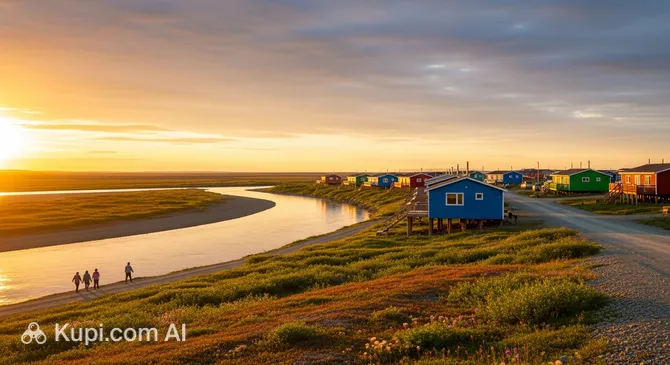
Atqasuk is a small, secluded village nestled in the vast expanse of Alaska's North Slope. It provides a rare opportunity to experience the quiet beauty of the Arctic tundra and the enduring traditions of the Iñupiat people. Unlike the coastal communities, this inland settlement offers a unique perspective on life in the far north of the United States.

Atqasuk. Source: Kupi.Binoculars

Located on the banks of the Meade River, roughly 60 miles south of Utqiaġvik, Atqasuk is home to a tight-knit community of approximately 230 residents. The village is surrounded by a pristine landscape of rolling tundra, lakes, and rivers. The climate here is truly Arctic, with long, cold winters perfect for viewing the Northern Lights, and summers where the sun never sets, allowing for endless exploration of the wilderness.

The community was re-established in the modern era, though the area has been used by indigenous people for hunting and fishing for generations. The name itself means "the place to dig for hard rock," referring to a natural coal-like substance found nearby. Visitors interested in the roots of this settlement can delve deeper into the history of Atqasuk to learn how its people have thrived in this challenging environment.

For adventurous travelers, Atqasuk is a gateway to authentic subsistence culture. The Meade River is a focal point for fishing and boating, while the surrounding lands are rich with wildlife, including caribou herds and migratory birds. It is an ideal destination for those looking to disconnect from the modern world and witness the raw, untouched beauty of the Alaskan interior.

Weather Overview

The local climate is distinctly Arctic, defined by extreme cold and significant seasonal contrasts. To ensure you are adequately prepared for the conditions, it is helpful to review the weather in Atqasuk before your journey.

Winters are long and intensely cold, dominating much of the year. February is typically the coldest month, with average temperatures hovering around -25.5°C and minimums dropping as low as -28.6°C. Despite the freezing temperatures, this season is generally dry, with months like January through April seeing almost no precipitation.

Summer offers a brief period of milder weather, though it remains cool. July is the warmest month, reaching average highs of 14.6°C, making it the most comfortable time for outdoor activities. However, this is also the wettest time of year, with July experiencing approximately 13 wet days. Expect cool summers with occasional rain and long, bitterly cold winters that remain mostly dry.

Interesting Facts

Beyond the scenic Meade River and its quiet atmosphere, Atqasuk holds intriguing stories hidden within its permafrost and history. Here are some fascinating details that reveal the unique character of this remote Arctic village:
  • Prehistoric Giants: The banks of the Meade River are a surprising treasure trove for paleontologists. The area is known for possessing a rich collection of dinosaur bones and fossils dating back to the Cretaceous period, suggesting that this frozen landscape was once a lush environment for prehistoric life.

  • A Village Reborn: Unlike many continuous settlements, Atqasuk was largely abandoned after World War II as families moved to larger hubs for schools and work. It was only officially re-established as a permanent community in 1977, driven by the strong desire of former residents to return to their ancestral hunting and fishing grounds.

  • The "Burning Rock" Legacy: While the village's name refers to the local bituminous coal, the historical significance is often overlooked. During World War II, coal mined here was transported by sled to Utqiaġvik (formerly Barrow) to fuel government facilities and homes, playing a vital role in sustaining the region during the war years.

  • Nature's Refrigerator: Many residents still utilize traditional siġluaqs, or ice cellars, dug deep into the permafrost. These natural underground chambers maintain a constant freezing temperature year-round, allowing the community to store whale meat, caribou, and fish without the need for electricity.

How to Get There

Reaching Atqasuk is an adventure in itself, as this remote Iñupiat village is not connected to the rest of Alaska by a road system. Visitors planning a trip to this secluded community should be prepared for travel by air, which is the primary means of access. For detailed information on logistics and routes, you can read more about how to get to Atqasuk.

The city of Atqasuk does not have its own major commercial hub, so most travelers first fly into Wiley Post-Will Rogers Memorial Airport (BRW) in the neighboring city of Utqiaġvik. Located approximately 93 km from Atqasuk, this airport serves as the regional gateway for the North Slope. Since there are no roads connecting Utqiaġvik to Atqasuk, ground transport like taxis or buses is not an option for this leg of the journey. Instead, visitors typically transfer to a smaller bush plane for a short scheduled flight to the village airstrip.

For clarity, here is a summary of the main regional airport:

Airport Name City Passenger Traffic Km from City
Wiley Post-Will Rogers Memorial Airport Utqiaġvik Medium 93.0

Main Attractions

Meade River is the lifeline of the community and a primary draw for visitors looking to experience the authentic Arctic lifestyle. As the village's main geographical feature, the river serves as a bustling highway for boats in the summer and snowmachines in the winter. It is renowned for its excellent fishing opportunities, teeming with grayling, burbot, salmon, and whitefish. Travelers often join locals on the riverbanks to witness or participate in subsistence fishing, gaining deep insight into how the Iñupiat people have sustainably relied on these waters for generations.

The surrounding Arctic Tundra offers a stark, mesmerizing beauty that is distinct from the coastal flatness of nearby Utqiaġvik. In Atqasuk, the terrain rolls gently, covered in a fragile carpet of wildflowers, mosses, and berries during the brief summer season. This vast wilderness is a prime location for wildlife viewing, particularly for spotting the large herds of caribou that migrate through the area. Birdwatchers will also find this region rewarding, as the wetlands and lakes attract a variety of migratory species, including spectacled eiders, yellow-billed loons, and ptarmigans.

For those interested in natural history, the area is a significant Paleontological Site. The banks of the Meade River and the surrounding bluffs have yielded an impressive array of dinosaur fossils and ancient plant remains from the Cretaceous period. While there are no formal museums in the village itself, the knowledge that this frozen landscape was once a lush, prehistoric forest adds a layer of wonder to every hike. Visitors can explore the river's edge to see the geological history exposed by the elements, often finding pieces of ancient wood and fossilized evidence of the dinosaurs that once roamed here.

Cultural Immersion in the village itself is perhaps the most profound attraction. Unlike larger tourist hubs, Atqasuk offers a quiet, unscripted look at modern Iñupiat life. A walk through the settlement reveals traditional ice cellars (siġluaqs) used for storing meat, and you may see residents preparing hides or crafting traditional items like skin masks and parkas. The community's resilience and dedication to preserving their heritage—having re-established the village in the 1970s—make simply being here and engaging with local residents a memorable experience for respectful travelers.

Local Cuisine

The culinary experience in Atqasuk is deeply rooted in the subsistence lifestyle of the Iñupiat people, centered around "country food" or Niqipiaq. In this remote village, there are no commercial restaurants or cafes; instead, the local diet relies heavily on the bountiful natural resources of the surrounding tundra and the Meade River. For visitors, tasting the local cuisine usually means being invited to a community gathering or a family home, where food is prepared with respect for the land and shared generously.

Given the village's inland location and proximity to migrating herds, Caribou (tutu) is a primary staple. It is prepared in various ways, from hearty stews and roasts to paniqtuq, which is meat dried in the open air to preserve it for long winters. Another essential part of the diet comes from the river; Whitefish, grayling, and burbot are caught year-round. A unique local delicacy worth trying if offered is quaq—fish or meat eaten raw and frozen, often dipped in seal oil, which provides vital energy and warmth in the Arctic climate.

For a sweet treat, the most famous dish is Akutaq, often referred to as "Eskimo Ice Cream." Traditionally made by whipping animal fat (such as caribou or reindeer fat) with seal oil and snow, modern versions may use vegetable shortening. It is packed with local berries like cloudberries (aqpik) or blueberries, which are hand-picked from the tundra during the short summer season. This energy-rich dessert is a fixture at celebrations and a testament to the resourcefulness of the local culture.

When it comes to beverages, hot drinks are the standard to combat the freezing temperatures. Tea and coffee are consumed throughout the day and are central to social interactions. You may also find that locals prize fresh water melted from specific types of river ice or snow, valued for its purity and crisp taste compared to treated tap water.

Tourists should be aware that Atqasuk does not have a dining scene in the traditional sense. There are no street food stalls or markets. A local general store supplies basic groceries and processed snacks, but visitors are strongly advised to bring their own supplemental food supplies. The true food culture here is communal; hunting and fishing are not just for sport but for survival, and the harvest is often shared among neighbors, elders, and guests in a tradition of hospitality that defines life on the North Slope.

Travel Tips

Visiting Atqasuk is a true expedition into the Arctic wilderness, requiring far more preparation than a typical tourist destination. Because this remote village lacks standard tourism infrastructure like hotels and restaurants, these practical tips are essential for ensuring your safety and respecting the local way of life.

  1. Clothing and Gear: The Arctic climate demands serious preparation. In winter, you absolutely need heavy-duty insulated parkas, windproof pants, and rated boots, as frostbite can occur in minutes. If visiting in summer, the tundra comes alive with insects, so a high-quality mosquito head net and strong repellent are non-negotiable. Always dress in layers to adapt to shifting weather.

  2. Transportation: There are no paved roads, car rental agencies, or taxi services in the city. The village is small enough to navigate by walking, which is the primary mode of transport for visitors. Locals typically use ATVs (four-wheelers) in the summer and snowmachines in the winter; do not expect to rent these, though a local host might offer a ride.

  3. Finances: Bring plenty of cash (USD). While there is a local store that may accept credit cards, systems can go down due to internet connectivity issues. There are no banks and relying on an ATM is risky. Be prepared for significantly higher prices on groceries and supplies compared to the rest of the US, due to the high cost of air freight.

  4. Health and Safety: Medical facilities are limited to a local clinic staffed by health aides; serious emergencies require a medical evacuation flight to Utqiaġvik or Anchorage. Ensure you have travel insurance that covers medevac. Additionally, while polar bears are less common inland than on the coast, they—along with brown bears and wolves—can be present. Always stay alert when walking on the village perimeter.

  5. Communication: English is widely spoken, though you will often hear Iñupiaq among residents. Mobile coverage is extremely limited; GCI is the primary provider in rural Alaska, and other major carriers often have no signal. Wi-Fi is rare and slow. It is advisable to download offline maps and inform someone of your itinerary before you arrive.

  6. Local Etiquette: The community is tight-knit and values respect. Always ask for explicit permission before photographing locals, their homes, or their subsistence activities (such as processing game). It is customary to remove your shoes when entering a home or the school. Greeting elders first is a sign of politeness.

  7. What to Avoid: Do not touch or disturb equipment you see outside, such as boats, sleds, or drying racks. These are not abandoned artifacts but vital tools for survival. Furthermore, avoid bringing alcohol. Many North Slope villages have strict "damp" or "dry" laws regulating the possession and sale of alcohol; it is safest and most respectful to abstain during your visit.

  8. Food and Supplies: Since there are no restaurants or cafes in Atqasuk, you must be self-sufficient. Plan to bring the bulk of your own food, especially fresh produce or specific dietary items, from Utqiaġvik or Anchorage. The local store stocks basics, but inventory depends on flight schedules and weather.

By packing the right gear and approaching the community with an open, respectful mindset, your trip to Atqasuk will be a rewarding experience. Embracing the slower pace and self-reliance required here allows you to truly connect with the unique rhythm of life on the Alaskan North Slope.

Entertainment & Nightlife

Travelers expecting a vibrant urban nightlife with pulsing clubs, cocktail bars, or late-night discos will find a completely different experience in Atqasuk. As a small, remote village with a population of just over 200 people, there is no commercial nightlife scene in the traditional sense. There are no bars, nightclubs, pubs, or movie theaters. Instead, the "nightlife" here is dictated by the rhythms of nature and the close-knit community, offering a peaceful and introspective atmosphere that is rare to find elsewhere.

The concept of a "night out" changes drastically depending on the season. During the winter months, the primary evening entertainment is the spectacular natural light show of the Aurora Borealis. With zero light pollution, the village offers front-row seats to dancing green and purple lights that often fill the sky. Conversely, in the summer, the sun does not set, creating the "Midnight Sun" phenomenon. This allows for activities like hiking, fishing, or boating on the Meade River to continue well into the early morning hours, blurring the lines between day and night.

Social life in Atqasuk revolves entirely around community facilities rather than commercial venues. The Atqasuk Community Center is the heart of local gatherings, often hosting community bingo nights, feasts, and meetings that serve as the main social events. Similarly, the Meade River School acts as a central hub, particularly for sports; basketball games in the school gym are major events that draw nearly the entire village to cheer for the local teams. These venues offer a warm, welcoming environment where visitors can witness the genuine camaraderie of the residents.

It is crucial for visitors to be aware of the strict local laws regarding alcohol. Atqasuk bans the sale and importation of alcoholic beverages. This means you will not find any liquor stores or bars, and visitors should not bring alcohol into the village under any circumstances. Respecting these regulations is essential for visiting the community. The atmosphere at night is quiet and family-oriented, with most residents spending time in private homes. The dress code for any community event is strictly functional and casual—warm layers and boots are always the standard.

Safety during the evening hours is less about crime and more about the environment. The village is generally very safe for walking, but the extreme cold and the potential presence of wildlife are serious factors. Polar bears, brown bears, and wolves can wander near or into the village, especially when it is quiet. It is advisable not to walk alone on the outskirts of the village at night. There are no taxi services; the village is small enough to walk, but if you need to get somewhere during a storm or extreme cold, you would typically rely on a pre-arranged ride from a local host.

While evening options are limited to nature and community events, daytime entertainment is equally low-key and centered on the outdoors. Visitors spend their days exploring the vast tundra, birdwatching near the river, or observing the traditional subsistence lifestyle. Without museums or amusement parks, the village itself serves as a living classroom for understanding Arctic survival and Iñupiat culture.

Parks & Museums

In the remote village of Atqasuk, the definitions of parks and museums are vastly different from those in a typical city. There are no manicured gardens, ticketed art galleries, or enclosed historical exhibitions. Instead, the entire region serves as a boundless natural park, and the history of the land is preserved not in glass cases, but in the earth itself and the living traditions of its people. Visitors here come to experience a wilderness that remains largely unchanged and a culture that thrives in one of the world's harshest environments.

The Meade River Valley acts as the community's central park and primary recreational area. In the summer, the riverbanks are bustling with activity as families set up fish camps, launch boats, and enjoy the endless daylight. It is an uncultivated green space where the tundra meets the water, offering soft mossy ground for walking and an abundance of wildflowers like Arctic poppies and lupines. For tourists, this is the best place to observe the local lifestyle and enjoy a picnic surrounded by the silence of the Arctic.

Surrounding the village is the vast expanse of the Arctic Tundra, which functions as an open-air nature reserve. Without designated trails or fences, the landscape invites free-roaming exploration for those prepared for the terrain. During the short summer season, the tundra transforms into a vibrant ecosystem teeming with migratory birds, caribou, and small mammals. Hiking here offers a sense of solitude and scale that is difficult to find anywhere else, providing a raw and immersive connection to the natural world.

While there are no brick-and-mortar museums, the area is internationally recognized as a significant Paleontological Site. The bluffs along the Meade River serve as a natural museum, holding a treasure trove of dinosaur fossils and ancient plant remains from the Cretaceous period. Scientists flock here to study the bones of dinosaurs that once lived in a much warmer Arctic. For visitors, walking along the river cliffs offers a chance to see geological history exposed by erosion, effectively turning a hike into a journey through deep time.

Meade River School is the closest entity to a cultural center within the village. As the hub of community life, the school often showcases the artistic and cultural achievements of the local youth. Inside, you may find displays of traditional Iñupiat crafts, such as skin sewing, mask making, and artwork that reflects the students' connection to their heritage. While it is an educational facility and not a public gallery, it is the heart of Atqasuk’s cultural expression and often hosts community events where visitors can witness local traditions firsthand.

For a truly authentic experience, the "museum" is the community itself. Engaging with local elders—the keepers of oral history—can be far more enlightening than reading a plaque. Many residents are happy to share stories about the Old Village site or the traditional use of ice cellars (siġluaqs) for food storage. A respectful conversation can unlock the rich history of the Iñupiat people, making the entire village feel like a living heritage site.

Getting Around

Public Transport Overview: Visitors planning a trip to Atqasuk should be aware that there is absolutely no formal public transport system within the village. Due to its small size and remote location in the Arctic, you will not find buses, trams, metros, or scheduled shuttles of any kind. The infrastructure is minimal, consisting of gravel roads that are primarily designed for local use rather than tourism.

Getting Around: For the vast majority of tourists, the primary mode of transportation is walking. The village is compact, and most key locations—such as the school, the general store, and the airstrip—are within a reasonable walking distance of one another. In the summer, the gravel roads are easy to traverse on foot, though they can be dusty. In the winter, the roads are snow-packed, requiring sturdy, insulated footwear to navigate safely.

Local Transport Methods: While there is no public transit, you will notice that residents rely heavily on personal off-road vehicles. During the summer months, ATVs (four-wheelers) are the standard way to get around, while snowmachines (snowmobiles) are essential during the long, snowy winters. These vehicles are privately owned and are not available for public rental. There are no bike rental stations or car rental agencies in the village.

Taxis and Ride-Sharing: It is important to note that there are no commercial taxi services, and ride-sharing apps like Uber or Lyft do not operate here. You cannot hail a cab or book a ride via a smartphone. Occasionally, a local resident or a host may offer a ride to visitors arriving with heavy luggage from the airstrip, but this is an informal courtesy rather than a paid service. Travelers should not rely on finding a driver upon arrival.

Tickets and Payment: Since there is no public transport network, there are no tickets, travel passes, or transport cards to purchase. No mobile apps are needed for transit. If you do arrange a private transfer or a ride with a local guide for an excursion, any payment would likely be a direct cash transaction agreed upon in advance, as credit card processing for such services is virtually non-existent.

Practical Advice: The best way to prepare for navigating the village is to pack appropriate gear. High-quality walking boots are essential: waterproof and mud-resistant for the summer thaw, and rated for extreme cold for the winter. Because you will be walking everywhere, ensure you dress in layers to stay warm and dry. Always remain aware of your surroundings when walking on the outskirts of the village, as wildlife can be present nearby.

Accommodation

Accommodation Overview

Travelers planning a visit to Atqasuk must be aware that this is a remote, subsistence-based village with absolutely no commercial tourism infrastructure. There are no hotels, motels, hostels, or vacation rentals available for booking. The village is not set up to accommodate leisure tourists overnight in the traditional sense, and finding a place to stay requires significant advance planning and direct communication with local entities.

Local Lodging Options

The only potential accommodation within the village is typically reserved for visiting government officials, school district employees, or contractors working on local projects. These facilities are often managed by the Atqasuk Corporation or the local city government. While they may occasionally rent a room to a traveler if space permits, this is not guaranteed and cannot be booked online. Visitors hoping to stay overnight must contact the City of Atqasuk or the village corporation well in advance to inquire about availability and permission.

Staying in Utqiagvik

Due to the lack of facilities, the most practical option for tourists is to base themselves in the larger regional hub of Utqiagvik (formerly Barrow), which is approximately 60 miles north. Utqiagvik offers standard hotels and guest houses. From there, it is possible to arrange a day trip to Atqasuk via a short flight, allowing you to experience the village without the logistical challenge of securing overnight lodging.

Booking and Costs

If you are successful in arranging a private stay within the village, expect the cost to be high compared to standard accommodations in the "Lower 48" United States. Prices are driven by the high cost of maintaining facilities in the Arctic. Payment is often required in cash or by check upon arrival, as credit card processing may not always be available. Booking tip: Never fly to Atqasuk without a confirmed place to stay or a scheduled return flight the same day, as the extreme climate makes being stranded without shelter dangerous.

Nearby Cities

While Atqasuk is a remote and secluded village, it acts as one point in a constellation of communities scattered across the vast North Slope of Alaska. These regional connections are vital for logistics and culture, and exploring them offers a broader understanding of life in the Arctic environment.

Utqiaġvik, formerly known as Barrow, is the most significant neighbor and the regional hub. As the northernmost city in the United States, it serves as the primary gateway for all travel to Atqasuk. Visitors there can explore the Iñupiat Heritage Center and experience the rugged coast of the Arctic Ocean, providing a contrast to the inland river landscape found here.

Located to the northwest on the Chukchi Sea coast is Wainwright. Known locally as "Olgonik," this village is a tight-knit community deeply rooted in whaling and marine subsistence traditions. It offers a unique perspective on coastal Arctic life, differing from the caribou-focused inland culture, yet sharing the same resilience and heritage.

City Population Distance (km)
Utqiagvik 4000 93
Wainwright 3600 99
Kotzebue 3300 451
Prudhoe Bay 2114 339
Kuparuk 2000 319

These neighboring communities, though separated by miles of tundra, form a network that defines the unique character of the North Slope region.

Shopping & Souvenirs

General Overview

Shopping in Atqasuk is a strictly utilitarian experience, reflecting the remote and subsistence-based lifestyle of the village. Visitors should not expect a retail destination with boutiques, fashion outlets, or variety stores. Instead, the shopping scene is limited to the bare necessities required for survival in the Arctic. The availability of goods is entirely dependent on air freight, meaning that selection can be sparse, and prices are significantly higher than in the continental United States due to the logistical challenges of transport.

Main Shopping Areas

There are no shopping districts or commercial streets in Atqasuk. The entire retail sector is essentially comprised of a single establishment, the Atqasuk Corporation Store (often referred to simply as the village store). Located centrally within the community, this store serves as the absolute lifeline for residents and visitors alike. It acts as a grocery, hardware store, and general supplier all rolled into one. Here, you can find basic food items, canned goods, limited fresh produce, cold-weather gear, and household supplies. It is the primary source for all goods in the village, making it the only place to replenish supplies.

Shopping Malls

There are no shopping malls, department stores, or large retail centers in Atqasuk. The village's infrastructure is small-scale and focused on housing and community services. Travelers looking for a more conventional shopping experience would need to visit the regional hub of Utqiaġvik or major cities like Anchorage before flying into the village.

Markets

Atqasuk does not have formal marketplaces, flea markets, or street bazaars. However, the lack of commercial markets does not mean there is nothing to buy. The "market" here is informal and community-driven. Often, local announcements for homemade goods or fresh bannock (fry bread) are posted on bulletin boards at the Post Office or the Community Center. Engaging with these local notices offers a glimpse into the village's internal economy.

Souvenirs

While you won't find a dedicated souvenir shop, Atqasuk is an excellent place to acquire authentic, high-quality Iñupiat arts and crafts directly from the artisans. Local residents are known for their skill in skin sewing, creating beautiful items such as mukluks (boots), fur parkas, and mittens. You may also find hand-carved masks or jewelry made from natural materials. To purchase these items, it is best to inquire at the City Office or the Community Center, as sales are usually conducted personally by the artists rather than through a store.

Opening Hours and Payment

The local general store typically operates with limited hours, often closing in the early evening and potentially on Sundays. It is crucial to be aware that operating times can change unexpectedly due to weather or staffing. Regarding payment, cash is the most reliable method. While the store may accept credit cards, the internet connection in the village can be unstable, leading to transaction failures. There are no banks and relying on an ATM is risky, so visitors are strongly advised to bring sufficient cash for all their intended purchases.

Tax Information

One benefit for shoppers in Alaska is that the state does not impose a statewide sales tax. However, local municipalities often levy their own taxes. In Atqasuk, prices on the shelf are generally inclusive of the high freight costs, but you should not expect a formal "tax-free" refund system for tourists as seen in international travel destinations.
Reached the end of the page?

That means the route is fully explored