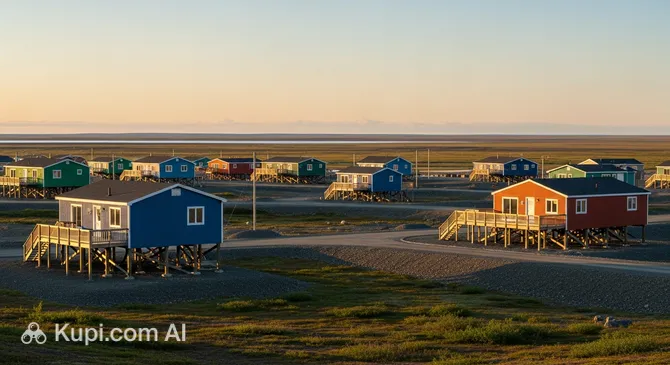
Shopping in Point Lay is a strictly utilitarian experience, reflecting the remote and self-reliant nature of this Arctic community. Visitors will not find souvenir shops, boutiques, or fashion outlets here. The commercial landscape is designed solely to sustain the local population with essential goods. For tourists, "shopping" is less about retail therapy and more about acquiring basic survival supplies or, if fortunate, purchasing authentic handicrafts directly from local artisans.
There are no shopping districts or commercial streets in the village. The retail activity is concentrated entirely in the single general store, often referred to as the Native Store. This establishment serves as the grocery store, hardware supplier, and general goods depot for the entire population of 200 people. You will not find window displays or promotional sales; instead, you will find aisles stocked with non-perishable foods, frozen meats, outdoor gear, and household necessities required for life on the North Slope.
Travelers should be aware that there are no shopping malls or department stores in Point Lay. The nearest facilities of that kind are hundreds of miles away in larger Alaskan cities like Anchorage or Fairbanks. The village infrastructure is built for subsistence, not consumerism, and the limited space on the freight planes is prioritized for food, fuel, and medical supplies rather than luxury retail items.
While there are no formal markets, the most valuable items to purchase in Point Lay are authentic Iñupiat arts and crafts. The village is home to skilled artisans who create exquisite works from natural materials. You may find intricate carvings made from walrus ivory, baleen etchings, or hand-sewn clothing such as skin mittens and mukluks (traditional boots). These items are rarely sold in a shop; instead, transactions usually happen informally. Visitors interested in purchasing local art should ask respectful questions at the community center or the school to be connected with artists.
If you do plan to buy souvenirs, particularly those made from marine mammal parts like ivory or baleen, it is crucial to understand the legal regulations. Under the Marine Mammal Protection Act, only Alaska Natives can harvest and create authentic handicrafts from these materials. If you are traveling internationally, be aware that many countries have strict bans on the import of marine mammal products, so check customs regulations before making a purchase.
Opening hours for the village store are typically limited compared to urban centers, often closing in the early evening and potentially having reduced hours on weekends. Prices for all goods are significantly higher than in the continental United States due to the extreme cost of air freight. A gallon of milk or fresh produce can cost three to four times the national average.
Regarding payment, cash is the most reliable method. While the store may accept credit cards, the village relies on satellite internet connections which can be disrupted by Arctic weather, rendering card terminals useless. There are no banks or currency exchange counters, so visitors should bring sufficient US Dollars to cover all potential purchases, including food, supplies, and crafts.
Finally, Alaska is one of the few states with no state sales tax, which technically applies to purchases here. However, given the high base cost of goods and the lack of luxury items, this is rarely a significant factor for tourists. The focus of spending in Point Lay is on supporting the local economy and ensuring you have the provisions needed for your stay in the wilderness.