Support

Point Hope

About

Welcome to Point Hope, a destination that offers a profound glimpse into the Arctic way of life. Located in the United States, specifically on the northwest coast of Alaska, this small community is far removed from the hustle of modern metropolises. Known locally as Tikigaq, meaning "index finger" in the Iñupiaq language, the village sits on a triangular spit of land jutting into the Chukchi Sea. With a population of approximately 700 residents, it provides an intimate and authentic atmosphere where visitors are greeted with genuine northern hospitality.
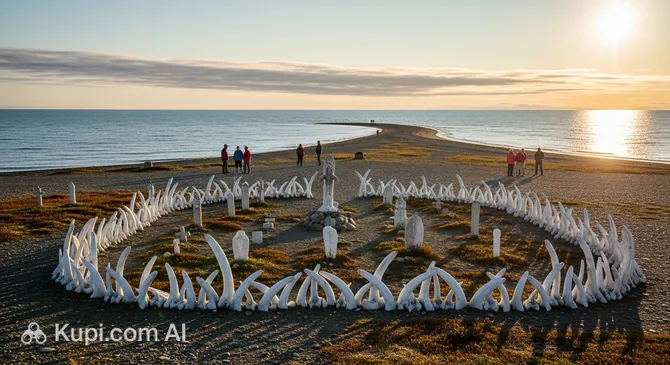
Point Hope
Point Hope. Source: Kupi.Binoculars

Point Hope is widely recognized as one of the oldest continuously inhabited sites in North America. The history of Point Hope is deeply intertwined with the sea and subsistence living, spanning thousands of years. Archaeological evidence suggests that indigenous people have lived here for centuries, drawn by the strategic location for hunting marine mammals. This deep connection to the past is palpable as you walk through the village, where ancient traditions blend seamlessly with contemporary life.

Travelers venturing to this remote outpost are often drawn by its unique cultural landmarks and natural beauty. One of the most striking features is the village cemetery, which is surrounded by a fence made of large whale jawbones, standing as a testament to the community's enduring whaling culture. The area is also a haven for wildlife enthusiasts, offering opportunities to spot polar bears, walruses, and migrating birds. Additionally, the vast, open skies make it an incredible location for viewing the Northern Lights during the winter months.

If you are an adventurous traveler seeking a destination that is both challenging and rewarding, Point Hope awaits. Whether you are interested in exploring the remains of the ancient Ipiutak culture or simply wish to experience the midnight sun in a pristine Arctic setting, a visit to this remarkable village promises memories that will last a lifetime.

Weather Overview

Point Hope experiences a distinct Arctic climate, characterized by long, frigid winters and short, cool summers. The winter months are particularly intense, with January and February seeing average temperatures around -19.3°C and lows dipping as far as -21.5°C. Travelers visiting during this season should be prepared for extreme cold and short daylight hours.

As the seasons shift, conditions become milder but remain brisk. July is typically the warmest month, yet the average temperature only reaches about 9.6°C, making it a cool respite rather than a hot summer destination. For a more detailed breakdown of seasonal conditions to help plan your trip, you can consult the weather in Point Hope.

Precipitation volume is generally low throughout the year, often recording just 1mm to 2mm per month, but the frequency of damp weather increases in the latter half of the year. From July through November, you might encounter up to 11 wet days per month. In general, expect cool summers with occasional rain and cold, relatively dry winters.

Average monthly temperature

Average monthly precipitation

Interesting Facts

Beyond the main attractions, Point Hope holds many fascinating secrets that reveal the resilience and ingenuity of its people. This remote community is not just a dot on the map but a place of deep historical layers and unique adaptations to the Arctic environment.
  • A Prehistoric Metropolis: The archaeological site of Ipiutak, located near the village, was once a thriving settlement with hundreds of dwellings. At its peak around 1,500 years ago, it may have been more populous than modern-day Fairbanks was during the gold rush, featuring a sophisticated culture known for elaborate ivory carvings and burial masks with artificial eyes.

  • Built from the Sea: In a landscape almost entirely devoid of timber, ancient residents ingeniously turned to the ocean for construction materials. While the cemetery's bone fence is well-known, early inhabitants also used the massive jawbones and ribs of bowhead whales as structural beams to support the roofs of their semi-subterranean sod houses.

  • A Village on the Move: The community has not always stood on its current ground. In the 1970s, the entire village relocated to a new site further up the spit to escape the threat of erosion and flooding that plagued the historic site of "Old Tigara," leaving the ancestral grounds to slowly merge with the shifting coastline.

  • Natural Refrigeration: To survive the year, local families utilize traditional "ice cellars" dug deep into the permafrost. These underground chambers maintain a constant freezing temperature, serving as natural freezers that can preserve whale meat and blubber for distinctively long periods without the need for electricity.

How to Get There

Reaching this remote community on the edge of the Arctic is an adventure in itself, as the village is not connected to the rest of Alaska by road or rail. Air travel is the primary and most reliable means of access for visitors. For a comprehensive overview of routes and logistics, you can read more about how to get to Point Hope to plan your journey effectively.

The village is directly served by Point Hope Airport (PHO), which is conveniently located just 2.4 km from the center of the settlement. Due to this close proximity, the transfer to the village core is very quick, typically taking only 5 to 10 minutes by local taxi or arranged transport. However, because this is a small regional facility, most travelers will connect through a larger hub.

The main gateway for the region is Ralph Wien Memorial Airport (OTZ) in the city of Kotzebue, situated roughly 240 km away. Visitors typically fly into Kotzebue from larger cities like Anchorage and then take a smaller commuter plane to reach their final destination.

For clarity, here is a summary of the main airports:

Airport Name City Passenger Traffic Km from City
Ralph Wien Memorial Airport Kotzebue Medium 239.7
Point Hope Airport Point Hope Small 2.4

There are no railway stations in Point Hope or the surrounding region, and the village is not accessible by train. The harsh Arctic terrain and the remote location mean that rail infrastructure does not extend to this part of Alaska. Visitors should rely entirely on air transport or, in rare seasonal instances, maritime options to reach the community.

Main Attractions

While Point Hope is not a typical tourist destination filled with museums or amusement parks, its attractions are deeply rooted in its ancient history and pristine natural environment. Visitors here are invited to explore landmarks that tell the story of thousands of years of survival and culture on the Arctic coast. The sights are raw, authentic, and unlike anything else in the United States.

The most iconic landmark in the village is undoubtedly the Whale Bone Cemetery. This sacred ground is distinctively fenced with the upright jawbones of massive bowhead whales, creating a striking silhouette against the stark Arctic horizon. These bones are not merely decorative; they symbolize the profound spiritual and physical bond between the Iñupiat people and the whales that have sustained them for millennia. Walking near the perimeter offers a quiet moment to reflect on the community's enduring whaling traditions.

For those interested in archaeology and history, the site of Old Tigara offers a window into the past. Located near the tip of the peninsula, this area contains the remains of ancient sod houses where ancestors lived for centuries. Although many of the structures have been reclaimed by the earth or the sea, the site remains a powerful place to stand and imagine the bustling prehistoric metropolis that once thrived here. It is one of the most significant archaeological areas in the Arctic, representing thousands of years of continuous human habitation.

Nature enthusiasts will find the Chukchi Sea Coast to be a dynamic and living attraction. The point of land where the village sits acts as a natural observation deck for Arctic wildlife. During the spring and fall migrations, visitors can scan the open water and ice leads for bowhead and beluga whales making their way north or south. The coastline is also a prime spot for birdwatching, attracting rare seabirds, and, with the help of a local guide, it is often possible to safely view polar bears and walruses in their natural habitat.

Local Cuisine

The culinary landscape of Point Hope is defined not by Michelin-starred restaurants, but by a subsistence lifestyle that has sustained the Iñupiat people for millennia. Here, food is known as "country food," harvested directly from the land and the freezing waters of the Chukchi Sea. For visitors, the local cuisine offers a rare opportunity to taste the Arctic, though it requires an adventurous palate and an appreciation for traditional hunting cultures.

The most iconic delicacy in the village is maktak (or muktuk), which consists of frozen whale skin and blubber. Usually cut into bite-sized cubes, it is rich in vitamins and energy, essential for survival in the harsh climate. It is often eaten raw or pickled and has a nutty flavor with a chewy texture. Another staple is caribou, which is prepared in various ways, from hearty stews to dried meat known as paniqtuq (jerky), often dipped in seal oil—a condiment that functions much like ketchup or soy sauce in local households.

Seafood is naturally abundant, with Arctic char, salmon, and whitefish featuring heavily in the diet. You might encounter fish that has been dried in the wind or frozen raw to be eaten as quaq. For dessert, the traditional treat is akutaq, widely known as "Eskimo ice cream." This unique dish is a whipped mixture of fats (traditionally reindeer or seal fat, now often vegetable shortening), sugar, and local berries like cloudberries (aqpik) or blueberries, sometimes mixed with fish or snow.

When it comes to beverages, the social fabric of Point Hope revolves around hot drinks to combat the pervasive cold. Tea and coffee are consumed in large quantities and are the center of social visits. Travelers should be aware that the sale of alcohol is restricted in the village; there are no bars or liquor stores. The community focuses on warm, non-alcoholic hospitality, and sharing a pot of coffee is a universal gesture of welcome.

Dining out in Point Hope is not a typical tourist experience, as there are no formal restaurants or cafes in the village. Most residents cook at home, relying on their freezers full of hunted game and the local commercial store, which supplies imported goods like pizza, burgers, and snacks. The best way to experience authentic local food is to be invited to a community gathering or the annual whaling feast (Qagruq) in June, where the catch is generously shared with everyone in the village, celebrating the spirit of cooperation that defines this remote outpost.

Travel Tips

Visiting Point Hope is a unique adventure into one of the most remote corners of North America, requiring careful preparation and respect for the local environment. To help you navigate this Arctic community safely and enjoyably, here are some essential practical tips for your journey.

  1. Clothing and Gear: The weather here is unpredictable and often harsh, regardless of the season. Even in summer, temperatures hover around 10°C, so dress in layers using wool or synthetic materials—avoid cotton. In winter, a heavy, rated Arctic parka, windproof pants, and insulated boots are mandatory survival gear. Since the sun barely sets in summer and barely rises in winter, bring a quality sleep mask or a headlamp depending on when you visit.

  2. Transportation: There is no public transit, car rental agencies, or ride-sharing services like Uber in Point Hope. The village is compact enough to walk, but locals primarily get around on ATVs (four-wheelers) in the summer and snowmachines in the winter. Arrange your airport transfer with your host or lodging provider in advance, as you cannot simply hail a taxi upon arrival.

  3. Finances: Bring enough cash to last your entire trip. While the local Native Store may accept credit cards, systems can go down due to internet connectivity issues. There are no commercial banks, and relying on a single ATM is risky. Be prepared for significantly higher prices than in the "Lower 48" states, as almost all goods are flown in by air cargo.

  4. Health and Safety: You are in polar bear country. Never walk alone outside the village limits, especially near the coast or the dump, and always stay alert. There is a local health clinic for basic medical needs, but serious emergencies require a medical evacuation flight to a larger hospital. Ensure your travel insurance covers remote medical evacuation.

  5. Communication: English is widely spoken, though you will hear locals speaking Iñupiaq. Mobile coverage can be spotty; GCI is the primary provider in rural Alaska, and other carriers may not have service. Wi-Fi is generally satellite-based and slower than what you are used to, so download offline maps and entertainment before you arrive.

  6. Local Etiquette: The community is tight-knit and values respect, particularly toward Elders. Always ask for permission before taking photographs of people, their homes, or their drying racks. It is customary to remove your shoes when entering a private home or certain public buildings to keep the floor clean of mud and snow.

  7. What to Avoid: Do not bring alcohol. Point Hope is a "dry" village, meaning the sale, importation, and possession of alcohol are prohibited by local law. Violating this rule is disrespectful to the community and can lead to legal trouble. Also, avoid walking on the tundra without a guide, as it is easy to disturb fragile vegetation or lose your way in the featureless landscape.

  8. Shopping and Supplies: The village has one main general store, often referred to as the Native Store. It carries groceries and basic supplies, but stock depends on flight schedules and weather. If you have specific dietary requirements or need prescription medications, bring an ample supply with you from home, as you cannot buy specialized items locally.

By packing the right gear and approaching the community with an open mind and respect for their traditions, your visit to Point Hope will be a deeply rewarding experience. Enjoy the incredible hospitality of the Iñupiat people and the raw beauty of the Arctic coast!

Entertainment & Nightlife

Travelers expecting a bustling nightlife scene with neon lights, cocktail bars, and dance clubs will find Point Hope to be a completely different world. As a traditional Iñupiat community and a "dry" village, the sale, importation, and possession of alcohol are strictly prohibited. Consequently, there are no bars, pubs, or nightclubs here. Instead, evening entertainment is defined by nature, community gatherings, and the unique rhythms of the Arctic seasons.

During the long winter nights, the main attraction is the sky itself. Point Hope offers some of the most spectacular viewing opportunities for the Northern Lights (Aurora Borealis) in the world. With no light pollution to interfere, the dancing green and violet bands create a mesmerizing show that often lasts for hours. In contrast, during the summer months, the "nightlife" takes place under the Midnight Sun. It is common to see locals playing basketball, working on boats, or children playing outside at 2:00 AM, as the sun never sets, creating a surreal and energetic atmosphere that blurs the line between day and night.

Social life in the village revolves around community hubs rather than commercial venues. The Tikigaq School is often the heart of evening activity, particularly during the basketball season. High school basketball is hugely popular in rural Alaska, and attending a game is a fantastic way to experience local spirit and cheer alongside residents. Another popular pastime is Community Bingo, often held at the local community center or tribal hall. These events are welcoming to respectful visitors and offer a warm, casual environment to meet locals.

When it comes to getting around after dark (or during the "night" hours of summer), safety is paramount—but not because of crime. You are in polar bear country, and bears can venture into the village at any time, often using the cover of darkness or fog. It is strictly advised not to walk alone at night, especially near the outskirts or the beach. There are no commercial taxi services or Ubers; locals get around on snowmachines or ATVs. If you need to move between locations, it is best to arrange a ride with your host.

Daytime entertainment in Point Hope is equally low-key and centered on the outdoors and cultural heritage. There are no movie theaters or amusement parks. Instead, visitors spend their days exploring the archaeological mounds of Old Tigara or walking the beach to look for washed-up artifacts and ivory (which should be admired but left in place unless you are with a guide who advises otherwise). For a glimpse into local creativity, keep an eye out for local artisans carving whale bone or ivory, often working from their homes or small workshops, carrying on a tradition that dates back nearly two thousand years.

Parks & Museums

In Point Hope, the concepts of "parks" and "museums" are redefined by the raw majesty of the Arctic environment and the depth of indigenous history. You will not find manicured gardens, ticketed galleries, or velvet ropes here. Instead, the entire peninsula serves as a vast natural playground, and the village itself acts as a living repository of Iñupiaq heritage, where history is etched into the landscape rather than displayed in glass cases.

The Point Hope Peninsula and Beaches function as the community's primary recreational space. Surrounded by the Chukchi Sea on three sides, the spit offers miles of gravel beaches that are perfect for walking and beachcombing. In the summer, the stark white of winter is replaced by the vibrant greens and yellows of the tundra, which blooms with hardy Arctic wildflowers like poppies and saxifrage. This natural area is not just for leisure; it is the stage for the seasonal movements of sea ice and marine life, offering a front-row seat to the dynamic Arctic ecosystem.

Another significant natural feature is the Marryat Inlet, a large lagoon located just behind the village. This area is a haven for migratory birds and a vital resource for the community. During the warmer months, it becomes a prime spot for birdwatching, where visitors can observe species such as eiders, loons, and snowy owls in their natural habitat. The lagoon's calm waters contrast with the often rough open ocean, providing a serene setting for experiencing the midnight sun.

While there is no formal brick-and-mortar museum in the village, the Old Tigara Archaeological Site serves as a profound open-air museum. Stretching across the landscape near the tip of the peninsula, this area contains the sod-house mounds of the ancient Ipiutak civilization. Walking here allows you to trace the footprint of a society that thrived over a millennium ago. It offers a tangible connection to the past that is far more immersive than a traditional exhibit, though visitors must tread carefully to respect the unexcavated history beneath their feet.

The culture of Point Hope is also preserved and displayed through its Qalgi (clan houses). Although these are traditional ceremonial sites rather than public galleries, they represent the artistic and spiritual heart of the community. It is here that the famous Iñupiaq drumming and dancing traditions are practiced and passed down. While access to specific ceremonies may be restricted, the existence of these spaces highlights that the "gallery" of Point Hope is its people and their enduring traditions.

For a truly authentic experience, take a moment to observe the local artisans who often work outside their homes or in small sheds. The "art gallery" of Point Hope is frequently found in the hands of carvers transforming whale baleen and walrus ivory into intricate sculptures and jewelry. Engaging respectfully with these artists offers a personal insight into the visual culture of the Arctic that no museum plaque could provide.

Getting Around

Travelers planning a visit to Point Hope should be aware that the city does not possess a formal public transport system. There are no buses, trams, metros, or scheduled trolleybus routes operating within the community. The infrastructure is designed for a small, remote village environment rather than a bustling urban center, meaning the standard public transit options found in larger cities are entirely absent here.

The primary modes of transportation reflect the unique Arctic terrain and the subsistence lifestyle of the residents. In the winter months, snowmachines (snowmobiles) are the dominant form of travel, allowing locals to move quickly over snow and ice. During the summer, when the snow melts, ATVs (all-terrain vehicles) and four-wheelers take over as the main way to navigate the gravel roads and the surrounding tundra. While tourists typically do not rent these vehicles themselves due to safety and navigation concerns, they are a constant sight in the village.

For visitors, walking is a viable and common option for getting around the central part of the village. The community is compact, and most key locations—such as the school, the store, and the health clinic—are within a reasonable walking distance of each other. However, you must be prepared for the weather; wind chills can be severe, and road conditions can be muddy or icy depending on the season. Always dress in heavy, windproof layers if you intend to explore on foot.

Regarding payment and tickets, since there is no public transit network, there are no travel passes, transport cards, or mobile apps to worry about. Ride-sharing services like Uber or Lyft do not exist in this region. If you manage to arrange an informal ride with a local resident, cash is the only accepted method of payment. It is highly recommended to bring small bills with you, as electronic payment terminals are rare for such transactions and change may not be readily available.

The most critical transport detail for tourists is the airport transfer. There is no shuttle bus or taxi stand at the airstrip. You must arrange your transportation from the airport to your lodging in advance. Typically, your host or the place where you are staying will pick you up in a private vehicle or a truck. Do not assume you can find a ride upon arrival without prior arrangement, as the airport is unstaffed and located outside the immediate village center.

Occasionally, an informal "village taxi" service may operate, usually run by a resident with a private vehicle, but schedules are irregular and contact information is often found only by word of mouth or on local bulletin boards. These rides are strictly cash-based and prices are usually a flat rate per trip. Due to the unpredictability of this option, relying on your accommodation provider for logistical support remains the best advice for navigating Point Hope.

Accommodation

Accommodation options in Point Hope are extremely limited, reflecting its status as a remote Native village rather than a mainstream tourist hub. Travelers should not expect to find international hotel chains, luxury resorts, or hostels with backpacker amenities. Instead, the available lodging consists primarily of small, locally owned inns or bed-and-breakfast style setups. These facilities are generally modest and functional, designed to provide a warm and safe base for visitors, contractors, and visiting officials.

Given the compact size of the community, there are no distinct "neighborhoods" to choose from. All lodging options are located within the main village cluster, placing you within walking distance of essential services like the Native Store, the health clinic, and the post office. This proximity is convenient, as it eliminates the need for complex transport arrangements within the village itself, though you will still need to arrange a transfer from the airport.

Booking accommodation in Point Hope requires planning and direct communication. It is highly recommended to book weeks or even months in advance, especially during the summer season or when community events are taking place. Unlike standard travel destinations, local lodgings rarely appear on major online booking platforms. You will likely need to find a phone number and call directly to make a reservation. Be aware that prices are typically higher than average for basic amenities due to the high cost of utilities and logistics in the Arctic. Additionally, clarify payment methods beforehand, as some places may prefer cash or checks over credit cards.

Nearby Cities

For those looking to explore the surroundings, Point Hope serves as an excellent base for day trips to several interesting nearby locations:

Kotzebue is the most accessible neighbor and serves as the regional hub for the Northwest Arctic. Located approximately 240 kilometers away, it is home to the Northwest Arctic Heritage Center, an excellent facility where visitors can learn about the local ecosystem and the enduring traditions of the Iñupiat people. As the primary transit point for flights in the region, it offers a slightly more bustling atmosphere while maintaining its deep cultural roots.

Further to the south lies the famous town of Nome, known globally for its rich Gold Rush history and as the finish line of the Iditarod Trail Sled Dog Race. Unlike many other remote communities, Nome has a distinct frontier character, featuring abandoned gold dredges and a scenic road system that allows for exploration into the tundra. It provides a fascinating contrast to the quiet, subsistence-focused lifestyle of Point Hope.

Another interesting destination is Wainwright, a village located on the Chukchi Sea coast to the northeast. Like Point Hope, it is a traditional Iñupiat community deeply connected to whaling and the ocean. A visit here offers a chance to compare the nuances of different coastal villages and experience the vast, flat expanse of the North Slope region.

City Population Distance (km)
Nome 3697 433
Wainwright 3600 366
Kotzebue 3300 239
Selawik 830 347
Noorvik 700 295

These nearby destinations offer a glimpse into the diverse culture and landscapes of the region.

Shopping & Souvenirs

Shopping in Point Hope is a strictly functional experience rather than a recreational activity. Visitors will not find designer boutiques, department stores, or sprawling retail centers in this remote Arctic community. Instead, the local commercial landscape is designed to meet the essential survival needs of the residents, focusing on groceries, hardware, and basic clothing. For tourists, the "shopping" experience is less about browsing shelves and more about the unique opportunity to acquire authentic indigenous art directly from the creators.

There are no shopping districts or high streets in the village. The retail hub of the community is typically the main general store, often referred to as the Native Store. This single facility functions as a supermarket, hardware store, and clothing outlet all rolled into one. Here, you can find everything from fresh produce (flown in at great expense) to snowmachine parts and heavy winter gear. It is the primary gathering place for locals to pick up supplies, and for visitors, it offers a fascinating look at the logistics of life in the Arctic, particularly the high cost of goods due to air freight.

Travelers looking for shopping malls will not find them here. Point Hope is a small village with a population of around 700 people, and the infrastructure does not support large commercial complexes. The nearest shopping mall is hundreds of miles away in Anchorage or Fairbanks. Visitors should arrive with all the specialized gear and personal items they need, as the local selection is limited to the basics required for daily life in the village.

While there are no formal flea markets or souvenir shops with neon signs, the village is a hidden gem for collectors of high-quality indigenous art. The "market" here is the community itself. Iñupiaq art is world-renowned, and Point Hope is home to many skilled carvers and artisans who work with materials harvested from the land and sea. You may find handmade items being sold at the community center during events, or you might be directed to an artist's home to view their work. This direct interaction offers a personal connection to the piece you are buying that is impossible to find in a souvenir shop.

The most prized souvenirs from Point Hope are intricate carvings made from walrus ivory, whale bone, and baleen. Local artisans create stunning sculptures of Arctic animals, hunters, and spiritual figures, as well as traditional jewelry and the famous "baleen baskets." These items are not merely trinkets but significant cultural artifacts. However, a crucial word of caution: the export of marine mammal products is strictly regulated. International travelers generally cannot take ivory or whale bone out of the United States. Even U.S. citizens should ensure they receive a certificate of authenticity to prove the item is a Native handicraft under the Marine Mammal Protection Act.

Store hours in Point Hope are generally standard, usually opening around 9:00 AM or 10:00 AM and closing in the evening, though hours may be reduced on Sundays. When it comes to payment, cash is the most reliable method. While the main store may accept credit cards, internet outages are common in the Arctic, which can render card terminals useless. There are no banks, and ATM access is limited and unreliable. Travelers are strongly advised to bring enough cash to cover their expenses, including any art purchases, which are almost exclusively cash-based.

Regarding taxes, the state of Alaska does not impose a state-level sales tax, which is a benefit for shoppers. However, visitors will quickly notice that the prices on the shelves are significantly higher than in the "Lower 48" states. This sticker shock is due to the immense cost of transporting goods to a village that is accessible only by air for most of the year. Therefore, while you may save on tax, the overall cost of purchasing goods in Point Hope is high.

Reached the end of the page?

That means the route is fully explored