Support

Shishmaref

About

Welcome to Shishmaref, a unique and remote village located on Sarichef Island in the Chukchi Sea. Positioned just north of the Bering Strait in the United States, this community offers a rare and authentic glimpse into life in the Arctic. Surrounded by water and vast landscapes, it is a place where traditional values and modern resilience meet.
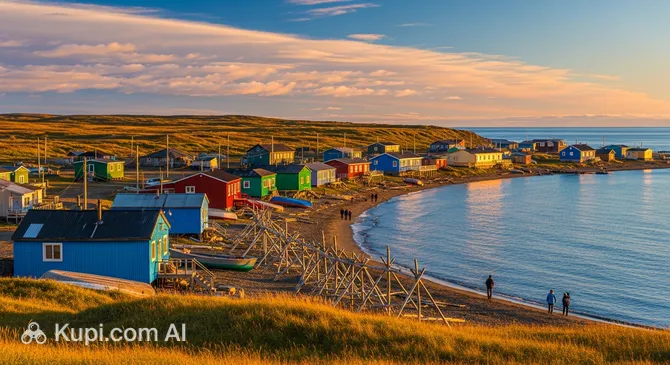
Shishmaref. Source: Kupi.Binoculars

With a population of approximately 600 residents, Shishmaref is a tight-knit Inupiat community. The village is situated on a sandy barrier island, offering breathtaking views of the ocean and the expansive Alaskan sky. The climate here is truly Arctic, characterized by cold winters and cool, short summers, shaping a lifestyle that is deeply connected to the seasons and the land.

The cultural heritage of the area is profound. Exploring the history of Shishmaref reveals a community that has subsisted on hunting, fishing, and gathering for centuries. Visitors are often drawn to the village to witness this enduring way of life and to see the work of local artisans. Shishmaref is renowned for its skilled carvers who create intricate sculptures from marine mammal bone and ivory, reflecting the rich artistic traditions of the region.

Nature enthusiasts will appreciate the proximity to the Bering Land Bridge National Preserve, which protects a remnant of the land bridge that once connected Asia and North America. The area is excellent for birdwatching and spotting marine wildlife. If you are seeking a destination off the beaten path that offers deep cultural immersion and stark natural beauty, Shishmaref invites you to experience the warmth of its people and the majesty of the far north.

Weather Overview

Travelers planning a trip to this remote Alaskan village should be prepared for a distinct Arctic climate. The weather in Shishmaref is characterized by long, freezing winters and short, cool summers, heavily influenced by its coastal location on the Chukchi Sea.

Winter conditions are rigorous, particularly in January, which is typically the coldest month with average temperatures dropping to -17.2°C and minimums reaching -19.2°C. The cold persists well into spring, with temperatures generally remaining below freezing until May. Visitors during these months must come equipped with high-quality thermal gear to handle the extreme cold.

The summer season brings milder but still cool weather. July is the warmest month, seeing average highs of approximately 12.0°C. While rainfall volume is generally low throughout the year (often around 1-3mm), the frequency of wet days increases significantly in late summer and early autumn, with July and September seeing up to 14-16 wet days. Overall, expect cool temperatures year-round with frequent dampness during the warmer months and dry, biting cold in winter.

Interesting Facts

Beyond the main attractions, Shishmaref holds many fascinating secrets and a deep-rooted history that defines its spirit. This remote village is not just a point on the map, but a place of incredible human resilience and unique local traditions.

  • The village is the proud home of the legendary dog musher Herbie Nayokpuk, known worldwide as the "Shishmaref Cannonball," who became a hero in the Iditarod Trail Sled Dog Race and remains a symbol of determination for the community.

  • Shishmaref is widely considered one of the premier locations for authentic indigenous art, with a high concentration of skilled carvers who create intricate sculptures from walrus ivory and whalebone, a craft passed down through generations.

  • Locals still rely on traditional engineering to navigate the icy waters; they construct and use umiaks, large open boats made by sewing together the skins of bearded seals, which are uniquely flexible and durable for spring hunting.

  • Situated on the narrow Sarichef Island, the community has gained global attention for its battle against coastal erosion, with the village voting to relocate in its entirety to preserve their culture against the shifting landscape of the barrier island.

How to Get There

Reaching this remote village requires careful planning, as it is located on an island off the coast of the Seward Peninsula and is not connected to the main road system of Alaska. Most travelers arrive by air, typically connecting through regional hubs. You can find more about how to get to Shishmaref and the specific logistics of travel in this detailed guide.

The city of Shishmaref does not have a major commercial airport capable of handling large jets. Instead, visitors usually fly into a larger regional hub and then transfer to a smaller bush plane. One of the primary gateways is Ralph Wien Memorial Airport (OTZ), located in the city of Kotzebue, approximately 169 km from Shishmaref. This airport serves as a vital link for the region. Another significant option is Nome Airport (OME), situated in Nome, about 197 km away. Both airports handle regional traffic and serve as transfer points for flights heading to smaller villages. Because there are no roads connecting Kotzebue or Nome to Shishmaref, ground transportation like taxis or buses is not an option for this leg of the journey; travel must be completed by a connecting flight.

For clarity, here is a summary of the main airports:

Airport Name City Passenger Traffic Km from City
Nome Airport Nome Medium 196.8
Ralph Wien Memorial Airport Kotzebue Medium 169.0
Point Hope Airport Point Hope Small 235.4

There are no railway stations in Shishmaref or the surrounding area. The railway network in Alaska does not extend to the western coast or the Seward Peninsula. Consequently, train travel is not a viable method for reaching this destination.

Since Shishmaref is isolated from the continental road network, there are no highways leading into the village. In the winter, local travel is sometimes conducted by snowmachine or dogsled over frozen terrain, while summer access is primarily by boat or small aircraft. Visitors should check with local air carriers in Nome or Kotzebue for flight schedules, which can be weather-dependent.

Main Attractions

While Shishmaref is a small and remote village rather than a typical tourist destination, it offers profound experiences for those interested in Arctic culture and nature. The attractions here are not built monuments but rather the living history, the vibrant artistic community, and the breathtaking wilderness that surrounds the island. Visitors come to witness a way of life that has adapted to one of the most challenging environments on Earth.

Bering Land Bridge National Preserve is undoubtedly the most significant natural feature in the area. Shishmaref serves as a gateway to this expansive wilderness, which protects a remnant of the land bridge that once connected Asia and North America. The preserve offers unparalleled opportunities for backcountry exploration, birdwatching, and observing Arctic wildlife in their natural habitat. It is a place of stark beauty, featuring lava flows, hot springs, and tundra landscapes that change dramatically with the seasons.

The village is globally renowned for its artistic heritage, particularly centered around the Melvin Olanna Carving Center. Shishmaref is home to some of the finest carvers in Alaska, who create intricate works of art from walrus ivory, whalebone, and baleen. Watching these master craftsmen at work offers a unique insight into Inupiat culture, where art is deeply intertwined with subsistence traditions. Visitors can often purchase authentic carvings directly from the artists, ensuring a genuine connection to the local community.

For a glimpse into local daily life and history, the Nayokpuk General Store is a central landmark. Founded by the family of the legendary dog musher Herbie Nayokpuk, known as the "Shishmaref Cannonball," the store is more than just a place to buy supplies; it is a social hub. Herbie Nayokpuk is a local hero who put Shishmaref on the map through his courageous runs in the Iditarod Trail Sled Dog Race, and his legacy is felt throughout the village.

A walk along the Sarichef Island Coastline provides a powerful perspective on the village's relationship with the sea. From the shore, you can look out over the Chukchi Sea, which is frozen solid in winter and teeming with marine life in summer. It is an excellent spot for viewing migrating birds and seals, which are vital to the community's subsistence lifestyle. The coastline also offers a place to reflect on the resilience of the people who have called this shifting barrier island home for centuries.

Local Cuisine

The culinary landscape of Shishmaref is defined not by commercial restaurants or trendy cafes, but by a deep and enduring connection to the land and sea. In this remote Inupiat community, food is a matter of subsistence and survival. The local diet relies heavily on the harvest from the Chukchi Sea and the surrounding tundra, following a seasonal rhythm that has sustained the population for centuries.

For those interested in traditional foods, the staple of the local diet is the bearded seal, known locally as ugruk. Every part of the animal is used, but the most culturally significant product is seal oil. It serves as a ubiquitous condiment, used much like butter or dipping sauce for dried meat, fish, and even vegetables. Another signature preparation is dried fish (often salmon, whitefish, or herring), which is preserved in the open air and eaten as a nutrient-dense snack, often dipped in seal oil to add fat and warmth against the Arctic cold.

A beloved treat that visitors might encounter is Akutaq, often referred to as "Eskimo ice cream." Traditionally made by whipping animal fat (such as reindeer fat or seal oil) with snow and wild berries like cloudberries or blueberries, modern versions may incorporate vegetable shortening and sugar. It is a high-energy food perfect for the demanding climate and is frequently served at community gatherings and celebrations.

When it comes to beverages, hot coffee and tea are the drinks of choice, consumed throughout the day to keep warm. It is critically important for travelers to know that Shishmaref is a dry village. The sale, importation, and possession of alcohol are strictly prohibited. Visitors must respect this local law and should not bring any alcoholic beverages into the community.

Travelers should not expect to find standard dining establishments here; there are no restaurants in Shishmaref. For basic supplies, snacks, and frozen goods, you can visit the Nayokpuk General Store or the native store, but selection can be limited and prices reflect the high cost of air freight. The true culinary experience of Shishmaref is found in the homes of its residents. Sharing food is a core cultural value, and visitors who build connections with locals may be lucky enough to be invited to share a meal of caribou stew or fresh fish, offering a genuine taste of Arctic hospitality.

Travel Tips

Visiting Shishmaref is a true adventure into the heart of the Arctic, requiring careful preparation due to its remote location and unique environment. To ensure a safe, respectful, and enjoyable experience in this tight-knit community, here are some essential practical tips to help you plan your journey.

  1. Clothing and Gear: Preparation for the elements is critical. Even in summer, temperatures can be chilly and damp, so bring waterproof boots, windproof outer layers, and warm wool or synthetic base layers. If visiting in winter, you need professional-grade Arctic gear, including a heavy parka, insulated snow pants, and face protection. Don't forget a portable power bank, as cold weather drains batteries quickly.

  2. Transportation: There is no public transport, taxi service, or car rental agency in Shishmaref. The village is small and compact, making it entirely walkable for visitors. Locals travel primarily by ATV (four-wheeler) in the summer and snowmachine (snowmobile) in the winter. If you have heavy gear or need to go further afield, you may be able to arrange a ride with a local host, but do not expect standard transit options.

  3. Finances: Cash is king in rural Alaska. While the general store may accept credit cards, internet outages can occur, rendering card machines useless. There are very limited banking facilities, so bring enough cash to cover your expenses for the entire trip. Be aware that prices for food and supplies are significantly higher than in the continental United States due to air freight costs.

  4. Health and Safety: The village has a local clinic staffed by health aides for basic care, but serious medical emergencies require a medevac flight to a larger hospital, which is weather-dependent. Always carry a sufficient supply of personal prescription medications. Additionally, be "bear aware" if you walk outside the village perimeter; polar bears and grizzly bears can be present in the area.

  5. Communication: English is the primary language spoken by all residents, though you will also hear the local Inupiaq dialect. Mobile phone coverage can be spotty; GCI is the main provider in rural Alaska, and other carriers often have no signal. Wi-Fi is rarely available publicly, so be prepared to be offline and enjoy the digital detox.

  6. Local Etiquette: Shishmaref is a subsistence community, meaning hunting and fishing are vital for survival. Never touch boats, drying racks, nets, or equipment you see around the village, as these are someone's livelihood. Always ask for explicit permission before taking photographs of local residents, their children, or their property.

  7. What to Avoid: Strictly avoid bringing any alcohol or drugs into the village. Shishmaref is a "dry" community, and the importation, sale, or possession of alcohol is illegal and culturally offensive. Also, avoid walking on the unstable edges of the shoreline where erosion is active, as the ground can suddenly give way.

  8. Local Insight: If you wish to support the local economy, buying art directly from the carvers is a wonderful gesture. Shishmaref is famous for whalebone and walrus ivory carvings. However, if you purchase ivory, ensure you receive the proper documentation to prove it was crafted by an Alaska Native artist, which is required by law for you to legally own and transport it.

By respecting these guidelines and the local way of life, you will be warmly welcomed into this resilient community. A trip to Shishmaref offers a rare opportunity to disconnect from the modern rush and connect with a culture that has thrived on the edge of the world for centuries.

Entertainment & Nightlife

Travelers expecting a bustling urban nightlife with neon lights, dance clubs, and cocktail lounges will find a completely different rhythm in Shishmaref. It is crucial to understand that this is a dry village, meaning the sale and possession of alcohol are strictly prohibited. Consequently, there are absolutely no bars, night clubs, or pubs in the community. The "nightlife" here is defined not by commercial entertainment, but by nature's grandeur and community-centric gatherings.

The most spectacular evening show in Shishmaref takes place overhead. During the long, dark winter months, the village becomes a prime viewing spot for the Aurora Borealis (Northern Lights). With zero light pollution from neighboring cities, the dancing green and violet lights are often visible right from your doorstep. The best "district" for this experience is simply the northern edge of the village facing the Chukchi Sea, where the expansive horizon offers an unobstructed theater for the celestial display.

Social life in the evenings revolves almost entirely around community facilities. The Shishmaref School is the undisputed hub of activity, particularly during the basketball season. In rural Alaska, high school basketball is a major event, and the school gym packs out with residents cheering for the local team. Another popular evening pastime is community Bingo, often held at the Community Hall or the tribal building. These events are warm, welcoming, and the best way to interact with locals in a relaxed atmosphere. Visitors are generally welcome to join in, buy a card, and experience the genuine social fabric of the village.

When venturing out at night, safety concerns are environmental rather than criminal. The village is very safe for pedestrians, but the extreme cold requires serious preparation. Furthermore, Shishmaref is in polar bear country. It is advisable to carry a bright flashlight and stay within the lit areas of the village, avoiding the dark outskirts or the shoreline alone at night, as bears can wander near the community. There are no taxi services; getting around is done on foot or, if you are lucky, by catching a ride on a local's snowmachine.

While evening options are limited, daytime entertainment offers a quiet engagement with the culture. Visitors can spend time watching artisans at the local carving workshops or simply walking the sandy barrier island to observe the unique coastal geography. For those interested in history, the Shishmaref Lutheran Church stands as a central landmark and a testament to the community's spiritual life, often hosting services and gatherings that welcome visitors.

Parks & Museums

In the remote village of Shishmaref, you will not find manicured city parks with paved paths or formal museums with ticket counters. Instead, the "green spaces" here are vast, untamed expanses of Arctic tundra and coastline, while the culture is preserved not behind glass cases, but in the hands of living artists and the daily practices of the community. The entire island serves as a living exhibition of Inupiat heritage and resilience against the elements.

The most significant natural area accessible from the village is the Bering Land Bridge National Preserve. While Shishmaref sits just outside its boundaries, the village is a primary gateway to this remote wilderness. Unlike a traditional park, this preserve protects a remnant of the land connection that once joined Asia and North America. It is a place of stark, raw beauty, featuring lava flows, maar lakes, and hot springs set against the tundra. For visitors, it offers a rare chance to see Arctic wildlife, including muskoxen, caribou, and migratory birds, in a habitat that has remained largely unchanged for millennia.

Closer to the settlement, the Sarichef Island Coastline functions as the community's main recreational and subsistence area. This sandy barrier island offers sweeping views of the Chukchi Sea, which transforms from a solid sheet of ice in winter to a bustling waterway in summer. A walk along the beach is not just a scenic stroll; it is a lesson in coastal geography and climate dynamics. Visitors can observe the unique flora of the dunes and watch for seals and walruses offshore, experiencing the profound connection between the land, the sea, and the local people.

In terms of cultural venues, the Melvin Olanna Carving Center is the closest equivalent to a gallery or art museum in Shishmaref. Named after a renowned local artist, this facility is a working studio rather than a static display. It is the heartbeat of the village's artistic community, where skilled carvers transform walrus ivory, whalebone, and baleen into exquisite sculptures. Visitors are often welcome to step inside to watch the artists at work, smell the dust of the bone being shaped, and purchase museum-quality pieces directly from the creators.

While there is no dedicated history museum, the Shishmaref Lutheran Church stands as a significant architectural and historical landmark. As one of the most prominent structures in the village, it has served as a spiritual and social gathering point for generations. Its simple, sturdy design reflects the practical necessities of building in the Arctic, and it houses the collective memory of the community's baptisms, weddings, and funerals, marking the passage of time in this close-knit settlement.

For a truly authentic experience, treat the village itself as an open-air museum. Walking through the sandy lanes, you will see traditional drying racks laden with fish or seal meat and handmade umiaks (skin boats) resting on the shore. These are not exhibits but vital tools of survival. An insider tip for art lovers: many carvers work from their homes or small sheds. If you strike up a respectful conversation with a local, you might be invited to see a private collection of carvings or raw materials that rival any metropolitan gallery display.

Getting Around

Travelers accustomed to urban centers with complex transit networks will find the transportation situation in Shishmaref to be starkly different. There is absolutely no public transport system in the village. You will not find buses, trams, subways, or fixed-route shuttles here. The infrastructure is minimal, consisting of sandy unpaved roads designed for light local traffic rather than public commuting.

For visitors, the primary mode of getting around is walking. The inhabited part of the village is compact, situated on a narrow barrier island, making it entirely possible to traverse the community on foot within a short time. Since there are no designated bus stops or stations, there are also no tickets, travel passes, or transport apps to worry about. The "payment system" is non-existent because the infrastructure for public transit does not exist.

While there are no taxis, ride-sharing services like Uber, or car rental agencies, you will see motorized transport used extensively by residents. In the summer months, ATVs (all-terrain vehicles or "four-wheelers") are the standard way locals move people and supplies. In the winter, when the ground and surrounding sea are frozen, snowmachines (snowmobiles) become the essential lifeline for travel. These are privately owned vehicles, and there is no formal service for tourists to hire them for point-to-point transport.

Occasionally, a local host or a resident may offer a ride on a snowmachine or ATV, particularly if you have heavy gear or need to travel from the airstrip to a lodging. In such informal cases, there is no fixed price list; it is a matter of courtesy or a pre-arranged fee with your specific host. It is important to carry cash, as electronic payment methods are rarely available for these types of informal transactions.

Practical advice for navigating Shishmaref focuses on pedestrian preparedness rather than schedule checking. Since you will be walking outdoors, high-quality, weather-appropriate footwear is essential. In summer, waterproof boots are recommended due to mud and sand; in winter, insulated Arctic boots are mandatory to prevent frostbite. Always remain aware of your surroundings when walking on the village roads, as ATVs and snowmachines share the same paths and can move quickly.

Accommodation

Finding accommodation in Shishmaref requires a completely different approach than booking a hotel in a standard tourist destination. Travelers should be aware that there are no commercial hotels, motels, resorts, or hostels in the village. The tourism infrastructure is minimal, and lodging options are extremely limited, often restricted to informal arrangements that must be secured well before your arrival.

The primary form of accommodation for visitors is often a homestay or a room rental arranged through local entities. Occasionally, the City of Shishmaref or the Native Village Council may have a few rooms available for visiting workers or officials that can be rented by travelers if not in use. These facilities are basic, typically offering a bed and shared bathroom facilities, emphasizing function over comfort. For larger groups, such as educational tours, arrangements can sometimes be made to sleep on the floor of the local school gymnasium, though this requires specific permission from the school district and usually necessitates bringing your own sleeping gear.

Since the village is located on a small barrier island and is very compact, "location" is rarely a deciding factor. Any accommodation you secure will be within walking distance of the airstrip, the general store, and the coastline. Staying anywhere in the village places you in the heart of the community, offering an immersive experience into daily Inupiat life that a standard hotel could not provide.

Booking Tip: You cannot book accommodation online through major travel platforms. Planning a stay here requires direct communication. You should contact the City of Shishmaref or the Native Village Council by telephone months in advance to inquire about availability. Do not fly to the village without a confirmed place to stay, as you may be left without shelter in a harsh Arctic environment.

Regarding costs and payment, be prepared for prices that reflect the high cost of living in remote Alaska. Even basic lodging can be surprisingly expensive compared to mainland standards. Payment is almost exclusively handled in cash or, in some cases, by check. Credit card facilities are rare and unreliable due to internet connectivity issues, so travelers should bring sufficient funds to cover their entire stay. Visitors are also advised to bring their own toiletries, a towel, and perhaps a sleeping bag, even if a bed is promised, to ensure comfort.

Nearby Cities

For those looking to explore the surroundings, Shishmaref serves as an excellent base for day trips to several interesting nearby locations. While the village is isolated by the lack of connecting roads, short flights by bush plane allow travelers to visit significant regional hubs that offer distinct historical and cultural experiences.

One of the most prominent nearby destinations is Nome. Famous for its rich gold rush history, this town offers a fascinating look into Alaska's past. Visitors can explore the remnants of the mining era, walk along the golden sands of the Bering Sea beaches, and stand beneath the famous Burled Arch, which marks the finish line of the Iditarod Trail Sled Dog Race. It is a place where history and modern frontier life blend seamlessly.

Another key location worth visiting is Kotzebue, situated just north of the Arctic Circle. As a hub for the Northwest Arctic region, it provides a deep dive into Inupiat culture. The Northwest Arctic Heritage Center is a highlight here, offering museum-quality exhibits on the local ecosystem and indigenous traditions. Kotzebue is also known for its stunning views of the midnight sun during summer and its vibrant community spirit.

City Population Distance (km)
Nome 3697 198
Kotzebue 3300 170
Selawik 830 273
Savoonga 733 354
Noorvik 700 232

These nearby destinations offer a glimpse into the diverse culture and landscapes of the region, allowing visitors to appreciate the vastness and unique character of western Alaska.

Shopping & Souvenirs

Shopping in Shishmaref is a unique experience largely defined by the village's remote location and subsistence lifestyle. Visitors should not expect a commercial shopping scene with boutiques, fashion outlets, or souvenir shops. Instead, commerce here is strictly utilitarian, focused on providing essential supplies to residents, with the notable exception of the incredible local artwork that can be purchased directly from the community's master craftsmen.

There are no designated shopping districts or bustling high streets in the village. The retail landscape consists primarily of two main general stores that serve the entire population. These stores are the lifeline of the community, stocking everything from groceries and dry goods to hardware, winter clothing, and fuel. For a tourist, walking into these stores offers a glimpse into the reality of Arctic living, where the selection is determined by air freight schedules and prices reflect the high cost of transportation to this isolated island.

Travelers looking for large retail complexes will find none here. There are no shopping malls, department stores, or chain retailers in Shishmaref. The commercial infrastructure is microscopic compared to urban centers, designed solely to meet basic human needs rather than consumer desires.

While there are no formal flea markets or craft bazaars, the village itself functions as an informal marketplace for high-quality indigenous art. Shishmaref is world-famous for its skilled carvers. The most prized items to bring back are traditional carvings made from walrus ivory, whalebone, and baleen. These are not mass-produced trinkets but museum-quality sculptures depicting Arctic animals, hunters, and scenes from Inupiat mythology.

The best way to purchase these souvenirs is often directly from the artists or through the Melvin Olanna Carving Center. By buying locally, you support the village economy and ensure the authenticity of the piece. If you purchase items made from marine mammal parts, such as ivory or bone, it is crucial to ask for a certificate of authenticity or proof that it was crafted by an Alaska Native artist. This documentation is required by law to possess and transport these items within the United States, and international travelers should be aware that exporting such materials across borders is generally prohibited.

Store hours in Shishmaref are generally limited compared to city standards. The main stores typically operate from morning until early evening, often closing for a lunch break and having reduced hours on weekends. Cash is the preferred method of payment everywhere in the village. While the general stores may have card terminals, internet connectivity issues can frequently render them unusable. There are no banks and limited ATM access, so visitors are strongly advised to bring enough cash to cover all potential purchases, including art and supplies.

Regarding taxes, Alaska is one of the few states with no state-level sales tax, though local municipalities often levy their own. However, the concept of "Tax-Free" shopping for tourists (like VAT refunds found in Europe) does not apply here. The price you see on the shelf is the price you pay, and visitors should be prepared for sticker shock, as the cost of goods can be significantly higher than on the mainland due to the logistics of bush plane delivery.

Reached the end of the page?

That means the route is fully explored