Support

Port Clarence

About

Located on the western tip of the Seward Peninsula, Port Clarence is a remote and fascinating destination in Alaska. This vast natural harbor is situated near the Bering Strait, offering visitors a chance to witness the raw and untamed beauty of the United States' northernmost frontier.

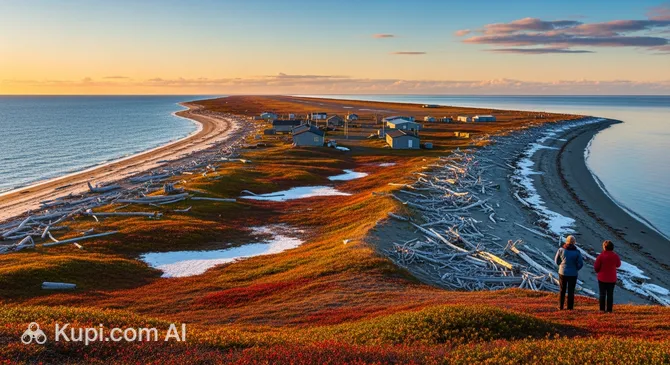
The landscape here is characterized by sweeping tundra, dramatic coastal views, and a sense of profound isolation that appeals to adventurers seeking off-the-beaten-path experiences. It is a place where nature dictates the pace of life, making it an intriguing spot for those interested in maritime geography and the unique ecosystem of the Arctic region.

While the area is quiet today, it holds a significant place in the region's past. For those curious about the area's development and its role over the years, the history of Port Clarence offers deeper insights into this distinctive location.

Weather Overview

The climate in Port Clarence is defined by its high-latitude location, resulting in long, freezing winters and short, cool summers. Conditions here are typical of the Arctic region, where nature dictates the seasons with intensity. For travelers preparing for a trip to this remote Alaskan outpost, checking the weather in Port Clarence is essential for packing the right gear.

Winter is the dominant season, with temperatures remaining well below freezing for several months. January is typically the coldest month, with an average temperature of -17.7°C and lows dipping to -20.0°C. The cold persists through spring, with average temperatures only rising above freezing starting in May.

Summer brings a brief period of milder weather, though it remains brisk compared to southern standards. July is the warmest month, reaching an average of 10.2°C. Expect cool summers with frequent wet days and very cold winters with minimal precipitation volume. While the amount of rainfall is low, often just 1mm to 3mm, July and August can see up to 16 wet days per month, suggesting frequent light drizzle or mist.

Interesting Facts

Beyond the main attractions, Port Clarence holds many fascinating secrets that highlight its unique position on the map. This remote location is more than just a spot on the coastline; it possesses a rich history of engineering and maritime significance that few travelers know about.

  • For decades, the skyline of this remote area was dominated by the LORAN-C transmission tower. Standing at an impressive height of approximately 411 meters (1,350 feet), it held the title of the tallest structure in Alaska until it was dismantled in 2010, serving as a vital navigation aid for mariners across the North Pacific.

  • Port Clarence is formed by a distinctive geographic feature known as Point Spencer. This long sand spit creates one of the only natural deep-water harbors in the Arctic Ocean, which historically made it a bustling rendezvous point for 19th-century whaling fleets seeking shelter from the open sea.

  • Despite appearing on maps as a designated place, it is essentially a town without residents. In recent census counts, the permanent population has often been recorded as zero or limited strictly to rotational personnel maintaining the infrastructure, making it a unique "ghost" settlement compared to traditional Alaskan villages.

How to Get There

Reaching this remote outpost on the Seward Peninsula requires careful planning, as the region is isolated from the main road networks of the continent. While the journey can be challenging, it offers a true Arctic adventure. For travelers looking to arrange their logistics, you can find more details about how to get to Port Clarence and the necessary transportation arrangements on our dedicated page.

Port Clarence does not have its own commercial airport. The primary gateway for most visitors is the Nome Airport (OME), located in the city of Nome, approximately 107 km away. This is a key regional hub that connects the area to larger Alaskan cities. From Nome, reaching the coast near Port Clarence typically involves arranging specialized transport or a charter, as the journey takes approximately 3 hours by vehicle depending on road conditions and weather. Another option for accessing the broader region is the Ralph Wien Memorial Airport (OTZ) in Kotzebue, situated about 264 km from Port Clarence. However, due to the lack of direct connecting roads, travel from Kotzebue would require a significantly longer and more complex transit, estimated at over 7 hours if a land route were feasible.

For clarity, here is a summary of the main airports in the vicinity:

Airport Name City Passenger Traffic Km from City
Nome Airport Nome Medium 106.9
Ralph Wien Memorial Airport Kotzebue Medium 264.2
Gambell Airport Gambell Small 287.7

There are no railway stations serving Port Clarence or the surrounding Seward Peninsula. The vast and rugged terrain of this part of Alaska is not connected to the North American rail network. Visitors typically rely on air travel to regional hubs like Nome, followed by local bush planes, boats, or off-road vehicles to reach their final destination.

Main Attractions

Port Clarence is not a traditional city with bustling streets and museums; rather, it is a destination defined by its spectacular isolation and raw natural beauty. The attractions here are the geographic features and the untouched wilderness that surrounds this vast natural harbor. Visitors who make the journey are rewarded with landscapes that have remained largely unchanged for centuries.

Point Spencer is the most prominent feature of the area, a long, curving sand spit that naturally forms the protective harbor. This strip of land is historically significant, having served as a gathering point for 19th-century whaling fleets and later as a strategic Coast Guard station. Today, it offers travelers a stark, windswept beauty and a unique vantage point to look out over the Bering Sea and the sheltered waters of the port simultaneously.

Just inland from the main bay lies Grantley Harbor, a scenic body of water connected to Port Clarence by the Tuksuk Channel. This inner harbor is often calmer and framed by the rolling tundra of the Seward Peninsula. It is an excellent spot for those looking to appreciate the serene vastness of the Arctic landscape, with opportunities to see local fishing activities and the dramatic play of light on the water during the long summer days.

While technically a separate community, the village of Teller is an essential stop for anyone visiting the region. Located on a spit separating Port Clarence from Grantley Harbor, Teller is the end of the road system from Nome and provides a vital cultural connection to the area. Visitors can learn about the traditional Iñupiat lifestyle, observe subsistence fishing, and experience the warm hospitality of one of Alaska's authentic rural villages.

For nature enthusiasts, the surrounding Arctic Tundra serves as a living attraction. The area is a haven for wildlife viewing, particularly for birdwatchers who can spot migratory species that frequent the coastline. In the waters, it is not uncommon to spot seals and, occasionally, migrating whales, making the simple act of observing the horizon a thrilling activity for wildlife lovers.

Local Cuisine

Due to its isolated nature and lack of permanent commercial infrastructure, Port Clarence does not have a conventional dining scene with restaurants or cafes. Visitors to this remote part of the Seward Peninsula typically arrive self-sufficient with their own provisions. However, the surrounding region is deeply rooted in the culinary traditions of the indigenous Iñupiat people, whose diet relies heavily on subsistence hunting and gathering from the land and sea.

The local diet is centered around high-energy, nutrient-dense foods essential for surviving the Arctic climate. Salmon and whitefish are staples, often prepared by drying, smoking, or fermenting to preserve them for winter. A true delicacy of the region is Muktuk, consisting of whale skin and blubber, which is traditionally eaten raw, frozen, or cooked. It is prized for its rich flavor and high vitamin C content. Another common protein source is Caribou or moose meat, often made into hearty stews or dried into jerky.

For a sweet treat, the most iconic dish is Akutaq, commonly known as "Eskimo Ice Cream." Unlike dairy-based ice cream, this traditional dessert is made by whipping animal fat (such as seal oil or reindeer fat) or shortening with snow or water, and then mixing in wild berries like cloudberries (locally called salmonberries) or blueberries. It is a calorie-rich dish that provides essential energy for outdoor activities in the cold.

Regarding beverages, hot drinks are a constant necessity to combat the chill. Strong coffee and hot tea are consumed throughout the day to stay warm. While wild berry juices are sometimes prepared, travelers should be aware that alcohol availability can be restricted in many rural Alaskan communities, with some being "damp" or "dry" by local regulation. Since there are no supermarkets or food stalls in the immediate vicinity, visitors must plan to bring all necessary food and drink from the gateway city of Nome.

Travel Tips

Visiting Port Clarence is a true expedition into the Alaskan wilderness rather than a standard sightseeing trip, requiring thorough preparation and self-sufficiency. To ensure a safe and memorable experience in this remote corner of the United States, here are some essential practical tips to help you plan your journey.

  1. Clothing and Gear. The weather on the Seward Peninsula is unpredictable and often harsh. You must dress in layers using wool or synthetic materials; cotton should be avoided as it holds moisture. Even in summer, bring a heavy waterproof jacket, wind pants, and sturdy, insulated hiking boots. Don't forget a hat, gloves, and a high-quality mosquito head net, as insects can be intense during the warmer months.
  2. Transportation. There is no public transportation, metro, or taxi service in Port Clarence. Access is primarily via charter plane or boat from Nome. If you are traveling by land from Nome to Teller, you will need a rugged 4x4 vehicle, but be aware that the road ends at Teller, and crossing to Port Clarence requires a boat. All travel logistics must be arranged well in advance with operators in Nome.
  3. Finances. The official currency is the United States Dollar (USD). However, Port Clarence itself has no banks, ATMs, or commercial stores. You must withdraw all necessary cash in Nome before departing. While credit cards work in Nome, cash is essential for paying local boat operators or buying supplies in the nearby village of Teller. Plan your budget to cover high costs for charters and fuel.
  4. Health and Safety. You will be miles away from the nearest hospital, which is located in Nome. It is critical to carry a comprehensive first aid kit and any personal medications. Wildlife encounters, particularly with grizzly bears and muskoxen, are a real possibility; carry bear spray and know how to use it. Always inform someone of your itinerary, as search and rescue operations can take time to reach this isolated area.
  5. Communication. The primary language is English. Mobile phone coverage is virtually non-existent in Port Clarence. Do not rely on your standard SIM card or roaming data. For safety, it is highly recommended to rent or bring a satellite phone or a satellite messenger device (like an inReach) to communicate in case of an emergency.
  6. Local Etiquette. The land around Port Clarence and the Seward Peninsula is often used by Iñupiat locals for subsistence hunting and fishing. Respect their traditional lifestyle and do not interfere with fishing nets, drying racks, or hunting activities. If you encounter locals in nearby Teller, a friendly greeting and respect for their privacy go a long way. Always practice Leave No Trace principles.
  7. What to Avoid. Do not trespass on private property or Native allotments. Much of the land in Alaska is owned by Native corporations or individuals, even if it looks uninhabited. Always look for signage or ask locally in Nome or Teller about land status before setting up camp or hiking inland.
  8. Daylight Awareness. Be prepared for extreme daylight hours. In mid-summer, the sun barely sets, creating 24 hours of daylight which can disrupt sleep patterns; bring an eye mask. Conversely, if you visit in late autumn or winter, daylight is extremely limited, so high-quality headlamps and flashlights with extra batteries are mandatory.

By packing the right gear and respecting the raw power of the Arctic environment, your trip to Port Clarence will be a safe and awe-inspiring adventure. Embrace the solitude and the stunning landscapes, and you will discover the unique beauty that defines this rugged edge of Alaska.

Entertainment & Nightlife

Travelers planning a trip to Port Clarence should be aware that this is not a destination for traditional urban nightlife. As a remote and largely uninhabited outpost on the Seward Peninsula, there are no nightclubs, bars, concert venues, or night markets in the area. The "nightlife" here is defined entirely by the raw, natural environment rather than commercial entertainment. Visitors looking for a party atmosphere or a cocktail lounge will not find it here; instead, they will find a profound silence and solitude that is rare in the modern world.

In place of neon lights and music, the evening entertainment in Port Clarence is provided by the sky. During the darker months, particularly from late autumn to early spring, this location offers a front-row seat to the spectacular Aurora Borealis (Northern Lights). Far from any light pollution, the dancing green and violet lights provide a mesmerizing show that rivals any club performance. Conversely, during the summer months, the phenomenon of the Midnight Sun means true night never falls, allowing for "evening" activities like hiking or fishing to continue well into the early morning hours under bright daylight.

For those seeking social interaction, entertainment is a self-made affair. Evenings are typically spent around a campfire (if weather permits and fuel is available) or inside heated tents and cabins, sharing stories and hot drinks with travel companions. Since there are no restaurants or pubs, any food or alcohol must be brought in by the travelers themselves from Nome. It is important to remember that safety is paramount at night; the wilderness is home to bears and other wildlife, so venturing out alone in the dark without precautions is strongly discouraged.

Regarding daytime entertainment, Port Clarence similarly lacks conventional facilities like theaters, museums, or amusement parks. The "museum" here is the landscape itself, scattered with remnants of Coast Guard history and maritime artifacts. The primary activities are outdoor pursuits: exploring the coastline, birdwatching, and observing the unique Arctic ecosystem. For those craving a taste of civilization or a historic bar scene, the nearest options are located in the city of Nome, a short flight away, which serves as the social hub for the entire region.

Parks & Museums

Port Clarence is a destination where the boundaries between a city and the wilderness dissolve completely. Unlike traditional tourist hubs, this remote outpost does not feature manicured city parks, botanical gardens, or brick-and-mortar art galleries. Instead, the entire region functions as a vast, open-air preserve, offering visitors an immersive experience in one of the most rugged natural environments on Earth. The cultural heritage here is not housed in glass cases but is written into the landscape and preserved by the communities of the surrounding Seward Peninsula.

While you will not find fenced green spaces with benches, the natural areas around Port Clarence are spectacular in their scale and wildness. These "parks" are defined by nature itself, offering unhindered access to the Arctic ecosystem.

Bering Land Bridge National Preserve is the most significant protected area in the wider region. Although its boundaries lie to the north and east of Port Clarence, the landscape here is part of the same geological and ecological continuum. This preserve protects a remnant of the ancient land bridge that once connected Asia and North America. For visitors, it offers a stark, treeless terrain filled with volcanic features, hot springs, and a rich array of wildlife, serving as a living monument to the Ice Age history that shaped human migration.

The Coastal Wetlands and Tundra surrounding Grantley Harbor act as the area's primary recreational space. This undefined natural park is a haven for migratory birds and marine life. In the summer, the tundra explodes with wildflowers, cloudberries, and blueberries, creating a colorful carpet that stretches to the horizon. Visitors can treat this area as a massive hiking ground where the trails are made by caribou rather than city planners, offering a sense of solitude that is impossible to find in urban parks.

Regarding museums and cultural institutions, Port Clarence itself has no permanent population to support local facilities. However, the history and culture of this unique area are meticulously preserved in the regional hub of Nome, which serves as the cultural gateway for the entire Seward Peninsula.

The Carrie M. McLain Memorial Museum in Nome is the essential repository for the region's history. Since there are no museums on-site in Port Clarence, this institution provides the necessary context for understanding the area's significance. Exhibits cover the rich history of the Bering Strait, including the gold rush era, the dramatic stories of Arctic exploration, and the military importance of sites like Port Clarence during the 20th century. It is the best place to learn about the human endeavors that have touched this remote coast.

The Katirvik Cultural Center, also located in Nome, serves as a vital gallery and gathering space dedicated to the Indigenous people of the Bering Strait. "Katirvik" translates to "gathering place" in the Iñupiaq language. This venue celebrates the living culture, art, and traditions of the Iñupiat, Yup'ik, and St. Lawrence Island Yupik peoples. For travelers heading to Port Clarence, a visit here offers deep insight into the subsistence lifestyle and artistic heritage that continue to thrive in the villages of the Seward Peninsula, such as nearby Teller.

For a truly authentic experience, treat the coastline of Point Spencer as a "living museum." While you should not disturb any artifacts, the shores are often lined with driftwood and remnants of the area's maritime past. Walking these beaches offers a quiet, reflective connection to the generations of whalers, traders, and Coast Guard personnel who once navigated these icy waters.
Getting Around

Travelers planning a visit to Port Clarence must be aware that there is absolutely no public transport system within the area. As a remote location with no permanent residential population and limited infrastructure, you will not find buses, trams, metros, or even taxis. The concepts of schedules, routes, and ticket machines do not apply here, and visitors must be entirely self-sufficient regarding their mobility.

Once you arrive in the area, movement is primarily accomplished on foot or by utilizing specialized off-road vehicles. In the summer months, hiking is the most common way to explore the immediate surroundings of the harbor and the sand spit. For covering longer distances along the coastline or crossing the water to the nearby village of Teller, small boats or skiffs are the standard mode of travel. In winter, transportation shifts to snowmachines (snowmobiles) or dog sleds, which are essential for navigating the frozen tundra and sea ice.

Since there is no organized transit authority, there are no travel passes, transport cards, or mobile apps for ticketing. Payment for any transportation services—such as a boat ride from a local operator or a charter flight drop-off—is typically arranged on an individual basis. Transactions are often conducted in cash (US Dollars), and prices are negotiated directly with the service provider. It is crucial to agree on fees beforehand, as there are no meters or fixed tariff sheets.

For tourists, the most practical advice is to arrange all logistical support in the regional hub of Nome before departing. There are no car rental agencies or bike sharing stations in Port Clarence itself. If you require a vehicle, such as an ATV, it must usually be arranged as part of a guided expedition or transported at significant expense. Consequently, most visitors treat the area as a wilderness hiking destination, relying on their own physical fitness to get around once dropped off by their charter.

Accommodation

Where to Stay:

Travelers planning a visit to Port Clarence must adjust their expectations regarding accommodation. As a remote and uninhabited outpost on the Seward Peninsula, there are no hotels, hostels, resorts, or vacation rentals within the area itself. The infrastructure that exists is strictly industrial or former military, meaning there is no commercial hospitality sector. Visitors cannot simply book a room online and arrive; staying here requires a completely different approach focused on self-reliance and wilderness survival.

For the vast majority of adventurers, the primary "accommodation" option is wilderness camping. This is an off-grid experience where you must bring your own shelter. The landscape offers plenty of flat ground on the sand spit of Point Spencer or the surrounding tundra, but there are no designated campgrounds with facilities like running water, electricity, or restrooms. Camping here is primitive and demands high-quality, four-season gear capable of withstanding high winds and freezing temperatures. Travelers must also be diligent about bear safety, storing food in bear-resistant containers and setting up camp well away from cooking areas.

Because of the lack of facilities, most visitors choose to use the city of Nome as their base camp. Located approximately a 3-hour journey away (by air or mixed transport), Nome offers a range of standard accommodations, including comfortable hotels, bed and breakfasts, and guest houses. From there, tourists typically arrange day trips or overnight expeditions to Port Clarence with the help of local charter operators. Staying in Nome ensures access to warm beds, hot showers, and dining options, which are non-existent at the port.

The nearby village of Teller, located across the channel, is a small residential community rather than a tourist destination. While it is the closest settlement, it generally does not have formal hotels for tourists. Accommodation in Teller is extremely limited and usually restricted to informal arrangements or facilities for visiting workers. Travelers should not rely on finding a place to stay there without prior, confirmed local contacts.

Booking and Planning Tip: Since you will likely be basing yourself in Nome, it is crucial to book your accommodation months in advance, especially during the summer peak season or during major regional events like the Iditarod finish. Hotels in Nome are limited and fill up quickly. For those intending to camp in Port Clarence, no booking is required for the land itself, but you must verify land ownership status (Native corporation or public land) and obtain any necessary recreational permits before setting up your tent.

In summary, a trip to Port Clarence is not about finding the best hotel deal, but about preparing for a rugged outdoor expedition. Whether you choose to sleep under the midnight sun in a tent or return to the comforts of Nome each night, your accommodation plan should be centered on safety and logistics.

Nearby Cities

Situated on the remote western edge of the Seward Peninsula, Port Clarence is not a central hub for touring the region but rather a distant destination in itself. Due to its isolated nature and lack of infrastructure, it does not serve as a base for day trips. Instead, visitors typically travel here from larger regional centers that offer the necessary logistics and amenities for Arctic exploration.

The primary gateway to this area is Nome, located approximately 109 kilometers to the southeast. As the commercial and transportation hub of the region, Nome is where most travelers begin their journey. It is renowned for its rich Gold Rush history and serves as the finish line for the Iditarod Trail Sled Dog Race. Unlike Port Clarence, Nome provides hotels, restaurants, and the essential services required to plan an expedition into the surrounding wilderness.

To the north lies Kotzebue, situated about 265 kilometers away just above the Arctic Circle. Although it is a significant cultural center for the Iñupiat people and the Northwest Arctic, there are no direct road or transport links connecting it to Port Clarence. Travel between these remote locations typically requires routing through major air hubs, emphasizing the vast and rugged scale of this part of Alaska.

City Population Distance (km)
Nome 3697 109
Savoonga 733 247
Kotzebue 3300 265
Emmonak 800 299
Alakanuk 700 307

These neighboring communities, though separated by hundreds of kilometers of tundra and sea, collectively define the character of the region. While Port Clarence offers solitude, these cities provide the vital cultural and logistical connections that make life and travel possible in this challenging environment.

Shopping & Souvenirs

Travelers planning a visit to Port Clarence must set aside any expectations of a traditional shopping experience. As a remote and largely uninhabited outpost on the Seward Peninsula, the area is devoid of commercial retail infrastructure. There are no shopping malls, boutiques, souvenir stands, or even convenience stores within the immediate vicinity of the harbor or the Coast Guard station. For visitors, "shopping" here effectively means ensuring you have purchased all necessary supplies, food, and gear in the regional hub of Nome before boarding your charter flight or boat.

Because there are no commercial districts in Port Clarence, the concept of Main Shopping Areas does not apply to this wilderness destination. The landscape is dominated by tundra and coastline rather than storefronts. The nearest location with a semblance of retail activity is the village of Teller, located across the channel. Teller has a small general store offering basic provisions, but accessing it requires a boat crossing or a journey over sea ice in winter. For any substantial shopping needs, visitors must rely on the streets of Nome, particularly Front Street, which serves as the commercial lifeline for the entire region.

Unsurprisingly, there are no shopping malls in or around Port Clarence. The region is characterized by its isolation and lack of large-scale development. Travelers looking for department stores or fashion brands will not find them anywhere on the Seward Peninsula. The focus here is on survival and subsistence rather than consumerism.

Similarly, there are no organized markets in Port Clarence. However, the region is rich in cultural heritage, and while you won't find a flea market, you may encounter authentic local craftsmanship if you visit the nearby community of Teller. In these small villages, commerce is often informal. Locals may occasionally sell handmade items or subsistence foods directly from their homes, but there is no designated marketplace to browse.

When it comes to souvenirs, you cannot buy them on-site in Port Clarence. The best mementos are the photographs you take and the memories of the stark Arctic beauty. If you wish to bring back a tangible piece of the region, you should look for authentic Iñupiat arts and crafts in Nome or Teller. Highly prized items include intricate ivory carvings (ensure they are legally sourced and certified), beadwork, and clothing made from seal skin or muskox wool (qiviut). These items support the local Indigenous economy and represent the true artistic traditions of the Bering Strait.

Since there are no stores, information regarding Opening Hours and Payment is largely irrelevant for Port Clarence itself. However, if you are purchasing goods in the nearby village of Teller or arranging services, be aware that cash is essential. Credit card processing can be unreliable or unavailable in remote Alaskan villages due to connectivity issues. In Nome, standard business hours apply, and cards are widely accepted, but once you leave the city limits, self-reliance and cash on hand are the rules of the road.

regarding taxes, the state of Alaska does not impose a state-level sales tax, which is a benefit for tourists. However, local municipalities often levy their own sales taxes. While Port Clarence is outside of these taxing jurisdictions due to its lack of commerce, if you are shopping in Nome, be prepared for a local sales tax added to your purchases. This is worth keeping in mind when budgeting for high-value items like local art or specialized outdoor gear.

Reached the end of the page?

That means the route is fully explored