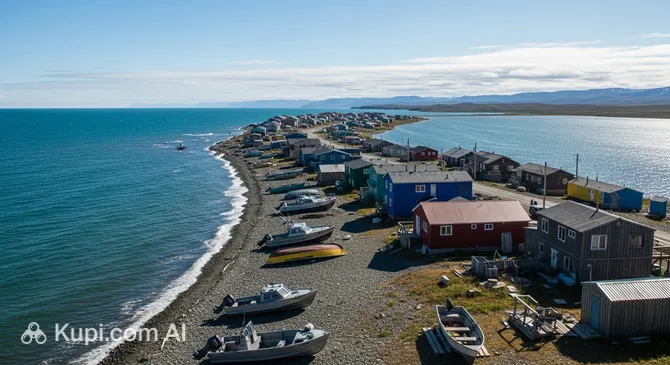
Kivalina defies the standard definition of urban tourism; instead of manicured city parks and ticketed museums, it offers vast, untamed wilderness and a culture kept alive through daily practice rather than glass exhibits. The "parks" here are the endless horizons of the Arctic, and the "museums" are the people themselves, who carry thousands of years of Inupiat history in their language, crafts, and subsistence lifestyle.
The Barrier Reef Beach serves as the village's primary natural recreational area, though it bears little resemblance to a typical seaside resort. Stretching along the Chukchi Sea, this rugged strip of gravel and sand is a place of raw beauty and constant change. In the summer, it is a hub of activity where families gather, boats are launched, and children play near the surf. In the winter, the beach transforms into a gateway to the frozen ocean, offering a stark, white landscape that is perfect for walking and observing the shifting sea ice.
Across the lagoon lies the Tundra Hinterland, which functions as the community's vast, unfenced garden. While not a park in the traditional sense, this expansive terrain is where locals and visitors alike go to connect with the land. During the warmer months, the tundra comes alive with wildflowers and berries, including cloudberries (aqpiks) and blueberries. It offers a profound sense of solitude and silence, broken only by the calls of migratory birds, making it an exceptional spot for hiking and photography.
Regarding cultural institutions, travelers should note that there are no formal museums or art galleries within Kivalina. The village does not have a building dedicated to preserving artifacts; instead, the entire settlement acts as a Living Museum. Walking through the unpaved streets, visitors can observe traditional drying racks laden with fish or caribou, skin boats (umiaks) resting on the shore, and the daily processing of subsistence harvests. This open-air display of heritage offers a more authentic and immediate connection to Inupiat culture than any curated exhibit could provide.
The McQueen School often serves as an informal cultural center for the community. As the heart of village social life, the school frequently showcases student artwork, traditional crafts, and projects related to local history. during community gatherings or special events, the school's gymnasium transforms into a venue for traditional drumming and dancing, allowing visitors to witness the vibrant artistic expression of the residents firsthand.
Among the architectural landmarks, the Kivalina Sea Wall stands as the most significant modern structure. This massive rock revetment was constructed to protect the eroding island from powerful ocean storms. While utilitarian in nature, it has become a defining feature of the village's landscape and a poignant monument to the community's resilience in the face of climate change. Walking along the wall offers a sobering perspective on the fragile balance between the village and the encroaching sea.
The Friends Church is another central pillar of the community, representing the spiritual history of the region. As one of the most prominent buildings in the village, it serves as a gathering place that blends Christian faith with local community values. Its simple architecture reflects the practical needs of the Arctic environment, standing as a beacon of warmth and fellowship during the dark winter months.
For a truly authentic experience, ask a local if there are any current ivory or whalebone carvers working outside their homes. Watching a master artisan transform raw natural materials into intricate sculptures is a privilege that offers deep insight into the artistic heritage of the region, far surpassing a visit to a souvenir shop.