Support

Brevig Mission

About

Brevig Mission is a small, traditional community located on the western tip of the Seward Peninsula in Alaska. Situated along the coast of Port Clarence, this remote village offers a unique glimpse into the rugged beauty of the northern United States. With a population of approximately 400 residents, it provides an intimate atmosphere where the vastness of the Arctic tundra meets the sea, creating a landscape that is both stark and breathtaking.

The community is deeply rooted in Inupiat traditions, and subsistence living remains a vital and cherished part of daily life here. Visitors interested in the history of Brevig Mission will discover a resilient heritage that dates back to the early 20th century, originally established as the Teller Mission. The local culture is warm and welcoming, offering a rare chance to learn about authentic life in the Far North and the enduring spirit of its people.
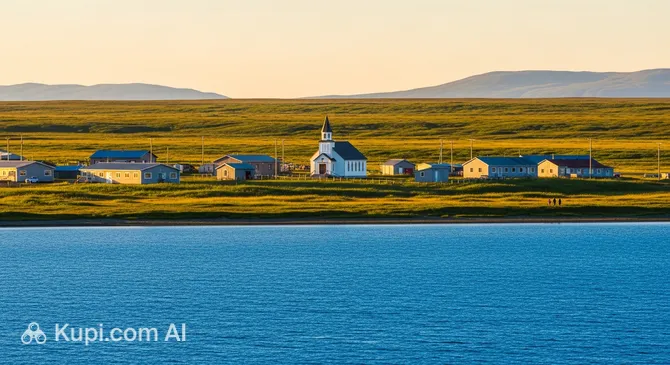
Brevig Mission. Source: Kupi.Binoculars

Travelers to this isolated destination are often drawn by the pristine natural surroundings and the opportunity to witness the Arctic environment firsthand. The area is excellent for viewing wildlife, including seals, walruses, and migratory birds that frequent the coast. In the winter months, the dark, unpolluted skies provide a spectacular canvas for the Northern Lights, while the snow-covered terrain invites exploration by snowmachine or dog sled.

Although it is off the beaten path and accessible primarily by air, Brevig Mission promises an unforgettable experience for adventurous souls. Whether you are looking to witness the midnight sun in summer or immerse yourself in Alaskan Native culture, a visit to this quiet coastal village is a journey into the heart of the Arctic.

Weather Overview

The climate in Brevig Mission is typical of the Arctic region, characterized by long, freezing winters and short, cool summers. Travelers visiting during the colder months should come well-prepared, as January sees average temperatures drop to around -19.2°C, with lows reaching -21.8°C. Conversely, the summer season brings milder conditions, with July being the warmest month, offering average temperatures of about 10.8°C and highs up to 13.6°C.

Although the volume of precipitation is quite low year-round, typically recording only 1mm to 2mm monthly, the area still experiences a significant number of wet days. You can expect cool summers with frequent light drizzle and cold winters with persistent snow cover. For a more detailed breakdown of what to expect during your specific travel dates, be sure to check the weather in Brevig Mission.

Interesting Facts

Beyond its quiet exterior and remote location, Brevig Mission holds a pivotal place in scientific history and local heritage. This small community is known for more than just its Arctic landscape; it has played a surprisingly crucial role in modern medicine and retains deep historical roots.
  • Solving a Medical Mystery: Brevig Mission is famous in the scientific community for helping researchers decode the 1918 Spanish Flu. Because the village sits on permafrost, the virus was preserved in the frozen ground for decades, allowing scientists to eventually recover genetic material and sequence the virus's genome to better understand pandemics.

  • The "Lucy" Discovery: In a landmark scientific event during the 1990s, pathologist Johan Hultin discovered the frozen remains of a local woman he nicknamed "Lucy." Her well-preserved lung tissue provided the essential RNA that allowed the 1918 virus to be reconstructed, a breakthrough that had eluded scientists for nearly a century.

  • Reindeer Herding Roots: The settlement was originally established in the early 1900s as the "Teller Reindeer Station." It was created as a place where Sami herders brought over from Norway could teach the local Inupiat population the trade of reindeer herding.

  • A Name with History: While it was first known as Teller Mission, the village was later renamed Brevig Mission. This change was made to honor the Reverend Tollef L. Brevig, a Norwegian Lutheran pastor who dedicated his life to serving the community and fostering its early development.

How to Get There

Reaching the remote village of Brevig Mission is an adventure in itself, offering travelers a chance to experience the authentic logistics of travel in rural Alaska. Located off the road system, the community is not accessible by car or train, making air travel the primary means of transportation. For those planning a trip, you can find more about how to get to Brevig Mission and the specific connections required to reach this unique destination on the Seward Peninsula.

The city of Brevig Mission does not have a major commercial hub of its own, but you can fly into Nome Airport (OME) in the city of Nome, which is about 104 km from Brevig Mission. This is the main gateway for the region. While a theoretical journey by ground transport would take approximately 3 hours, there are no roads connecting the two communities. Instead, visitors transfer to a small bush plane or commuter flight for the final leg of the journey across the tundra.

Another significant regional hub is the Ralph Wien Memorial Airport (OTZ) located in Kotzebue. Situated roughly 247 km away, this airport serves as a vital link for Northern Alaska, though it is further from Brevig Mission than Nome. Travelers arriving here would also need to arrange connecting flights to reach their final destination. The travel time from Kotzebue would be significantly longer due to the distance and logistics involved.

For clarity, here is a summary of the main airports:

Airport Name City Passenger Traffic Km from City
Nome Airport Nome Medium 104.3
Ralph Wien Memorial Airport Kotzebue Medium 246.8

Main Attractions

In a remote community like Brevig Mission, attractions are not defined by ticket queues or souvenir shops, but rather by the powerful presence of the Arctic landscape and the deep historical roots of the village. Sightseeing here is an immersive experience, inviting visitors to witness a way of life that has adapted to one of the most rugged environments on Earth. A walk through the settlement offers a perspective on traditional subsistence living, where fish drying racks and sled dogs are common sights, reflecting the enduring culture of the local Inupiat people.

The coastline along Port Clarence serves as a primary focal point for scenic views. Walking along the shore provides uninterrupted vistas of the water, which freezes over in winter to become an extension of the land. In the warmer months, the beach is a quiet place to observe the vastness of the horizon and look for marine wildlife. The stark beauty of the tundra surrounding the village invites exploration for those prepared for the terrain, offering a chance to see the unique flora that survives in the permafrost.

Historically, the community centers around its spiritual heritage. The local church stands as a significant landmark, representing the legacy of the Reverend Tollef L. Brevig for whom the mission was named. Near the village, a simple white cross marks the mass grave of the 1918 flu victims, a site of profound historical and scientific significance. While it is a somber location, it attracts those interested in the medical history that put this small village on the global scientific map. Visitors are reminded to treat all local landmarks and archeological sites with the utmost respect.

Local Cuisine

The culinary landscape of Brevig Mission is defined entirely by the subsistence lifestyle of its Inupiat residents, rather than by a commercial restaurant scene. In this remote Arctic community, food is gathered from the land and sea, following traditions that have sustained the local population for generations. Visitors will not find bistros or cafes here; instead, the "cuisine" is a direct reflection of the seasons, revolving around hunting, fishing, and gathering.

For those fortunate enough to experience traditional local fare, Muktuk is a signature delicacy worth noting. Consisting of whale skin and blubber, it is often eaten raw, frozen, or cooked and is prized for its high energy content and nutritional value. Fish is another staple, particularly salmon, whitefish, and herring, which are frequently dried on racks in the wind to create a jerky-like provision that lasts through the long winter. Reindeer meat also plays a significant role in the local diet, a nod to the village's history as a reindeer station, often served in hearty stews or roasted.

Another unique treat is Akutaq, commonly known as "Eskimo ice cream." This traditional dish is made by whipping fat—historically seal oil or reindeer fat, though often vegetable shortening today—with snow or water and mixing in wild berries like cloudberries or blueberries. It is a high-energy dessert that perfectly encapsulates the resourcefulness of the region's food culture.

Regarding beverages, hot coffee and tea are the standard drinks of choice to combat the freezing temperatures. Travelers should be aware that Brevig Mission is a "dry" community, meaning the sale and importation of alcohol are banned. Consequently, you will not find bars or pubs; social life centers around community gatherings where non-alcoholic warm drinks and water are served.

Dining logistics for tourists are strictly practical. There are no restaurants, street food stalls, or fast-food chains in the village. Visitors must plan to be self-sufficient, typically purchasing supplies at the local general store, which stocks basic groceries and non-perishable goods. The most authentic culinary experiences occur within private homes, where sharing food is a cultural cornerstone, though this is usually reserved for guests who have established a personal connection with the community.

Travel Tips

Visiting Brevig Mission requires careful planning and a deep respect for the remote, subsistence-based lifestyle of its residents. These practical tips will help you prepare for the unique challenges of the Arctic and ensure a respectful and safe journey to this welcoming Inupiat community.

  1. Clothing and Gear: The weather here is unforgiving, so function must always triumph over fashion. In winter, you need heavy-duty Arctic gear: a high-quality parka, insulated snow pants, thermal base layers (wool or synthetic, never cotton), and rated winter boots. Even in summer, the climate is cool and damp; bring waterproof hiking boots, a windbreaker, and rain gear. Don't forget a sleeping mask if you visit during the summer of the "midnight sun."

  2. Transportation: There is no public transport, metro, or taxi service in the village. Brevig Mission is small and compact, so walking is the primary way for visitors to get around. Locals rely on ATVs (four-wheelers) in the summer and snowmachines in the winter. You will not find car rental agencies here; all travel in and out of the village is by small bush plane from Nome.

  3. Finances: Bring plenty of cash (USD) with you before leaving Nome or Anchorage. While the local general store may accept credit cards, telecommunication outages are common, rendering card machines useless. There are no banks or ATMs in the village. Be prepared for significantly higher prices on goods compared to the mainland due to shipping costs.

  4. Health and Safety: There is a local health clinic staffed by health aides, but it is not a full-service hospital and hours may vary. For any serious medical emergency, a medevac flight to Nome or Anchorage is required, which depends heavily on weather conditions. Always travel with a full supply of your prescription medications and a basic first-aid kit. Be aware of wildlife, including bears, when walking on the outskirts of town.

  5. Communication: English is widely spoken, though you may hear locals speaking Inupiaq. Cell phone coverage is limited; GCI is typically the only provider with reliable service in rural Alaska, so check your roaming capabilities. Wi-Fi is rare and satellite-based, meaning it is often slow and expensive. Download offline maps and entertainment before you arrive.

  6. Local Etiquette: The community is tight-knit and friendly; it is customary to smile and greet people you pass on the road. Respect for elders is paramount. Do not photograph people, children, or their private property (including drying racks, boats, and sleds) without asking for explicit permission first. These items are essential tools for survival, not just photo opportunities.

  7. What to Avoid: Strictly avoid bringing alcohol or drugs. Brevig Mission is a "dry" village, meaning the importation, sale, and possession of alcohol are banned under local law. Violating this is a serious offense and disrespectful to community values. Also, avoid walking on the tundra alone without informing someone of your plans, as the landscape can be disorienting.

  8. Additional Tip: Since there are no restaurants, you should plan your meals in advance. It is a smart "life hack" to purchase non-perishable snacks and easy-to-prepare food items in Nome or Anchorage and fly them in with you. Relying solely on the local store can be expensive and stock is subject to shipment schedules.

By packing the right gear and approaching the community with an open heart and a respectful attitude, your visit to Brevig Mission can be a profound experience. Embrace the quiet pace of village life, and you will be rewarded with a genuine connection to the land and its people.

Entertainment & Nightlife

Travelers planning a trip to Brevig Mission should adjust their expectations regarding nightlife before arrival. As a traditional Inupiat community and a designated "dry" village, the sale, importation, and possession of alcohol are strictly prohibited. Consequently, you will not find any nightclubs, bars, pubs, or cocktail lounges here. The bustling nightlife districts common in larger cities are replaced by the profound quiet of the Arctic tundra and the close-knit atmosphere of village life.

In place of commercial entertainment venues, the "nightlife" in Brevig Mission is dictated by the natural world. During the long winter months, the primary evening attraction is the sky itself. With zero light pollution, the village offers a front-row seat to the Aurora Borealis. The best "venue" for this spectacular display is simply standing along the shores of Port Clarence or on the edge of the village, facing away from the streetlights. The dancing green and purple lights provide a mesmerizing show that rivals any urban entertainment.

During the mid-summer months of June and July, the village experiences nearly constant illumination. Since Brevig Mission is located just south of the Arctic Circle, the sun does not technically remain above the horizon for a full 24 hours. However, it dips so briefly and shallowly below the horizon that true darkness never falls, creating a phenomenon of continuous civil twilight or effectively 24 hours of daylight. This extended light allows for unique activities like late-night hiking, beachcombing, or photography under the glowing sky of an eternal sunset.

Safety is the most critical consideration for any evening exploration. If you venture out to watch the stars or the Northern Lights, always carry a bright flashlight and dress in layers, as temperatures can drop rapidly. More importantly, be vigilant about wildlife; polar bears and muskoxen can roam near the village, especially under the cover of darkness. It is advisable to stay within the populated areas of the settlement and never walk alone on the outskirts at night.

While evening entertainment is limited to nature and quiet reflection, daytime offers a different pace. Entertainment here is not found in amusement parks or theaters but in the immersion of daily life. Visitors often spend their days observing local artisans carving ivory or sewing skin boats, or exploring the surrounding landscape. For those seeking cultural enrichment, simply engaging in respectful conversation with locals at the general store or during community events provides a deeper understanding of life in this remote corner of Alaska.

Parks & Museums

In a remote outpost like Brevig Mission, the concept of parks and museums takes on a different meaning. You will not find manicured botanical gardens or ticketed exhibition halls here; instead, the entire region serves as a vast, untamed wilderness park, and the village itself is a living repository of Inupiat culture and history. The attractions here are raw and authentic, defined by the landscape and the enduring traditions of the people who call it home.

The Shores of Port Clarence act as the community's primary natural recreational area. This rugged stretch of coastline offers a starkly beautiful environment for walking and beachcombing. In the summer, the beach is a place to watch for migratory birds and marine wildlife, while the driftwood scattered along the sand serves as a reminder of the ocean's power. It is a quiet, contemplative space where visitors can witness the convergence of the Bering Sea waters and the land, free from the crowds found in more accessible tourist destinations.

Beyond the village limits lies the expanse of the Arctic Tundra, which effectively functions as a boundless national park without fences or trails. During the brief summer season, this landscape bursts into life with wildflowers, mosses, and lichens, making it an excellent area for hiking and berry picking—a popular local activity. The terrain is challenging and uneven, characterized by permafrost features, but it offers unparalleled views of the Seward Peninsula's unique geography.

While there is no formal museum building, the Brevig Mission Lutheran Church stands as a significant historical and cultural landmark. As the physical and spiritual center of the mission established by Reverend Tollef L. Brevig, the building represents the intersection of Western religion and indigenous life that shaped the community's history over the last century. Its simple architecture is a testament to the resilience required to build and maintain structures in such a harsh climate.

Another site of profound historical weight is the 1918 Flu Memorial. Located near the village, a white cross marks the mass grave of the villagers who perished during the Spanish Flu pandemic. This site is not only a memorial to the ancestors of the current residents but also a place of global scientific interest, as it was here that vital research helped decode the virus decades later. It serves as a somber, open-air historical site that invites respectful reflection on the community's survival and contribution to modern science.

For art lovers, the "galleries" of Brevig Mission are found within the homes and workshops of local carvers. The village is home to skilled artisans who continue the tradition of carving walrus ivory and whale bone. While there is no storefront to browse, visitors who establish a respectful rapport with locals may be invited to see these intricate works in progress. These carvings are not just art; they are a continuation of a storytelling tradition that has existed for millennia.

Insider Tip: Since there are no marked trails or information plaques, the best way to learn about the area is to engage with the locals. If you see someone working on a boat or a sled, a polite greeting can often lead to fascinating stories about the land and its history that you won't find in any guidebook.

Getting Around

Travelers arriving in Brevig Mission should immediately adjust their expectations regarding public transportation. As a small, remote village with a population of roughly 400 people, there is no public transport system whatsoever. You will not find buses, metros, trams, or scheduled shuttles operating within the community. The infrastructure is designed for a subsistence lifestyle rather than urban commuting, meaning there are no bus stops, ticket counters, or transport maps to consult.

For visitors, the primary and most reliable mode of getting around is walking. The village is compact, and most key locations—such as the school, the clinic, the general store, and the post office—are located within a short distance of one another. The terrain consists of gravel roads and boardwalks, which can be muddy in summer and icy in winter. Consequently, the most important "transport ticket" you can buy is a pair of high-quality, weatherproof boots suitable for the season.

Regarding payment systems and travel passes, none exist because there are no services to pay for. There are no travel cards, mobile apps, or validation machines. If you do happen to arrange an informal ride with a local resident—which is not guaranteed and should not be expected—payment would be strictly in cash (USD), negotiated directly with the driver. It is essential to carry small bills, as no one will be able to process credit card transactions for a ride.

While there are no car rental agencies or ride-sharing apps like Uber or Lyft, you will notice that the locals have their own distinct forms of private transport adapted to the Arctic environment. In the summer months, ATVs (All-Terrain Vehicles) or "four-wheelers" are the standard way to move people and supplies. In the winter, these are replaced by snowmachines (snowmobiles). These vehicles are privately owned tools for survival and daily life, not public taxis, so please do not attempt to flag them down as you might in a city.

The only semi-regular transport logistics involve the connection between the airstrip and the village. Since there is no official airport shuttle, transport from the landing strip to the village center is typically done by walking or via pre-arranged pickup if you are staying with a host or visiting for official business. If you have heavy gear, it is advisable to coordinate with your local contact in advance to ensure you are not left carrying luggage across the tundra.

Accommodation

Finding a place to stay in Brevig Mission requires a complete shift in perspective from the typical travel experience. As a small, remote Inupiat community with a population of around 400, the village has no commercial hotels, motels, hostels, or bed and breakfasts. There are no luxury resorts or online rental listings here. The infrastructure is built entirely for the residents, and tourism is not a primary industry, so accommodation options for visitors are extremely limited and informal.

For most travelers, the only viable option is to arrange a homestay with a local family. This is not a formal service but rather a hospitality arrangement that must be negotiated directly. Occasionally, lodging may be available at the school or a city building, but these spaces are typically reserved for visiting professionals, such as relief teachers, construction workers, or medical staff. Because the village is so compact, there are no specific "tourist areas" to choose from; any accommodation you secure will be within walking distance of the airstrip and the central community facilities.

Booking Tip: You cannot book accommodation online or upon arrival. It is absolutely critical to arrange your lodging weeks or months in advance. You should contact the City of Brevig Mission office or the Native Village of Brevig Mission Council before booking your flights. Attempting to visit without a confirmed place to stay is dangerous due to the harsh weather and lack of public shelter.

Regarding costs and payment, be prepared for a cash-only economy when dealing with informal lodging. Prices can be high compared to mainland standards, reflecting the high cost of living in the Arctic. Payment is usually agreed upon directly with your host. If you cannot secure lodging in the village, the most common strategy is to base yourself in the city of Nome, which has standard hotels, and visit Brevig Mission as a day trip, weather permitting.

Nearby Cities

Brevig Mission is situated in a remote part of Alaska, yet it is part of a network of communities that define the character of the Seward Peninsula and the surrounding region. While the village is isolated, it is located within reach of several key regional hubs and neighbors that offer distinct cultural and historical experiences.

The most accessible and historically significant destination is Nome. Located approximately 106 kilometers away, it serves as the transportation and commercial hub for the region. Nome is world-renowned for its Gold Rush history and as the finish line of the famous Iditarod Trail Sled Dog Race. Visitors can explore the Carrie M. McLain Memorial Museum, walk along the beaches of the Bering Sea where gold mining still takes place, or simply enjoy the amenities of a larger town.

Another fascinating regional neighbor is Kotzebue, situated about 248 kilometers north on the Baldwin Peninsula. As one of the largest communities in rural Alaska, it offers a deep dive into Inupiat culture. The Northwest Arctic Heritage Center is a highlight here, providing educational exhibits on the local ecosystem and indigenous traditions. Although it requires a bit more planning to reach, it provides a broader perspective on life above the Arctic Circle.

City Population Distance (km)
Nome 3697 106
Kotzebue 3300 248
Emmonak 800 301
Savoonga 733 265
Noorvik 700 298

These nearby destinations offer a glimpse into the diverse culture and landscapes of the region.

Shopping & Souvenirs

Shopping in Brevig Mission is a strictly utilitarian experience, completely removed from the commercial retail culture found in larger cities. As a small, remote subsistence community, the village does not have shopping malls, boutiques, or souvenir shops. Instead, the local economy focuses on essential goods required for survival in the Arctic. Visitors should not expect to find fashion items, electronics, or luxury goods here; the retail scene is limited to basic necessities.

The General Store serves as the commercial heart of the village and is essentially the only "shopping district" in town. This single establishment functions as a grocery store, hardware supplier, and clothing outlet all in one. Here, you can purchase food staples, canned goods, cold-weather gear, and basic household supplies. It is a vital lifeline for residents, and browsing its aisles offers a glimpse into the logistics of rural Alaskan life, where prices are significantly higher than on the mainland due to the high cost of air freight.

There are no shopping malls or department stores in Brevig Mission. The infrastructure simply does not support large-scale retail. Travelers looking for specialized equipment or a wider selection of goods must do their shopping in Nome or Anchorage before flying into the village. It is highly advisable to bring all personal necessities, toiletries, and specific medications with you, as the local store's inventory is subject to shipment schedules and weather delays.

While there are no formal markets, the most unique shopping opportunity lies in purchasing authentic local crafts directly from the artisans. The Inupiat residents of Brevig Mission are renowned for their skill in carving walrus ivory, whale bone, and baleen, as well as for skin sewing and beadwork. These items are not sold in a gift shop but are typically available by asking around the community. Purchasing directly from a local carver not only provides you with a beautiful, genuine piece of Arctic art but also supports the local subsistence economy.

If you are looking for souvenirs, the best items to bring back are these handcrafted works of art. Intricate ivory figurines, hand-sewn skin boots (mukluks), and baleen baskets are treasured collectibles. However, tourists—especially those from outside the United States—must be aware of strict regulations regarding the transport of marine mammal products. Always ensure you have the proper documentation and buy from Alaska Native artists to comply with the Marine Mammal Protection Act.

Opening hours for the general store are generally limited, often closing in the early evening and potentially on Sundays. Payment methods require preparation: while the store may accept credit cards when the satellite connection is working, outages are common. Therefore, carrying sufficient cash (USD) is absolutely essential for any transaction in the village, especially when buying crafts from locals who will not have card readers.

Regarding taxes, the state of Alaska does not have a state sales tax, which technically makes shopping "tax-free" in that regard. However, given the remote location, there are no tax refund counters or administrative offices for tourists. The price you see on the shelf—often two to three times the national average—is the price you pay.

Reached the end of the page?

That means the route is fully explored