Support

Savoonga

About

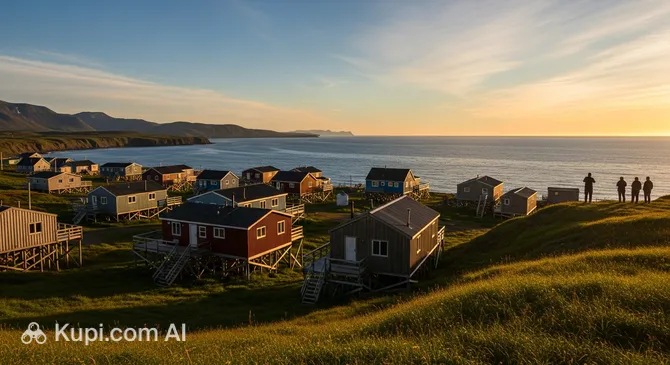
Savoonga is a truly distinctive settlement located on the northern coast of St. Lawrence Island in the Bering Sea. As part of the Alaska region in the United States, this remote village offers travelers a rare opportunity to experience the authentic lifestyle of the Siberian Yupik people. Far removed from the bustle of major cities, Savoonga provides a serene and culturally rich atmosphere that defines life in the Arctic.

Savoonga. Source: Kupi.Binoculars

With a modest population of approximately 733 residents, the community is tight-knit and deeply connected to the land and sea. The history of Savoonga is fascinating, dating back to 1916 when it was established primarily as a reindeer camp, which distinguishes its origins from other ancient settlements in the region. Today, the village maintains a subsistence lifestyle that has sustained its people for generations.

Often referred to as the "Walrus Capital of the World," Savoonga is renowned for its exceptional marine mammal hunting culture, which remains a vital part of the local economy and tradition. Visitors are also drawn to the area's spectacular bird watching opportunities, as the island's cliffs host millions of seabirds during the summer months. The rugged, treeless landscape provides a dramatic backdrop for exploring the unique Arctic wilderness.

For those seeking an adventure off the beaten path, Savoonga promises an unforgettable journey into a world where ancient traditions meet the stark beauty of the north. It is a perfect destination for cultural enthusiasts and nature lovers looking to witness a side of Alaska that few get to see.

Weather Overview

The climate in Savoonga is distinctly Arctic, defined by long, freezing winters and short, cool summers. January is typically the coldest month, with average temperatures hovering around -14.4°C and lows frequently dropping to -16.6°C. Visitors arriving during this season should come prepared for harsh conditions, as the cold remains intense well into spring.

By contrast, the summer months bring a thaw, though temperatures remain brisk. July sees the warmest weather, with an average of 9.2°C and maximums reaching just over 11°C. While this is the most pleasant time for outdoor activities like bird watching, the air remains crisp, and warm clothing is recommended year-round.

Precipitation is quite low in volume, often measuring only 1mm to 3mm per month, yet the days can often be damp or misty. The number of wet days increases significantly towards the end of the year, peaking in December with about 16 wet days. For a comprehensive look at the weather in Savoonga throughout the year, consult our detailed guide. Expect cool summers with frequent light moisture and very cold, persistent winters.

Interesting Facts

Beyond the main attractions, Savoonga holds many fascinating secrets that stem from its isolation in the Bering Sea. From its unusual legal status to its specific origins, the village offers a glimpse into a way of life that is truly one-of-a-kind.
  • Private Land Ownership: Unlike most of Alaska where land is often state or federally managed, St. Lawrence Island is privately owned by its two resident villages, Savoonga and Gambell. In 1971, the community opted out of the cash settlement offered by the Alaska Native Claims Settlement Act (ANCSA) in exchange for the full title to the island's 1.13 million acres, granting them exclusive control over their territory.

  • Built for Reindeer: While the island has been inhabited for thousands of years, the village of Savoonga was established in 1916 specifically as a reindeer camp. The herd was originally introduced from Siberia to provide a stable food source, and the settlement grew around this unique industry rather than traditional hunting grounds.

  • The "Old Ivory" Tradition: Residents are famous for excavating "old ivory"—fossilized walrus tusks that have been buried for centuries and colored by minerals. Because the land is private communal property, locals have the exclusive right to dig for these ancient artifacts, which are legally distinct from fresh ivory and highly valued by collectors.

  • Closer to Russia: Geographically, the village is located closer to the Siberian coast of Russia than to the mainland of the United States. This proximity creates a unique cultural sphere where the Siberian Yupik language and traditions remain vibrant and distinct from mainland Alaskan cultures.

  • A "Dry" Community: Visitors should be aware that Savoonga is a strictly "dry" village. The sale, importation, and possession of alcohol are completely banned to preserve the health and safety of the community, a local law that is rigorously enforced.

How to Get There

Reaching the remote village of Savoonga on St. Lawrence Island is an adventure that requires careful planning, as there are no roads connecting it to the mainland. Air travel is the primary means of access for visitors and locals alike. For a detailed breakdown of routes and logistics, you can read more about how to get to Savoonga and prepare for your journey to the Bering Sea.

The city of Savoonga relies on connections from regional hubs. Travelers typically fly first to Nome Airport (IATA: OME), located in the city of Nome on the Alaskan mainland. This is a key regional airport with significant passenger volume. It is situated approximately 261.9 km from Savoonga; while a theoretical journey by car would take about 7 hours based on this distance, the ocean separation necessitates a connecting flight.

Closer to the destination is Gambell Airport (IATA: GAM), located in the village of Gambell on the same island. It is a smaller facility serving the local community, approximately 62.2 km away. Although the distance suggests a travel time of around 2 hours by taxi, actual transport between the two villages is typically managed by boat, snowmachine, or plane depending on the season and weather conditions.

For clarity, here is a summary of the main airports:

Airport Name City Passenger Traffic Km from City
Nome Airport Nome Medium 261.9
Gambell Airport Gambell Small 62.2

Main Attractions

Savoonga is not a destination defined by theme parks or grand museums; rather, its attractions are the raw, unfiltered elements of the Arctic environment and the living culture of its people. Visitors travel here primarily to witness the spectacular natural phenomena of the Bering Sea and to experience a way of life that has adapted to one of the harshest climates on Earth.

For nature enthusiasts, the Seabird Colonies along the cliffs of St. Lawrence Island are arguably the most significant draw. During the summer months, the rocky coastlines teem with millions of nesting birds, including crested auklets, puffins, and murres. The sheer density of birdlife here is world-renowned, making the area a bucket-list destination for serious birdwatchers who trek to the island specifically to observe species that are rarely seen elsewhere in the United States.

Rising to the south of the village, the Kookooligit Mountains offer a dramatic backdrop and a unique opportunity for hiking and exploration. These ancient volcanic peaks, while not exceedingly high, dominate the landscape and provide panoramic views of the tundra and the surrounding ocean. In the brief summer season, the slopes are dotted with wildflowers and berries, offering a stark but beautiful contrast to the icy waters of the coast.

The coastline itself serves as a prime location for Marine Mammal Viewing. As the "Walrus Capital of the World," the waters near Savoonga are a critical habitat not only for walruses but also for gray whales and bowhead whales during their migrations. While visitors must always respect local hunting activities and maintain a safe distance, the chance to see these majestic creatures in their natural Arctic habitat is a profound experience.

Finally, no visit is complete without engaging with the local Ivory Carving tradition. Savoonga is famous for its artisans who carve intricate sculptures from "old ivory"—fossilized walrus tusks excavated from the island's frozen ground. While there are no formal galleries, buying art directly from local carvers is a common and cherished activity. It allows tourists to take home a piece of the island's history while supporting the local economy and admiring the incredible craftsmanship of the Siberian Yupik people.

Local Cuisine

The culinary landscape of Savoonga is defined not by restaurants or cafes, but by the subsistence lifestyle of the Siberian Yupik people. In this remote village, food is gathered directly from the land and the Bering Sea. Visitors will not find commercial dining establishments; instead, the local diet consists of nutrient-dense traditional foods that have sustained the community for thousands of years in the Arctic climate.

As the "Walrus Capital of the World," it is no surprise that walrus meat is a dietary staple. It is prepared in various ways, from dried meat to soups, and every part of the animal is utilized. Another significant delicacy is muktuk, consisting of whale skin and blubber, which is often eaten raw or pickled. This high-energy food provides essential vitamins and warmth, crucial for survival in the harsh winters. Reindeer meat is also common, sourced from the island's managed herd.

During the summer months, the tundra provides a bounty of vegetation. Locals harvest wild greens like sourdock and willow leaves, as well as berries such as salmonberries and blueberries. These are frequently used to make Akutaq, often called "Eskimo Ice Cream." In Savoonga, this traditional dish is a whipped mixture of reindeer fat, seal oil, or vegetable shortening, blended with berries and sometimes sugar or fish, creating a rich and hearty dessert.

When it comes to beverages, hot tea and coffee are the drinks of choice, consumed frequently to stay warm and socialize. It is critically important for tourists to remember that Savoonga is a "dry" community. The sale, importation, and possession of alcohol are strictly prohibited. Visitors should respect this local law and expect to drink only non-alcoholic beverages during their stay.

Since there are no restaurants, tourists must plan their meals carefully. Most visitors bring their own non-perishable food supplies or purchase basics at the local general store, the Savoonga Native Store. However, the community is known for its hospitality, and guests invited into local homes may have the rare privilege of tasting authentic subsistence foods prepared in the traditional way.

Travel Tips

Visiting Savoonga is a true expedition into the heart of the Alaskan Arctic, and proper preparation is the key to enjoying this unique remote community. Because the village is isolated and resources are limited, planning ahead will ensure your stay on St. Lawrence Island is safe, comfortable, and respectful of the local way of life.

  1. Clothing and Gear: Dress for extreme weather, regardless of the season. Even in summer, temperatures remain cool and damp, so pack thermal layers, a high-quality windproof and waterproof jacket, and waterproof pants. Sturdy, insulated boots are essential for walking on the unpaved, often muddy or snowy terrain. Don't forget a warm hat and gloves, as the wind chill from the Bering Sea can be piercing.
  2. Transportation: Forget about standard city transport; there are no subways, buses, or car rental agencies here. The village is small enough to navigate on foot, which is how most visitors get around. Locals primarily use ATVs (four-wheelers) in the summer and snowmachines in the winter. If you need to travel further or transport gear, you may be able to arrange a ride with a local host or guide, but there are no official taxi services or ride-hailing apps.
  3. Finances: The currency is the US Dollar. While the local general store may accept credit cards, systems can go down due to internet connectivity issues. It is highly recommended to bring enough cash to cover your entire stay, including payments for accommodation, local art, or guided trips. ATMs are scarce and may not be reliable. Tipping is not strictly mandatory but is a kind gesture for guides who share their time and knowledge.
  4. Health and Safety: Medical facilities are limited to a local health clinic staffed by health aides; there is no full-service hospital. Bring a sufficient supply of any personal medications you require, as there is no pharmacy for tourists. Be extremely cautious of the weather; blizzards and fog can roll in quickly. Also, be aware of wildlife, including polar bears in winter—always listen to local advice regarding safe areas to walk.
  5. Communication: English is widely spoken, so you will have no trouble communicating, though St. Lawrence Island Yupik is the first language for many residents. Mobile coverage can be spotty; GCI is the primary provider in rural Alaska, and other carriers may not have service. Wi-Fi is rare and slow, so be prepared for a digital detox. Download offline maps and essential information before you arrive.
  6. Local Etiquette: The culture here is communal and deeply rooted in respect, especially for elders. Always ask for permission before taking photographs of people, their homes, or their subsistence activities (like drying meat or carving). It is polite to greet people you pass on the road. Remove your shoes when entering a local home unless told otherwise.
  7. What to Avoid: Strictly avoid bringing any alcohol into the village. Savoonga is a "dry" community, and the importation or possession of alcohol is illegal and culturally offensive. Additionally, do not disturb hunting equipment or boats found on the beach, as these are vital tools for the community's survival.
  8. Food Supplies: Since there are no restaurants, you should pack your own non-perishable food and snacks. The local store stocks basic groceries, but prices are significantly higher than on the mainland due to freight costs, and selection varies based on the last shipment. Bringing your own supply ensures you have what you need without straining local resources.

By packing the right gear and respecting the local customs, you will be well-equipped to appreciate the raw beauty and warm hospitality of Savoonga. Embrace the slower pace of life and the rare opportunity to witness a community that thrives on the edge of the world.

Entertainment & Nightlife

Travelers hoping for a bustling scene of nightclubs, cocktail bars, or neon-lit districts will find a completely different definition of "nightlife" in Savoonga. As a strictly "dry" community, the sale and consumption of alcohol are prohibited, meaning there are no pubs, liquor stores, or dance clubs. Instead, evening entertainment here is defined by the rhythms of nature, deep cultural traditions, and the tight-knit community spirit of the Siberian Yupik people.

The most spectacular "light show" in Savoonga is provided not by disco balls, but by the Aurora Borealis. During the long, dark winter nights, the lack of light pollution makes the village one of the best places in the world to witness the Northern Lights dancing across the sky. Visitors often gather near the edge of the village or along the Bering Sea coast to watch the green and purple ribbons reflect off the sea ice, an experience far more profound than any city club.

In the summer months, the concept of "night" shifts dramatically. Although the village sits just south of the Arctic Circle, it experiences continuous twilight or "white nights" rather than the full Midnight Sun. While the sun does briefly dip below the horizon, true darkness never falls, allowing the village to remain active well into the early morning hours. You might find locals working on their boats, carving ivory, or children playing outside at 2:00 AM. This phenomenon allows for late-night hiking or birdwatching in the Kookooligit Mountains, where the landscape is bathed in a surreal, soft glow.

Social life in Savoonga revolves around community gatherings rather than commercial venues. The Savoonga School gymnasium often serves as the central hub for entertainment, hosting high school basketball games that draw nearly the entire village. These events are high-energy and spirited, offering tourists a chance to cheer alongside locals. Another popular pastime is community Bingo nights held at the tribal or city halls, which are social highlights for many residents.

When venturing out in the evening, safety is paramount, but not because of crime. The primary concern is the extreme weather and wildlife. If you plan to walk around at night during winter, you must dress in heavy thermal gear and remain vigilant for polar bears, which can wander near the village. It is advisable to stay within the lit areas of the settlement and never walk alone on the outskirts without a local guide. There are no taxis; getting around is done on foot or by snowmachine.

Regarding daytime entertainment, do not expect cinemas, amusement parks, or formal museums. The village itself is a living museum. Entertainment consists of watching master carvers work on walrus ivory, visiting the Savoonga Native Store to chat with locals, or simply observing the subsistence activities on the beach. For those seeking cultural immersion and natural wonder, the quiet, raw beauty of Savoonga offers an unforgettable alternative to the standard tourist track.

Parks & Museums

In Savoonga, the concept of parks and museums differs significantly from the manicured gardens and exhibition halls found in metropolitan areas. Here, the entire landscape of St. Lawrence Island serves as a vast, untamed natural park, while the village itself acts as a living museum where ancient traditions are practiced daily. Visitors come not for ticketed attractions, but to immerse themselves in the raw beauty of the Arctic and the enduring heritage of the Siberian Yupik people.

The Kookooligit Mountains act as the community's primary recreational area and natural landmark. Rising dramatically to the south of the settlement, these ancient volcanic peaks offer accessible hiking terrain during the summer months. The slopes are covered in alpine tundra, which blooms with wildflowers and berries, providing a stark contrast to the rocky grey surroundings. Hiking here rewards visitors with sweeping panoramic views of the Bering Sea and the chance to spot snowy owls or arctic foxes in their natural habitat.

The Bering Sea Coastline is another significant natural space that functions as the heart of local activity. While it is not a beach for sunbathing, the black volcanic sands and rocky shores are places of immense biological activity. This area is the gateway to the "Walrus Capital of the World," where locals launch their boats for subsistence hunting. For tourists, walking along the shore offers opportunities to find unique driftwood, observe grey whales breaching offshore, and witness the powerful connection between the ocean and the community.

Regarding cultural institutions, there are no formal museums or art galleries in Savoonga. Instead, the Ivory Carving Tradition serves as the village's most profound cultural exhibit. The "galleries" are the homes and workshops of the local carvers, who are world-renowned for their skill in transforming fresh and fossilized walrus ivory into intricate sculptures. Watching a master artisan work is an interactive experience that offers deeper insight into Yupik history and storytelling than any static display could provide.

Another site of historical significance is the Old Ivory Excavation Grounds. Since the land is privately owned by the native corporation, locals have the exclusive right to dig for "old ivory"—walrus tusks that have been buried for centuries and colored by minerals in the soil. While tourists cannot dig without strict permission and guidance, seeing these excavation sites provides a tangible link to the past, revealing how generations of inhabitants have lived on this island for thousands of years.

For a truly authentic experience, ask a local guide about the best spots for seabird viewing along the cliffs. Millions of auklets, puffins, and murres nest in the rocky crags near the village. Standing on the edge of the tundra with the sound of thousands of birds filling the air is a sensory experience that defines the wild, uncurated majesty of Savoonga.

Getting Around

Travelers arriving in Savoonga should be aware that the city operates without a standard public transport system. There are no buses, metros, trams, or fixed-route shuttles servicing the village. Due to its remote location and small population, the infrastructure is completely different from what one might find in a typical urban center. The primary means of getting around the settlement is simply walking, as the village is compact and most points of interest are within a reasonable distance of one another.

For the local residents, the main modes of transportation are adapted to the rugged terrain and Arctic climate. In the summer months, All-Terrain Vehicles (ATVs) or "four-wheelers" are the standard way to navigate the unpaved gravel roads and the surrounding tundra. During the winter, when snow covers the ground, snowmachines (snowmobiles) become the essential vehicle for travel. While there are no official rental agencies for these vehicles, they are the heartbeat of local mobility.

Since there is no formal ticketing system, visitors do not need to worry about travel passes, transport cards, or mobile apps. If you require a ride—for instance, to transport luggage from the airstrip or to reach a specific site outside the main village—it is usually arranged informally. Payment for such services is strictly cash-based. There are no meters or fixed price lists, so if a local agrees to give you a lift, it is polite to agree on a price beforehand or offer a fair amount for their fuel and time.

Tourists should not expect to find taxis, car-sharing services like Uber, or bike rentals. The roads are often muddy in summer and icy in winter, making bicycles impractical for most. The most critical piece of advice for navigating Savoonga is to bring high-quality, waterproof footwear. Since you will likely be walking everywhere, insulated rubber boots are indispensable for dealing with the mud and puddles that are common in the village.

Regarding airport transfers, there is no shuttle bus waiting at the airstrip. It is highly recommended to arrange your transport in advance with your lodging host or a local contact before you arrive. In many cases, hosts will pick up their guests on an ATV or in a truck. Without prior arrangement, you may find yourself walking from the airstrip to the village with your luggage, which, while possible, can be challenging depending on the weather conditions.

Accommodation

Travelers planning a visit to Savoonga must adjust their expectations regarding accommodation, as the options are extremely limited and differ significantly from standard tourist destinations. There are no international hotel chains, luxury resorts, or budget hostels in the village. Instead, the available lodging is functional and utilitarian, designed primarily to house visiting workers, government officials, and the occasional adventurer. Visitors will typically find simple, apartment-style rentals or rooms managed by local entities such as the city council or the native corporation.

Given the compact size of the settlement, location is rarely an issue. All accommodation options are situated within the main village area, placing you within easy walking distance of the airstrip, the general store, and the coastline. There are no specific "tourist districts"; staying anywhere in Savoonga means you are right in the heart of the community, immersed in the daily life of the residents.

Booking accommodation in Savoonga is a manual process that should be tackled well before your arrival. You cannot book rooms through major online travel agencies or apps. Instead, you must contact the City of Savoonga or the local native corporation directly by telephone to inquire about availability and make reservations. It is highly advisable to confirm your booking multiple times, including a few days before your flight, to ensure your room is ready.

Regarding costs, prices tend to be in the mid-to-high range, reflecting the high cost of maintaining infrastructure in such a remote Arctic location. While the amenities are basic—often consisting of a shared kitchen and bathroom facilities—the rates are comparable to modern hotels in mainland cities. Payment methods can be limited; while some places may accept credit cards, systems are frequently offline, so carrying enough cash to cover your entire stay is the safest and most reliable strategy.

Nearby Cities

For those looking to explore the surroundings, Savoonga serves as an excellent base for day trips to several interesting nearby locations, though "nearby" in this remote part of Alaska often requires a plane or a boat to reach.

Located on the western tip of St. Lawrence Island, Gambell is the closest neighbor and the only other settlement on the island. Sharing the same rugged landscape and Siberian Yupik heritage, it is frequently visited by locals and adventurous travelers via snowmachine in winter or boat in summer. Gambell is particularly famous among birdwatchers for its proximity to Asian migratory flyways, offering chances to spot rare species that seldom reach other parts of North America.

On the mainland, Nome acts as the vital regional hub and a gateway to the wider world. Known globally for its rich Gold Rush history and as the finish line of the Iditarod Trail Sled Dog Race, the city offers a distinct change of pace. Visitors can explore the Bering Land Bridge National Preserve, drive the extensive local road system, or enjoy amenities and historical sites that are not available on the remote island.

City Population Distance (km)
Nome 3697 263
Hooper Bay 1300 330
Chevak 1000 348
Emmonak 800 316
Alakanuk 700 315

These nearby destinations offer a glimpse into the diverse culture and landscapes of the region, from the bird-filled cliffs of the island to the historic streets of the mainland hubs.

Shopping & Souvenirs

Shopping in Savoonga offers a stark contrast to the commercial retail experiences found in most tourist destinations. In this remote village, commerce is driven by necessity and tradition rather than luxury or variety. Visitors will not find fashion boutiques, souvenir shops, or electronics retailers. Instead, the local economy is focused on basic subsistence supplies and the world-class artistry of the Siberian Yupik people. The experience is intimate and informal, often involving direct interactions with local artisans in their homes or workshops.

There are no shopping districts or bustling high streets in Savoonga. The retail activity is concentrated entirely around the Savoonga Native Store, which serves as the lifeline for the community. This general store stocks everything from groceries and non-perishable foods to hardware, outdoor gear, and fuel. For tourists, this is the only place to purchase snacks, drinks, or personal hygiene items. It is important to remember that due to high freight costs, prices for everyday goods are significantly higher than on the mainland.

Travelers looking for large shopping complexes will find none here. Savoonga does not have shopping malls, department stores, or chain retailers. The infrastructure is built solely to support the small population of approximately 733 residents, meaning the commercial landscape is strictly utilitarian.

While there are no formal flea markets or craft bazaars, the entire village functions as an informal marketplace for authentic native art. The "market" here consists of word-of-mouth connections. Visitors interested in purchasing local goods should ask their host or a local guide to introduce them to carvers and seamstresses. It is common for artisans to bring their wares directly to visitors at the airstrip or their lodging, creating a personal and memorable purchasing experience.

The most coveted items to bring back from Savoonga are walrus ivory carvings. The village is famous for its master carvers who create intricate sculptures of animals, hunters, and spirits from both fresh white ivory and "old ivory"—fossilized tusks that have been colored by minerals in the earth over centuries. Other unique souvenirs include handmade dolls, skin sewing, and beadwork. When buying ivory, always ask for a certificate of authenticity to ensure the item was crafted by an Alaska Native artist, which complies with the Marine Mammal Protection Act and allows for legal ownership.

Opening hours for the general store are typically limited, often running from late morning to early evening (e.g., 10:00 AM to 6:00 PM), and it may be closed or have reduced hours on Sundays. Regarding payment, cash is the most reliable method. While the store may accept credit cards, the internet connection on St. Lawrence Island can be unstable, frequently rendering card terminals useless. Visitors should bring sufficient US dollars to cover all their potential purchases, especially when buying art directly from locals, as artisans generally do not accept credit cards.

One financial benefit for visitors is that the United States state of Alaska does not impose a state-level sales tax. While some local municipalities may have their own taxes, shopping in remote villages generally feels straightforward with no complex tax-refund schemes to navigate. The price negotiated with an artist is typically the final price, keeping the transaction simple and direct.
Reached the end of the page?

That means the route is fully explored