Support

Golovin

About

Welcome to Golovin, a small and resilient community located on a point of land between Golovnin Bay and Golovnin Lagoon on the Seward Peninsula. This remote village offers a unique glimpse into the rugged and authentic lifestyle of rural Alaska in the United States. With a population of approximately 130 residents, Golovin is a tight-knit settlement where traditional subsistence activities are still a vital part of daily life, surrounded by the breathtaking, untouched wilderness of the north.

The climate here is subarctic, characterized by long, cold winters and cool, crisp summers, which shapes the local culture and activities. Visitors interested in the history of Golovin will discover its roots as an Inupiat village originally known as Chinik. It later became a significant trading post and a supply point for nearby gold fields, named after Vice-Admiral Vasily Golovnin of the Russian Navy. This blend of indigenous heritage and exploration history gives the town a distinct character.
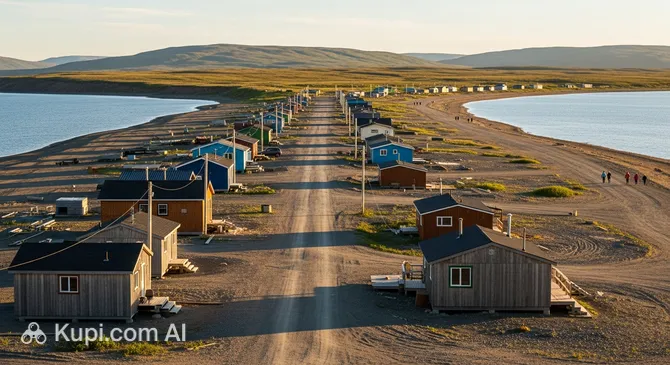
Golovin. Source: Kupi.Binoculars

One of the most exciting times to visit is during March, as Golovin serves as a checkpoint for the world-famous Iditarod Trail Sled Dog Race. The arrival of mushers and their dog teams brings a festive energy to the village. Beyond the race, the area is known for its stark natural beauty, offering opportunities for fishing, berry picking, and observing local wildlife in their natural habitat along the coast of the Bering Sea.

If you are looking to step off the beaten path and experience the quiet majesty of the Alaskan landscape, Golovin provides a serene and memorable destination. It is a place to disconnect from the hustle of modern cities and appreciate the enduring spirit of the Arctic.

Weather Overview

Understanding the local climate is essential for visiting this part of Alaska, which experiences distinct seasonal changes. The weather in Golovin is characterized by freezing winters and cool, mild summers. January is usually the coldest month, with average temperatures hovering around -16.9°C, while temperatures in December and February are similarly frigid, often dropping below -16°C.

The summer months offer a respite from the cold, with July being the warmest time of year, averaging 12.9°C and reaching highs of 15.5°C. While total precipitation volume remains low throughout the year, visitors should be prepared for frequent cloudy or damp conditions, especially in August and September which see up to 16 wet days per month. Expect mild summers with occasional rain and cold, largely dry winters.

Interesting Facts

Beyond the scenic landscapes and its reputation among mushers, Golovin holds fascinating historical details that tell the story of its unique evolution. This small community is rich with tales of resilience and linguistic quirks that define its character.

  • One of the most curious facts about the village is the discrepancy in its spelling. While the town is named after Vice-Admiral Vasily Golovnin of the Russian Navy, the second "n" was eventually dropped from the community's name. However, the adjacent Golovnin Bay and Golovnin Lagoon retain the original spelling, creating a unique geographical distinction.

  • Golovin played a critical role in the legendary 1925 Serum Run to Nome, a heroic relay to deliver diphtheria antitoxin. It was here that the famous musher Leonhard Seppala passed the serum to Charlie Olson, who then transported it across the ice to the next checkpoint at Bluff, contributing to saving the lives of many in Nome.

  • In the late 19th century, the village became the site of a significant mission school established by the Swedish Evangelical Covenant Church. This mission served as a headquarters for the burgeoning reindeer herding industry in the region, which was introduced to provide a sustainable food source and economic opportunity for the local population.

How to Get There

Reaching the remote village of Golovin is an adventure in itself, offering travelers a true taste of the Alaskan wilderness. Because the community is not connected to the main road system, travel requires careful planning and typically involves a combination of regional flights and bush planes. For a detailed guide on logistics and routes, you can read more about how to get to Golovin.

The primary gateway for most visitors is Nome Airport (IATA: OME), located in the city of Nome. This is the most significant regional hub, situated approximately 115.7 km from Golovin. Travelers generally fly into Nome on a commercial jet and then transfer to a smaller commuter plane for the final leg of the journey across the Seward Peninsula. The airport handles a significant volume of passengers annually, serving as a vital lifeline for the surrounding communities.

Another option in the wider region is Unalakleet Airport (IATA: UNK), located in Unalakleet about 131 km from Golovin. While it is a smaller facility compared to Nome, it is a key transport node for this part of Alaska. Additionally, for those exploring the northern areas, the Ralph Wien Memorial Airport (IATA: OTZ) in Kotzebue serves the region, though it is further away at approximately 262.1 km. It is important to note that there are no roads connecting these airports to Golovin; travel between these points is exclusively by air.

For clarity, here is a summary of the main airports in the region:

Airport Name City Passenger Traffic Km from City
Nome Airport Nome Medium 115.7
Ralph Wien Memorial Airport Kotzebue Medium 262.1
Saint Mary's Airport St Marys Small 277.4
Unalakleet Airport Unalakleet Small 131.0
Nulato Airport Nulato Small 237.7

Golovin is not accessible by rail, and there are no railway stations in the immediate vicinity or on the Seward Peninsula. The rugged terrain and permafrost conditions of rural Alaska make train travel unavailable in this region. Visitors rely entirely on air travel and, in winter, occasionally on snowmachine trails or dogsleds for local transport.

Main Attractions

While Golovin is a small, remote village without traditional commercial tourist sights, its primary allure lies in its spectacular natural setting and cultural landmarks. The most prominent feature is Golovnin Bay, which borders the community. This vast body of water is not only scenic but serves as the lifeline of the village. Visitors can walk along the shoreline to observe the dramatic tides and the convergence of the bay with the lagoon, offering excellent opportunities for photography and spotting marine wildlife in the icy waters.

The village itself is situated on a distinctive geographical formation known as the Golovin Spit. This narrow strip of land offers a unique vantage point, surrounded by water on two sides with the rugged hills of the Seward Peninsula rising in the background. Exploring the spit provides a tangible sense of the isolation and beauty of rural Alaska. In the warmer months, the surrounding tundra is perfect for hiking, where travelers can find an abundance of wildflowers and local berries, such as cloudberries and blueberries.

Another significant point of interest is the site of the historic Swedish Covenant Mission. Although the original dynamics of the village have changed over time, the legacy of the mission established in the late 19th century remains part of the local identity. The location marks an important chapter in the region's history, where the introduction of reindeer herding began. Seeing the area helps visitors understand the blend of indigenous culture and early settler history that shapes the community today.

Finally, the Iditarod Trail route itself is a major draw for those visiting in winter. Golovin serves as an official checkpoint for the world-famous sled dog race. Standing on the frozen trail where legendary mushers and their dog teams pass is a thrilling experience for sports enthusiasts. Even when the race is not on, the trail represents a historic artery of transportation and survival in the Arctic, connecting the village to the wider history of the Alaskan frontier.

Local Cuisine

When visiting Golovin, travelers should not expect the dining amenities typically found in larger cities across the United States. As a small, remote community, there are no commercial restaurants, cafes, or bars. Instead, the local culinary culture is deeply rooted in the subsistence lifestyle of the Inupiat people, revolving around the harvest of wild resources from the land and the surrounding waters.

The diet in this region is defined by the seasons and the abundance of nature. Fishing is a primary source of sustenance, with varieties such as salmon, trout, and whitefish being staples. These are often prepared fresh during the summer or dried and smoked to preserve them for the long winter months. Hunting also plays a crucial role, providing moose, caribou, and waterfowl, which are traditional sources of protein for the residents.

Gathering is another essential part of the local food culture. During the short but vibrant summer, families head to the tundra to pick wild berries, including blueberries, cranberries, and the prized cloudberries (often called salmonberries in Alaska). A popular traditional treat is Akutaq, also known as Eskimo ice cream. This unique dish is made by whipping fat or oil with berries and sometimes fish or sugar, creating a high-energy food perfectly suited for the cold climate.

For visitors, it is important to plan ahead regarding meals. Since there are no dining establishments and grocery supplies in the village store can be limited, travelers are strongly advised to bring their own food and provisions. Sharing a meal in Golovin is often a communal and private affair, and if you are lucky enough to be invited into a local home, you will experience the genuine hospitality and distinct flavors of the Arctic.

Travel Tips

Visiting Golovin offers a rare and rewarding opportunity to experience the authentic lifestyle of the Seward Peninsula, but traveling to such a remote village requires significantly more preparation than a standard vacation. To help you navigate your journey smoothly and respectfully, here are some essential practical tips for your stay.

  1. Clothing and Gear: The weather can be unpredictable and harsh, regardless of the season. Dress in layers starting with thermal base layers, followed by wool or fleece insulation, and a high-quality windproof and waterproof outer shell. Sturdy, waterproof boots are mandatory, as the unpaved roads can be muddy in summer and snowy in winter. If you visit in winter, specialized Arctic gear is essential.

  2. Transportation: Once you arrive at the airstrip, your primary mode of transport will be walking. The village is small and compact, making it easy to navigate on foot. There are no taxis, ride-sharing apps, or car rental agencies here. Locals use ATVs in the summer and snowmachines in the winter, but these are generally private vehicles.

  3. Finances: The local currency is the US Dollar, used throughout the United States. It is critical to bring enough cash for your entire stay, as credit card processing can be unreliable due to internet connectivity, and there are no ATMs in the village. Small bills are appreciated at the local store.

  4. Health and Safety: Golovin has a local health clinic staffed by health aides for basic care, but there is no hospital or pharmacy. For any serious medical emergency, an air evacuation to Nome or Anchorage is required, which depends heavily on weather conditions. It is strongly advised to purchase medevac insurance before your trip. Always carry a personal supply of necessary prescription medications.

  5. Communication: English is the primary language spoken in Golovin. Cell phone coverage can be spotty and is often limited to specific regional carriers (like GCI), so do not rely on having a constant data connection. Wi-Fi is generally not available for public use, so download any maps or documents you need beforehand.

  6. Local Etiquette: The community is tight-knit and traditional. It is polite to greet people you pass on the road. Always ask for explicit permission before taking photographs of residents, their children, or their property. This includes subsistence equipment like fish drying racks, boats, and sleds, which are private and vital for survival.

  7. What to Avoid: Be aware of local alcohol regulations. Many rural Alaskan villages have "damp" or "dry" laws that restrict or ban the sale and possession of alcohol. Importing alcohol without knowing the specific local rules can lead to legal trouble and is considered disrespectful to community norms.

  8. Additional Tip: Bring your own provisions. While there is a small general store, stock is limited and prices are significantly higher than in urban areas due to freight costs. Packing shelf-stable snacks and essential toiletries will ensure you have what you need without straining local resources.

By packing the right gear and approaching the community with an open mind and respect for their traditions, you will ensure a safe and memorable visit. Enjoy the incredible solitude and the warm hospitality that defines this unique corner of the North.

Entertainment & Nightlife

Travelers planning a trip to Golovin must adjust their expectations regarding nightlife and entertainment. Unlike the bustling cities in other parts of the United States, this small Inupiat village does not have a nightlife district, nightclubs, bars, or concert venues. The "nightlife" here is defined not by neon lights and music, but by the profound silence of the Arctic and the rhythms of nature. The village consists of just a few streets, and after dark, the community is generally quiet as residents retreat to their homes.

The most spectacular evening entertainment in Golovin is provided by the sky itself. During the long winter nights, the lack of light pollution makes this an exceptional location for viewing the Aurora Borealis, or Northern Lights. Visitors willing to brave the cold can witness dancing ribbons of green and violet light stretching across the horizon, an experience far more memorable than any city club. Conversely, during the summer months, the phenomenon of the Midnight Sun means true darkness rarely falls, allowing for hiking and photography well into the early morning hours.

Social life in the village revolves entirely around community events rather than commercial establishments. Occasional gatherings might take place at the local school gymnasium or community hall, such as basketball games or community bingo nights, which are popular with locals. It is important to note that Golovin is a community where the sale and importation of alcohol are strictly regulated or prohibited under local option laws. There are no pubs or liquor stores, and visitors should respect these local regulations strictly to avoid legal issues and cultural offense.

For daytime entertainment, the focus is on outdoor exploration and cultural appreciation. There are no movie theaters, amusement parks, or formal museums in the village. Instead, entertainment is found in walking the coastline of Golovnin Bay, berry picking on the tundra, or watching the local wildlife. For those interested in history, simply walking through the village offers a look at the historic buildings and the lifestyle of a remote Alaskan outpost.

Safety is a primary concern for any evening activity. If you venture out at night to watch the auroras, be aware that you are in bear country. Polar bears and other wildlife can be active near the village, especially along the shoreline. It is advisable to stay within the central area of the village, carry a flashlight, and never walk alone far from shelter. Additionally, extreme cold is a constant danger in winter; ensure you are dressed in heavy arctic gear even for short walks.

Parks & Museums

In the remote village of Golovin, the concept of "parks and museums" differs significantly from what travelers might expect in a typical city. There are no manicured gardens, fenced city parks, or ticketed art galleries here. Instead, the village is surrounded by a vast, untouched wilderness that functions as a magnificent open-air park, and the community itself acts as a living museum of Inupiat culture and Alaskan history. Visitors come here to immerse themselves in the raw beauty of the landscape rather than to visit formal institutions.

Natural Landscapes and Outdoor Areas

The most accessible "park" in the area is the rugged shoreline of Golovnin Bay. This natural expanse offers miles of walking terrain where the land meets the icy waters of the Bering Sea. It is a dynamic environment where visitors can observe the powerful tides and watch for marine wildlife, including seals and beluga whales. The beach is not for sunbathing but for beachcombing and witnessing the stark, dramatic beauty of the Arctic coast. It serves as the community's front yard and a primary thoroughfare for boats and snowmachines depending on the season.

Beyond the village limits lies the endless expanse of the Alaskan Tundra. During the short summer, this landscape transforms into a vibrant garden of wildflowers, mosses, and lichens. It is a paradise for hikers who are comfortable navigating without trails. This area is also the local "grocery store" for berry picking, where the ground is dotted with blueberries, cranberries, and cloudberries. Walking here offers a profound sense of solitude and a connection to the land that has sustained the local people for millennia.

Cultural and Historical Sites

While there are no formal museums in Golovin, the Old Swedish Covenant Mission Site stands as a significant historical marker. Established in the late 19th century, this mission played a pivotal role in the history of the Seward Peninsula, particularly as a center for the introduction of reindeer herding to the area. viewing the site provides a window into the era of early contact between indigenous communities and Western missionaries, offering a tangible link to the past that shaped the modern village.

Another cultural focal point is the seasonal Iditarod Checkpoint location. Although it is not a permanent museum structure, during the race, this spot becomes a hub of living history. The Iditarod Trail is a National Historic Trail, and standing on the ground where mushers check in connects visitors to the heritage of dog sledding, which was once the only mode of transportation and mail delivery in this frozen region. The stories shared by locals about the trail serve as an oral history far more engaging than many written exhibits.

Authentic Experiences

For a deeper understanding of the local culture, the best approach is to engage respectfully with the community. While not a public gallery, the daily sights of subsistence living—such as fish drying on wooden racks or the construction of traditional skin boats—offer an authentic look at Inupiat ingenuity. Always remember that these are private livelihood activities; observing from a respectful distance or asking a local to explain the process can be the most educational part of a visit.

Getting Around

Travelers planning a visit to Golovin must adjust their expectations regarding transportation, as the village does not operate any form of public transit system. There are no buses, metros, trams, or scheduled shuttles serving the community. The infrastructure is typical of a remote, rural settlement with a very small population, meaning the complex transport networks found in urban centers are entirely absent here.

Due to the lack of public transport, there is no ticketing system, fare structure, or travel card requirement. Visitors do not need to worry about purchasing passes, downloading transit apps, or validating tickets. The logistics of getting around are straightforward and do not involve any commercial payment systems.

The primary mode of getting around for visitors is simply walking. The village is compact, and all essential locations—such as the airstrip, the general store, and the post office—are located within a relatively short distance of one another. Walking provides the most reliable way to navigate the unpaved roads and allows you to take in the surroundings at your own pace.

In terms of local vehicles, residents primarily rely on All-Terrain Vehicles (ATVs) during the summer and snowmachines (snowmobiles) during the winter months. These are private vehicles essential for the subsistence lifestyle and navigating the rugged terrain. There are no taxi services, car-sharing platforms, or vehicle rental agencies available. While locals are generally friendly, you should not rely on finding a ride unless you have made specific private arrangements.

Practical advice for navigating Golovin centers on being prepared for the elements. Since you will be walking everywhere, high-quality, waterproof footwear is mandatory. The roads can be muddy in the warmer months and covered in snow or ice in the winter. Always dress in layers to stay warm while moving between buildings, and be mindful that there are no sheltered bus stops or waiting areas to escape the weather while en route.

Accommodation

Travelers planning a visit to Golovin must be aware that the village does not possess a commercial hospitality industry. Unlike larger tourist destinations in the United States, there are no hotels, motels, hostels, or resorts in this small community. The infrastructure is designed primarily for the residents, and as such, accommodation options for visitors are extremely limited and often informal.

Given the compact size of the village, there are no specific "tourist areas" or neighborhoods to choose from. The entire community is walkable, and any lodging you secure will be centrally located near the airstrip, the store, and the water. The lack of commercial lodging means that you cannot simply arrive and expect to find a room available; arriving without a confirmed place to stay is strongly discouraged and can be dangerous given the harsh climate.

For most visitors, accommodation typically involves arranging a homestay with a local family or securing a spot in a city-owned facility if available. In some rural Alaskan villages, the local school or community hall may offer floor space for sleeping during major events like the Iditarod, but this is not a guaranteed year-round option. It is common for workers or officials visiting the village to stay in "transient housing" managed by the city or the tribal council, which may be available to travelers depending on demand.

Booking Tip: You cannot book accommodation in Golovin through major online travel agencies or booking apps. All arrangements must be made directly and well in advance. It is highly recommended to contact the City of Golovin office or the local tribal council by phone weeks or months before your trip to inquire about availability and get recommendations for a place to sleep.

Regarding costs, prices for informal lodging or transient housing can be surprisingly high due to the scarcity of options and the high cost of living in remote Alaska. Be prepared for a "mid-range" price point despite the basic amenities. Furthermore, credit card processing is often unavailable; visitors should bring sufficient cash to cover their entire stay, as hosts likely will not accept other forms of payment.

Nearby Cities

For those looking to explore the surroundings, Golovin serves as an excellent base for day trips to several interesting nearby locations. While the village is remote and unconnected by roads, the network of regional flights and bush planes makes it possible to visit other unique communities on the Seward Peninsula and beyond. These excursions offer a deeper dive into the history, culture, and geography of rural Alaska.

The most prominent destination nearby is Nome, located approximately 114 km away. As the regional hub, Nome is famous for its rich Gold Rush history and as the finish line of the Iditarod Trail Sled Dog Race. Visitors can explore the Bering Land Bridge National Preserve visitor center, walk along the historic Front Street, or pan for gold on the local beaches. It offers a stark contrast to the quiet of Golovin, with more amenities, restaurants, and historical sites to explore.

Another fascinating stop is Unalakleet, situated to the southeast. Known for its world-class fishing, particularly for king salmon and silver salmon in the Unalakleet River, it is a vibrant community that serves as a gateway to the region. It is also a major checkpoint on the Iditarod trail. A visit here provides insight into a subsistence lifestyle that blends Inupiat and Yup'ik cultures, set against a backdrop of stunning coastal scenery.

For those willing to travel a bit further north, Kotzebue offers a rich cultural experience. It is one of the largest indigenous communities in Alaska and home to the Northwest Arctic Heritage Center. Here, travelers can learn extensively about the traditions, art, and survival skills of the Inupiat people living above the Arctic Circle.

City Population Distance (km)
Nome 3697 114
Kotzebue 3300 263
Selawik 830 268
Emmonak 800 210
Unalakleet 700 132

These nearby destinations offer a glimpse into the diverse culture and landscapes of the region. Since travel between these communities is exclusively by air, it is essential to check flight schedules in advance to plan a successful day trip or short overnight stay.

Shopping & Souvenirs

Shopping in Golovin is a strictly utilitarian experience centered on survival and basic necessities rather than leisure or fashion. Unlike typical retail experiences in the United States, there are no boutiques, chain stores, or luxury outlets here. Visitors will find that retail options are extremely limited, focusing almost entirely on supplying the local community with food, fuel, and essential hardware needed for life in the Arctic.

There is no designated shopping district or high street in the village. Commercial activity is concentrated in a single location: the local general store. This facility serves as the community hub, stocking everything from canned goods and fresh produce (dependent on shipment schedules) to outdoor gear and household supplies. It is located in the heart of the village and is easily accessible on foot from anywhere in the settlement.

Travelers should note that there are absolutely no shopping malls or department stores in Golovin. The nearest shopping centers are located in Anchorage or Nome, which requires air travel to reach. The village infrastructure is designed solely for a small population living a subsistence lifestyle, so do not expect to find clothing retailers or electronics shops.

Golovin does not have formal marketplaces, flea markets, or food bazaars. However, the community itself functions as an informal market for local goods. During community gatherings or festivals, you might find residents selling homemade baked goods or crafts, but these are sporadic events and not organized as a permanent attraction for visitors.

While there are no dedicated souvenir shops, Golovin is an excellent place to find authentic Native Alaskan art. Local artisans are known for their incredible skill in beadwork, skin sewing, and carving. Visitors looking for a meaningful keepsake should ask respectfully if anyone in the village has items for sale. Common treasures include hand-sewn slippers, fur hats, or intricate beaded jewelry. Purchasing directly from the artist ensures the authenticity of the item and directly supports the local economy.

The local store typically operates on limited hours, often closing in the early evening and potentially on Sundays. It is crucial to be aware that operating times can fluctuate based on staffing and weather conditions. Regarding payment, cash is essential in Golovin. While the store may accept credit cards when the internet connection is stable, connectivity issues are common. Visitors should bring enough cash to cover all potential purchases, including food and art.

The state of Alaska does not impose a state-level sales tax, which is a benefit for visitors compared to other parts of the country. However, local municipalities often levy their own sales taxes to fund community services. In Golovin, you should expect to pay the shelf price plus any applicable local tax. Note that the US does not have a VAT refund system for international tourists similar to those found in Europe.

Reached the end of the page?

That means the route is fully explored