Support

Shageluk

About

Welcome to Shageluk, a remote and captivating village that offers a genuine glimpse into life in rural Alaska. Situated on the east bank of the winding Innoko River, this small community is defined by its deep connection to the surrounding wilderness and its rich cultural traditions. For travelers looking to step off the beaten path and experience the quiet majesty of the North, Shageluk provides a unique and memorable atmosphere far removed from the hustle of major cities.

Geographically, Shageluk is located in the Yukon-Koyukuk Census Area of the United States. It is accessible primarily by air or water, emphasizing its secluded nature. The village is home to a close-knit population of approximately 122 residents, many of whom maintain a subsistence lifestyle that relies on fishing, hunting, and gathering. The climate here is typical of the Alaskan interior, with cold, snowy winters and mild, brief summers that transform the landscape into a lush green haven.
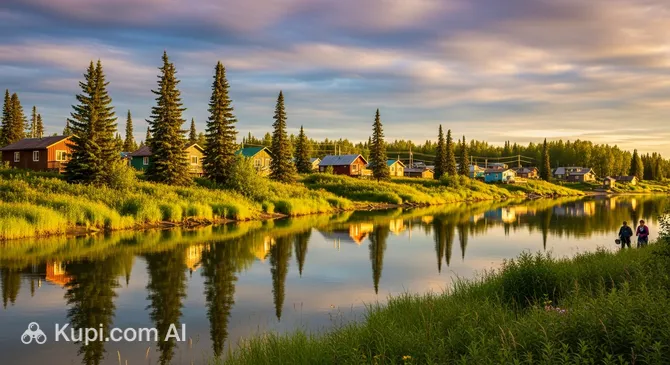
Shageluk. Source: Kupi.Binoculars

The village is historically significant as a Deg Hit'an Athabascan settlement. Delving into the history of Shageluk allows visitors to appreciate the resilience and enduring heritage of its people. One of the village's main claims to fame is its role as a checkpoint for the legendary Iditarod Trail Sled Dog Race. During the race years when the Southern Route is used, the quiet village transforms into a bustling hub of activity as mushers and their dog teams pass through, making it a bucket-list destination for race enthusiasts.

Beyond the excitement of the Iditarod, the Innoko River itself is a major draw, offering opportunities for boating and observing local wildlife in their natural habitat. The serene environment is perfect for those who appreciate untouched nature. We invite you to discover the rugged beauty and warm hospitality of Shageluk, a hidden gem in the Alaskan wilderness.

Weather Overview

The climate in this region is characterized by significant seasonal contrasts, typical of the Alaskan interior. Travelers planning a trip should check the detailed weather in Shageluk to pack appropriately, as conditions vary greatly throughout the year. Generally, you can expect cold, snowy winters and mild, relatively pleasant summers that offer a brief but beautiful window for outdoor exploration.

January is typically the coldest month, with average temperatures dropping to around -16.0°C and lows often reaching -18.7°C. In contrast, the summer season brings a welcome thaw; July is usually the warmest time of year, with average temperatures hovering around 15.0°C and highs reaching up to 18.7°C. While total precipitation volume remains low year-round (often just 1-3mm per month), "wet days" are quite frequent, particularly in August, which sees precipitation on approximately 18 days.

Interesting Facts

Beyond its scenic riverfront and role in dog sledding history, Shageluk holds fascinating stories of resilience and tradition that are often overlooked. Here are some unique facts about this remote Alaskan community:

  • The Village on the Move: The Shageluk you see today is not in its original location. In 1966, the entire community made the difficult decision to relocate about two miles downriver to a higher bluff. This massive undertaking was necessary to escape the chronic flooding and erosion that plagued the original site, now referred to as "Old Shageluk."

  • A "Dry" Community: Like many traditional villages in rural Alaska, Shageluk enforces strict local laws regarding alcohol. It is classified as a "dry" village, meaning the sale, importation, and possession of alcohol are prohibited to promote social health and preserve the community's way of life.

  • Early Historical Records: The settlement has been recognized on maps long before modern statehood. It was first documented by the Russian explorer Lavrenty Zagoskin in the early 1840s, who recorded it as "Tshageluk," proving its longstanding significance in the region's history.

  • Linguistic Heritage: Shageluk is a critical stronghold for the Deg Hit'an culture. It is one of the few remaining places where the Deg Xinag language is actively preserved and taught, serving as a vital living link to the Athabascan ancestors of the area.

How to Get There

Reaching the remote village of Shageluk requires careful planning, as the community is located entirely off the main road system in the Alaskan interior. For a detailed guide on how to get to Shageluk, including local logistics, we recommend reviewing all available options. Access is exclusively by air or water, typically involving small bush planes or boats along the Innoko River, as there are no highways connecting the village to the rest of the state.

Since the village relies on smaller aircraft for connectivity, travelers typically fly into larger regional hubs before transferring. The closest major facility listed is Unalakleet Airport (UNK), situated approximately 151 km from Shageluk. Another significant staging point for Western Alaska is Bethel Airport (BET), located roughly 242 km away. Please note that despite the proximity in distance, there are no roads between these airports and Shageluk; travel must be completed via connecting flights or charters.

For clarity, here is a summary of the main regional airports that serve as potential gateways:

Airport Name City Passenger Traffic Km from City
Bethel Airport Bethel Medium 241.9
Saint Mary's Airport St Marys Small 205.9
Unalakleet Airport Unalakleet Small 151.4
Nulato Airport Nulato Small 241.6
McGrath Airport McGrath Small 203.1

Main Attractions

The Innoko River is the lifeblood of Shageluk and serves as the village's primary natural attraction. This meandering tributary of the Yukon River offers exceptional opportunities for boating and sport fishing, drawing visitors who are eager to catch northern pike, sheefish, and whitefish in its pristine waters. For tourists, the river provides a peaceful setting to observe the traditional subsistence lifestyle of the local Deg Hit'an people, who rely on the waterway for transportation and food throughout the seasons.

One of the most exciting times to visit is during the Iditarod Trail Sled Dog Race, as Shageluk serves as a vital checkpoint on the race's Southern Route, typically used during odd-numbered years. When the "Last Great Race on Earth" passes through, the quiet community transforms into a bustling hub of activity, with villagers and volunteers hosting mushers in the community hall. It offers a rare chance for visitors to witness the endurance of the dog teams and the warm hospitality of the residents up close.

For those interested in local history, the site of Old Shageluk offers a poignant glimpse into the community's past. Located approximately two miles downriver from the current village, this original settlement was abandoned in 1966 due to severe and recurrent flooding. While nature has reclaimed much of the area, visiting the site allows travelers to understand the resilience of the community and the challenges of life in the Alaskan interior.

Nature enthusiasts will appreciate Shageluk's proximity to the Innoko National Wildlife Refuge, a vast wilderness area that surrounds the region. This remote refuge is a haven for wildlife viewing, particularly known for its high density of moose and nesting waterfowl. It provides an authentic backcountry experience for adventurers looking to explore the untouched boreal forests and wetlands that characterize this part of Alaska.

Local Cuisine

The culinary landscape of Shageluk is defined not by commercial restaurants or trendy cafes, but by a deep, enduring connection to the land and the river. In this remote Athabascan village, "farm-to-table" is not a concept but a way of life known as subsistence. The local diet revolves around the seasonal harvest, with the bountiful Innoko River and the surrounding boreal forests serving as the community's primary grocery store. Visitors here will discover a cuisine that is fresh, organic, and prepared with traditional methods passed down through generations.

Fish is the cornerstone of the local diet, with salmon being the most prized catch. During the summer runs, families work together to harvest King, Silver, and Chum salmon. You might taste it baked fresh, but it is most iconic when preserved for the long winter—smoked into hardy strips or dried to create a savory, nutrient-dense snack. Beyond salmon, the river yields northern pike, whitefish, and the delicious sheefish. Often called the "tarpon of the North," sheefish has white, flaky meat that is considered a delicacy, often eaten baked or used in hearty chowders.

Game meat also plays a significant role in Shageluk's food culture. Moose is a staple protein, often prepared in rich stews with potatoes and onions to provide warmth during cold days, or roasted for community gatherings. Another traditional favorite found in the region is fry bread. These fluffy, golden-brown pieces of deep-fried dough are a comfort food staple across rural Alaska, often served alongside soups or topped with jams made from locally gathered berries.

Speaking of berries, the tundra and forests around the village are dotted with blueberries, cranberries, and salmonberries in the late summer. These are not only eaten fresh but are also the key ingredient in Indian ice cream (a variation of Akutaq). This unique dessert is traditionally made by whipping fat (such as shortening or animal fat) with sugar and berries until it reaches a light, frothy consistency. It is a high-energy treat that perfectly encapsulates the ingenuity of using available resources.

When it comes to beverages, travelers should be aware that Shageluk is a "dry" village. The sale and importation of alcohol are strictly prohibited to support community wellness. As a result, the local drinking culture centers around non-alcoholic options. Hot coffee and tea are ubiquitous, serving as essential warmers in the subarctic climate. You will also find plenty of clean, fresh water and fruit juices sharing the table at mealtime.

Tourists planning a trip should note that there are no commercial restaurants, diners, or supermarkets in Shageluk. The food scene is entirely domestic and communal. Visitors typically arrange meals through their lodging hosts or bring their own supplies from larger hubs like Bethel or Anchorage. However, if you are lucky enough to visit during a community potlatch or the Iditarod race, you may be treated to the legendary hospitality of the village, sharing in a feast of moose soup and smoked fish at the community hall.

Travel Tips

Visiting Shageluk is a true adventure into the heart of the Alaskan bush, where thorough preparation is the key to a comfortable and respectful stay. Since amenities are limited in this remote community, packing smart and understanding the local way of life will ensure you have a safe and memorable experience in the wilderness.

  1. Clothing and Gear: The weather dictates your wardrobe here. In winter, you absolutely need heavy-duty thermal layers, a rated parka, and insulated boots to survive sub-zero temperatures. In summer, while days can be mild, the mosquitoes and gnats can be intense; bringing a head net and high-quality insect repellent is not optional—it is a necessity. Waterproof boots are recommended year-round due to mud and river activities.
  2. Transportation: Shageluk is a small, walkable village, and you can easily explore the main area on foot. There are no taxis, buses, or car rental agencies. Locals primarily get around using ATVs in the summer and snowmachines (snowmobiles) in the winter. If you need to move heavy gear, you may be able to arrange a ride with a local host, but do not expect public transit.
  3. Finances: Cash is king in rural Alaska. There are no ATMs or banks in the village. While the small local store may accept credit cards, systems can go down due to internet outages. It is highly advisable to bring enough cash in small denominations ($10s and $20s) to cover your entire stay, including tips or purchasing handmade crafts from locals.
  4. Health and Safety: The village is served by a small local health clinic staffed by health aides, but there is no hospital. Serious medical emergencies require an air evacuation to a larger city like Bethel or Anchorage, which is weather-dependent and expensive. Strongly consider purchasing travel insurance that covers medical evacuation. Also, be "bear aware" if you venture outside the immediate village limits.
  5. Communication: English is the primary language spoken by all residents. Mobile coverage can be spotty; GCI is typically the provider with the best coverage in rural Alaska, while other major carriers may have no signal at all. Wi-Fi is rare and often slow via satellite, so be prepared for a digital detox.
  6. Local Etiquette: The community is close-knit and values respect. Always greet people you pass on the road; a friendly wave goes a long way. If you wish to take photographs of people, their homes, or their equipment (like drying fish or sleds), always ask for permission first. Elders are held in high esteem, so be polite and deferential when interacting with older residents.
  7. What to Avoid: Do not bring alcohol. Shageluk is a "dry" village, meaning the importation, sale, and possession of alcohol are strictly prohibited by local law. Violating this rule is not only disrespectful to community values but can also lead to legal trouble.
  8. Additional Tip: Bring your own snacks and specialized food items. Since there are no restaurants in Shageluk and the local store has a limited selection with high prices due to freight costs, packing dry goods, coffee, and easy-to-prepare meals will make your trip much smoother.

By keeping these practical tips in mind, you can focus on what truly matters: soaking in the incredible silence of the Innoko River and connecting with the warm, resilient people of Shageluk. Travel with an open mind and a flexible schedule, and you will find this hidden corner of Alaska to be an unforgettable destination.

Entertainment & Nightlife

Travelers arriving in Shageluk expecting a traditional nightlife scene with neon lights, bustling clubs, or cocktail bars will find something entirely different—and perhaps more profound. As a small, remote village with a population of just over 100 people, Shageluk does not have a "nightlife district" or commercial entertainment venues. Furthermore, it is important to remember that this is a "dry" community, meaning the sale and possession of alcohol are strictly prohibited. The evenings here are not about parties; they are about tranquility, community connection, and the raw beauty of the Alaskan wilderness.

Instead of hopping between bars, "nightlife" in Shageluk often involves bundling up to witness one of nature's most spectacular shows: the Northern Lights (Aurora Borealis). From late autumn to early spring, the lack of light pollution makes the village an ideal observatory. The best "venue" for this is simply the banks of the Innoko River or the open airstrip area (while staying clear of active operations), where the expansive sky offers an unobstructed view of dancing green and violet lights. The atmosphere is silent and awe-inspiring, with the only dress code being your warmest insulated parka and heavy boots.

Social life in the village revolves around community gatherings rather than commercial establishments. The Shageluk Community Hall serves as the central hub for local events. Depending on when you visit, you might find residents gathering here for community bingo nights, potlatches, or traditional dances. These events are warm, family-friendly affairs where visitors are often welcomed with curiosity and hospitality. Another spot of activity is often the local school gymnasium, which sometimes hosts evening basketball games or youth activities that bring the village together.

For those visiting during the summer months, the concept of "night" shifts entirely due to the phenomenon of the Midnight Sun. With nearly 24 hours of daylight, evening entertainment transitions seamlessly into late-night fishing or boating on the river. The "crowd" is local families processing their catch or enjoying the endless twilight. Practical advice for this season involves bringing a high-quality sleep mask, as the sun refuses to set, and carrying strong insect repellent, as mosquitoes can be most active during the cooler evening hours.

Safety during the evening requires awareness of the environment rather than urban dangers. There are no streetlights in many areas, so a reliable headlamp or flashlight is essential for navigating the unpaved paths. The primary concern at night is wildlife; bears and moose frequently wander near or through the village, especially after dark. It is advisable to walk in groups, make noise to avoid startling animals, and carry bear spray. Since there are no taxis or public transport, all travel is on foot or, if you are lucky, a ride on a local's ATV or snowmachine.

While daytime entertainment does not include museums, theaters, or amusement parks, the daylight hours are filled with outdoor adventure. Visitors spend their days exploring the surrounding trails, observing wildlife in the Innoko National Wildlife Refuge, or watching the daily rhythms of subsistence living, such as fish drying and net mending. The entertainment here is immersive and hands-on, offering a quiet escape from the noise of the modern world.

Parks & Museums

In the remote village of Shageluk, the concept of "parks" and "museums" takes on a different meaning than in urban centers. Here, the entire landscape serves as a vast, unmanicured park, and the village itself is a living museum of Deg Hit'an Athabascan heritage. Visitors will not find manicured botanical gardens or ticketed art galleries; instead, they will discover boundless wilderness areas and a culture deeply woven into the daily life of the community.

Innoko National Wildlife Refuge stands as the region's premier natural area, effectively functioning as a massive national park surrounding the village. Spanning over 3.8 million acres, this refuge is a sanctuary for waterfowl, moose, and bears. For nature lovers, it offers an authentic wilderness experience where you can observe the complex ecosystems of the boreal forest and wetlands without the crowds found in more accessible parks. It is a birdwatcher's paradise, particularly during the spring and fall migrations.

The Innoko Riverfront acts as the village's central "green space" and social hub. Unlike a city park with paved paths, the riverbank is a dynamic natural area where the community interacts with the water. In summer, it is a place for launching boats, fishing, and children playing near the shore; in winter, the frozen river becomes a highway for snowmachines and dog sleds. It offers the best vantage points for viewing the sunset and the surrounding hills.

While there are no formal museums in Shageluk, the Old Shageluk Site offers a profound historical experience akin to an open-air museum. Located about two miles downriver, this area contains the remnants of the original village before the community relocated in the 1960s to escape flooding. exploring the overgrown foundations and remaining structures provides a quiet, poignant look at the village's history and the power of nature in this region.

Cultural preservation here is active rather than static. The Shageluk Community Hall often serves as a temporary cultural center during festivals and gatherings. While not a permanent gallery, it is the place where visitors might see traditional beadwork, fur sewing, and perhaps the renowned Deg Hit'an masks used in ceremonial dances. The artistry of the local people is displayed through their clothing and tools rather than on walls, making every interaction a potential cultural exhibit.

For a touch of local architecture, look for the St. John's Episcopal Church. As is common in many interior Alaskan villages, the church represents a significant historical chapter, marking the intersection of traditional spiritual beliefs and the arrival of missionaries in the 19th and 20th centuries. The simple yet sturdy structure stands as a landmark of the community's resilience and history.

Insider Tip: For a truly local "garden" experience, ask a resident to point out the best nearby berry patches in late summer. Walking through the tundra to pick wild blueberries and cranberries is a favorite local pastime that connects you with the land far more intimately than a stroll through a formal park.

Getting Around

Travelers accustomed to navigating cities via subway maps and bus schedules will find the transport landscape of Shageluk to be refreshingly simple, albeit entirely different. There is absolutely no public transport system in the village: you will not find buses, trams, metros, or fixed-route shuttles. The community is small and self-contained, meaning that the infrastructure is designed for personal travel rather than mass transit.

For the vast majority of visitors, the primary mode of transportation is walking. The village layout is compact, with homes, the school, the post office, and the community hall all situated within a relatively short distance of one another. Walking is not only the most practical option but also the best way to soak in the local atmosphere. However, road conditions vary with the weather; paths are unpaved and can be muddy in summer or covered in snow and ice during winter, so sturdy, weather-appropriate footwear is essential.

While there are no commercial taxis or ride-sharing apps like Uber, the locals utilize specific vehicles adapted to the rugged terrain. In the summer months, All-Terrain Vehicles (ATVs) or "four-wheelers" are the standard way to move people and heavy supplies. In the winter, the village switches to snowmachines (snowmobiles). As a tourist, you cannot rent these through a formal agency, but if you have heavy gear or need to travel a longer distance, you may be able to arrange a ride with a local resident. These arrangements are informal and based on hospitality and availability.

Since there is no ticketing system, there are no travel cards, passes, or validation machines to worry about. If a local resident agrees to give you a lift on their ATV or boat, payment is typically a matter of polite negotiation. Cash is the only accepted currency for such transactions. It is customary to offer a reasonable amount to cover fuel costs and the driver's time, as fuel is expensive in this remote region. Always agree on the price before starting the journey to avoid misunderstandings.

Arrival and departure involve a brief logistical step: getting from the airstrip to the village center. There is no shuttle bus service. Typically, if you are staying with a host or visiting for a specific program, someone will meet you at the plane with a vehicle to transport your luggage. If you arrive without prior arrangements, you will likely need to walk into the village or wait at the airstrip to see if a local is available to assist. It is highly recommended to coordinate your arrival with a local contact beforehand to ensure a smooth transfer.

Accommodation

Finding a place to stay in Shageluk is quite different from booking a hotel in a major city or tourist hub. Due to its remote location and small population of just over 122 residents, there are no commercial chain hotels, luxury resorts, or standard hostels. The accommodation landscape here is extremely limited and functional, designed primarily to serve visiting workers, officials, or the occasional adventurer rather than mass tourism. Visitors should expect rustic, simple lodging that prioritizes warmth and shelter over amenities.

The primary option for travelers is typically a city-run lodge or transient housing facility managed by the local municipality or tribal council. These facilities usually offer basic private or shared rooms with access to communal bathrooms and a kitchen. In some cases, informal homestays or bed-and-breakfast arrangements with local families may be available, offering a more immersive experience into the daily life of the Deg Hit'an people. During major events like the Iditarod, the school gymnasium or community hall often opens up to accommodate the influx of mushers and visitors, though this is sleeping-bag-style accommodation.

In terms of location, the concept of "neighborhoods" does not apply to Shageluk. All available lodging is situated within the compact village center, within walking distance of the airstrip, the post office, and the Innoko River. Staying anywhere in the village places you right in the heart of the community and close to the surrounding wilderness.

Booking Tip: You cannot rely on online booking platforms or apps to secure a room here. It is absolutely essential to arrange accommodation well in advance by contacting the Shageluk City Office or the Tribal Council directly via phone. Do not arrive without a confirmed place to stay, as capacity is very low and alternative options do not exist.

Regarding costs, prices can be surprisingly high—often falling into the mid-to-high range—reflecting the high cost of energy and maintenance in rural Alaska. Payment methods are often limited; while some facilities might accept credit cards, systems can be unreliable. It is highly recommended to bring sufficient cash or be prepared to pay by check. Confirm the price and payment method explicitly when you call to make your reservation.

Nearby Cities

Situated deep in the Alaskan interior, Shageluk is part of a vast network of remote settlements. While true "day trips" are challenging due to the distances and lack of road connections, knowing the surrounding regional hubs and neighboring communities provides valuable context for understanding the geography and logistics of Western Alaska.

Bethel serves as the primary administrative and transport hub for the entire Yukon-Kuskokwim Delta. As the largest community in the region, it is a critical lifeline for smaller villages like Shageluk, offering access to medical services, shopping, and cultural institutions like the Yugtarvik Regional Museum, which preserves the heritage of the Yup'ik people.

Located on the coast of Norton Sound, Unalakleet offers a coastal counterpart to the riverine environment of the interior. It is well-known as a major checkpoint on the Iditarod Trail and is famous for its silver salmon runs. The community sits at the mouth of the Unalakleet River and serves as a gateway between the interior and the Bering Sea coast.

City Population Distance (km)
Bethel 20287 239
Kwethluk 800 229
Unalakleet 700 150
Akiachak 627 219
Stebbins 600 169

These locations highlight the diverse settlement patterns of the region, ranging from busy commercial centers to smaller traditional villages.

Shopping & Souvenirs

General Overview: Shopping in Shageluk is a strictly functional affair, far removed from the retail therapy found in larger cities. As a small, remote subsistence village, the community does not support recreational shopping, boutiques, or souvenir shops. Visitors should expect to find only the absolute essentials required for daily living in the Alaskan bush. The experience here is characterized by necessity and scarcity, offering a glimpse into the logistical challenges of life off the road system.

Main Shopping Areas/Streets: There are no shopping districts or commercial streets in Shageluk. The entire retail "scene" is typically comprised of a single general store, often referred to as the "Native Store" or community store. Located in the heart of the village, this establishment serves as the grocery store, hardware supplier, and convenience stop all in one. It stocks shelf-stable foods, basic household goods, and limited outdoor gear, often at prices significantly higher than in urban areas due to freight costs.

Shopping Malls: It is important for tourists to understand that there are no shopping malls, department stores, or chain retailers in Shageluk. The nearest facilities of this kind are hundreds of miles away in Anchorage or Fairbanks. Travelers must arrive fully equipped with all specialized gear, clothing, and personal items, as buying them upon arrival is impossible.

Markets: Shageluk does not have a regular public market. However, the concept of a "market" here is informal and community-driven. During special events, such as the Iditarod Trail Sled Dog Race or community potlatches, the Community Hall may temporarily transform into a space where locals display goods. In these settings, you might find homemade baked goods or jams made from local berries, but these are sporadic and dependent on the village calendar.

Souvenirs: While you won't find a gift shop, Shageluk offers the rare opportunity to purchase authentic, high-quality Alaska Native crafts directly from the artists. The Deg Hit'an people are renowned for their skill in beadwork, skin sewing, and wood carving. If you ask around respectfully or check at the tribal office, you may be able to buy handmade moccasins, fur mittens, birch bark baskets, or traditional masks. These items are not mass-produced; they are cultural artifacts that directly support local families.

Opening Hours and Payment: The local store typically operates on limited hours, often closing for a lunch break and shutting down early in the evening and on weekends. Cash is the preferred method of payment. While the store may have a card terminal, reliance on satellite internet means that electronic payments can be unreliable or unavailable during outages. There are no ATMs in the village, so visitors should bring enough US dollars in small denominations to cover any purchases, especially when buying crafts from individuals.

Tax-Free: The state of Alaska does not impose a state sales tax, which applies to purchases in Shageluk. However, given the nature of the local economy and the absence of formal tourist infrastructure, there are no tax-refund schemes or "duty-free" shopping options available for international visitors.

Reached the end of the page?

That means the route is fully explored