Support

Tuluksak

About

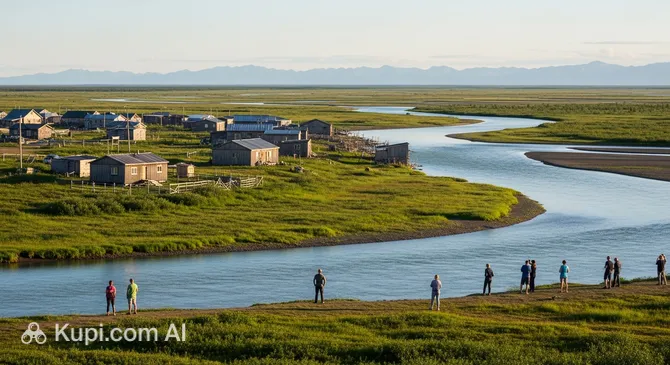
Nestled in the vast wilderness of Alaska, Tuluksak is a small and traditional village that offers a unique perspective on life in the far north. Located in the Bethel Census Area, this remote community is situated on the south bank of the Tuluksak River, near its convergence with the mighty Kuskokwim River. It is a place where the rhythms of nature dictate the pace of life, distinct from the bustling cities found elsewhere in the United States.

Tuluksak. Source: Kupi.Binoculars

With a population of approximately 450 residents, Tuluksak is a tight-knit community predominantly inhabited by Yup'ik people. The climate here is subarctic, characterized by long, cold winters and short, mild summers, which shapes the local lifestyle and architecture. Visitors interested in the history of Tuluksak will discover a settlement deeply rooted in indigenous heritage, where traditional subsistence activities like fishing, hunting, and gathering remain vital parts of daily existence.

For the adventurous traveler, the village serves as a gateway to the pristine Alaskan outdoors. The surrounding landscape is dominated by tundra and waterways, making it an excellent spot for authentic wilderness experiences. Fishing for salmon and whitefish in the local rivers is a key activity, and the area provides opportunities to observe local wildlife in its natural habitat. While it lacks standard tourist infrastructure, its appeal lies in its genuine cultural atmosphere and untouched environment.

If you are seeking a destination far off the beaten path, Tuluksak offers a rare chance to witness the resilience and traditions of rural Alaska. It is a destination for those who appreciate silence, nature, and cultural depth over commercial attractions.

Weather Overview

Travelers planning a trip to this remote Alaskan village should be prepared for a subarctic climate with distinct seasonal shifts. The weather in Tuluksak is defined by long, freezing winters and short, relatively mild summers. January is typically the coldest month, with average temperatures dropping to -13.5°C and minimums reaching -16.5°C, requiring heavy winter gear for any outdoor activities.

The summer months offer a brief period of warmth, with July seeing average temperatures of 14.5°C and highs around 17.9°C. However, this warmer season is often accompanied by frequent precipitation; August, for instance, records about 17 wet days. Generally, you can expect mild summers with regular rainfall and very cold winters with lighter precipitation.

Interesting Facts

Beyond the main attractions, Tuluksak holds many fascinating secrets that reveal the resilience and unique lifestyle of its residents. This remote village is not just a point on the map but a community where geography and history have shaped a distinct way of life.

  • The Winter Ice Highway: During the freezing winter months, the Kuskokwim River transforms into a vital transportation route known as the "Ice Road." Locals plow a path directly on the frozen river, allowing cars and trucks to drive between Tuluksak and the regional hub of Bethel, a journey that is impossible by land during the summer.

  • Gateway to Gold: Tuluksak has a historical connection to the Alaskan gold rush. It traditionally served as a supply point and gateway for the Nyac mining district, located further up the Tuluksak River. The dredging operations in the nearby mountains were once a significant economic engine for the area.

  • A Language Preserved: Unlike many places where indigenous languages are fading, Tuluksak is a stronghold for the Central Yup'ik language. It is one of the few communities where the language is still spoken as a primary means of communication by a large portion of the population, keeping ancient oral traditions alive.

  • The "Bush" Definition: The village is a classic example of a "Bush Alaska" community, meaning it is completely disconnected from the North American road network. All fuel, groceries, and supplies must be flown in by small aircraft or barged up the river during the short summer season, making logistics a daily art form.

How to Get There

Reaching the remote village of Tuluksak requires careful planning, as it is located in the Alaskan wilderness off the main road system. Most visitors arrive via regional hubs that connect to larger cities in the United States. For a detailed breakdown of routes and logistics, you can read more about how to get to Tuluksak on our dedicated page.

The city of Tuluksak does not have its own major commercial airport, so most travelers fly into Bethel Airport (BET), located in the city of Bethel. This is the primary regional hub, situated approximately 59.4 km from Tuluksak. Bethel Airport handles a significant amount of traffic and serves as the main gateway for the Yukon-Kuskokwim Delta. Since there are no roads connecting the two locations, the journey from the airport to the village is typically completed via small bush planes or boats traveling along the river system.

Another accessible facility in the wider region is Saint Mary's Airport (KSM), located in the city of St Marys. It is situated about 163.9 km from Tuluksak. While less convenient than Bethel, it is a notable transport point. Travel from Saint Mary's Airport to Tuluksak also requires arranging air charters or specialized water transport, as overland travel is not feasible due to the lack of connecting infrastructure.

For clarity, here is a summary of the main airports nearby:

Airport Name City Passenger Traffic Km from City
Bethel AirportBethelLarge59.4
Saint Mary's AirportSt MarysMedium163.9
Chevak AirportChevakSmall253.4
Kwigillingok AirportKwigillingokSmall182.2
Kongiganak AirportKongiganakSmall164.7

Main Attractions

As a small, traditional Yup'ik village in the Alaskan wilderness, Tuluksak does not offer typical commercial tourist sights like museums or amusement parks. Instead, the main attractions here are the breathtaking natural landscapes and the authentic cultural experiences of life in the "Bush." Visitors come here to disconnect from the modern world and immerse themselves in a pristine, rugged environment.

The Tuluksak River is the heart of the community and a primary draw for outdoor enthusiasts. This tributary of the Kuskokwim River offers excellent opportunities for freshwater fishing, particularly for various species of salmon and whitefish during the summer months. For tourists, simply navigating the river by boat provides a unique vantage point to view the local landscape and perhaps spot wildlife such as moose or waterfowl along the banks.

Just a short distance away lies the mighty Kuskokwim River, one of the largest river systems in the United States. At the confluence where the Tuluksak meets the Kuskokwim, visitors can witness the sheer scale of the Alaskan waterways. In the summer, this area is a bustle of activity with barges and skiffs, while in the winter, the frozen river transforms into a mesmerizing ice highway, offering a completely different but equally spectacular scenic experience.

The surrounding Tundra Wilderness serves as a boundless playground for those who love raw nature. Unlike designated parks with paved trails, the open tundra around Tuluksak invites exploration of a vast, treeless landscape that changes colors with the seasons. In late summer and early autumn, the land is dotted with wild berries, such as cloudberries and blueberries, and the open terrain offers unobstructed views of the expansive Alaskan sky, making it a perfect spot for photography and northern lights viewing in the colder months.

Local Cuisine

The culinary landscape of Tuluksak is defined not by commercial restaurants or cafes, but by the subsistence lifestyle that has sustained the Yup'ik people for generations. Visitors here will not find menus or dining establishments; instead, the local cuisine is a direct reflection of the surrounding wilderness. Food is gathered, hunted, and prepared with deep respect for the land and rivers, offering a rare opportunity to taste ingredients in their most natural and organic forms.

The cornerstone of the local diet is salmon, harvested from the Tuluksak and Kuskokwim rivers. It is prepared in various ways, but smoked and dried salmon—often called "dry fish"—is a staple that sustains families through the long winters. Another signature delicacy is Akutaq, widely known as "Eskimo ice cream." This traditional dish is a high-energy mixture of whipped fat (traditionally seal oil or reindeer fat, though shortening is often used today), sugar, and an abundance of locally picked wild berries such as cloudberries, blueberries, or cranberries. It serves as both a dessert and a vital source of calories in the cold climate.

Game meat also plays a significant role in the village's food culture. Moose and caribou are commonly hunted and shared among the community, used in hearty stews and soups that provide warmth and nutrition. Meals are often accompanied by fry bread, a simple but beloved dough that is deep-fried until golden and fluffy. Because fresh produce must be flown in and is often expensive, the diet relies heavily on these locally sourced proteins and preserved goods.

When it comes to beverages, the culture revolves around warmth and community. Hot tea and strong coffee are consumed throughout the day to combat the subarctic chill, serving as a social lubricant during visits and gatherings. Travelers should be aware that Tuluksak, like many traditional villages in the region, does not have a nightlife scene or bars. The focus is on non-alcoholic drinks that comfort and sustain, reflecting a lifestyle where practical needs and social bonds take precedence over commercial entertainment.

Travel Tips

Visiting Tuluksak offers a rare glimpse into rural Alaskan life, but because of its isolation, it requires far more preparation than a standard tourist destination. These practical tips will help you navigate the logistics and cultural nuances of this remote community to ensure a safe and respectful stay.

  1. Clothing and Gear: The weather dictates your wardrobe here. In winter, you need heavy-duty insulated gear, including a parka, thermal layers, and rated boots for temperatures well below freezing. If visiting in summer, waterproof clothing and sturdy hiking boots are essential, along with a high-quality mosquito head net and strong insect repellent, as the biting flies and mosquitoes can be intense in the tundra.

  2. Transportation: Forget about ride-hailing apps, taxis, or car rentals; Tuluksak has no paved roads connecting it to the outside world and no public transit system. Within the village, the area is small enough to navigate on foot. Locals primarily travel using ATVs (four-wheelers) in summer and snowmachines in winter, so you may need to arrange a ride with a host for longer distances or to transport luggage.

  3. Finances: The local currency is the US Dollar, and cash is absolutely essential. There are no commercial banks or ATMs in the village. While the small general store may accept credit cards, internet connections can be unreliable, rendering card readers useless. Bring enough small bills to cover your entire stay, including payments for any local guides, crafts, or supplies.

  4. Health and Safety: Medical infrastructure is limited to a basic village clinic staffed by health aides; there is no hospital or 24/7 pharmacy. Serious medical emergencies require a medevac flight to Bethel, which is strictly weather-dependent. Bring a full supply of your prescription medications and a robust first-aid kit. Also, be "bear aware" if you venture to the river or outskirts, as wildlife is abundant.

  5. Communication: English is widely spoken and understood, although Central Yup'ik is the primary language for many residents. Cell phone coverage is limited and often restricted to specific regional carriers like GCI; major national carriers may have no signal. Public Wi-Fi is virtually non-existent, so prepare to be offline or check coverage maps before arrival.

  6. Local Etiquette: The community functions on respect and close family ties. Always greet elders first as a sign of respect. It is critical to ask for permission before taking photos of locals, their children, or their property—including fish drying racks and boats. Privacy is highly valued in this small settlement.

  7. What to Avoid: Do not bring alcohol into the village without strictly verifying local laws. Many communities in the Yukon-Kuskokwim Delta are "dry" (banning possession and sale) or "damp" (strictly limiting amounts). Violating these local option laws is not only illegal but also culturally offensive and can cause significant trouble.

  8. Additional Tip: Pack your own non-perishable food and toiletries. Due to the high cost of air freight, prices at the village store can be double or triple what you are used to, and selection is very limited. Bringing your own snacks, coffee, and personal hygiene products will save you money and ensure you have what you prefer.

By packing wisely and respecting the local way of life, your visit to Tuluksak can be a deeply rewarding adventure. Embrace the slower pace and the quiet beauty of the Yukon-Kuskokwim Delta for an unforgettable experience in the Alaskan bush.

Entertainment & Nightlife

Travelers arriving in Tuluksak expecting a vibrant urban nightlife scene with bustling clubs, cocktail bars, or late-night discos will find a completely different reality. As a small, traditional Yup'ik village, Tuluksak does not have a commercial nightlife district, nor does it have bars, nightclubs, or pubs. In fact, like many communities in rural Alaska, it is a place where the sale and often the possession of alcohol are strictly regulated or prohibited, shifting the focus of "nightlife" from partying to nature and community connection.

The true evening entertainment here is provided by the natural world, particularly during the long winter months. When the sun sets and the skies are clear, Tuluksak becomes a prime viewing location for the Northern Lights (Aurora Borealis). Far from the light pollution of major cities, the darkness here is absolute, allowing the dancing green and violet lights to put on a spectacular show that rivals any concert. The banks of the Tuluksak River offer an open, unobstructed view of the horizon, making it a favorite spot for locals and visitors to stand in awe of the celestial display.

In the summer, the concept of "nightlife" disappears entirely due to the phenomenon of the Midnight Sun. From late May through July, daylight persists for nearly 24 hours, meaning outdoor activities like fishing, boat rides, and berry picking often continue well into the early morning hours. The "evening" atmosphere is energetic but driven by the endless light rather than dimly lit venues. The dress code for any activity here is strictly functional: warm layers, waterproof boots, and mosquito nets are far more important than fashion.

Social entertainment in the village is centered around community gatherings rather than commercial venues. The heartbeat of local social life is often the school gymnasium, which frequently hosts basketball games—a sport that is incredibly popular across rural Alaska. Residents of all ages gather to cheer on the local teams, and visitors are generally welcomed to watch and experience the high energy of village sports. Community bingo nights and traditional potlucks also serve as the main forms of evening recreation, offering a warm, family-friendly atmosphere.

When venturing out at night, particularly in winter, safety is paramount. There are no streetlights in many areas, so a high-quality headlamp or flashlight is essential. You should also be vigilant about wildlife; bears and moose can wander near the village, especially close to the river or trash disposal areas. Since there are no taxis or ride-sharing services, all travel is done on foot, by ATV, or snowmachine. It is advisable to always let your host know where you are going and when you expect to return.

During the daytime, entertainment remains low-key and nature-focused. Without museums, theaters, or amusement parks, the days are spent engaging with the land. Visitors might watch locals preparing fish at smokehouses, explore the tundra for wild plants, or simply enjoy the profound silence of the wilderness. For those seeking culture and excitement, the daily rhythm of subsistence living provides a fascinating, immersive alternative to standard tourist attractions.

Parks & Museums

In the remote village of Tuluksak, the concepts of "parks" and "museums" take on a different meaning than they do in urban centers. Here, nature is not confined to fenced gardens, and history is not locked behind glass cases. Instead, the entire surrounding wilderness serves as a boundless natural park, and the village itself acts as a living museum where ancient traditions are practiced daily. Visitors come here not for ticketed attractions, but to experience the raw beauty of the subarctic landscape and the enduring heritage of the Yup'ik people.

Parks and Natural Areas

The most significant natural area surrounding the village is the vast Yukon Delta National Wildlife Refuge. Tuluksak lies within the sphere of this immense protected area, which is one of the largest wildlife refuges in the world. Rather than paved paths and benches, this "park" offers millions of acres of wetlands, tundra, and spruce forests. It is a premier destination for birdwatchers, as the refuge hosts millions of migratory birds, including geese, swans, and ducks, that flock here to nest during the short summer season.

Closer to the community, the Banks of the Tuluksak River function as the village's central green space and social hub. In the summer, the gravel bars and grassy shores are bustling with activity as families gather to process fish, repair boats, and enjoy the long daylight hours. It is a place of work and recreation combined, offering visitors a chance to walk along the water, observe the traditional fish-drying racks, and appreciate the peaceful flow of the river against the backdrop of the distant mountains.

Museums and Cultural Heritage

There are no formal museums or art galleries in Tuluksak; the culture here is experiential rather than exhibited. The village itself can be viewed as a "Living Museum" of Yup'ik heritage. Visitors interested in local history should look for the traditional arts and crafts produced by residents. Local artisans are renowned for their skill in weaving grass baskets, beading, and carving ivory or wood. These items are often created in homes or at the community school rather than in a dedicated studio, reflecting a culture where art is integrated into everyday life.

Historical and Architectural Landmarks

One of the most distinct architectural landmarks in the village is the local Russian Orthodox Church. Its presence is a testament to the historical influence of Russian traders and missionaries in the Yukon-Kuskokwim Delta during the 19th century. With its characteristic design and modest wooden structure, the church stands out against the rugged landscape. It continues to be a center of spiritual life for many residents, blending traditional indigenous beliefs with Orthodox Christianity in a unique cultural synthesis.

Authentic Experiences

For a truly authentic insight into the local environment, ask a local guide about the best spots for berry picking on the tundra. In late summer, the open fields around the village transform into a natural garden filled with salmonberries, blueberries, and cloudberries. Gathering these berries is a cherished seasonal tradition, and joining in—or simply walking the spongy, mossy ground of the tundra—offers a sensory connection to the land that no manicured park can replicate.

Getting Around

Travelers arriving in Tuluksak will quickly realize that the public transport system here is unlike anything found in major urban centers. There are no buses, trains, metros, or trams operating in the village. The community is small, with a compact layout that makes it entirely distinct from cities with paved grids and scheduled transit routes. Instead of a municipal transport network, the "system" relies on personal vehicles adapted to the rugged terrain and the changing seasons.

For getting around the village itself, the primary modes of transport are ATVs (All-Terrain Vehicles), locally known as four-wheelers, during the summer and snowmachines (snowmobiles) during the winter. These vehicles are essential for navigating the unpaved, often muddy or snowy paths that serve as streets. While there are no official rental agencies, visitors may sometimes arrange informal rides with local residents to transport luggage or reach specific destinations, though this is not a guaranteed service.

Because there is no formal public transit, there is no ticketing system, travel pass, or mobile app for getting around. You will not find ticket machines or card validators. If you do manage to arrange a ride with a local, payment is strictly an informal cash transaction. It is crucial to carry small bills, as electronic payments are generally not accepted for these types of personal services, and drivers will not have change. Ride-sharing apps like Uber or Lyft do not operate in this region at all.

Walking is the most reliable and common way for visitors to navigate Tuluksak. The village is small enough to be traversed on foot, and this allows you to absorb the atmosphere at your own pace. However, practical advice for pedestrians centers on the weather and terrain: in summer, roads can be dusty or muddy, requiring sturdy waterproof boots, while in winter, extreme cold and ice necessitate heavy insulated gear and traction cleats for safety.

For travel leaving the village or connecting to nearby hubs like Bethel, the "public transport" takes to the sky or the water. Small bush planes function similarly to a bus service, operating scheduled flights that carry passengers and mail. In the summer, river boats are also a common method of travel along the Kuskokwim River. During the deep winter, the frozen river transforms into an ice road, allowing for a unique form of car and truck travel between villages, a special feature of the region's transport landscape.

Accommodation

Finding accommodation in Tuluksak is a unique experience that differs significantly from standard travel destinations. As a remote, traditional village with a subsistence-based lifestyle, there are no commercial hotels, motels, resorts, or hostels within the community. The tourism infrastructure found in larger cities does not exist here, and visitors cannot simply arrive and expect to find a room available for rent.

Accommodation options are extremely limited and are primarily designed to support essential services rather than leisure travel. Lodging is typically restricted to visiting officials, health workers, or educators. For the adventurous traveler, the most common options are arranging a stay at the local school (which may allow visitors to sleep in the gymnasium or a classroom during non-school hours) or securing a spot in transient housing managed by the Tuluksak Native Community (Tribal Council). Informal homestays with local families may also be possible, but these rely entirely on personal connections and the hospitality of residents.

Because there are no commercial lodgings, there are no specific "tourist areas" to stay in. The village is small and compact, so any accommodation you secure will be within walking distance of the river, the airstrip, and the general store. Visitors should be prepared for very basic amenities; it is highly recommended to bring your own sleeping bag, sleeping pad, and towel, as bedding is rarely provided in institutional settings like the school.

Booking Tip: You cannot book accommodation online through major travel platforms like Booking.com or Expedia. It is absolutely critical to contact the Tuluksak Traditional Council or the school administration weeks or even months in advance to request permission to visit and to ask about lodging availability. Arriving without a confirmed place to stay is not only disrespectful to the community but can be dangerous due to the harsh weather and lack of public shelter.

Regarding costs, prices are not fixed and are often determined on a case-by-case basis. If a fee is charged for staying in community housing or a homestay, it is often higher than one might expect for basic facilities, reflecting the high cost of heating and utilities in rural Alaska. Cash is the only reliable payment method; credit cards are generally not accepted for lodging, and you should agree on the price clearly before your arrival.

Nearby Cities

Tuluksak is located in the remote Bethel Census Area of the United States, a region where the landscape is defined by vast tundra and winding waterways. The village is not connected to the continental road network, meaning that travel to neighboring communities requires a boat, plane, or snowmachine depending on the season. This isolation fosters a close-knit environment where the river systems serve as the primary thoroughfares.

The most significant nearby city is Bethel, which functions as the logistical and economic hub for the entire Yukon-Kuskokwim Delta. While Tuluksak maintains its quiet, traditional atmosphere, residents frequently travel to this larger center for supplies, medical care, and transport connections. Other surrounding settlements, such as Akiachak and Kwethluk, are smaller villages that share the same subsistence lifestyle and cultural heritage.

Below is a list of the closest cities and villages, sorted by their distance from Tuluksak:

City Distance (km) Population
Akiachak 33 627
Kwethluk 41 800
Bethel 55 20,287
Napaskiak 62 500
Quinhagak 159 700

Travel distances in this region can be deceptive; while some villages appear close on a map, the winding nature of the rivers can make the actual journey longer. In winter, the frozen Kuskokwim River often transforms into an ice road, allowing for easier vehicle access between these communities, while summer travel is dominated by skiffs and barges.

Shopping & Souvenirs

General Overview: Visitors to Tuluksak should adjust their expectations regarding shopping, as the experience here is vastly different from that of a typical tourist destination. As a remote subsistence village, commerce is focused almost entirely on basic necessities rather than leisure or luxury retail. There are no boutiques, fashion outlets, or souvenir shops. Instead, shopping is limited to a few essential locations where residents purchase groceries, fuel, and household supplies. For travelers, the "shopping" scene offers a glimpse into the logistical challenges and high costs of living in rural Alaska, rather than a recreational activity.

Main Shopping Areas/Streets: There are no designated shopping districts or commercial high streets in the village. The retail landscape is typically centered around a single General Store (often referred to as the trading post), which serves as the community's lifeline. This store is usually located centrally, within walking distance of the river or the airstrip. It functions as a catch-all provider, stocking everything from canned food and fresh produce (when available) to hardware, winter clothing, and snowmachine parts. This is the only place in town to buy supplies, so it naturally becomes a social hub where locals cross paths.

Shopping Malls: Travelers should be aware that there are no shopping malls or large department stores in Tuluksak. The infrastructure simply does not support large-scale retail. The nearest location with slightly more comprehensive shopping options is the regional hub of Bethel, but even there, the options are utilitarian. Visitors looking for specialized gear, electronics, or fashion items should ensure they purchase everything they need in a major city like Anchorage or before arriving in the United States.

Markets: The village does not host formal flea markets, food bazaars, or farmers' markets in the traditional sense. However, the concept of trade is alive in the form of community gatherings. Occasionally, the local school or the tribal council may organize fundraisers or craft fairs, particularly around holidays or community festivals. These events are the closest equivalent to a market, offering homemade baked goods, traditional foods like fry bread, and locally crafted items. They are sporadic, so it is best to ask a local resident if any such events are happening during your stay.

Souvenirs: While there are no souvenir shops, Tuluksak is an excellent place to acquire authentic Yup'ik arts and crafts directly from the artisans. The region is renowned for its exquisite craftsmanship. Look for grass baskets woven from locally gathered beach grass, intricate beadwork, and skin-sewn items like slippers or mukluks. Carvings made from wood, ivory, or bone are also prized. To purchase these, you will likely need to ask around the village to find out who is selling their work, as transactions are often informal and conducted in the artist's home.

Opening Hours and Payment: The general store typically operates with limited hours, often closing in the early evening and sometimes on Sundays. Cash is king in Tuluksak. While the main store may accept credit cards, the internet connection required to process them can be unreliable due to weather or satellite issues. For buying crafts from locals, cash is the only accepted method. Be prepared for "bush prices"—due to the high cost of air freight, everyday items can cost significantly more than in the lower 48 states.

Tax-Free: Alaska is one of the few states with no state-level sales tax, which is a benefit for travelers. However, local municipalities often levy their own sales taxes to fund community services. In remote villages like Tuluksak, there is typically no infrastructure for processing tax refunds for tourists. Visitors should assume that the price listed on the shelf is the final price, and no tax-free shopping schemes are available.
Reached the end of the page?

That means the route is fully explored