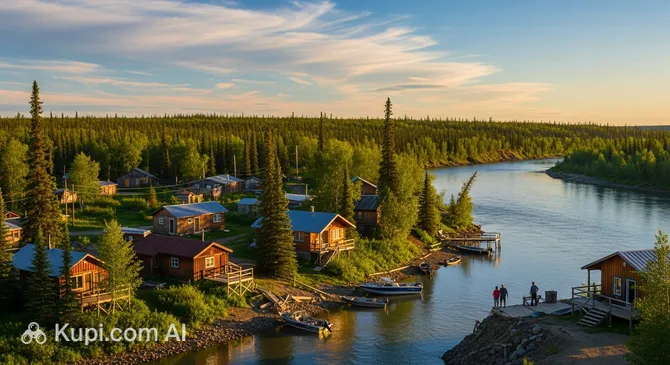
Shopping in Kalskag is a strictly functional affair, reflecting the practical needs of a remote subsistence community rather than the recreational retail experience found in larger cities. Visitors will not find boutiques, department stores, or promenade shops here. Instead, the local commerce is centered entirely around survival and daily necessities, with a focus on providing food, fuel, and basic hardware to residents who live far from the road system.
There are no designated shopping districts or commercial streets in the traditional sense. The "retail scene" is typically limited to a single general store or trading post that serves as the lifeline for the village. This store stocks a variety of essential goods, including shelf-stable groceries, frozen foods, outdoor gear, and household supplies. Travelers should expect a limited selection and prices that are significantly higher than in the contiguous United States, a result of the high cost of air freight required to transport goods to the Alaskan bush.
It is important to clarify that there are no shopping malls, plazas, or large retail chains in Kalskag. The nearest facilities of that nature are hundreds of miles away in Anchorage. The village infrastructure is small-scale and intimate, designed solely to support the population of approximately 230 people.
While there are no formal flea markets or souvenir shops, the opportunity to purchase unique items does exist for those who ask. The region is home to skilled artisans who practice traditional Yup'ik crafts. There is no central marketplace for these goods; instead, sales are often informal. Visitors interested in local artistry should look for flyers on community bulletin boards (often at the post office or general store) or politely inquire with locals about anyone selling handmade items.
For those lucky enough to find them, the souvenirs from Kalskag are deeply authentic. The most prized items include intricate beadwork, hand-sewn skin boots (mukluks), and fur garments tailored to withstand the subarctic cold. Another popular local item is the kuspuk (qaspeq), a traditional hooded tunic worn by both men and women, which is both culturally significant and practical for the environment. Purchasing these items directly from the maker ensures that your money supports the local economy and helps preserve these ancient traditions.
Opening hours for the local general store are typically limited compared to urban convenience stores. They may close for a lunch break or shut down early in the evening, and hours can fluctuate based on staff availability or weather conditions. Sundays may have reduced hours or be closed entirely. It is wise to purchase what you need when you see the store is open rather than assuming it will be available later.
Regarding payment, cash is king in Kalskag. While the store may accept credit cards when the satellite internet connection is functioning, outages are common. Travelers should always carry enough US currency in small denominations to cover their purchases. When buying crafts from local individuals, cash is almost exclusively the only accepted method of payment.
One financial benefit for visitors is that the state of Alaska does not impose a statewide sales tax. However, local municipalities often levy their own sales taxes to fund community services. In Kalskag, you may encounter a modest local tax added to your purchase at the general store, but the overall lack of a state tax generally keeps the add-on costs lower than in many other parts of the country.