Support

Kwigillingok

About

Kwigillingok is a fascinating and remote village situated in the Yukon-Kuskokwim Delta region of Alaska. Known locally as "Kwig," this small community offers an authentic glimpse into rural life in the far north of the United States. It is located on the western shore of Kuskokwim Bay, providing residents and intrepid visitors with direct access to the rich resources of the Bering Sea coast.

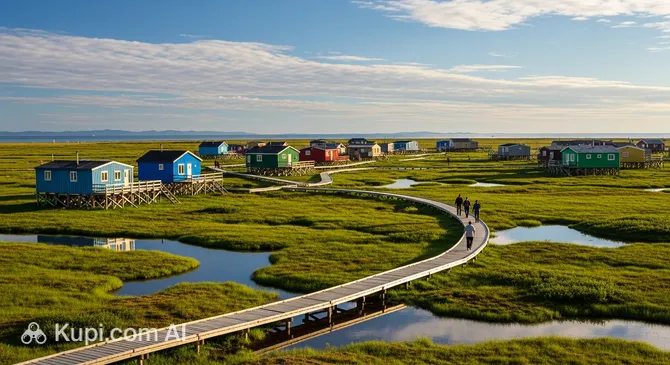
The village is home to a population of approximately 320 people, most of whom are Alaska Natives of Central Yup'ik descent. The landscape is characterized by vast, flat tundra and an intricate network of waterways, which freeze over in the winter and transform into lush wetlands during the short summer. The atmosphere here is quiet and deeply connected to the natural rhythms of the seasons.

Kwigillingok. Source: Kupi.Binoculars

Cultural heritage is the heartbeat of the community. Those interested in the history of Kwigillingok will find that it is inextricably linked to the subsistence lifestyle that has sustained the Yup'ik people for generations. Traditional activities such as fishing, hunting marine mammals, and gathering berries are still central to daily life, offering a unique cultural perspective for visitors.

For travelers seeking an off-the-beaten-path experience, Kwigillingok serves as a gateway to the pristine Arctic wilderness. The surrounding wetlands are excellent for birdwatching, particularly during migration seasons, while the open horizons offer stunning views of the northern sky. Whether you are drawn by the allure of the Arctic tundra or the warmth of the local community, a visit to Kwigillingok is a memorable journey into the heart of Alaska.

Weather Overview

The climate in this part of Alaska is characterized by distinct seasonal changes, ranging from freezing winters to mild summers. For travelers preparing for a visit, checking the weather in Kwigillingok is essential for packing the right gear. January is typically the coldest month, with average temperatures hovering around -11.2°C, whereas July brings the warmest conditions, averaging 12.8°C.

Precipitation volume is remarkably low, consistently around 2mm to 3mm per month, yet the frequency of precipitation is quite high. Expect cool summers with frequent damp days and cold winters where light snow is common. Throughout the year, you might encounter anywhere from 10 to 16 wet days per month, so waterproof clothing is recommended regardless of the season.

Interesting Facts

Beyond the main attractions, Kwigillingok holds many fascinating secrets that reveal the resilience and rich folklore of its people. Life here is defined by a deep connection to the land and a constant adaptation to the shifting environment of the Yukon-Kuskokwim Delta.

  • The Legend of the "No River": The village's name, Kuigilnguq in Yup'ik, literally translates to "place with no river." This seems contradictory today, as the Kwigillingok River flows right by the community. Local legend explains this paradox with a story about a father who drained a nearby lake to find his daughter's lost necklace, inadvertently creating the river that exists today.

  • A Village on Stilts: You won't find paved roads in Kwigillingok. Instead, the community relies on an intricate network of elevated wooden boardwalks that connect homes, the school, and the store. These walkways are essential because the ground often turns into a marshy, quicksand-like mud during the warmer months, making travel on the natural surface nearly impossible.

  • The "Sinking" Phenomenon: Kwigillingok is widely cited by scientists and journalists as one of Alaska's "sinking villages." Built on ancient permafrost, the ground beneath the village is thawing, causing the land to subside. This geological shift challenges residents annually, as they must frequently level their homes and repair the boardwalks that shift with the earth.

  • The Parent Village: Kwigillingok has a unique historical connection to the nearby village of Kongiganak. In the late 1960s, facing severe flooding and erosion, a significant portion of Kwigillingok's population made the difficult decision to relocate to higher ground nearby. This migration founded Kongiganak, yet many families chose to stay, maintaining Kwigillingok as a vibrant, albeit vulnerable, community.

How to Get There

Reaching the remote village of Kwigillingok is an adventure in itself, as the community is not connected to the rest of Alaska by road. The journey typically involves flying across the stunning tundra of the Yukon-Kuskokwim Delta. For travelers planning their trip, finding the right connection is key; you can read more about how to get to Kwigillingok and the specific logistics involved in visiting this unique location.

The village is directly served by Kwigillingok Airport (KWK), which is conveniently located just 0.6 km from the center of the settlement. Due to the small size of the village and the proximity of the airstrip, getting to the main residential area takes only a few minutes, often via ATV or snowmachine depending on the season. This local airfield handles light aircraft and is the primary lifeline for residents and visitors alike.

Most visitors will not fly directly to Kwigillingok from outside the region but will instead transfer through Bethel Airport (BET). Located in the city of Bethel approximately 125 km away, this is the main regional hub. Since there are no roads connecting Bethel to Kwigillingok, you cannot take a taxi or bus between them; instead, travelers must board a smaller commuter flight to complete the final leg of the journey.

Another nearby option is Kongiganak Airport (KKH), situated in the neighboring village of Kongiganak, about 19 km from Kwigillingok. While very close, travel between these two villages is typically conducted by boat in the summer or snowmachine in the winter, rather than by road vehicles.

For clarity, here is a summary of the main airports:

Airport Name City Passenger Traffic Km from City
Bethel Airport Bethel Large Regional Hub 124.6
Saint Mary's Airport St Marys Medium 243.4
Chevak Airport Chevak Small 228.0
Kwigillingok Airport Kwigillingok Small Local 0.6
Kongiganak Airport Kongiganak Small Local 18.7

Main Attractions

While Kwigillingok is a small, traditional village rather than a typical tourist destination, its unique geography and culture offer several compelling points of interest for visitors. The most distinct feature of the village is its Elevated Boardwalk System. Because the ground consists of marshy tundra that becomes soft and muddy in the warmer months, there are no paved roads. Instead, a network of raised wooden walkways connects the houses and community buildings. Walking these boardwalks offers a truly unique perspective on village life and is essential for navigating the settlement without sinking into the mire.

Another focal point of the community is the Kwigillingok Moravian Church. The Moravian faith has a long history in the Yukon-Kuskokwim Delta, and the local church serves as a central gathering place for residents. For visitors, the church represents the spiritual heart of the village and offers insight into the blend of traditional Yup'ik culture and Christian practices that defines modern life in the region. The building itself is a modest but significant landmark against the flat horizon.

For nature enthusiasts, the Kwigillingok River and Waterfront provide a gateway to the wild beauty of the Bering Sea coast. This area is the hub of subsistence activity, where you can observe locals preparing their boats for fishing or returning with the day’s catch. It is an excellent spot for photography, offering sweeping views of the water and the chance to spot marine wildlife or migratory birds that flock to the coastal wetlands during the spring and fall.

Finally, the surrounding Tundra Wilderness serves as a vast, open-air attraction for those who appreciate solitude and raw nature. In late summer, the landscape comes alive with locals picking berries, particularly cloudberries and crowberries. A guided walk onto the tundra allows visitors to experience the profound silence of the Arctic and admire the intricate ecosystem of the wetlands, which sustains the community year-round.

Local Cuisine

The culinary experience in Kwigillingok is far removed from the typical restaurant scene found in larger cities. Instead of dining out, visitors here encounter a subsistence-based food culture that has sustained the Yup'ik people for thousands of years. The local diet is deeply connected to the seasons, relying heavily on the harvest from the Bering Sea and the surrounding tundra. For travelers, this offers a rare chance to taste food that is organic, wild-caught, and prepared with traditional methods passed down through generations.

One of the most iconic dishes to try is Akutaq, often referred to as "Eskimo ice cream." Unlike the dairy-based dessert known elsewhere, traditional Akutaq is a high-energy mixture of whipped fats—historically seal oil or reindeer fat, though vegetable shortening is common today—blended with fresh snow and an abundance of local berries like cloudberries (salmonberries) or blueberries. Another staple is dried or smoked fish, particularly salmon and whitefish. Prepared during the summer and stored for winter, the fish has a rich, smoky flavor and a jerky-like texture that makes it a perfect, hearty snack.

When it comes to beverages, the culture in Kwigillingok is warm and welcoming but distinct. Hot tea is the universal drink of choice, consumed throughout the day to stay warm and during social visits. It is customary for a pot of tea to be always available in local homes. Travelers should be aware that Kwigillingok is a "dry" village, meaning the sale and importation of alcohol are prohibited. Consequently, there are no bars or pubs, and the social life revolves around community gatherings rather than nightlife.

Visitors should plan their meals carefully, as there are no commercial restaurants or cafes in the village. The food scene is entirely domestic, centered around family kitchens and communal sharing. Basic groceries and snacks can be purchased at the local general store, but the selection is limited and prices reflect the high cost of air freight. If you are fortunate enough to be invited into a local home, accept the hospitality graciously; sharing food is a core value of the community, and a home-cooked meal of moose soup or fresh fish is the most authentic dining experience you can have in the region.

Travel Tips

Visiting Kwigillingok is a unique adventure that requires careful preparation to fully appreciate the remote beauty and traditional lifestyle of this Yup'ik community. Because the village is off the road system and subject to the rugged conditions of the Yukon-Kuskokwim Delta, these practical tips will help ensure your trip is safe, respectful, and comfortable.

  1. Clothing and Gear: The weather can be unpredictable, so dressing in layers is essential regardless of the season. In summer, the tundra is wet and muddy, making knee-high waterproof rubber boots (often called "Alaska sneakers") the most important item in your suitcase. Bring a high-quality rain jacket and windbreaker to protect against the coastal breeze. If you visit in winter, you will need heavy-duty thermal gear, insulated boots, and face protection against sub-zero temperatures.

  2. Transportation: Forget about rental cars or ride-hailing apps; there are no paved roads connecting Kwigillingok to the outside world or even within the village itself. Movement within the community is primarily by walking on the wooden boardwalks that float above the marshy ground. For longer distances or hauling gear, locals use ATVs (four-wheelers) in the summer and snowmachines in the winter. As a tourist, you will mostly be walking, so comfortable footwear is key.

  3. Finances: The local currency is the US Dollar. While the general store may accept credit cards, telecommunications can be unreliable in rural Alaska, causing card readers to fail. It is highly recommended to bring enough cash to cover your entire stay, including food and potential lodging costs. There are no banks and likely no reliable ATMs in the village, so withdraw money in Bethel or Anchorage before your final flight.

  4. Health and Safety: Medical facilities are limited to a small local clinic staffed by health aides; there is no hospital or pharmacy in the village. You must bring an adequate supply of any prescription medications you need, along with a basic first-aid kit. regarding safety, be aware that you are in bear country, although they are less common right in the village. Always stay aware of your surroundings and the weather conditions, which can change rapidly.

  5. Communication: English is widely spoken, but for many residents, Central Yup'ik is their first language. Learning a few local words, such as Cama-i (a warm hello/greeting), is a great way to show respect. Cell phone coverage can be spotty and is often limited to specific carriers like GCI; do not expect high-speed mobile data or Wi-Fi in public spaces. It is best to download offline maps and entertainment before you arrive.

  6. Local Etiquette: The community is close-knit and values privacy. Always ask for permission before taking photographs of people, their homes, or their subsistence activities (such as drying fish). When walking on the boardwalks, it is polite to yield to elders or people carrying heavy loads. If you are invited into a home, remove your boots at the door immediately to avoid tracking in mud or snow.

  7. What to Avoid: Kwigillingok is a "dry" village, meaning the importation, sale, and possession of alcohol are strictly prohibited by local law. Do not bring any alcohol with you, as this is a serious offense that can lead to legal trouble and is considered highly disrespectful to the community norms. Additionally, avoid walking off the designated boardwalks, as the surrounding tundra can be deceptively deep and marshy.

  8. Food and Supplies: Since there are no restaurants, you will be relying on the local general store or your own supplies. The store carries basics, but prices are significantly higher than in the continental United States due to shipping costs. A smart travel hack is to bring your own non-perishable snacks, instant meals, and coffee from a larger hub like Bethel to keep your budget in check and ensure you have food you like.

By packing the right gear and approaching the community with an open heart and respect for their traditions, you will find Kwigillingok to be a welcoming and unforgettable destination. Embrace the slower pace of life, enjoy the stunning starkness of the tundra, and cherish the opportunity to experience authentic rural Alaska.

Entertainment & Nightlife

Travelers planning a trip to Kwigillingok in search of a vibrant urban nightlife scene with bars, nightclubs, and bustling entertainment districts will find a very different reality. As a traditional Yup'ik village and a designated "dry" community, the sale, importation, and possession of alcohol are strictly prohibited. Consequently, there are no pubs, cocktail lounges, or dance clubs here. The atmosphere in the evenings is peaceful and quiet, defined by the vast silence of the surrounding tundra rather than the beat of music.

Instead of commercial nightlife, evening entertainment in Kwigillingok revolves around community and nature. Social life is centered on the local school and the community hall, where events such as high school basketball games often draw the entire village together. These gatherings are spirited and welcoming, offering visitors a chance to witness the genuine warmth of the local culture. "Eskimo Bingo" and other community fundraisers are also popular evening pastimes where you can interact with residents in a relaxed, alcohol-free environment.

For many visitors, the true "nightlife" is found in the sky. During the darker months, typically from late August to April, Kwigillingok offers a front-row seat to the spectacular Aurora Borealis (Northern Lights). With zero light pollution, the dancing green and purple lights provide a mesmerizing show that rivals any club performance. Conversely, in the height of summer, the "midnight sun" means it never truly gets dark, allowing for surreal late-night walks on the boardwalks under a twilight glow that lasts until morning.

If you venture out for an evening stroll, safety and preparation are paramount. There are no streetlights outside the main village area, so carrying a high-lumen flashlight or headlamp is essential during the dark season. While the village is generally safe from crime, the natural environment poses risks; always be aware of the potential for wildlife, including stray dogs or occasional wild animals near the perimeter. Dress warmly, as temperatures drop significantly at night, and stick to the wooden boardwalks to avoid stepping into freezing marshland.

During the daytime, entertainment is equally low-key and culturally immersive. There are no amusement parks or movie theaters; instead, visitors can spend their time observing the daily rhythm of subsistence living. You might watch locals return from a hunt or prepare fish along the riverbanks. For a deeper understanding of the region, engaging in conversation with local artisans or elders—if invited—can be more rewarding than any museum tour, offering personal insights into a lifestyle that has thrived in this harsh climate for centuries.

Parks & Museums

Travelers arriving in Kwigillingok expecting manicured city parks or glass-walled museums will quickly realize that this village redefines the concept of public space and cultural exhibition. Here, the "park" is the boundless wilderness that surrounds the community, and the "museum" is the daily life of the residents themselves. The connection between the land and the people is so seamless that the entire village feels like a living heritage site, set against a backdrop of one of the most unique ecosystems in the United States.

Yukon-Kuskokwim Delta National Wildlife Refuge
Kwigillingok is situated directly within the vast expanse of the Yukon-Kuskokwim Delta National Wildlife Refuge, one of the largest refuges in the country. There are no gates or ticket booths; simply stepping off the village boardwalks places you in this protected natural wonder. It is a world-class destination for birdwatchers, serving as a critical breeding ground for millions of shorebirds and waterfowl, including emperor geese and tundra swans. In the summer, the wetland transforms into a vibrant, green tapestry of marshes and ponds, offering unparalleled opportunities to observe Arctic wildlife in its undisturbed habitat.

Kuskokwim Bay Coastline
The village's location on the western edge of Kuskokwim Bay serves as a natural recreation area for the community. While not a "beach" in the tropical sense, the coastline is a rugged, beautiful interface between the land and the Bering Sea. It is a place of stark beauty where visitors can watch the dramatic tides shift, observe seals and walruses offshore, or witness the local fleet of skiffs heading out for subsistence fishing. The open horizon here provides a spectacular stage for sunsets that seem to last for hours during the summer months.

Kwigillingok Moravian Church
In the absence of a formal history museum, the local Moravian Church stands as the most significant architectural and historical landmark in the village. Established by missionaries in the early 20th century, the church represents a pivotal era in the region's history, marking the intersection of traditional Yup'ik spirituality and Western religion. The building is not just a place of worship but a repository of community memory, where elders pass down stories and hymns that have been translated into the Yup'ik language, preserving a unique linguistic and cultural heritage.

The "Living Museum" of Yup'ik Culture
Rather than viewing artifacts behind glass, visitors to Kwigillingok experience culture in real-time. The entire village operates as a living museum where ancient traditions are practiced daily. Walking along the boardwalks, you are likely to see rack upon rack of salmon drying in the wind—a preservation method that has remained unchanged for thousands of years. The sight of seal skins being stretched or qiviut (muskox wool) being worked by local artisans offers a genuine insight into the ingenuity and resilience required to thrive in this environment.

For a truly authentic experience, ask a local about the best spots for berry picking in late summer. Venturing just a short distance onto the tundra to gather cloudberries (known locally as salmonberries) is not only a popular pastime but a meditative activity that connects you deeply with the land and the local way of life.

Getting Around

Travelers planning a visit to Kwigillingok should be aware that the village does not possess a public transport system in the traditional sense. There are no buses, trams, metros, or scheduled shuttles operating within the community. Due to its small size and remote location on the tundra, the infrastructure is completely different from that of a standard city, and getting around is primarily a matter of self-propulsion or private arrangement.

The most common and reliable mode of transport for visitors is simply walking. The village is unique in that it relies on a network of elevated wooden boardwalks rather than paved roads. These walkways connect homes, the school, the general store, and the airstrip, keeping pedestrians above the marshy ground. Since the entire village covers a relatively small area, you can walk from one end to the other in a short amount of time, making a public transit network unnecessary for daily needs.

For longer distances or hauling cargo, locals utilize all-terrain vehicles (ATVs) or four-wheelers during the summer months and snowmachines (snowmobiles) during the winter. While there are no commercial rental agencies for these vehicles, they serve as the de facto "cars" of the village. You will not find car-sharing apps, taxi services, or bike rentals here. The terrain is generally unsuitable for standard bicycles, and standard automobiles are virtually non-existent.

Regarding payment and tickets, there are no travel passes, transport cards, or mobile apps to worry about. Since there is no formal service, there are no ticket booths or validation machines. If you require assistance moving heavy luggage from the airstrip or need a ride due to mobility issues, you may be able to arrange an informal ride with a local resident. In such cases, offering a small cash payment or covering the cost of fuel is a polite and customary gesture, but this is done on a personal basis rather than through a regulated system.

The most important practical advice for navigating Kwigillingok is to come prepared with the right footwear. Because "transport" mostly means walking, high-quality, waterproof rubber boots are essential in the summer to handle mud and wet boardwalks. In winter, insulated boots with good traction are vital for safety on icy surfaces. Always be mindful when walking on the boardwalks, as they can be narrow and slippery, and stepping off them often means sinking into deep mud or snow.

Accommodation

Finding a place to stay in Kwigillingok is a distinct experience that differs significantly from standard travel planning. As a small, remote village, it does not possess a commercial tourism infrastructure. There are no hotels, motels, hostels, or resorts in the traditional sense. You will not find properties listed on international booking websites, and luxury amenities are non-existent. Instead, accommodation is extremely limited and functional, primarily designed for visiting workers, officials, or family members rather than leisure tourists.

The main accommodation option is typically managed by the Native Village of Kwigillingok (the local Tribal Council). They often maintain a transient housing unit or a few rooms designated for visitors. These facilities are basic and utilitarian, usually providing a bed and access to shared kitchen and bathroom facilities. The comfort level is comparable to a rustic hostel or a dormitory; visitors are often advised to bring their own sleeping bags, towels, and toiletries, as linens may not always be provided.

In some cases, informal homestays may be arranged, where a traveler stays with a local family. This offers a warm and authentic insight into the subsistence lifestyle of the Yukon-Kuskokwim Delta but is not a formal service. Such arrangements usually require a personal connection or prior approval from community leaders. Unlike in larger cities, you cannot simply knock on a door or find a "vacancy" sign.

Booking Tip: It is critical to secure your accommodation before you board your flight. Do not arrive in the village without a confirmed place to sleep, as there are no backup options. You must contact the Tribal Council office by phone well in advance to inquire about availability and make reservations.

Regarding payment, the local economy operates largely on cash. Do not expect to pay for your lodging with a credit card or via a mobile app. Prices can be higher than one might expect for basic amenities, reflecting the high cost of utilities and maintenance in rural Alaska. Ensure you agree on the nightly rate during your phone call and bring sufficient cash to cover your entire stay.

Nearby Cities

Kwigillingok is located in the vast and sparsely populated Yukon-Kuskokwim Delta, where the concept of a "nearby city" is relative. In this remote part of Alaska, communities are separated by miles of tundra and waterways rather than connected by roads. Travel between these settlements is typically conducted by bush plane, boat, or snowmachine, depending on the season. The nearest neighbors are other traditional Yup'ik villages, while the larger regional hub provides essential services and transit connections.

The following table lists the closest cities and villages to Kwigillingok, sorted by their distance from the community:

City Population Distance (km)
Kipnuk 700 49
Quinhagak 700 72
Bethel 20,287 128
Kwethluk 800 142
Akiachak 627 149

Shopping & Souvenirs

Shopping in Kwigillingok is a strictly utilitarian experience, vastly different from the retail therapy found in larger cities. As a small, remote village in rural Alaska, commercial activity is limited to meeting basic survival needs rather than leisure or luxury shopping. Visitors should not expect boutiques, department stores, or souvenir shops. Instead, the "shopping scene" consists primarily of a single general store that serves as the lifeline for the community, stocking everything from groceries and hardware to winter clothing.

Main Shopping Areas
There are no shopping districts or commercial streets in Kwigillingok. The village layout is defined by its wooden boardwalks, and the commercial hub is simply the location of the local general store, often situated near the center of the community or close to the post office. This is the gathering point for residents to pick up supplies. A walk along the main boardwalks will take you past this central hub, but do not expect window shopping; the focus here is entirely on function and community service.

Shopping Malls
Travelers should be aware that there are absolutely no shopping malls in Kwigillingok. The nearest large-scale retail facilities are hundreds of miles away in Anchorage. Even the regional hub of Bethel has only limited retail options compared to the continental United States. If you require specialized gear, electronics, or specific clothing brands, you must purchase these items before arriving in the village.

Markets
Formal public markets, such as flea markets or farmers' markets, do not exist in the village. The harsh climate and subsistence lifestyle mean that food is hunted, fished, or gathered rather than sold in open-air stalls. However, you may occasionally encounter informal fundraising sales at the school or community hall, where locals sell homemade baked goods or plates of food. These events offer a warm, community-focused alternative to a traditional market experience.

Souvenirs and Local Crafts
While there are no dedicated souvenir shops, Kwigillingok is a hidden gem for authentic Yup'ik arts and crafts. The region is renowned for its skilled artisans who create exquisite items such as hand-woven grass baskets, intricate beadwork, skin sewing (furs and mukluks), and carvings made from walrus ivory or bone. The best way to purchase these unique items is to ask around respectfully; often, sales are conducted directly from an artist’s home. Buying directly supports the local families and ensures you are getting a genuine piece of Alaskan heritage.

Opening Hours and Payment
The local general store typically operates with limited hours, often closing in the early evening and on Sundays. It is crucial to check the hours upon arrival. Regarding payment, cash is the most reliable method. While the store may accept credit cards, the telecommunications infrastructure in rural Alaska can be unstable, leading to card reader failures. There are no banks and likely no reliable ATMs in the village, so visitors are strongly advised to bring enough US dollars to cover all potential purchases.

Tax Information
Alaska is one of the few states in the US with no state sales tax, which can be a benefit for travelers. However, local municipalities often levy their own sales taxes to fund community services. In remote villages like Kwigillingok, prices are already significantly higher than average due to the extreme cost of air freight shipping. Therefore, even without a state tax, visitors should be prepared for "sticker shock" on everyday items like milk, bread, and fuel.

Reached the end of the page?

That means the route is fully explored