Support

Nightmute

About

Nightmute is a truly unique destination for travelers seeking to experience the remote and rugged beauty of the Alaskan wilderness. Situated on Nelson Island, this small village offers a rare insight into the traditional lifestyle of the region, far removed from the bustle of major cities. While it is technically located in the United States, the atmosphere here feels like a world of its own, defined by vast tundra landscapes and the rhythms of nature.

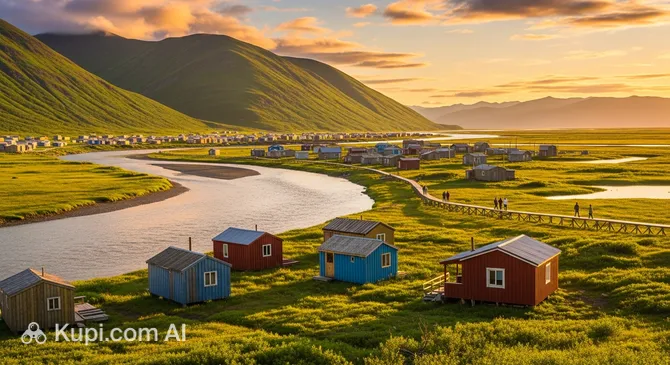
Nightmute. Source: Kupi.Binoculars

With a population of approximately 300 residents, the community is tight-knit and deeply connected to the land. The climate is subarctic and often characterized by strong winds—a feature reflected in the village's original Yup'ik name, Negtemiut, which translates to "people of the pressed-down place." Exploring the history of Nightmute reveals a rich heritage of indigenous culture that continues to thrive today, blending ancient traditions with modern village life.

For the adventurous soul, Nightmute provides unparalleled opportunities to witness pristine nature. The surrounding area is excellent for bird watching and observing local wildlife in their natural habitat. Additionally, the nearby rivers and the proximity to the Bering Sea make it a prime location for fishing, particularly for salmon and halibut, which remain staples of the local subsistence diet.

If you are looking to step off the beaten path and immerse yourself in a quiet, authentic corner of the North, Nightmute awaits. It is a destination that invites you to disconnect from the digital world and appreciate the stark, serene beauty of rural Alaska.

Weather Overview

Understanding the local climate is crucial before packing for your journey to this remote Alaskan destination. The weather in Nightmute is typical of a subarctic environment, characterized by long, cold winters and short, cool summers. January is generally the coldest month, with average temperatures hovering around -11.7°C and lows dipping to -14.2°C, requiring heavy thermal clothing for any outdoor activities.

Summer brings a welcome thaw, though conditions remain mild rather than hot. July is typically the warmest time of year, with average temperatures reaching 12.0°C and highs occasionally touching 14.3°C. This season offers the most comfortable conditions for exploring the surrounding tundra, although the air often retains a crisp chill.

Regardless of when you visit, be prepared for consistent moisture. While the total precipitation volume might seem low, the frequency of precipitation is significant, with 10 to 17 wet days recorded per month throughout the year. August tends to see the most frequent precipitation. Overall, expect cool to mild summers with frequent light rain and cold, dry winters.

Interesting Facts

Beyond its quiet exterior and remote location, Nightmute holds a surprising place in pop culture and a deep history of resilience. This small village is defined not just by its geography, but by the unique stories of the people who have called it home for generations.

  • Hollywood Fame: Nightmute gained international recognition as the setting for the 2002 psychological thriller Insomnia, starring Al Pacino and Robin Williams. However, the movie was not actually filmed in the village; the production used locations in British Columbia, Canada, to depict the town's foggy, sleepless atmosphere.

  • The Great Relocation: In 1964, a significant portion of the village's population decided to move approximately 15 miles away to establish the community of Toksook Bay. This migration was undertaken to access better resources and avoid the difficult seasonal travel required by their traditional lifestyle, though many families chose to stay and maintain Nightmute's legacy.

  • A Village on Boardwalks: Due to the boggy, permafrost-rich tundra that surrounds the area, there are no paved streets connecting the homes. Instead, a network of elevated wooden boardwalks links the houses and community buildings, allowing residents to traverse the wet ground without sinking into the mud.

  • Ancient Roots: The residents are primarily Qaluyaarmiut, known as the "dip net people," who have inhabited Nelson Island for over 2,000 years. Unlike many other indigenous groups in the United States, their isolation on the island helped preserve their traditions, language, and culture from early outside influence.

How to Get There

Reaching the remote village of Nightmute on Nelson Island is an adventure in itself, often involving a combination of regional flights and local travel methods. Since the area is isolated within the Alaskan wilderness, planning your journey in advance is essential. For a detailed breakdown of routes and logistics, you can read more about how to get to Nightmute to ensure a smooth trip.

The city of Nightmute does not have its own major commercial airport listed in regional hubs, but you can fly into Bethel Airport (IATA: BET) in the city of Bethel, which is about 161 km from Nightmute. This is a significant regional hub serving as a primary gateway for the Yukon-Kuskokwim Delta. Reaching the village from here typically requires a transfer to a small bush plane or a boat, and travel times vary depending on weather and transport availability. Another option is Chevak Airport (IATA: VAK) in Chevak, roughly 127 km away. It is a smaller facility, and connections from this point also depend heavily on local charters. You might also consider Saint Mary's Airport (IATA: KSM), located 192 km away in St Marys, which handles a moderate amount of traffic.

For clarity, here is a summary of the main airports:

Airport Name City Passenger Traffic Km from City
Bethel Airport Bethel High 161.4
Saint Mary's Airport St Marys Medium 192.0
Chevak Airport Chevak Small 127.3
Kwigillingok Airport Kwigillingok Small 108.8
Kongiganak Airport Kongiganak Small 117.0

The city of Nightmute does not have a railway station, and the rugged, roadless terrain of this part of Alaska means there are no train connections available. Visitors typically rely on small aircraft, boats, or snowmachines depending on the season to navigate the distance between regional hubs and the village.

Main Attractions

Travelers visiting Nightmute should not expect traditional tourist sites like museums or amusement parks. Instead, the primary allure of this remote village lies in the raw, untouched beauty of Nelson Island. Unlike much of the surrounding Yukon-Kuskokwim Delta, which is flat and marshy, Nelson Island is formed from volcanic rock, offering a distinct landscape of rugged hills and cliffs. Hiking across this unique terrain provides visitors with panoramic views of the Bering Sea and a chance to experience the solitude of the true Alaskan wilderness.

One of the most significant draws for nature enthusiasts is the opportunity to view the Nelson Island Musk Ox Herd. These prehistoric-looking creatures were introduced to the island in the late 1960s and have since thrived in the area. Spotting these shaggy, resilient animals grazing on the tundra is a highlight for wildlife photographers and adventurers alike. The island's isolation means the animals can often be observed in a completely natural setting, far undisturbed by heavy human traffic.

The waterways surrounding the village, particularly the tributaries leading to the Toksook River and the nearby ocean bays, are central to life in Nightmute and serve as a prime attraction for anglers. Fishing here is world-class, offering chances to catch various species of salmon, halibut, and trout. For visitors, joining a local guide to navigate these waters offers not just the thrill of the catch, but a deep cultural insight into the subsistence lifestyle that has sustained the Yup'ik people for thousands of years.

Local Cuisine

The culinary landscape of Nightmute is defined entirely by the subsistence lifestyle of its residents, offering a rare glimpse into traditional Yup'ik food culture. You will not find fine dining establishments or fast-food chains here; instead, the "menu" is dictated by the seasons, the ocean, and the tundra. For visitors, the local cuisine is an opportunity to taste foods that are harvested, hunted, and gathered directly from the surrounding wilderness, often prepared using methods passed down for generations.

One of the most iconic dishes to try is Akutaq, widely known as "Eskimo Ice Cream." Unlike the dairy-based dessert most travelers are used to, traditional Akutaq is a whipped mixture of animal fats (such as seal or reindeer fat) or vegetable shortening, blended with fresh snow or water and an abundance of local berries like cloudberries (salmonberries) or blueberries. It is a high-energy food designed to sustain people in cold climates and is often served during celebrations or as a special treat.

Fish, particularly salmon and halibut, forms the backbone of the local diet. You are likely to encounter it in various forms: dried, smoked, or frozen raw as quaq. Dried fish strips are a staple snack, chewy and savory, often dipped in seal oil, which is a prized condiment in the region. This oil provides essential nutrients and warmth during the harsh winters, though its strong, distinct flavor can be an acquired taste for visitors.

When it comes to beverages, the culture revolves around staying warm. Hot tea and coffee are the standard drinks of hospitality, always available in local homes to welcome guests from the cold. Travelers should be aware that Nightmute, like many rural Alaskan villages, may restrict the sale and importation of alcohol. There are no bars or pubs; social life centers on community gatherings where hot non-alcoholic drinks are shared.

Dining out in the conventional sense is not an option in Nightmute, as there are no commercial restaurants or street food stalls. Visitors must typically plan to be self-sufficient, purchasing basic supplies at the small local general store, or they may be lucky enough to be hosted by a local family. In such a setting, food is communal and sharing the catch of the day is a deep-rooted cultural value, making every meal an intimate and authentic experience.

Travel Tips

Visiting Nightmute is not your typical vacation; it is an expedition into the heart of the Alaskan wilderness and traditional Yup'ik culture. Because this remote village on Nelson Island is far removed from standard tourist infrastructure, thorough preparation is essential to ensure your trip is safe, respectful, and enjoyable.

  1. Clothing and Gear: The weather here is unpredictable and often harsh, so dressing in layers is non-negotiable. Even in summer, bring a waterproof and windproof jacket, thermal base layers, and warm wool socks. Since the village is built on permafrost and connected by boardwalks, the ground can be extremely muddy; waterproof rubber boots (often called "Xtratufs" by Alaskans) are the absolute best footwear choice. If you visit in winter, you will need heavy-duty Arctic gear, including a parka, insulated pants, and face protection against the biting wind.

  2. Transportation: Forget about car rentals, taxis, or public buses—they do not exist here. Within the village, you will get around primarily by walking on the elevated wooden boardwalks. In the summer, locals use ATVs (four-wheelers) and skiffs (small boats) for travel, while snowmachines (snowmobiles) are the main mode of transport in winter. As a visitor, you will likely need to arrange transport with a local host or guide, as there are no commercial ride services.

  3. Finances: The local currency is the US Dollar (USD). It is critical to bring enough cash for your entire stay before you leave a major hub like Bethel. While the small village store may accept credit cards, internet connections can be unreliable, and card machines frequently go down. There are no banks and likely no accessible ATMs. Be prepared for high prices on basic goods due to the cost of freight shipping to the island.

  4. Health and Safety: Medical facilities are limited to a small local clinic for basic care; serious emergencies require a medical evacuation by air to Bethel or Anchorage, which is weather-dependent. It is highly recommended to have travel insurance that covers medevac services. Regarding safety, always be aware of wildlife, including musk oxen and bears, when hiking outside the village. Do not approach animals for photos.

  5. Communication: English is widely spoken, but the primary language for many residents is Central Alaskan Yup'ik. Learning a few words, like Waqaa (Hello/What's up?), is a great way to show respect. Cell phone service is limited; GCI is typically the only carrier with reliable coverage in rural Alaska, so AT&T or Verizon phones may not work. Wi-Fi is scarce and slow, so plan to be offline for much of your trip.

  6. Local Etiquette: The community is tight-knit and traditional. Always ask for explicit permission before taking photographs of local residents, their homes, or their subsistence activities (like drying fish). It is customary to remove your shoes immediately upon entering a home or the school. Respect for elders is a cornerstone of the culture; allow them to speak first and listen attentively.

  7. What to Avoid: Do not bring alcohol or drugs into the village. Nightmute, like many rural Alaskan communities, is a "dry" or "damp" village with strict local laws regarding the importation and possession of alcohol. violating these rules is not only disrespectful but can lead to serious legal trouble and immediate expulsion from the community.

  8. Food Supplies: Since there are no restaurants, you must be self-sufficient or rely on a host. The local general store has a very limited selection of non-perishable items (canned goods, pasta, snacks) at premium prices. It is a smart "life hack" to pack a supply of dehydrated meals, protein bars, and your own coffee or tea to ensure you have what you need without draining the village's limited stock.

By packing the right gear and approaching your visit with a humble and open mindset, you will find Nightmute to be an incredibly rewarding destination. It is a place where you can disconnect from the noise of the modern world and connect deeply with the land and its people.

Entertainment & Nightlife

Travelers arriving in Nightmute expecting a vibrant scene of neon lights, cocktail lounges, or dance clubs will find themselves in a completely different world. It is essential to understand that this is a small, traditional Yup'ik village with a population of approximately 300 people, and there is absolutely no commercial nightlife infrastructure. There are no bars, nightclubs, pubs, or late-night restaurants here. Furthermore, like many communities in rural Alaska, Nightmute is subject to strict local laws regarding alcohol; it is typically a "dry" or "damp" village, meaning the sale of alcohol is prohibited, and possession may be restricted or banned entirely.

The "nightlife" in this remote corner of the United States is defined not by music and crowds, but by the spectacular displays of nature. During the long, dark winter nights, the complete absence of light pollution transforms the village into a prime location for viewing the Aurora Borealis (Northern Lights). The atmosphere is one of profound silence and solitude. Visitors often spend their evenings on the wooden boardwalks or at the edge of the village, looking up at the sky to watch the green and purple ribbons of light dance over the tundra.

Social activity in the evenings is community-centered and family-oriented. While there are no commercial entertainment venues, the local Community Hall and the School Gymnasium often serve as the hubs of village life. Depending on the schedule, you might encounter a community bingo night, a basketball tournament—which is a heavily favored sport in the region—or a gathering featuring traditional Yup'ik dancing and drumming. These events are inclusive, alcohol-free, and provide a warm, welcoming insight into the local culture, though visitors should always look for cues or ask if it is appropriate to attend.

From a practical standpoint, navigating Nightmute at night requires preparation. There are no taxis or public transport services; getting around is done entirely on foot via the elevated boardwalks. It is crucial to bring a reliable flashlight or headlamp, as street lighting is minimal to non-existent, and the wooden paths can be slippery or uneven. Dress in your warmest layers, as temperatures drop significantly after dark. In terms of safety, the village is very secure regarding crime, but the environment poses real risks. Be cautious of the extreme cold and be aware that wildlife, such as foxes or even bears, may roam near the village outskirts at night.

During the daylight hours, entertainment remains low-key and outdoors. There are no movie theaters, museums, or amusement parks. Instead, visitors spend their time exploring the unique volcanic landscape of Nelson Island, hiking the surrounding hills for panoramic views of the Bering Sea, or observing the daily rhythms of subsistence living. The experience here is about disconnecting from modern distractions and embracing the quiet, rugged pace of life in the Alaskan bush.

Parks & Museums

Travelers venturing to Nightmute should adjust their expectations regarding "parks" and "museums." In this remote Yup'ik village of approximately 300 people, you will not find manicured botanical gardens, ticketed art galleries, or curated historical exhibits. Instead, the entire region serves as a vast, open-air nature reserve, and the village itself is a living testament to a culture that has thrived here for thousands of years. The "parks" are the boundless tundra and volcanic hills, while the "museums" are the traditions practiced daily by the residents.

Nelson Island Wilderness

Unlike the flat, marshy terrain typical of the Yukon-Kuskokwim Delta, the area surrounding Nightmute is distinct for its rugged, volcanic geology. The entire island essentially functions as one massive natural park. Visitors can hike the rolling hills and ridge lines of the Qaluyaat Mountains, which offer sweeping panoramic views of the Bering Sea and the vast delta wetlands. There are no marked trails or ranger stations here; it is a pristine, wild landscape where you are free to roam, provided you respect the land and are prepared for the elements. In summer, the tundra is carpeted with wildflowers and berries, making it a beautiful, albeit boggy, place for exploration.

Toksook River and Waterways

The waterways that weave through and around Nightmute are the community's lifeline and its most dynamic natural feature. The Toksook River and its tributaries serve as a natural recreation area for fishing and boating. In the warmer months, the riverbanks are bustling with activity as families set nets for salmon or travel by skiff. For a visitor, simply sitting by the water offers a chance to observe the local wildlife, including migratory birds and occasionally seals, in a setting that feels completely untouched by modern development.

Living Culture and Heritage

There are no formal museums in Nightmute. The history of the area is not kept behind glass cases but is preserved through oral storytelling, dance, and subsistence living. The closest thing to a cultural center is the local Community Hall or the school gymnasium, where the village gathers for potlatches and traditional Yup'ik dancing. These events showcase intricate, hand-carved masks and regalia that are significant artistic achievements in their own right. While not a museum open to the public on a schedule, being invited to witness these traditions offers a far more authentic glimpse into the region's history than any exhibit could.

Our Lady of Perpetual Help Catholic Church

One of the few architectural landmarks in the village is Our Lady of Perpetual Help Catholic Church. While small and modest compared to urban cathedrals, it stands as a significant historical marker of the community's post-contact history. The church has been a central part of village life for decades, representing the unique blend of traditional Yup'ik spirituality and the Jesuit missionary influence that shaped much of rural Alaska in the 20th century. It is a quiet place for reflection and offers insight into the modern social fabric of the village.

For those seeking a deeper academic understanding of the region's art and history, the nearest dedicated facility is the Yupiit Piciryarait Cultural Center located in Bethel, the regional hub you likely passed through to reach Nightmute. However, in Nightmute itself, the best way to experience the culture is to engage respectfully with the locals. A simple walk along the boardwalks, observing the drying fish racks and the construction of skin boats or sleds, provides a firsthand look at the ingenuity and resilience that define this unique corner of the United States.
Getting Around

When planning a trip to Nightmute, it is essential to adjust your expectations regarding public transportation. Unlike typical tourist destinations, this remote village does not have a formal public transport system. There are no buses, trams, metros, or trolleybuses operating here. The infrastructure is minimal and adapted specifically to the rugged, permafrost-rich terrain of Nelson Island. Consequently, you will not find travel passes, transit apps, or ticket machines; the concept of a "fare zone" simply does not apply in this environment.

The primary means of getting around the village is on foot. Nightmute is interconnected by a network of elevated wooden boardwalks rather than paved sidewalks or asphalt roads. These boardwalks serve as the main arteries of the community, keeping pedestrians above the wet, boggy tundra. For a visitor, this means your own two feet are your main mode of transport. The village is small enough that you can walk from one end to the other relatively quickly, provided you are wearing sturdy, waterproof footwear to navigate sections where the wood may be slick or uneven.

While there are no commercial taxis or car-sharing services like Uber, locals rely heavily on personal motorized vehicles adapted for the seasons. In the summer months, ATVs (All-Terrain Vehicles) or "four-wheelers" are the standard way to transport goods and people along the boardwalks and surrounding trails. In the winter, when the ground is frozen and covered in snow, snowmachines (snowmobiles) become the essential form of travel. As a tourist, you cannot rent these commercially, but you may be able to arrange a ride with a local host or guide if you need to travel further afield or transport heavy gear.

Since there is no official ticketing system, any transport assistance you receive from a local resident is usually an informal arrangement. If you manage to catch a ride on a skiff (boat) to a nearby fishing spot or on an ATV to a trail, payment is typically handled in cash. There are no card readers or mobile payment options for these services. It is polite to agree on a price beforehand or offer money to cover fuel costs, which are quite high in this remote region.

For travel on the water, which is crucial for accessing hunting grounds or neighboring communities, small open boats called skiffs are used. These are privately owned and not part of a scheduled ferry service. If your travel plans involve moving along the river or coast, you will need to hire a local boat operator. Always remember that transport schedules here are dictated by the weather and the tides, not by a timetable, so patience and flexibility are your best travel companions.

Accommodation

Finding accommodation in Nightmute requires a significant shift in mindset for the average traveler. There are absolutely no commercial hotels, motels, hostels, or resorts in the village. You will not find listings on major booking platforms, and there is no front desk to check into upon arrival. Lodging here is informal and community-based, reflecting the remote and non-commercial nature of the region.

The primary option for visitors is to arrange a homestay with a local family. This offers a warm and authentic immersion into the daily life of the village, but it requires prior arrangement. Alternatively, for official visitors or larger groups, arrangements can sometimes be made to stay at the local school. This typically involves sleeping on the floor of a classroom or gymnasium, so bringing your own sleeping bag, towel, and toiletries is essential. In some cases, the tribal council may have a designated building or unit for visitors, but availability is never guaranteed.

Because there are no "tourist areas," staying anywhere in the village places you within walking distance of the central boardwalks, the general store, and the river. The community is small and compact, so location is rarely a concern once you have secured a roof over your head.

Booking and Prices:

You cannot book accommodation online. The only way to secure a place to stay is to contact the Native Village of Nightmute (Tribal Council) or the school principal well in advance of your trip. Do not just show up expecting to find a room. Prices for homestays or council housing can be surprisingly high due to the cost of utilities and heating in rural Alaska; expect to pay rates comparable to a mid-range hotel in a city. Payment is almost exclusively in cash, so bring sufficient funds to cover your entire stay.

Booking Tip: Start planning your accommodation weeks or even months before your travel dates. Communication can be slow, and phone lines may be down. Confirm your arrangements multiple times before boarding your flight to Bethel.

Nearby Cities

For those looking to explore the surroundings, Nightmute serves as an excellent base for day trips to several interesting nearby locations. While travel in this remote region typically requires small aircraft or boats, visiting neighboring communities offers a deeper understanding of the Yukon-Kuskokwim Delta. Bethel is the largest and most significant hub, providing access to the Yupiit Piciryarait Cultural Center and a variety of services not found in smaller villages. Chevak is another unique destination, known for its distinct Cup'ik heritage and language, which differs from the Yup'ik traditions of the surrounding area. Hooper Bay offers a stunning coastal setting on the Bering Sea, famous for its history of intricate grass weaving.

City Population Distance (km)
Bethel 20287 165
Hooper Bay 1300 139
Chevak 1000 126
Kwethluk 800 184
Kipnuk 700 71

These nearby destinations offer a glimpse into the diverse culture and landscapes of the region.

Shopping & Souvenirs

Shopping in Nightmute is a strictly utilitarian experience, reflecting the remote and subsistence-based lifestyle of its residents. Visitors should not expect a retail destination; there are no boutiques, fashion outlets, or souvenir shops in the traditional sense. Instead, the village relies on a single general store that provides essential goods, groceries, and hardware to the community. For a traveler, "shopping" here is less about leisure and more about acquiring basic necessities or discovering authentic local craftsmanship directly from the artisans.

The concept of a "shopping district" or "high street" does not exist in this small community. The village layout consists of homes and community buildings connected by elevated wooden boardwalks. The main hub of commercial activity is the local General Store (often managed by the village corporation or a local entity), which is typically located centrally near the school or post office. This is the only place to purchase food, fuel, and basic household supplies.

Travelers looking for shopping malls will find absolutely none in Nightmute. The nearest facilities resembling a mall are hundreds of miles away in Anchorage. The infrastructure here is designed for survival and practicality in the subarctic tundra, not for recreational retail therapy. The general store itself is small, functional, and carries a limited stock that depends heavily on the arrival of freight barges or cargo planes.

There are no formal markets in the village. You will not find flea markets, farmers' markets, or food stalls. However, the community spirit often functions as an informal marketplace. Fresh subsistence foods—such as berries in the summer or fresh fish—are sometimes shared or traded among families, though this is rarely a commercial transaction open to tourists. Occasionally, bake sales or fundraisers may be held at the Community Hall or school, offering a chance to buy homemade treats.

Despite the lack of stores, Nightmute is an excellent place to find high-quality, authentic souvenirs if you know who to ask. The Yup'ik people of Nelson Island are renowned for their incredible craftsmanship. The region is particularly famous for grass baskets, which are woven with intricate designs and are highly prized by collectors. You may also find hand-carved ivory or bone figures, skin sewing (such as fur hats or mittens), and beadwork. These items are not sold in a shop; instead, you will likely need to ask your host or a local resident to introduce you to an artist selling from their home.

Opening hours for the general store can be limited and unpredictable. It typically opens around 10:00 AM or 11:00 AM and may close as early as 5:00 PM, often shutting down for a lunch break in the middle of the day. It is generally closed on Sundays. When it comes to payment, cash is the absolute king. While the store may technically have a card machine, connection issues are common in this remote part of the United States. Local artists selling crafts will almost exclusively require cash. It is vital to bring enough physical currency for your entire trip, as there are no banks or reliable ATMs in the village.

Regarding taxes, Alaska is one of the few states with no state-level sales tax. However, many local municipalities impose their own sales tax on goods and services to fund community infrastructure. In remote villages, prices on shelf items are already significantly higher than on the mainland due to the extreme costs of shipping. There is no tax-free refund system for tourists here; the price you see (or negotiate with an artist) is the price you pay.

Reached the end of the page?

That means the route is fully explored