Support

Eek

About

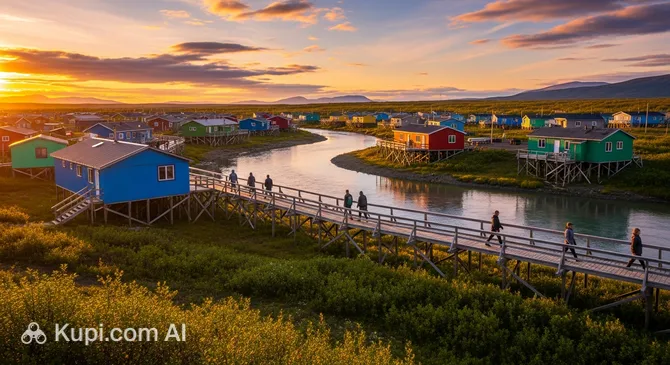
Welcome to Eek, a fascinating and remote village located in the state of Alaska, United States. Situated on the banks of the Eek River near the Kuskokwim River delta, this small community is home to approximately 400 residents. The village is surrounded by the vast, rugged beauty of the tundra, offering a serene escape far removed from the hustle and bustle of major cities.

Eek. Source: Kupi.Binoculars

To truly understand the spirit of this place, one must look into the history of Eek. It is a traditional Central Yup'ik Eskimo village, where the local culture and subsistence lifestyle remain vibrant and integral to daily life. The community was originally located at a different site nearby but moved to its current location in the early 20th century to avoid flooding, showcasing the resilience and adaptability of its people.

Visitors are drawn here not for commercial tourist traps, but for the authentic experience of rural Alaska. The area is renowned for excellent fishing opportunities, particularly for salmon and pike in the local rivers. Additionally, the surrounding wilderness provides a unique backdrop for wildlife viewing and experiencing the stark, majestic landscapes of the north, making it a distinct destination for nature enthusiasts.

If you are an adventurous traveler looking to explore the hidden corners of the world, Eek offers a warm welcome and a memorable glimpse into a unique way of life near the Bering Sea coast.

Weather Overview

The climate in this region is defined by its northern location, featuring cold winters and cool, mild summers. Understanding the weather in Eek is essential for preparation, as conditions can be quite rugged. January is typically the coldest month, with average temperatures hovering around -12.0°C, while lows can dip significantly further.

Summer brings a thaw, with July being the warmest time of year, reaching an average of 13.7°C. Despite the warmer temperatures, the area sees frequent precipitation days throughout the year. Visitors should generally expect cool, damp conditions in the summer and freezing temperatures in the winter, with distinct wet days occurring between 10 and 17 times a month depending on the season.

Interesting Facts

To better understand the unique character of this remote Alaskan community, here are some interesting facts about Eek:

  • Name Origin: The village's distinct name is not an expression of surprise. It is derived from the Central Yup'ik word "Iik," which translates to "two eyes." The community is also known by its traditional Yup'ik name, "Ekvicuaq," which is a separate designation used by the local people.
  • Boardwalk Streets: Due to the marshy tundra ground, which becomes soft and boggy during the warmer months, the village utilizes an extensive network of elevated wooden boardwalks. These serve as the main roads for pedestrians and ATVs, keeping travel stable above the permafrost.
  • Isolated Access: Like many rural settlements in this part of the United States, Eek is not connected to any road system. It is accessible only by small bush planes, boats during the summer, or snowmachines traveling over frozen rivers in the winter.
  • Dry Community: Visitors should be aware that Eek is a "dry" village. The sale, importation, and possession of alcohol are prohibited by local law to promote the health and safety of the residents.
  • Subsistence Lifestyle: The local culture is deeply tied to the land. Most residents practice a subsistence lifestyle, relying on fishing for salmon and pike, hunting moose and waterfowl, and gathering berries to sustain their families throughout the year.

How to Get There

Reaching this remote Alaskan village is an adventure in itself, requiring some planning due to its isolated location. Since the community is not connected to the standard road system, visitors typically rely on air travel to nearby hubs followed by a bush plane or boat connection. You can find more about how to get to Eek and the specific logistics on our detailed transport page.

The city of Eek does not have its own major airport suitable for large commercial jets. The most significant regional hub is Bethel Airport (IATA: BET), located in the city of Bethel, approximately 63.6 km from Eek. This airport serves as the primary gateway for the Yukon-Kuskokwim Delta, handling a substantial volume of passengers annually. From Bethel, travelers usually transfer to smaller commuter planes to reach the village.

Another option in the broader region is Dillingham Airport (IATA: DLG), situated in Dillingham. It is located about 237.6 km from Eek. While further away, it is another key point of entry for this part of Alaska, though connecting to Eek from here may require more complex travel arrangements compared to the direct routes often available from Bethel.

For clarity, here is a summary of the main airports:

Airport Name City Passenger Traffic Km from City
Bethel Airport Bethel Medium 63.6
Dillingham Airport Dillingham Small 237.6
Saint Mary's Airport St Marys Small 216.4
Kwigillingok Airport Kwigillingok Very Small 74.0
Kongiganak Airport Kongiganak Very Small 55.3

There are no railway stations in Eek or the surrounding area. The rugged terrain and permafrost of the tundra make rail transport impractical in this region. Visitors should plan to utilize air travel or seasonal water transport to reach the village.

Main Attractions

Unlike bustling tourist hubs filled with museums and monuments, the attractions in Eek are deeply rooted in the raw, untouched beauty of the Alaskan wilderness. Visitors traveling to this remote village come to experience a pace of life dictated by nature, where the primary points of interest are the river, the tundra, and the unique layout of the community itself.

The Eek River is the heart of the village and its most significant natural attraction. It serves as a vital transportation route and a premier destination for anglers. During the summer months, the river teems with various species of Pacific salmon, including silvers, reds, and chums, as well as pike and lush. For tourists, a boat trip along the river offers not only the chance to fish but also to see the landscape from the water, providing a peaceful and scenic perspective of the region.

Surrounding the village is the vast expanse of the Alaskan Tundra, which offers a unique kind of beauty and activity for outdoor enthusiasts. In the late summer and early autumn, the tundra comes alive with locals and visitors engaging in berry picking. The marshy grounds are rich with salmonberries, blueberries, and blackberries (crowberries). Walking the tundra—often requiring rubber boots—provides an intimate look at the delicate ecosystem of the Yukon-Kuskokwim Delta.

For wildlife watchers, the area is a prime spot for Wildlife Observation. The wetlands and riverbanks attract a diverse array of migratory birds, making it a rewarding location for birdwatching, especially during the spring and fall migrations. Additionally, larger mammals such as moose, red foxes, and occasionally bears can be spotted in the hinterlands surrounding the village, offering thrilling photographic opportunities in a completely natural habitat.

Within the settlement, the Village Boardwalks stand out as a distinctive architectural feature worth exploring. Because Eek is built on permafrost and marshy ground, an elevated wooden boardwalk system connects homes, the school, and the general store. Taking a walk along these wooden paths is the best way to tour the community, offering a glimpse into the daily lives of the residents and the ingenious adaptations required to live in such a challenging environment.

Local Cuisine

To experience the local cuisine in Eek is to understand the subsistence lifestyle that has sustained the Yup'ik people for thousands of years. There are no fine dining establishments or fast-food chains here; instead, the "menu" is dictated by the seasons, the river, and the tundra. The food is organic, wild-harvested, and deeply connected to the land, offering visitors a rare chance to taste authentic Alaskan Native flavors in their purest form.

The most iconic dish you must try, if offered by a local host, is Akutaq, widely known as "Eskimo Ice Cream." Unlike the dairy-based dessert found elsewhere, this traditional delicacy is a whipped mixture of fats—traditionally seal oil or reindeer fat, though vegetable shortening is common today—blended with sugar and an abundance of locally gathered berries like cloudberries (salmonberries) or blueberries. Some variations even include flaked whitefish or pike, creating a unique sweet-and-savory profile that provides essential energy for the cold climate.

Fish, particularly Pacific salmon, is the cornerstone of the diet. You will likely encounter it in many forms: smoked, baked, or dried into strips known as yukola or "dry fish." These chewy, jerky-like strips are a staple snack, cured in smokehouses that dot the village and preserved to last through the long winter. Alongside fish, wild game such as moose or caribou often features in hearty stews, slow-cooked to tenderness and served to warm the soul after a day out on the windswept boardwalks.

When it comes to beverages, it is crucial to remember that Eek is a "dry" community, meaning the sale, importation, and possession of alcohol are strictly prohibited. You will not find bars or liquor stores here. Instead, the social drink of choice is hot tea or coffee, which is brewing constantly in almost every home and community gathering place. During the berry season, you might also taste refreshing juices made from the highbush cranberries that grow in the surrounding wetlands.

The food culture in Eek revolves entirely around home cooking and sharing. There are no commercial restaurants or street food stalls. Visitors typically eat where they stay, whether it is a guest meal prepared by a local family or provisions purchased from the village's general store. The best way to experience the cuisine is to be invited to a community potlatch or a gathering at the school, where trays of Akutaq, dried fish, and fry bread are passed around, symbolizing the deep-rooted tradition of communal support and hospitality.

Travel Tips

Visiting Eek is a unique adventure that requires significantly more preparation than a standard vacation to a tourist hub. To ensure a safe, respectful, and enjoyable experience in this remote Yup'ik community, here are some essential practical tips to help you plan your journey.

  1. Clothing and Gear: The weather in the Yukon-Kuskokwim Delta can be unpredictable and harsh. Dress in layers using wool or synthetic materials; avoid cotton. Waterproof outer layers are mandatory. Most importantly, bring sturdy, waterproof knee-high rubber boots (often called "Alaskan sneakers"), as the terrain off the boardwalks can be extremely muddy and wet. In the summer, a high-quality bug spray and a head net are crucial to protect against swarms of mosquitoes and gnats.
  2. Transportation: Once you arrive in the village, your primary mode of transport will be walking. The village is connected by a system of wooden boardwalks raised above the tundra. There are no car rentals, taxis, or ride-sharing apps. Locals use ATVs (four-wheelers) in the summer and snowmachines in the winter, but these are private vehicles. Be prepared to carry your own luggage from the airstrip or boat landing to your accommodation.
  3. Finances: Bring enough cash to cover your entire stay. While the general store may accept credit cards, telecommunication outages can render card machines useless. There are no banks or ATMs in Eek. Be aware that prices for goods at the local store are significantly higher than in the contiguous United States due to the high cost of air freight, so budget accordingly.
  4. Health and Safety: The village has a small health clinic staffed by health aides, but it is not a full-service hospital. For serious medical emergencies, patients must be medevaced by plane to Bethel or Anchorage, which is weather-dependent. Bring a full supply of any prescription medications you need, as there is no pharmacy to fill prescriptions on short notice. Always be "bear aware" if you venture outside the village perimeter.
  5. Communication: English is widely spoken, though you will hear residents speaking Central Yup'ik, especially among elders. Cellular service is limited; GCI is the primary provider in rural Alaska, and other carriers often have no signal. Internet access is generally slow and expensive. It is best to download offline maps and necessary documents before you arrive.
  6. Local Etiquette: The community is tight-knit and values respect. Always greet elders first when you meet them. Unlike a public tourist attraction, Eek is a private home to its residents; do not take photographs of people, their homes, or their subsistence activities (like drying fish) without explicitly asking for permission first. A friendly, humble attitude goes a long way.
  7. What to Avoid: Strictly avoid alcohol. Eek is a "dry" village, meaning the importation, sale, and possession of alcohol are illegal. Violating this law is a serious offense and is culturally disrespectful. Also, avoid walking on the tundra without a guide if you are inexperienced, as it is easy to get disoriented in the featureless landscape.
  8. Food and Supplies: Due to the limited selection and high cost of food in the village, it is highly recommended to bring your own non-perishable food and snacks. If you have specific dietary restrictions, you must bring your own supplies, as the local general store stocks basic staples and may not have specialty items.

By packing the right gear and approaching the community with an open heart and respect for their traditions, your visit to Eek will be a deeply rewarding experience. Enjoy the incredible silence of the tundra and the warm hospitality of rural Alaska.

Entertainment & Nightlife

Travelers hoping to find a bustling scene of nightclubs, cocktail bars, or late-night discos in Eek will find a completely different reality. As previously mentioned, Eek is a "dry" community, meaning the sale and possession of alcohol are strictly prohibited. Consequently, there are no bars, pubs, or liquor stores in the village. The "nightlife" here is not about commercial entertainment but is defined by the profound quiet of the wilderness, community gatherings, and the spectacular natural phenomena of the Arctic.

In the winter months, the primary evening entertainment is the sky itself. Far from the light pollution of major cities, Eek offers a front-row seat to the Aurora Borealis (Northern Lights). On clear nights, the dancing green and purple lights provide a mesmerizing show that rivals any concert. Visitors often spend their evenings bundled up in heavy parkas, standing on the wooden boardwalks or the frozen riverbank, gazing upward. The atmosphere is one of absolute serenity, broken only by the sound of the wind or the distant howl of a sled dog.

During the summer, the concept of "night" shifts dramatically due to the Midnight Sun. With nearly 24 hours of daylight in June and July, the village remains active well into what would be the middle of the night elsewhere. It is common to see locals heading out on their boats for late-night fishing trips or children playing outside at 1:00 AM. The "evening" entertainment is essentially an extension of the day's outdoor activities, allowing for hiking, berry picking, or boating along the Eek River at any hour.

Social life in the village revolves around community centers rather than commercial venues. The Eek School is often the hub of activity, particularly during the basketball season. In rural Alaska, high school basketball is a major event, drawing the entire community to the gymnasium to cheer on the local team. Another popular pastime is community bingo, often held in the tribal or community hall. These events are welcoming and offer a genuine glimpse into the social fabric of the village, though visitors should always be respectful and unobtrusive.

Practical advice for the evenings: Since there are no restaurants open late (or at all), you must plan your own meals. If you venture out for a walk to see the lights or enjoy the midnight sun, dress warmly and practically—fashion takes a backseat to survival here. In winter, reflective gear and a headlamp are essential, as the boardwalks can be dark and icy. In terms of safety, always be aware of wildlife; moose and bears can wander near or into the village, especially during twilight hours. There are no taxis; getting around means walking on the boardwalks.

Regarding daytime entertainment, the options are equally low-key and nature-focused. There are no movie theaters, amusement parks, or museums in the traditional sense. The "museum" is the land and the living culture. Visitors might spend their days watching the river traffic, observing traditional fish drying practices (from a respectful distance), or simply chatting with locals at the general store, which serves as the unofficial town square for news and greetings.

Parks & Museums

When visiting a remote community like Eek, one must adjust their expectations regarding "parks" and "museums." You will not find manicured botanical gardens, ticketed art galleries, or historical museums with glass display cases here. Instead, the entire region functions as a vast, open-air nature preserve, and the village itself serves as a living museum of Yup'ik culture and resilience.

The most significant natural area, functioning much like a central park for the community, is the Eek River Waterfront. This is not a park with benches and playgrounds, but a dynamic, working riverbank that changes with the seasons. In summer, it is the hub of activity where families launch boats, process their catch, and children play near the water. For a visitor, simply walking along the riverbank offers a connection to the local lifestyle and provides a front-row seat to the stunning, expansive skies of the delta.

Surrounding the village is the Tundra Wilderness, which effectively acts as a limitless natural garden. Unlike fenced city parks, this landscape stretches to the horizon, carpeted with moss, lichens, and wildflowers during the short summer season. It is a communal space where residents harvest "nature's bounty"—salmonberries, blueberries, and blackberries. For tourists, hiking the tundra (with appropriate waterproof footwear) offers a serene, meditative experience in one of the most untouched ecosystems in the world.

In terms of cultural heritage, the Village Boardwalk System can be viewed as an architectural open-air gallery. Because the permafrost cannot support paved roads, this intricate network of elevated wooden paths connects the entire community. Walking these boardwalks is an immersive cultural experience, showcasing the unique engineering required to live in the Arctic. It allows visitors to observe the layout of a traditional subsistence village without trudging through the marshy ground below.

While there is no formal building labeled "museum," the Subsistence Lifestyle practiced by the residents is a form of living history. The sights of salmon drying on wooden racks, the preparation of seal oil, and the crafting of fur garments are traditions that have been passed down for thousands of years. These practices are not exhibits put on for tourists; they are the daily reality of survival and culture. Observing these activities respectfully offers a deeper understanding of the region's history than any curated collection could.

For a truly authentic experience, keep an eye out for the local church. In many rural Alaskan villages, the church serves not only as a place of worship but as a historical landmark and a community gathering point. While it may not be a museum, the architecture and the role it plays in village life reflect the intersection of traditional beliefs and the history of missionaries in the Yukon-Kuskokwim Delta.

Insider Tip: If you want to learn about the local history, do not look for a guidebook. Instead, visit the General Store or the post office and strike up a polite conversation. The elders and long-time residents are the keepers of the village's stories, and oral history is the primary way knowledge is preserved and shared in this part of Alaska.
Getting Around

Travelers accustomed to complex urban public transport networks will find a completely different reality in Eek. Due to its small population and remote location on the tundra, there is absolutely no formal public transport system in the village. You will not find buses, trams, subways, or fixed-route marshrutkas here. The infrastructure is designed for a subsistence lifestyle rather than mass transit, meaning visitors must be prepared to be self-sufficient in their mobility.

The "streets" of Eek are actually an extensive network of elevated wooden boardwalks. These structures are the lifeline of the community, keeping pedestrians and light vehicles above the marshy, unstable permafrost. For a tourist, walking is the primary and often only way to get around. The village is compact enough that you can walk from one end to the other in a relatively short time, provided you are wearing sturdy, comfortable footwear suitable for wooden planks that can be slippery when wet or icy.

Because there is no public transit, there is no payment system to worry about. You do not need to purchase travel passes, download transport apps, or validate tickets. There are no zones or tariffs. The concept of paying for a ride within the village is virtually non-existent in the traditional sense. If you require assistance moving heavy luggage from the airstrip to your accommodation, it is usually arranged privately with your host or a local resident, often as a gesture of hospitality or for a small, agreed-upon cash fee.

While there are no taxis or car rental agencies, you will see locals moving around on ATVs (All-Terrain Vehicles) during the summer and snowmachines (snowmobiles) during the winter. These are private vehicles and are not available for public hire. However, they function as the de facto "cars" of the village. Visitors should be aware that these vehicles share the narrow boardwalks with pedestrians. Standard etiquette requires walkers to step aside and yield the right of way to these vehicles to ensure safety for everyone.

Practical advice for getting around: Since you cannot hail a cab or check a bus schedule, planning your arrival is crucial. The airstrip is located a short distance from the main village boardwalks. It is highly recommended to coordinate your arrival with your host or the school (if you are visiting for educational purposes) so that someone can meet you with an ATV and a trailer for your bags. Without this arrangement, you should be prepared to carry your own luggage over the boardwalks to your destination.

In summary, the "transport system" of Eek is a testament to adaptation in the Arctic. There are no historic cable cars or underground trains, but the boardwalk system itself is a unique engineering feature worth appreciating. Navigating Eek is simple and human-scaled, requiring nothing more than a good pair of legs and respect for the local way of life.

Accommodation

Finding accommodation in Eek requires a completely different mindset compared to booking a hotel in a standard tourist destination. As a small, remote subsistence village with a population of around 400, there is no commercial tourism infrastructure. You will not find hotels, motels, hostels, resorts, or official bed-and-breakfasts listed on major booking platforms. The concept of a "check-in desk" does not exist here.

For the few visitors who travel to Eek—mostly for educational, medical, or government business—accommodation is typically arranged through homestays or specific community facilities. In rural Alaska, it is common for visiting groups (such as sports teams) to sleep in the school gymnasium. Individual travelers must usually rely on the hospitality of local residents who have extra space, or in some cases, transient housing managed by the school or the local clinic, though these are prioritized for visiting professionals.

Because there are no designated "tourist zones," staying in Eek means living right alongside the residents in the heart of the village. The community is compact and connected by boardwalks, so regardless of where you stay, you will be within walking distance of the river, the general store, and the airstrip. This arrangement offers an authentic immersion into the daily life of the village, far removed from the separation of a typical hotel experience.

Booking Advice: You cannot simply arrive in Eek and expect to find a place to sleep. It is absolutely critical to arrange your accommodation well in advance. Prospective visitors should contact the Native Village of Eek (Tribal Council) or the school administration before planning their trip. They can advise if any space is available or help coordinate a stay with a local family. Showing up without a confirmed place to stay is strongly discouraged and can place a burden on the community.

Regarding costs and payment, there are no fixed "rack rates." If you are staying with a host family or in tribal housing, prices are often arranged on a case-by-case basis. Be prepared to pay in cash, as credit card processing is rare or non-existent for these types of informal transactions. While the cost may be lower than a luxury hotel, visitors are often expected to bring their own sleeping bag, towel, and toiletries, and to be self-sufficient regarding food unless specific meal arrangements have been made with a host.

Nearby Cities

For those looking to explore the surroundings, Eek serves as an excellent base for day trips to several interesting nearby locations:

City Population Distance (km)
Bethel 20287 66
Togiak 800 159
Kwethluk 800 74
Kipnuk 700 116
Quinhagak 700 52

Bethel is the largest city in the region and serves as the primary hub for Western Alaska. A visit here offers a change of pace with access to amenities such as restaurants and larger stores, which are rare in smaller villages. Cultural enthusiasts should visit the Yupiit Piciryarait Cultural Center, which features a museum and library dedicated to preserving and sharing the rich traditions, art, and history of the Yup'ik people.

Located relatively close to Eek, Quinhagak is a coastal village situated near the mouth of the Kanektok River on Kuskokwim Bay. It is a premier destination for anglers, known worldwide for its exceptional sport fishing, particularly for king and silver salmon. The village also offers a unique perspective on coastal subsistence living and has recently gained attention for significant archaeological finds that shed light on the area's ancient history.

Another fascinating destination is Kwethluk, often referred to as the "River of the Real People." Situated along the Kuskokwim River, it is one of the longest-continuously occupied villages in the area. A trip here provides an authentic glimpse into riverine culture, with opportunities to observe traditional fish camps and the daily rhythms of life along the water, surrounded by the scenic beauty of the delta.

These nearby destinations offer a glimpse into the diverse culture and landscapes of the region.

Shopping & Souvenirs

Shopping in Eek is a strictly utilitarian affair, reflecting the remote and self-sufficient nature of this small Alaskan community. Visitors should adjust their expectations immediately; there are no boutiques, souvenir shops, or fashion outlets here. The retail experience is centered entirely on survival and basic necessities, providing a fascinating glimpse into the logistics of life in a village accessible only by air or water.

There are no "shopping districts" or commercial high streets in Eek. The village layout consists of homes and community buildings connected by boardwalks. The primary—and often only—place to purchase goods is the local General Store. This establishment serves as the lifeline for the community, stocking everything from canned food and dry goods to hardware, fuel, and basic clothing. For a tourist, a visit here is less about retail therapy and more about observing the unique inventory required to sustain life on the tundra.

Travelers accustomed to sprawling retail complexes will find no shopping malls in Eek. The nearest facilities resembling a department store or a mall are located in Bethel or Anchorage, hundreds of kilometers away. The infrastructure in Eek is designed solely to support the local population of approximately 400 people, rendering large-scale commercial centers unnecessary and impractical.

Similarly, there are no formal markets such as flea markets or farmers' markets. The "fresh market" here is the land itself, from which locals harvest berries and fish. However, you may occasionally find informal sales of baked goods or community fundraising events at the school or tribal hall, which offer a chance to buy homemade treats and support local causes.

While there are no dedicated gift shops, souvenirs from Eek can be truly exceptional if you know where to look. The region is famous for the incredible craftsmanship of the Yup'ik people. Visitors may have the opportunity to purchase authentic handmade items directly from local artisans. Look for exquisite grass baskets, which are a specialty of the Yukon-Kuskokwim Delta, as well as intricate beadwork, skin-sewn slippers (mukluks), and fur garments. These items are not mass-produced; they are works of art deeply rooted in cultural tradition.

Regarding opening hours and payment, the general store typically operates during standard business hours, roughly from 9:00 AM to 5:00 PM or 6:00 PM, though it may close for a lunch break. Sundays and holidays may see reduced hours or closures. It is critically important to carry cash. While the store may have card processing capabilities, reliance on satellite internet means that electronic payments can be unreliable due to weather or technical outages. Bringing enough US dollars to cover all your potential purchases is the safest strategy.

In terms of taxes, the United States does not have a national value-added tax (VAT) refund system for tourists. Alaska is one of the few states with no state-level sales tax, but local municipalities often levy their own sales taxes to fund community services. Visitors should not expect any tax-free shopping schemes or refund counters in Eek.

Reached the end of the page?

That means the route is fully explored