Support

Napaskiak

About

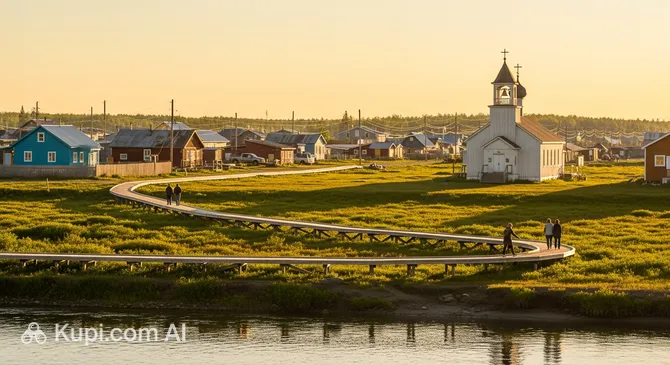
Napaskiak. Source: Kupi.Binoculars

Welcome to Napaskiak, a traditional Yup'ik village that offers a unique window into the authentic lifestyle of rural Alaska. Located on the east bank of the Kuskokwim River, this small community is defined by its strong cultural heritage and deep connection to the surrounding wilderness. For travelers seeking an off-the-beaten-path experience within the United States, Napaskiak provides a serene and culturally rich atmosphere far removed from the bustle of major cities.

The geography of the area is dominated by the majestic Kuskokwim River and the flat, tundra landscape typical of the Yukon-Kuskokwim Delta. With a population of approximately 500 residents, the village maintains a close-knit environment where subsistence activities like fishing and hunting are central to daily life. The climate here is subarctic, featuring long, cold winters and short, mild summers, which shapes the rhythm of the seasons and local traditions.

Visitors interested in the past can explore the history of Napaskiak, which is inextricably linked to the Yup'ik people who have inhabited this region for generations. One of the most significant landmarks in the village is the St. James Orthodox Church, a beautiful structure that reflects the historical Russian influence in the area. Walking through the village offers a chance to observe traditional fish drying racks and the peaceful flow of river life.

Whether you are drawn by the opportunity to witness a subsistence lifestyle or simply wish to experience the quiet beauty of the Alaskan tundra, Napaskiak is a fascinating destination. It is a place to respect local customs, enjoy the pristine natural environment, and appreciate the resilience of its people.

Weather Overview

Travelers planning a visit to this region should be prepared for a subarctic climate characterized by distinct seasonal contrasts. The weather in Napaskiak shifts from freezing, snowy winters to mild, pleasant summers, making the timing of your trip crucial for outdoor activities.

Winter is the dominant season, with January seeing average temperatures drop to around -12.8°C and lows reaching -15.8°C. As spring approaches, temperatures gradually rise, transitioning into a comfortable summer season. July is typically the warmest month, offering average temperatures of 14.0°C and highs of approximately 17.2°C, which provides excellent conditions for exploring the river and tundra.

Precipitation is frequent throughout the year, with the number of wet days ranging from 9 to 16 per month, although the actual volume of rainfall or snow remains relatively low at 1mm to 3mm. Expect mild summers with frequent light precipitation and very cold, dry winters.

Interesting Facts

Beyond the main attractions, Napaskiak holds many fascinating secrets that reveal the resilience and unique adaptation of its residents to the subarctic environment. Life here is defined by a blend of ancient traditions and practical solutions to the challenges of the Alaskan wilderness.

  • The Ice Highway: During the winter months, the frozen Kuskokwim River transforms into a vital transportation link known as the Kuskokwim Ice Road. This maintained "highway" allows residents to drive cars and trucks directly on the river ice to reach the regional hub of Bethel, facilitating the transport of groceries and supplies that are otherwise only accessible by boat or plane.

  • A Village on Boardwalks: Due to the underlying permafrost and marshy tundra, there are no paved streets connecting the homes in Napaskiak. Instead, a network of raised wooden boardwalks links the houses and community buildings, keeping pedestrians above the wet, shifting ground and creating a distinct visual character for the village.

  • A Dry Community: To promote social health and well-being, Napaskiak is one of Alaska's "dry" villages. This means the sale and importation of alcohol are strictly prohibited, a local law that reflects the community's commitment to maintaining a safe and traditional lifestyle.

  • Historic Russian Roots: The village is home to the St. James Orthodox Church, a historic structure listed on the National Register of Historic Places. The white clapboard building with its distinctive onion dome stands as a testament to the lasting influence of the Russian Orthodox Church in the region, with the majority of residents continuing to observe these religious traditions today.

  • Name Evolution: The village has appeared under various names in historical records before settling on its current designation. In the late 19th century, it was recorded as "Napaskiagamute" and later "Napaiskak" in the mid-20th century, reflecting the challenges early census takers faced in transliterating the Yup'ik language.

How to Get There

Traveling to the remote village of Napaskiak in the Yukon-Kuskokwim Delta is a unique experience that immerses visitors in the landscape of western Alaska. Since the region is not connected by a road system to the rest of the state, air travel is the primary method of arrival, followed by local river or ice road navigation. Most travelers begin their journey by flying into the regional hub of Bethel. For a comprehensive overview of logistics and travel tips, you can consult the detailed guide on how to get to Napaskiak.

The most convenient gateway for visitors is Bethel Airport (IATA: BET), located approximately 9 km from Napaskiak in the city of Bethel. As the major transportation hub for this part of Alaska, it handles a significant number of passengers and connects to larger cities like Anchorage. From Bethel, the final leg of the journey to Napaskiak is typically a short boat ride during the summer months or a drive across the frozen river via the ice road in winter. Travel times for this transfer are brief but can vary depending on the season and weather conditions.

While Bethel is the standard connection point, there are other airports in the wider region, such as Saint Mary's Airport (IATA: KSM). However, situated over 170 km away, it is not a practical entry point for reaching Napaskiak directly. Most itineraries will route through Bethel to ensure a smooth connection to the local transport options available along the Kuskokwim River.

For reference, here is a list of airports in the broader region:

Airport Name City Annual Passengers Distance from Napaskiak (km)
Bethel Airport Bethel 290,000 9.0
Saint Mary's Airport St Marys 25,000 171.4
Chevak Airport Chevak 9,408 226.5
Kwigillingok Airport Kwigillingok 5,075 120.6
Kongiganak Airport Kongiganak 1,200 103.3

Rail travel is not an option for reaching Napaskiak, as there is no railway infrastructure in this area of western Alaska. Visitors should plan to rely on the combination of commercial flights to Bethel and subsequent local transport to reach the village.

Main Attractions

Napaskiak is a destination defined not by commercial tourism, but by its authentic atmosphere and deep-rooted cultural heritage. Visitors here will not find ticketed theme parks or sprawling museums; instead, the attractions are the living history of the Yup'ik people, the stunning natural environment, and the unique architectural features adapted to the subarctic landscape.

The most prominent landmark in the village is the St. James Orthodox Church (historically listed as St. Jacob's Church). This striking white structure, topped with a characteristic Russian Orthodox onion dome, stands as a testament to the enduring influence of the Russian mission in western Alaska. Listed on the National Register of Historic Places, the church is the spiritual heart of the community. Its presence highlights the unique blend of indigenous culture and Orthodox tradition that characterizes the region, making it a fascinating site for those interested in history and architecture.

The Kuskokwim River itself serves as the village's main thoroughfare and scenic focal point. In the summer, the riverbank is a hive of activity where visitors can observe the traditional subsistence lifestyle in action, from families setting out in skiffs to the sight of salmon drying on wooden racks. During the winter months, the frozen river transforms into an "ice highway," offering a completely different perspective of the landscape and allowing for walks or drives directly on the ice, a quintessential Alaskan experience.

Exploring the village on foot reveals the unique Boardwalk System. Because Napaskiak sits on permafrost and marshy tundra, paved roads are nonexistent within the residential areas. Instead, a network of elevated wooden boardwalks connects homes, the school, and the church. Walking these paths offers a distinct way to tour the community, keeping you above the wet ground while providing intimate glimpses of daily village life and the surrounding wilderness.

For those looking to immerse themselves in the local environment, the surrounding Tundra Wilderness offers opportunities for berry picking and bird watching. The vast, open landscape around the village is rich with cloudberries (salmonberries) and blueberries in the late summer. It is a peaceful setting for photographers and nature enthusiasts to appreciate the stark, quiet beauty of the Yukon-Kuskokwim Delta without the crowds found in more accessible parts of the state.

Local Cuisine

The culinary landscape of Napaskiak is defined not by commercial restaurants, but by the subsistence lifestyle of the Yup'ik people. Food here is a direct reflection of the seasons and the surrounding wilderness, with a heavy reliance on what can be hunted, fished, or gathered from the tundra. For visitors, this offers a rare chance to understand a diet that has sustained this community for generations, centered on fresh, organic ingredients harvested from the land and the Kuskokwim River.

The most iconic staple of the local diet is salmon. During the summer runs, families work together to catch and process fish, which is prepared in various ways to last through the long winter. You might encounter dried fish strips, a chewy and savory snack often dipped in seal oil, or smoked salmon which is a household favorite. Another traditional delicacy worth knowing about is Akutaq, often referred to as "Eskimo ice cream." This high-energy dish is traditionally made by whipping animal fat (or vegetable shortening in modern times) with berries such as cloudberries (salmonberries) or blueberries, and sometimes mixed with fish or sugar.

When it comes to beverages, the culture in Napaskiak is distinct. Hot tea is the universal drink of hospitality, consumed frequently throughout the day to stay warm and socialize. It is crucial for tourists to remember that Napaskiak is a "dry" community. The sale, importation, and possession of alcohol are strictly prohibited. Visitors should respect this local law and expect to drink water, tea, coffee, or soft drinks during their stay.

Travelers should not expect to find standard restaurants, cafes, or street food vendors in the village. The "dining scene" is entirely domestic; meals are cooked in private homes and shared among family and neighbors. Visitors typically need to be self-sufficient, bringing their own food supplies from Bethel, or purchasing basic groceries and snacks at the local general store. If you are fortunate enough to be invited into a local home, it is a privilege that offers the most authentic taste of Yup'ik hospitality and cuisine.

Travel Tips

Visiting Napaskiak requires careful preparation, as the amenities and infrastructure common in larger towns are not available in this remote village. To help you plan a safe and respectful trip to this unique part of the United States, here are some essential practical tips to keep in mind.

  1. Clothing and Gear: The weather in the Yukon-Kuskokwim Delta can be unpredictable. In winter, heavy insulation, thermal layers, and a windproof parka are mandatory. For summer visits, bring waterproof rain gear and comfortable walking shoes or rubber boots, as the terrain can be wet. Crucially, pack high-quality insect repellent and a head net if visiting in summer, as mosquitoes can be intense in the tundra.

  2. Transportation: There is no public transport, taxi service, or car rental agency within the village. The community is connected by a system of wooden boardwalks, so be prepared to walk everywhere. Access to Napaskiak is primarily via boat from Bethel in the summer or the ice road in winter, so arrange your transfer logistics well in advance.

  3. Finances: The local currency is the US Dollar. You should bring sufficient cash with you from Bethel or Anchorage, as there are no ATMs in the village. While the small general store may accept credit cards, telecommunication outages can occur, rendering card machines useless. Tipping is not a standard practice here as there is no service industry in the traditional sense.

  4. Health and Safety: Napaskiak has a local health clinic staffed by health aides for basic care, but serious medical emergencies require a medevac flight to Bethel. Ensure you bring a full supply of any necessary prescription medications and a basic first-aid kit. The village is generally very safe, but always be aware of wildlife, such as moose or bears, near the outskirts.

  5. Communication: English is widely spoken, though Yup'ik is the first language for many residents. Learning a few words like "Cama-i" (hello) is a nice gesture. Mobile phone coverage can be spotty and is often limited to specific carriers like GCI; do not rely on having high-speed Wi-Fi access during your stay.

  6. Local Etiquette: The community is private and traditional. Always ask for explicit permission before taking photographs of locals, their homes, or subsistence activities like fish drying. It is polite to remove your shoes when entering a home or the church. A friendly wave to passersby on the boardwalk is the norm.

  7. What to Avoid: Do not bring alcohol. Napaskiak is a "dry" village, meaning the importation, sale, and possession of alcohol are strictly prohibited by local law. Violating this rule is not only offensive to the community's values but can also lead to legal trouble.

  8. Be Self-Sufficient: There are no restaurants, cafes, or hotels in the village. Unless you have arranged a homestay or a specific tour, you must be self-sufficient regarding food and lodging. The local store stocks basic non-perishable groceries, but the selection is limited, so bring your own snacks and lunch.

By packing the right gear and respecting the local customs, you will be well-equipped to enjoy the quiet beauty of Napaskiak. A humble and prepared approach ensures a positive interaction with the community and a deeper appreciation of the Alaskan subsistence lifestyle.

Entertainment & Nightlife

Travelers hoping to find a bustling nightlife scene with neon lights, dance clubs, or cocktail bars will find a completely different reality in Napaskiak. As a small, traditional Yup'ik village, the concept of "nightlife" here is not defined by commercial entertainment but by community gatherings, quiet reflection, and the rhythms of nature. There are no nightclubs, pubs, theaters, or entertainment districts in the village. The atmosphere after dark is incredibly peaceful, with the only sounds often being the wind across the tundra or the distant hum of a snowmachine.

It is essential for visitors to remember that Napaskiak is a "dry" community. The sale, importation, and possession of alcohol are strictly prohibited by local law. Consequently, you will not find any bars, liquor stores, or restaurants serving drinks. The evening culture is sober and family-oriented, focused on domestic life and visiting neighbors. For those accustomed to urban nightlife, this offers a rare opportunity to disconnect and experience a slower, quieter way of life.

While there are no commercial venues, social life in the evenings—particularly during the long winter nights—often revolves around community events. The Community Hall is frequently the hub of activity, hosting popular Bingo nights which are a favorite pastime in rural Alaska. These gatherings are spirited and welcoming, offering a glimpse into the local social fabric. Additionally, the local school gymnasium often serves as a venue for community basketball games, which draw enthusiastic crowds of all ages. Visitors should look for flyers at the general store to see if any community events are scheduled during their stay.

The most spectacular "night show" in Napaskiak is provided by nature itself. During the winter months, the lack of light pollution makes the village a prime location for viewing the Aurora Borealis (Northern Lights). On clear nights, the sky comes alive with dancing ribbons of green and violet, an experience that rivals any man-made entertainment. Conversely, during the summer, the "midnight sun" means it never truly gets dark, allowing for late-night walks along the boardwalks or fishing on the Kuskokwim River well into the early morning hours.

Safety at night in Napaskiak is less about avoiding crime and more about navigating the environment. The village is generally very safe, but the wooden boardwalks can be slippery, and street lighting is minimal or non-existent in some areas. A high-quality flashlight or headlamp is essential for walking after dark. Furthermore, visitors should be aware that wildlife, including loose dogs or occasional moose, can roam near the village at night. It is best to stick to the main boardwalks and avoid wandering into the outskirts of the tundra alone.

Regarding daytime entertainment, the options are equally low-key and centered on the outdoors. There are no movie theaters or amusement parks. Visitors spend their days exploring the river, observing traditional fish camps, or visiting the historic church. For a slightly more commercial experience, one would need to travel back to the regional hub of Bethel, though even there, entertainment options are limited compared to major cities.

Parks & Museums

In the traditional village of Napaskiak, the concept of parks and museums is defined not by manicured lawns or curated glass cases, but by the vast, untamed wilderness and the living history of its people. Visitors here will not find ticketed cultural institutions or city gardens; instead, the entire region serves as an open-air immersion into the subarctic environment and the enduring Yup'ik way of life.

The Kuskokwim River serves as the community's primary natural recreational area. Far more than just a transportation route, this massive waterway offers the scenic grandeur that one might expect from a national park. In the summer, the riverbanks are the center of activity and the best place to witness the connection between the land and the people. Visitors can watch the water flow past the distinct wooden fish drying racks, offering a peaceful setting for photography and reflection on the sheer scale of the Alaskan landscape.

Surrounding the village is the Tundra Wilderness, which functions as a communal green space for the residents. Unlike a fenced city park, this landscape stretches endlessly towards the horizon, covered in moss, lichen, and low-lying shrubs. During late summer, it transforms into a bountiful garden for berry picking. Walking the boardwalks to the edge of the village offers immediate access to this pristine environment, where the silence is broken only by the wind and the calls of migratory birds.

While there are no formal museums within the village limits, the St. James Orthodox Church stands as a significant cultural and architectural monument. As a site listed on the National Register of Historic Places, it preserves the history of the Russian Orthodox mission in western Alaska. The structure itself, with its classic white clapboard siding and onion dome, acts as a repository of local heritage. It represents the spiritual continuity of the community, housing religious icons and serving as a gathering place that bridges the past and present.

For those seeking a more traditional museum experience, the Yupiit Piciryarait Cultural Center is located just a short distance away in the hub city of Bethel. Although not in Napaskiak itself, it is the essential cultural institution for the entire Yukon-Kuskokwim Delta. It features exhibits on Yup'ik history, traditional tools, clothing, and art. Travelers often visit the center before or after their trip to Napaskiak to gain deeper context for the subsistence lifestyle they observe in the village.

An authentic way to experience the local "living museum" is simply to observe the Boardwalk System. Since the village has no paved roads, these elevated wooden paths are where the community's daily life unfolds. A respectful walk here offers insight into how a modern village adapts to the challenges of permafrost, effectively showcasing the ingenuity and resilience of the residents better than any static exhibit could.

Getting Around

Travelers arriving in Napaskiak will quickly realize that the public transport system here is non-existent in the traditional sense. There are no buses, trams, metros, or trains serving the village. The infrastructure is entirely different from an urban environment; instead of paved roads and bus stops, the village relies on a unique network of raised wooden boardwalks designed to traverse the marshy tundra ground. Consequently, the primary mode of transportation within the village limits is simply walking.

For moving around the local area or transporting goods, residents typically use All-Terrain Vehicles (ATVs or "four-wheelers") during the summer months and snowmachines (snowmobiles) during the winter. While there is no official rental service for these vehicles for tourists, they are the functional equivalent of cars in this community. Visitors should be careful when walking on the boardwalks to allow space for these small vehicles to pass, as they share the same narrow wooden paths.

The closest equivalent to a public transport link is the connection between Napaskiak and the regional hub of Bethel. In the summer, this is serviced by "river taxis"—local boat operators who ferry passengers along the Kuskokwim River. There is no fixed schedule for these boats; they typically run on demand or when full. During the winter, the frozen river becomes an "ice road," allowing cars and trucks to drive between the two communities. Travelers usually arrange these transfers privately or catch a ride with a local heading into town.

Regarding payment, there are no travel cards, mobile apps, or ticket machines. All transport transactions, particularly for river taxis or rides to Bethel, are strictly cash-based. The cost for a boat ride varies depending on the price of fuel and the operator, so it is essential to agree on a fare before departing. Visitors should carry sufficient small bills in US Dollars, as drivers and boat captains will not have card terminals or the ability to validate electronic tickets.

Since there are no commercial taxi companies, ride-sharing apps like Uber, or car rental agencies within Napaskiak, tourists must be self-reliant. The village is small enough that any destination—the church, the store, or the school—is within a reasonable walking distance. The most practical advice for navigating the village is to wear sturdy, comfortable walking shoes or rubber boots, as the boardwalks can be slick when wet or icy, and stepping off them often means stepping directly into wet tundra or deep snow.

Accommodation

Travelers planning a visit to Napaskiak must be aware that the village does not have a commercial tourism infrastructure. There are no hotels, motels, hostels, or vacation rentals operating within the community. The accommodation landscape is non-existent in the traditional sense, reflecting the village's nature as a private, residential community rather than a tourist destination.

For the vast majority of visitors, the most practical solution is to base their stay in the nearby regional hub of Bethel. Located just a short boat or snowmachine ride away, Bethel offers a range of standard accommodations, including hotels and bed-and-breakfasts. From there, tourists can arrange day trips to Napaskiak, allowing them to experience the village's culture and scenery without the logistical challenge of finding overnight lodging where none exists.

In rare instances, independent travelers may be able to arrange an informal homestay, but this is not a standard service and relies entirely on personal connections or prior approval from the community. Visiting groups or official delegations sometimes coordinate with the local school or the Tribal Council to use community facilities, but this is strictly for pre-approved purposes and is not an option available to casual tourists walking off a boat.

The most important tip for accommodation is to plan your logistics before you arrive in the region. You should secure a room in Bethel well in advance, particularly during the summer peak season or during major regional events like the Kuskokwim 300 sled dog race. Do not travel to Napaskiak expecting to find a place to stay upon arrival; doing so could leave you stranded without shelter in a harsh subarctic environment.

Nearby Cities

Napaskiak is situated within the Yukon-Kuskokwim Delta, a region dotted with traditional Yup'ik communities and centered around a major regional hub. While the village itself offers a peaceful retreat into the tundra, it is situated near other communities that shape the region's character. Exploring these neighboring areas allows visitors to witness the diversity of the local lifestyle and the varying scales of settlement along the Kuskokwim River.

The primary destination in the vicinity is Bethel, the regional hub located just a short distance downriver. Unlike the quiet boardwalks of Napaskiak, this larger city offers access to restaurants, grocery stores, and the regional airport, serving as the lifeline for the surrounding villages. For a look at other traditional communities, Kwethluk and Akiachak are situated further upstream. These settlements are deeply connected by history and river navigation, offering further insight into the subsistence culture of the delta.

City Population Distance (km)
Bethel 20287 10
Kwethluk 800 22
Kipnuk 700 152
Quinhagak 700 107
Akiachak 627 29

These nearby destinations highlight the interconnected nature of the region, where river travel and winter ice roads link families and cultures across the landscape.

Shopping & Souvenirs

Shopping in Napaskiak is a strictly functional affair, reflecting the practical needs of a small subsistence community rather than the commercial desires of tourists. Visitors will not find boutiques, fashion outlets, or souvenir shops lining the boardwalks. Instead, the retail experience is limited to purchasing essential supplies. For travelers, this offers a glimpse into the logistics of rural Alaskan life, where the focus is on utility and survival in a remote environment.

There are no designated shopping districts or commercial streets in the village. The "shopping scene" is concentrated entirely around the local general store. This single establishment serves as the lifeline for the community, stocking a variety of goods ranging from non-perishable groceries and household items to basic hardware and outdoor gear. Finding the store is simple, as it is one of the few main buildings connected by the central boardwalk system.

Travelers looking for shopping malls or department stores will find none in Napaskiak. The infrastructure simply does not support large-scale retail. For any significant shopping needs, including clothing, electronics, or a wider food selection, residents and visitors alike must travel to the regional hub of Bethel, which houses the closest supermarkets and larger retail outlets.

Formal markets, such as flea markets or farmers' markets, do not exist in the village. The local economy is largely based on subsistence—hunting, fishing, and gathering—rather than the buying and selling of produce. However, the lack of commercial markets does not mean there are no local treasures to be found. The exchange of goods is often informal and based on personal connections within the community.

When it comes to souvenirs, the most valuable items are authentic Yup'ik handicrafts. While there is no dedicated gift shop, local artisans are known for their exceptional skill. If you ask around or check community bulletin boards, you may find opportunities to purchase handmade items such as intricate grass baskets, skin-sewn slippers (mukluks), beadwork, or carvings made from ivory, bone, or antler. These items are deeply meaningful cultural artifacts and make for unique keepsakes.

Opening hours for the general store are typically limited compared to urban centers. It generally operates from late morning until early evening, and may have reduced hours or be closed on Sundays. Regarding payment, cash is the absolute most reliable method. While the store may accept credit cards, telecommunication signals in the bush can be unreliable, often rendering card machines useless. Visitors should bring sufficient US Dollars from Bethel to cover all potential purchases.

Regarding taxes, the state of Alaska does not impose a statewide sales tax, which is a benefit for travelers. However, local municipalities often levy their own sales taxes to fund community services. While there is no "tax-free" refund system for tourists as seen in international travel, the overall cost of goods is more heavily influenced by the high price of shipping freight to rural Alaska than by taxation.

Reached the end of the page?

That means the route is fully explored