Support

Kwethluk

About

Welcome to Kwethluk, a fascinating community deeply rooted in the traditions of the Yukon-Kuskokwim Delta. Known locally by its Yup'ik name, Kuiggluk, meaning "river," this village offers travelers a rare glimpse into the authentic rural lifestyle of Alaska, in the United States. Situated roughly 12 miles east of Bethel, Kwethluk is a place where modern life blends seamlessly with centuries-old customs amidst a backdrop of stunning subarctic tundra.
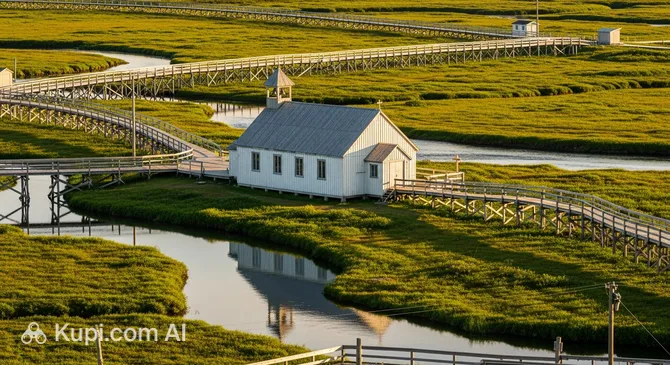
Kwethluk. Source: Kupi.Binoculars

Geographically, the city is located at the confluence of the Kwethluk and Kuskokwim rivers, a setting that defines much of its character and economy. The climate here is typical of the region, featuring long, cold winters and short, mild summers that bring the landscape to life. With a population of approximately 800 residents, the community maintains a close-knit atmosphere where subsistence activities like fishing and berry picking are central to daily existence.

Those interested in the history of Kwethluk will find that archaeological evidence suggests the area has been inhabited since prehistoric times. Today, the village is predominantly inhabited by Yup'ik people who preserve their heritage through language, dance, and art. One of the most prominent landmarks in the village is the St. Nicholas Russian Orthodox Church, a beautiful white wooden structure that serves as a testament to the area's historical influences.

For visitors, the Kwethluk River is a major attraction, offering excellent opportunities for boat travel and fishing, particularly during the salmon runs. The surrounding wilderness provides a serene environment for observing local wildlife and experiencing the vastness of the Alaskan landscape. If you are seeking a destination off the beaten path that offers genuine cultural immersion and untouched natural beauty, Kwethluk is a remarkable place to visit.

Weather Overview

The climate in this region is defined by its subarctic nature, featuring distinct seasonal changes that shape the local lifestyle. Winters are long and dominate the calendar, while summers are short but pleasantly mild. To plan your activities effectively, it is helpful to review the detailed weather in Kwethluk before your journey.

During the coldest months, temperatures drop significantly, requiring heavy thermal gear. January is typically the chilliest time of year, with an average temperature of -13.1°C and lows plunging to -16.2°C. Although the actual precipitation volume is low during winter, often around 1mm to 2mm, travelers should be prepared for consistent freezing conditions.

Conversely, the warmer season brings a lush transformation to the tundra. July stands out as the warmest month, offering average temperatures of 14.2°C and highs that can reach 17.5°C. While the rainfall volume remains modest, peaking at about 3mm in late summer, the frequency of damp weather is notable, with wet days often exceeding 15 days per month from July through October. Generally, you can expect cool to mild summers with frequent light precipitation and cold, relatively dry winters.

Interesting Facts

Beyond the scenic river views and traditional lifestyle, Kwethluk holds several fascinating secrets that reveal the depth of its history and unique adaptation to the Alaskan wilderness. From spiritual icons to unusual modes of transport, this small community is full of surprises for the curious traveler.

  • The "Bad" River: While the name Kuiggluk is often translated simply as "river," it actually carries a more nuanced meaning in the Yup'ik language. It is derived from the word for river (kuik) combined with a suffix meaning "bad" or "unnatural" (-rrluk). This description likely refers to the river's historical tendency to erode its banks and shift channels unpredictably, earning it a reputation as a "dangerous" or "bad" river among early inhabitants.

  • A Modern Saint: Kwethluk is widely revered in the Orthodox Christian world as the home of Saint Olga of Alaska (Matushka Olga). A local Yup'ik midwife and healer who passed away in 1979, she was known for her immense compassion, often knitting mittens for village children and comforting the abused. She was officially glorified (canonized) by the Orthodox Church in America in 2023, making her the first female Orthodox saint of North America.

  • The Reindeer Legacy: In the late 1930s, Kwethluk was a major hub for reindeer herding, a fact that surprises many visitors today. Historical records indicate that in 1939, the villagers collectively owned approximately 31,000 reindeer. These herds were a critical source of food and skins before the industry declined and the community shifted back towards other subsistence activities.

  • Hovercraft Mail Delivery: Due to the challenging river conditions during the "shoulder seasons"—when the ice is too thin for snowmachines but too thick for boats—Kwethluk has been one of the few places in the United States served by a USPS hovercraft. This rare vehicle allows mail and essential supplies to reach the village safely across the treacherous, shifting surfaces of the Kuskokwim and Kwethluk rivers.

How to Get There

Reaching the remote village of Kwethluk requires a bit of planning, as it is located off the main road system of Alaska. Most travelers first make their way to the regional hub of Bethel before continuing their journey to the village. For a complete overview of travel logistics, you can read more about how to get to Kwethluk.

The city of Kwethluk does not have its own major commercial airport, but you can fly into Bethel Airport (BET) in the city of Bethel, which is about 23 km from Kwethluk. This is the primary gateway for the Yukon-Kuskokwim Delta. From here, travel to Kwethluk depends on the season: by boat on the Kuskokwim River in the summer or by ice road in the winter. A transfer or taxi ride, when conditions allow for overland or river travel, takes approximately 55 minutes. Bethel Airport serves as a vital link for the region, handling a significant volume of passengers annually.

Another option in the wider region is Saint Mary's Airport (KSM), located in the city of St Marys, approximately 171 km from Kwethluk. It is crucial to note that there are no roads connecting St Marys to Kwethluk, making ground transport impossible. Travelers arriving at this location would need to book an additional flight to Bethel to reach the village. Saint Mary's Airport is a smaller regional hub compared to Bethel and primarily serves its immediate vicinity.

For clarity, here is a summary of the main airports in the vicinity:

Airport Name City Passenger Traffic Km from City
Bethel Airport Bethel Medium 22.7
Saint Mary's Airport St Marys Small 171.3
Chevak Airport Chevak Small 238.9
Kwigillingok Airport Kwigillingok Small 141.6
Kongiganak Airport Kongiganak Small 123.9

There are no railway stations in Kwethluk or the surrounding area, as the region is not connected to a rail network. Transportation within the Yukon-Kuskokwim Delta is primarily conducted by small aircraft, boats, or snowmachines depending on the time of year. Visitors should coordinate closely with local air carriers or boat charters in Bethel for the final leg of the trip.

Main Attractions

Although Kwethluk is a small and remote village, it offers visitors a profound connection to the history and nature of the Yukon-Kuskokwim Delta. The attractions here are not typical tourist facilities but rather authentic landmarks and natural wonders that define the local way of life. For those venturing to this part of the United States, the experience is centered on cultural heritage and the pristine wilderness.

The most iconic man-made landmark in the village is the St. Nicholas Russian Orthodox Church. Built in 1935, this historic white wooden structure is listed on the National Register of Historic Places and stands as the oldest building in the community. Its rectangular design, reminiscent of a ship, and its modest bell tower symbolize the enduring influence of the Russian Orthodox faith in the region. For visitors, it offers a serene glimpse into the spiritual life of the Yup'ik people, blending indigenous traditions with centuries-old religious customs.

For outdoor enthusiasts, the Kwethluk River is a world-class destination, particularly famous for its multi-day float trips. This tributary of the Kuskokwim is renowned for its crystal-clear waters and exceptional sport fishing opportunities. Anglers travel here to catch a variety of species, including King and Silver salmon, rainbow trout, and Arctic char. The river flows through a stunning wilderness landscape, providing a peaceful environment for rafting and wildlife viewing away from the crowds.

The Kuskokwim River itself serves as the vital artery of the region and is an attraction in its own right. At the confluence where Kwethluk sits, the river dominates the landscape, offering scenic views of the vast tundra. In the summer, it is a bustling highway for boats and barges, while in the winter, it transforms into an "ice road," allowing cars and trucks to drive directly on the frozen surface—a unique travel experience that highlights the adaptability of life in the subarctic.

Local Cuisine

The local cuisine of Kwethluk is a direct reflection of the subsistence lifestyle that defines the Yukon-Kuskokwim Delta. Here, food is not just sustenance; it is a profound connection to the land and the river. Visitors will not find a typical commercial dining scene with menus and waiters. Instead, the gastronomic experience is centered on traditional Yup'ik practices, where ingredients are harvested wild from the tundra and the Kuskokwim River, resulting in meals that are organic, fresh, and deeply culturally significant.

The absolute staple of the local diet is salmon. During the summer runs, families work together to catch and process fish, which sustains the community throughout the long winter. You might taste it in various forms: fresh and baked, smoked, or dried into hard strips known as dried fish or neleq. This jerky-like snack is often dipped in seal oil, a traditional condiment that provides essential fats and warmth in the cold climate. Another beloved delicacy is Akutaq, often called "Eskimo Ice Cream." This unique dish is a whipped mixture of fats (traditionally reindeer or seal fat, though modern recipes often use shortening), sugar, and an abundance of locally picked berries like cloudberries, blueberries, or cranberries. It is a high-energy treat served at almost every celebration.

When it comes to beverages, the culture in Kwethluk is warm and welcoming, usually centered around a hot cup of tea or coffee. A constantly boiling kettle is a fixture in many homes, ready to welcome guests who drop by. It is important for travelers to note that Kwethluk, like many rural Alaskan villages, has strict local laws regarding alcohol. The sale of alcoholic beverages is typically prohibited within the village, and the community focuses on social gatherings where tea and juice are the standard refreshments. Visitors should be respectful of these regulations and the local lifestyle.

For tourists, the "food scene" is informal and based on hospitality rather than commerce. There are no restaurants, cafes, or bars in Kwethluk. Food is prepared in private homes or at the local school, and it is shared communally during festivals, potlatches, and church events. If you are lucky enough to be invited to a community feast, you might also encounter dishes made from wild game, such as moose stew or roasted caribou, often accompanied by fluffy, golden fry bread. For those planning a visit, it is advisable to bring your own basic snacks and provisions from the regional hub of Bethel, while remaining open to the generous sharing culture of your hosts.

Travel Tips

Visiting Kwethluk is a unique adventure that requires a different approach than a typical city vacation, as you are entering a remote community where nature and tradition dictate the pace of life. To ensure a respectful and comfortable experience in this authentic Yup'ik village, a bit of specific preparation is essential before you board your flight or boat.

  1. Clothing and Gear: Functionality is key in the subarctic tundra. Regardless of the season, bring high-quality waterproof rubber boots (often called "Alaskan sneakers"), as the unpaved paths can be muddy. In summer, a head net and strong insect repellent are mandatory to ward off swarms of mosquitoes. If visiting in winter, you need heavy-duty thermal layers, a parka rated for extreme negative temperatures, and insulated gloves. If you plan to attend services at the St. Nicholas Russian Orthodox Church, dress modestly; women are often expected to wear skirts and cover their heads.

  2. Transportation: There are no car rental agencies, taxis, or public buses in Kwethluk. The village is small enough to navigate on foot, which is the best way to soak in the atmosphere. Locals primarily use ATVs (four-wheelers) in the summer and snowmachines in the winter. Getting to and from the village involves a small plane or a boat ride from Bethel, so all travel arrangements should be confirmed in advance with local charters.

  3. Finances: The local currency is the US Dollar (USD). It is highly recommended to carry sufficient cash with you from Bethel or Anchorage. While there is a local general store that may accept cards, internet outages can render card machines useless. There are no banks, and ATM availability can be unreliable. Be prepared for higher prices on goods due to the high cost of freight shipping to rural Alaska.

  4. Health and Safety: Kwethluk has a local clinic staffed by health aides for basic needs, but serious medical emergencies require a medevac to Bethel or Anchorage. Bring a full supply of any personal prescription medications. In terms of safety, be "bear aware" if you venture to the outskirts of the village, and always respect the unpredictable nature of the river currents.

  5. Communication: English is widely spoken, though many residents also speak Yup'ik. Learning a few local words, like Cama-i (hello/welcome) or Quyana (thank you), is a great way to show respect. Mobile phone coverage can be spotty; GCI is the primary provider in rural Alaska, and other carriers may not have service. Wi-Fi is generally not available in public spaces.

  6. Local Etiquette: The community values respect for elders and a humble demeanor. When walking through the village, greet people with a smile or a nod. Always ask for explicit permission before taking photographs of people, their homes, or their subsistence activities (like drying fish). If you are invited into a home, it is customary to remove your shoes at the door.

  7. What to Avoid: Do not bring alcohol into the village. Kwethluk has strict local option laws regarding the possession and sale of alcohol, and it is often a "dry" or "damp" community where importation is restricted. Violating these rules is a serious offense and disrespectful to community efforts to maintain wellness.

  8. Respect "Village Time": Life here does not run by the rigid clock of a city. Weather conditions often delay flights or boats, and events may start later than scheduled. Embrace flexibility and patience; rushing or showing frustration is counterproductive and culturally out of place.

By packing the right gear and approaching your visit with an open heart and a respectful mindset, you will find Kwethluk to be a welcoming and deeply moving destination. These small preparations will allow you to focus on the incredible landscape and the rich cultural heritage of the people who call this riverbank home.

Entertainment & Nightlife

Travelers hoping to find a vibrant scene of nightclubs, cocktail bars, or bustling entertainment districts will find a completely different rhythm in Kwethluk. As a small, traditional village in the Yukon-Kuskokwim Delta, there is no commercial nightlife in the conventional sense. There are no bars, pubs, or dance clubs here, and the community does not have late-night restaurants. Instead, the evening atmosphere is defined by profound tranquility, the vastness of the wilderness, and private community gatherings.

It is crucial for visitors to understand and respect the local regulations regarding alcohol. Kwethluk is typically a "dry" or "damp" community where the sale of alcohol is prohibited, and possession may be strictly regulated or banned entirely. Consequently, you will not find any venues serving drinks. The social "nightlife" for locals revolves around family visits, church activities, and events at the local school, particularly during the basketball season, which acts as a major social hub for the village.

The most spectacular evening entertainment in Kwethluk is provided by nature itself. During the winter months, when the nights are long and dark, the lack of light pollution makes this an exceptional location for viewing the Aurora Borealis (Northern Lights). Stepping outside on a clear night offers a front-row seat to dancing ribbons of green and violet light, a show that rivals any urban laser display. Stargazing is equally impressive, with the Milky Way visible in stunning clarity.

For those looking for daytime or early evening cultural activities, entertainment is informal and outdoors. There are no movie theaters, museums, or amusement parks within the village limits. Visitors often spend their time observing daily village life, walking along the river, or participating in subsistence activities if invited by a local host. The traditional maqi (steam bath) is a central part of evening relaxation for residents, though participation is usually by private invitation only.

When venturing out at night, safety is paramount. The village has limited street lighting, so carrying a high-quality flashlight or headlamp is essential. In the winter, temperatures can drop to dangerous lows, requiring extreme cold-weather gear even for short walks. Additionally, travelers should be vigilant regarding wildlife; bears and moose can wander near or into the village, especially under the cover of darkness. Since there are no taxis or public transport services, all evening movement is done on foot, and it is advisable to stay within the populated areas of the village.

Parks & Museums

In Kwethluk, the concept of parks and museums differs significantly from the manicured gardens and curatorial halls found in major cities. Here, the "parks" are vast, fence-free expanses of subarctic wilderness that surround the village, and the "museums" are the living traditions practiced daily by the residents. Visitors come here not to view artifacts behind glass, but to immerse themselves in a landscape and culture that have thrived for thousands of years.

The entire village is situated within the boundaries of the Yukon Delta National Wildlife Refuge, one of the largest protected conservation areas in the country. There are no gates or ticket booths; instead, you simply step off the boardwalks to enter a sprawling ecosystem of wetlands, tundra, and rivers. This area is a paradise for birdwatchers, as it serves as a critical breeding ground for millions of shorebirds and waterfowl. In the summer, the green expanse is dotted with wildflowers and berries, offering a pristine natural environment for hiking and wildlife photography.

The banks of the Kwethluk River function as the community's central recreational space. Rather than playgrounds or picnic tables, you will find families launching boats, processing fish, or enjoying the cool breeze by the water. In winter, the frozen river becomes a playground for snowmachines and dog sleds. It is the heartbeat of the village, providing a scenic and dynamic setting that changes dramatically with the seasons, offering visitors a raw and unfiltered connection to the Alaskan outdoors.

While there are no formal museums located directly within Kwethluk, the Yugtarvik Regional Museum in the nearby hub of Bethel acts as the cultural repository for the entire Yukon-Kuskokwim Delta. Since most travelers pass through Bethel to reach Kwethluk, a visit here is highly recommended to understand the context of the region. The museum features an impressive collection of traditional Yup'ik clothing, fur parkas, grass baskets, and ivory carvings, providing historical background to the lifestyle you will observe in the village.

Within the village itself, the St. Nicholas Russian Orthodox Church stands as the most significant historical and architectural landmark. Its classic white wooden exterior and distinct onion domes are striking against the rural backdrop. More than just a building, it houses beautiful religious icons and serves as a monument to the 19th-century arrival of Russian missionaries. The church grounds and the adjacent cemetery, with its unique grave markers, offer a poignant look at how indigenous beliefs and Orthodox Christianity have intertwined over generations.

For a truly authentic experience, ask a local guide about the best spots for berry picking on the tundra during late summer. This is not an official tourist attraction, but it is a cherished local pastime. gathering "akutaq berries" (salmonberries, blueberries, or cloudberries) offers a peaceful, meditative way to connect with the land, and the endless horizon provides a sense of solitude that is hard to find anywhere else in the world.

Getting Around

Travelers visiting Kwethluk should be aware that the city does not possess a formal public transport system. Due to its small size and remote location in the Alaskan wilderness, there are no buses, trams, metros, or fixed-route transit services available. The infrastructure here is completely different from a typical urban environment, and visitors should not expect to find scheduled transportation or public transit stops within the village limits.

The primary mode of getting around for visitors is walking. The community is compact, and most key locations, such as the school, the church, and the general store, are accessible on foot. For local residents, personal transport is essential and changes with the seasons: all-terrain vehicles (ATVs or "four-wheelers") are the standard in the summer, while snowmachines (snowmobiles) are the primary vehicles used during the winter months. You will see these parked in front of homes and businesses instead of cars.

Since there is no official transport network, there is no payment system involving travel cards, tickets, or mobile apps. You do not need to worry about validating passes or checking operating hours. However, if you require transport for heavy luggage or travel to the outskirts, you may be able to arrange an informal ride with a local resident. In such cases, transactions are strictly cash-based (USD), and prices should be agreed upon in advance. There are no metered taxis or ride-sharing services like Uber or Lyft.

Practical advice for navigating Kwethluk focuses on gear rather than tickets. Because the "roads" are often unpaved boardwalks or gravel paths that can be muddy in summer and icy in winter, high-quality waterproof rubber boots are the most important "transportation tool" you can bring. If you are walking during the dark winter months, wearing reflective clothing or carrying a flashlight is crucial for safety, as street lighting is minimal and snowmachines move quickly.

While there are no car rental agencies or bike rental schemes in the city, the river itself acts as the main transportation artery. In the summer, boats are the equivalent of cars, ferrying people and supplies along the Kuskokwim and Kwethluk rivers. In winter, the frozen river transforms into an ice highway. Visitors should always treat these routes with caution and never attempt to navigate the river or ice roads without an experienced local guide.

Accommodation

Finding accommodation in Kwethluk requires a different mindset than planning a trip to a typical tourist destination. As a small, traditional Yup'ik village with a population of around 800, there is no commercial accommodation sector within the community itself. You will not find standard hotels, motels, resorts, or hostels here. The village infrastructure is designed primarily for residents, and tourism is not a major industry.

Because of the lack of local lodging, the vast majority of visitors choose to base themselves in the nearby regional hub of Bethel, located approximately 12 miles away. Bethel offers a range of accommodation options, including standard hotels, bed and breakfasts, and guest suites. Staying in Bethel allows travelers to access modern amenities like Wi-Fi and dining while making day trips to Kwethluk by boat in the summer or by ice road in the winter. This is the most convenient and reliable strategy for tourists.

For those who have a specific reason to stay overnight within the village—such as for cultural exchange programs, official business, or visiting family—arrangements are almost always informal. Accommodation might be found in private homestays or, for larger groups, sometimes on the floor of the local school gymnasium, but this requires explicit prior permission from the school district or the tribal council. There are occasional "transient quarters" operated by local organizations, but these are not advertised online and must be booked by contacting the village administration directly.

Booking Tip: If you plan to stay in Bethel, book your room well in advance, especially during the summer months or during major regional events like the Kuskokwim 300 sled dog race, as rooms fill up quickly. If you are hoping to stay in Kwethluk itself, do not just show up. You must contact the Organized Village of Kwethluk or the city office weeks or months ahead of time to ask if any lodging is available and to receive permission to visit.

Regarding prices, travelers should be prepared for higher costs typical of rural Alaska. Accommodation in the region is generally in the mid-to-high price range due to the high cost of operations and limited supply. A standard room in Bethel can cost significantly more than a comparable room in the "Lower 48" states. Payment for formal hotels in Bethel can usually be made via credit card online, but if you manage to secure a homestay or informal lodging in the village, cash (USD) is often the only accepted method.

Nearby Cities

Travelers visiting this part of Alaska often explore the broader Yukon-Kuskokwim Delta, a region defined by its interconnected river communities. Since Kwethluk is a small village without commercial lodging, visitors typically navigate the area from the regional hub of Bethel. Situated just a short distance away, Bethel serves as the economic and transportation center, offering amenities such as the Yugtarvik Regional Museum and a variety of stores that contrast with the quieter village life.

Beyond the main hub, the surrounding area is dotted with other traditional settlements like Akiachak and Napaskiak. These neighboring villages are accessible by boat during the open water season or by ice road in the winter months. Visiting these communities offers a deeper perspective on the subsistence lifestyle along the Kuskokwim River, allowing travelers to observe how different populations adapt to the unique challenges and beauty of the delta environment.

City Population Distance (km)
Bethel 20287 19
Quinhagak 700 121
Kipnuk 700 174
Akiachak 627 11
Napaskiak 500 22

These nearby destinations offer a glimpse into the diverse culture and landscapes of the region.

Shopping & Souvenirs

Shopping in Kwethluk is a strictly functional experience rather than a recreational one. As a small, remote village in rural Alaska, the community does not have a commercial retail sector designed for tourists. The available shopping facilities are limited to providing basic sustenance and essential supplies for the local residents. Visitors should not expect to find boutiques, fashion outlets, or souvenir shops; instead, the "shopping" scene offers a glimpse into the logistical realities of life in the bush, where goods must be flown or barged in at significant cost.

There are no "shopping districts" or bustling high streets in the village. The commercial activity is concentrated entirely around the local general store (often operated by the village corporation). This single establishment serves as the grocery store, hardware store, and supply depot all in one. It is situated in the central part of the village, easily walkable from the school or the riverbank. For a traveler, this is the only place to purchase snacks, drinks, or forgotten personal items, though the selection is limited to non-perishable staples and basic necessities.

Travelers looking for shopping malls will not find them in Kwethluk. The village infrastructure simply does not support large-scale retail. The nearest semblance of a broader shopping experience is in the regional hub of Bethel, and even there, options are limited compared to urban centers. For serious retail needs, residents and visitors alike typically rely on ordering goods from Anchorage or the United States mainland, or they bring everything they need with them before arriving in the village.

Formal markets do not exist in Kwethluk. You will not find weekly farmers' markets or flea markets. However, the concept of trade is alive in a more traditional sense. During community gatherings, festivals, or holidays, there may be informal opportunities where locals sell homemade goods or food items like fry bread. These interactions are sporadic and based on community events rather than a fixed commercial schedule.

Despite the lack of souvenir shops, Kwethluk is an excellent place to acquire authentic Native Alaskan art directly from the artisans. The village is home to skilled craftspeople known for their exquisite work with natural materials. The best "souvenirs" to look for include traditional Yup'ik grass baskets, hand-sewn skin boots (mukluks), intricate beadwork, and ivory or wood carvings. To purchase these, you usually need to ask around the village respectfully or speak with a local host, as sales are conducted privately from homes rather than through a storefront.

Opening hours for the general store are typically limited compared to city standards, often closing by early evening and potentially having reduced hours on Sundays. Payment methods require preparation: while the store may accept credit cards, the internet connection in rural Alaska can be unreliable, rendering card machines useless. It is highly recommended to carry sufficient cash (USD) for all transactions. Additionally, visitors should be prepared for "bush prices"—the cost of everyday items is significantly higher than on the mainland due to expensive freight shipping.

Regarding tax-free shopping, Alaska is unique in that it does not have a state-level sales tax. However, local municipalities often levy their own sales taxes to fund community services. While you will not be charged a state tax, there is no international tax refund system (like VAT refunds) available for tourists in the US. The price you see on the shelf, plus any local village tax, is the final price you pay.

Reached the end of the page?

That means the route is fully explored