Support

Quinhagak

About

Welcome to Quinhagak, a captivating village located in the Yukon-Kuskokwim Delta region of Alaska. Known locally as Kuinerraq, meaning "new river channel," this small community offers a rare glimpse into the authentic lifestyle and rugged beauty of the far north. While it may seem remote compared to the bustling metropolises of the United States, Quinhagak is a place where ancient traditions and stunning wilderness converge, creating an unforgettable atmosphere for adventurous travelers.
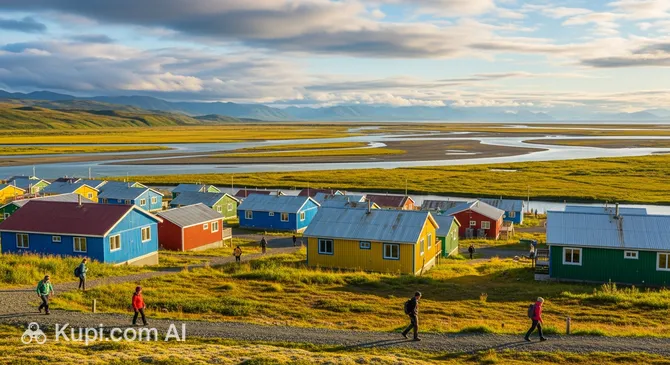
Quinhagak. Source: Kupi.Binoculars

Geographically, the village is situated on the Kanektok River, just a short distance from the Bering Sea coast. The climate here is typical of western Alaska, with maritime influences bringing cool summers and snowy winters. With a population of approximately 700 residents, Quinhagak maintains a close-knit, friendly environment where the subsistence lifestyle remains a vital part of daily existence. The vast, open tundra surrounding the village provides a dramatic backdrop that changes beautifully with the seasons.

One of the most significant aspects of the local heritage is the incredible Nunalleq archaeological site. The history of Quinhagak has been rewritten in recent years by the discovery of thousands of well-preserved Yup'ik artifacts emerging from the melting permafrost. These finds, dating back hundreds of years, are displayed at the local Nunalleq Culture and Archaeology Center, offering visitors a profound connection to the ancestors who first inhabited this land.

For outdoor enthusiasts, Quinhagak is a premier destination for world-class fishing. The Kanektok River is renowned globally for its abundant runs of all five species of Pacific salmon, as well as leopard rainbow trout and Dolly Varden. Whether you are an angler looking for the catch of a lifetime or a culture seeker eager to learn about the enduring Yup'ik way of life, Quinhagak invites you to experience the warmth of its community and the wild splendor of the Alaskan coast.

Weather Overview

The climate in this region is characterized by its subarctic nature and coastal influence, creating a distinct atmosphere that defines the local lifestyle. For travelers preparing for their journey, checking the current weather in Quinhagak is essential for packing the right gear. Generally, the area experiences significant seasonal shifts, though the proximity to the Bering Sea helps moderate the most extreme temperature fluctuations often found further inland.

Winters here are long and cold, with January being the coldest month, featuring an average temperature of -11.1°C and lows that can drop to -13.9°C. As spring arrives, temperatures slowly climb, eventually leading to a cool summer. July is typically the warmest time of year, with average temperatures reaching 13.1°C and highs peaking at roughly 15.8°C. This period is ideal for outdoor activities, though it is never truly hot.

Precipitation is a frequent occurrence throughout the year, characterized by a high number of "wet days" rather than heavy downpours. For instance, months like February and August can see up to 18 days with some form of precipitation, despite relatively low accumulation totals. Expect cool summers with frequent light rain or drizzle and cold winters where snow is common, so bringing waterproof layers is highly recommended.

Interesting Facts

Beyond its reputation as a prime fishing destination, Quinhagak holds fascinating secrets that have recently rewritten the history books of the Arctic. From ancient tragedies preserved in ice to modern architectural innovations, this small village is a place of remarkable discovery and resilience.

  • The "Pompeii of the North": The nearby Nunalleq archaeological site is one of the most significant discoveries in Alaska. It reveals a 17th-century Yup'ik village that was attacked and burned down during the "Bow and Arrow Wars." The tragedy, followed by centuries of freezing, preserved over 100,000 artifacts in the permafrost—including wooden masks, grass baskets, and dolls—in near-perfect condition, offering an unprecedented snapshot of life from 400 years ago.

  • Rewriting Maritime History: Among the treasures found at Nunalleq was a small wooden model of a double-hatch kayak. This discovery stunned experts because it predates Russian arrival in the region, disproving the long-held belief that Russian fur traders introduced this specific kayak design to the indigenous people.

  • A Viral Sensation: Quinhagak gained unexpected internet fame when local youth created a dance video set to the hit song "Feel It Still" by Portugal. The Man. The band, whose lead singer is from Alaska, fully endorsed the tribute. The video not only went viral but also highlighted the community's vibrant spirit and the stunning backdrop of the United States' northern wilderness.

  • The Octagonal House: To combat the brutal subarctic cold and high energy costs, the village became the testing ground for a unique architectural experiment known as the "Quinhagak Prototype." This distinctively shaped, eight-sided house was designed to minimize wind resistance and heat loss, serving as a model for sustainable housing in the Circumpolar North.

How to Get There

Reaching this remote community in the Yukon-Kuskokwim Delta is an adventure in itself, as the village is not connected to the statewide road system. Visitors typically fly into a regional hub before taking a smaller commuter plane to their final destination. You can read more about how to get to Quinhagak and the specific logistics of travel in this part of Alaska below.

The most significant transport hub for travelers heading to Quinhagak is Bethel Airport (IATA: BET). The city of Quinhagak does not have its own major airport capable of handling large jets, so you will likely fly into Bethel Airport in the city of Bethel, which is about 115 km from Quinhagak. This airport serves as the primary lifeline for the region, handling a substantial volume of passengers and freight. While a theoretical journey by road would take approximately 3 hours and 15 minutes based on the distance, it is important to note that there are no roads connecting these communities; transfers are exclusively made via small bush planes.

Another regional option is Dillingham Airport (IATA: DLG), located in the city of Dillingham, roughly 208 km from Quinhagak. Although it is a key airport for Bristol Bay, it is less commonly used as a direct gateway to Quinhagak compared to Bethel. The theoretical travel time by ground would be around 5 hours and 30 minutes, but like Bethel, actual access is dependent on air travel. Dillingham handles a moderate amount of traffic, particularly during the fishing season.

For clarity, here is a summary of the main airports in the vicinity:

Airport Name City Passenger Traffic Km from City
Bethel Airport Bethel Large Regional Hub 114.7
Dillingham Airport Dillingham Medium 208.2
Saint Mary's Airport St Marys Small 268.1
Kwigillingok Airport Kwigillingok Very Small 72.6
Kongiganak Airport Kongiganak Very Small 59.7

The city of Quinhagak does not have a railway station, and there are no train services operating in this remote part of the United States. The rugged terrain of the delta and the lack of infrastructure make rail travel impossible. Visitors should rely entirely on air transport to reach the village, arranging flights from the main hubs mentioned above.

Main Attractions

The cultural and natural highlights of Quinhagak offer a profound connection to both the land and the ancestors who have inhabited it for millennia. While the village is remote, its attractions are world-class, drawing visitors who seek authentic experiences in the United States' far north.

The Nunalleq Culture and Archaeology Center is arguably the most significant cultural stop in the region. It houses tens of thousands of remarkably well-preserved artifacts recovered from the Nunalleq dig site, often called the "Pompeii of the North." Because the items were frozen in permafrost for centuries, materials like wood, grass, and even hair have survived intact. Visitors can see exquisite wooden masks, ivory carvings, and everyday tools that rewrite the history of the Yup'ik people, making it a fascinating destination for anyone interested in indigenous heritage and archaeology.

For anglers, the Kanektok River is a legendary destination known globally as a "fish factory." This scenic river supports healthy runs of all five species of Pacific salmon, but it is perhaps most famous for its resident "leopard" rainbow trout, which are prized for their vivid spotting and fighting spirit. Tourists flock here for multi-day float trips that combine the thrill of sport fishing with the serenity of drifting through the unpopulated Alaskan wilderness, often spotting brown bears and diverse birdlife along the banks.

Travelers seeking a quieter, more intimate wilderness experience often head to the Arolik River. Smaller and clearer than the Kanektok, the Arolik offers a "boutique" fishing experience with strict access limits managed by the local village corporation. This stewardship ensures a pristine environment where anglers can wade through gin-clear water to cast for Arctic grayling and Dolly Varden. It is an ideal spot for those who want to escape the crowds and enjoy the solitude of the vast tundra landscape.

Beyond the riverbanks lies the endless Tundra Wilderness, which is an attraction in its own right. During the summer and early autumn, the landscape comes alive with color and an abundance of wild berries, such as cloudberries (aqpik) and blueberries. Hiking across this sponge-like terrain offers a unique perspective on the local subsistence lifestyle and provides exceptional opportunities for photography and birdwatching, as the delta is a critical habitat for waterfowl nesting in the summer months.

Local Cuisine

The culinary landscape of Quinhagak is defined not by Michelin-starred restaurants, but by the rhythm of the seasons and the bounty of the surrounding wilderness. In this Yup'ik community, food is gathered, hunted, and harvested directly from the land and water, creating a diet that is organic, nutrient-dense, and deeply connected to cultural traditions. For visitors, the local cuisine offers a rare opportunity to taste the authentic flavors of the subarctic, where "farm-to-table" is simply a way of life known as subsistence.

The undisputed star of the local diet is salmon, harvested fresh from the Kanektok and Arolik rivers. You simply cannot visit this region without trying it in its many forms. While fresh grilled or baked salmon is a staple during the summer runs, the smoked varieties are a true delicacy. Local families expertly cure and smoke the fish in smokehouses, producing smoked salmon strips that are savory, chewy, and rich in flavor. Another traditional preparation involves drying the fish to preserve it for the long winter, a technique that concentrates the taste and provides essential sustenance.

For a unique local treat, adventurous travelers should seek out Akutaq, widely known as "Eskimo ice cream." This traditional dish is a high-energy mixture historically made from whipped animal fats (such as seal oil or reindeer fat) and snow, though modern versions often incorporate vegetable shortening. It is studded with an abundance of locally picked berries, particularly the prized cloudberries (known locally as aqpik), blueberries, or crowberries. It is a sweet, fluffy, and hearty dish often served at community gatherings and celebrations.

When it comes to beverages, the culture in Quinhagak revolves around warmth and community. Hot tea and coffee are ubiquitous, serving as essential comforts against the chill of the Alaskan coast. You will find that a steaming cup is the standard gesture of hospitality in any home or camp. As for alcohol, it is important for tourists to be aware that many villages in rural Alaska have strict regulations regarding the sale and possession of alcoholic beverages. Travelers should check current local laws before arrival, but generally, the focus here is on hot, non-alcoholic drinks that keep you warm on the tundra.

Dining out in Quinhagak does not follow the typical tourist model. There are no bustling food courts or street food markets; instead, the "food scene" is centered around fishing lodges and the local general store. Most visitors are anglers staying at all-inclusive camps where hearty meals are prepared to fuel long days on the river. However, independent travelers can find basic supplies at the village store. The most memorable dining experiences often happen through invitations to a local home, where the spirit of sharing the catch highlights the community's generous nature.

Travel Tips

Visiting Quinhagak is a unique adventure that takes you far off the beaten path, so being well-prepared is the key to enjoying this remote Yup'ik community to the fullest. These practical tips will help you navigate the logistics of rural Alaska while respecting the local culture and environment.

  1. Clothing and Gear: The weather on the Bering Sea coast can be unpredictable, changing from sunshine to cold rain in minutes. Dress in synthetic layers (avoid cotton) and bring a high-quality, windproof, and waterproof outer shell. Sturdy, waterproof rubber boots—often called "Alaskan sneakers"—are essential for navigating muddy roads and riverbanks. Since summer temperatures rarely exceed 15°C, always pack a warm hat and gloves.

  2. Transportation: There is no public transport, metro, or taxi service in Quinhagak. The village is small and compact, making walking the primary way for visitors to get around. Locals typically travel by ATV (four-wheeler) in the summer and snowmachine in the winter. You will not need a rental car, as there are no roads connecting the village to the outside world, and rentals are not available locally.

  3. Finances: The local currency is the US Dollar (USD). While the main general store may accept credit cards, systems can go down due to internet connectivity issues. It is highly recommended to bring enough cash to cover your entire stay, including tips for guides and small purchases. There are no full-service banks, and relying on a single ATM in a remote village is risky.

  4. Health and Safety: Medical facilities are limited to a local clinic staffed by health aides; for serious emergencies, a weather-dependent medevac flight to Bethel or Anchorage is required. Always carry travel insurance that covers medical evacuation. Be "bear aware" when hiking or fishing outside the village—carrying bear spray and knowing how to use it is a standard safety precaution in this wilderness area.

  5. Communication: English is widely spoken, though Yup'ik is the first language for many elders. Mobile coverage in rural Alaska is often limited to specific carriers like GCI; if you use a different provider, you may not have service. Wi-Fi availability is scarce and speeds are generally slow, so prepare to be largely disconnected and download any necessary maps or documents beforehand.

  6. Local Etiquette: The community is warm and welcoming, but it is important to respect privacy. Always ask for permission before photographing locals, their children, or their property, including fish drying racks and subsistence camps. A friendly greeting goes a long way; try saying "Cama-i" (pronounced cha-mai), which is a traditional Yup'ik greeting meaning "hello" or "good to see you."

  7. What to Avoid: Do not bring alcohol into the village without strictly verifying the current local laws. Quinhagak has historically been a "dry" community, meaning the sale, importation, and possession of alcohol are banned. Violating these laws is a serious offense and is culturally insensitive. It is best to embrace the sober lifestyle of the village during your stay.

  8. Insect Protection: If you are visiting during the summer months, specifically June through August, be prepared for mosquitoes and biting gnats (no-see-ums). They can be intense on the tundra and near the river. A head net and a high-quality insect repellent containing DEET are not just recommended—they are virtually mandatory for your comfort.

By packing the right gear and approaching your visit with an open heart and respect for local traditions, you will find Quinhagak to be a deeply rewarding destination. Embrace the slower pace of life, breathe in the fresh Arctic air, and enjoy the incredible hospitality of the Yukon-Kuskokwim Delta.

Entertainment & Nightlife

Travelers arriving in Quinhagak expecting a vibrant urban nightlife scene with pulsing nightclubs, cocktail bars, or late-night discos will find a very different kind of evening entertainment. As a small, traditional Yup'ik village and a designated "dry" community, there are no bars, liquor stores, or pubs here. The sale and importation of alcohol are prohibited, meaning the "nightlife" is completely devoid of the party atmosphere found in larger cities. Instead, the evenings are defined by the rhythms of nature, community gatherings, and the profound silence of the subarctic wilderness.

In place of neon lights, visitors during the darker months (late August through April) are treated to one of the most spectacular light shows on Earth: the Aurora Borealis. Quinhagak's location, far from the light pollution of major metropolises, makes it a prime "venue" for viewing the Northern Lights. The best places to watch are simply the open areas on the edge of the village or along the banks of the Kanektok River, where the expansive sky offers an unobstructed view of dancing green and violet ribbons. The "dress code" for this event is strictly functional: heavy parkas, insulated boots, and thermal layers are mandatory to survive the freezing temperatures while you gaze upward.

During the summer months, the concept of "night" effectively disappears due to the Midnight Sun. In June and July, the sun barely dips below the horizon, creating a twilight that lasts for hours. This allows for a unique form of evening entertainment: fishing at 2:00 AM. Anglers often stay out on the river late into the "night," enjoying the surreal experience of casting lines under bright skies while the rest of the world sleeps. It is a peaceful, energizing atmosphere where the only sounds are the flowing water and the calls of migratory birds.

Social life in the village revolves around community centers rather than commercial entertainment districts. The local Bingo nights are a major social event in rural Alaska and a favorite pastime for residents. Held at the community hall or the school gym, these gatherings are welcoming and offer a genuine glimpse into local life. If you are lucky enough to be invited or if a public game is scheduled, it is a great way to meet locals in a warm, safe environment. Cash is typically required to play, and the atmosphere is friendly but focused.

When it comes to safety and logistics at night, Quinhagak is generally very safe regarding crime, but the environment poses real risks. There are no taxis or ride-sharing services; you will be walking back to your lodge or host home. In the winter, the extreme cold is a deadly hazard, so never walk alone without proper gear. In the summer, the main concern during evening walks is wildlife. Brown bears are active in the area, especially near the river and fish drying racks, so carrying bear spray and staying alert is essential, even within the village perimeter.

While evening options are limited to nature and community, daytime entertainment offers a bit more structure. The cultural highlight is the Nunalleq Culture and Archaeology Center, where you can view artifacts from the region's history. Beyond that, the "amusement park" of Quinhagak is the tundra itself—perfect for berry picking, hiking, and photography before the sun (eventually) sets.

Parks & Museums

In a remote village like Quinhagak, the concept of "parks and museums" takes on a different meaning compared to urban destinations. You will not find manicured gardens or sprawling gallery districts here. Instead, the village is surrounded by a boundless natural wilderness that serves as a playground for outdoor recreation, while its cultural heritage is preserved in a world-class archaeological center that has garnered global attention. The connection between the land and the local Yup'ik culture is seamless, offering visitors an immersive experience in both nature and history.

The primary "green space" for the community is the magnificent Kanektok River. While it is world-famous for fishing, it also functions as the village's central park for recreation. During the warmer months, the riverbanks are bustling with activity, from families launching boats to children playing near the water. The river corridor offers a pristine environment for wildlife viewing, where you can spot eagles, beavers, and occasionally brown bears in their natural habitat. It is a place of serene beauty that changes daily with the light and the seasons.

Another significant natural area is the Bering Sea Coast and the surrounding tundra. This vast, treeless landscape functions as a communal garden during the harvest season. The "beach" here is rugged and wild, often strewn with driftwood and offering unobstructed views of the horizon. Walking along the coast provides a sense of solitude and scale that is hard to find elsewhere. The tundra itself is a soft, sponge-like terrain that hosts an incredible variety of wildflowers and berries in the summer, serving as a natural sanctuary for migratory birds.

The cultural crown jewel of the village is the Nunalleq Culture and Archaeology Center. This facility is far more than a typical small-town museum; it is the repository for one of the most significant archaeological finds in the Arctic. The center houses a staggering collection of artifacts recovered from the nearby Nunalleq dig site, a 17th-century village preserved in permafrost. Visitors can view intricately carved wooden masks, ivory tools, dolls, and woven grass baskets that look as new as the day they were made 400 years ago. The center tells the story of the "Bow and Arrow Wars" and connects the ancient past directly to the living descendants in the village today.

While there are no other formal museums, the Nunalleq Archaeological Site itself is a point of immense historical interest. Located outside the main village along the eroding coastline, this active dig site (when researchers are present) has redefined the understanding of Yup'ik history. Although access may be restricted depending on erosion and scientific work, knowing that the ground beneath this region holds such well-preserved secrets adds a layer of profound historical significance to the entire area. The site is a testament to the resilience of the people and the preserving power of the ice.

From an architectural perspective, the Quinhagak Prototype House stands out as a modern landmark. This distinct, eight-sided building was developed to test sustainable housing solutions for the harsh subarctic climate. Its octagonal shape is designed to deflect the brutal winter winds and minimize snow drifting. While it is a private residence or functional building rather than a public museum, its unique silhouette is a highlight for those interested in cold-climate architecture and engineering.

For a truly authentic local experience, treat the tundra as an interactive botanical garden. Ask a local guide to show you the best spots for berry picking in late summer. Gathering aqpik (cloudberries) or blueberries is not just a leisure activity; it is a cultural tradition. Sitting on the soft moss, surrounded by the silence of the delta while harvesting nature's bounty, offers a peaceful and grounding connection to the land that no city park can replicate.

Getting Around

Travelers planning a visit to Quinhagak should be aware that the city does not possess a public transport system in the traditional sense. Due to its small size and remote location in the Yukon-Kuskokwim Delta, there are no buses, trams, metros, or trolleybuses operating within the village. The infrastructure is designed for a close-knit community where distances are short, and the terrain often dictates the mode of travel. Consequently, you will not find ticket machines, travel passes, or transport apps here.

The primary way for visitors to navigate the village is simply by walking. Quinhagak is compact, with most key locations—such as the general store, the clinic, and the airstrip—located within a reasonable distance of one another. The "streets" are a mix of gravel roads and boardwalks designed to float above the tundra and mud. Practical advice for tourists is to prioritize footwear over travel cards; sturdy, waterproof rubber boots are essential for getting around comfortably, especially during the rainy season or spring thaw.

While there are no taxis or ride-sharing services like Uber or Lyft, the local "traffic" consists almost entirely of all-terrain vehicles (ATVs) in the summer and snowmachines (snowmobiles) in the winter. These are privately owned vehicles used by residents for everything from grocery runs to hunting trips. Tourists generally do not rent these machines, but you will share the roads with them. It is important to stay alert when walking, as these vehicles are the lifeblood of local mobility.

For those arriving for fishing expeditions, transportation is typically pre-arranged by your host or lodge. Most fishing lodges provide shuttle services from the airstrip to their camps using heavy-duty vans or trucks adapted for the rugged conditions. Once at the lodge, the primary mode of transport shifts to boats. The river serves as the main highway for accessing fishing spots and exploring the wilderness, with jet boats being the standard vehicle for navigating the shallow channels of the delta.

Since there is no commercial public transport sector, there are no tickets to validate or operating hours to track. If you have a specific need to transport heavy gear or travel a longer distance within the village, you may be able to arrange an informal ride with a local resident or lodge staff, but this is done on a case-by-case basis rather than through a structured service. In this unique corner of the world, mobility is defined by the river, the weather, and the community's resourcefulness rather than by bus schedules.

Accommodation

Finding accommodation in Quinhagak requires a shift in expectations, as the options here are vastly different from a typical tourist destination. There are no standard chain hotels, roadside motels, or budget hostels in the village. Instead, the accommodation sector is almost entirely built around the world-class sport fishing industry. For the majority of visitors, "where to stay" is synonymous with one of the seasonal fishing lodges or tent camps that operate along the riverbanks during the summer months.

These lodges are generally all-inclusive facilities designed to provide a comfortable base for anglers in the rugged wilderness. They typically offer package deals that include not only the room (which can range from a sturdy weather-port tent to a wooden cabin) but also all meals, guided boat trips, and equipment. Because these camps are focused on access to the fish, they are strategically located along the Kanektok River, often just outside the main village or a short boat ride away. Staying here immerses you completely in the rhythm of the river and the surrounding tundra.

For independent travelers, contractors, or those not visiting for a fishing expedition, options are extremely limited and can be difficult to secure without local contacts. There may be a small number of rooms available for rent through the local village corporation or a simple bed-and-breakfast style arrangement in a private home, but these are not advertised on major booking platforms. It is often necessary to call the tribal office or the city office directly to inquire about availability for non-fishing stays.

Booking in advance is not just a tip; it is a necessity. The fishing season (roughly June to August) is short, and lodges are often fully booked up to a year in advance by returning guests. If you plan to visit, you should arrange your accommodation months before you even purchase your flights. Do not arrive in Quinhagak without a confirmed place to stay, as there is no "backup" hotel to walk into.

Regarding costs, visitors should be prepared for a high price range. The logistics of operating in a remote fly-in community drive up prices significantly. A week at a fishing lodge is a premium experience that typically costs thousands of dollars per person. Even basic rentals for independent travelers can be surprisingly expensive compared to mainland prices due to the high cost of energy and supplies in rural Alaska. Payment methods also vary; while lodges often accept cards and transfers, smaller local rentals may prefer cash or checks.

Nearby Cities

Nearby Cities:

When exploring the map around Quinhagak, the concept of "nearby" takes on a unique meaning typical of rural Alaska. In this vast, roadless region of the Yukon-Kuskokwim Delta, neighboring communities are not connected by highways but by the intricate network of rivers and the open sky. While the distances may seem short on paper, travel between these settlements is exclusively conducted by bush plane or boat, making each village a distinct island of culture and activity amidst the wilderness.

The most significant urban center in the vicinity is Bethel, located approximately 117 km away. As the regional hub, Bethel serves as the economic and transportation lifeline for Quinhagak and dozens of other smaller villages. It is where residents go for major medical services, shopping, and connecting flights to Anchorage. With a population of over 20,000, it stands in stark contrast to the quiet, subsistence-focused lifestyle of the surrounding settlements.

Other neighboring communities, such as Togiak and Kwethluk, share much in common with Quinhagak. These villages are deeply rooted in the Yup'ik tradition, relying heavily on fishing and hunting. Kipnuk, situated closer to the coast, and Akiachak, located further inland near the Kuskokwim River, are also part of this close-knit regional network. Visiting these places offers a broader perspective on life in the delta, where community ties remain strong despite the physical separation.

Here is a breakdown of the closest cities and villages to Quinhagak, along with their distances and population sizes:

City Distance (km) Population
Bethel 117 20,287
Togiak 116 800
Kwethluk 121 800
Kipnuk 122 700
Akiachak 132 627

Travelers should keep in mind that these distances represent direct air routes. Since there are no connecting roads, planning a visit to any of these neighboring locations requires chartering a flight or booking a seat on a scheduled commuter plane.

Shopping & Souvenirs

Shopping in Quinhagak is a unique experience that reflects the practical and subsistence-based lifestyle of rural Alaska. Unlike typical tourist destinations filled with boutiques and souvenir shops, the retail scene here is small, functional, and driven by necessity. Visitors should not expect a recreational shopping spree but rather a glimpse into how a remote community sustains itself. The available stores focus primarily on groceries, hardware, and outdoor gear essential for life on the delta, though fortunate travelers may find opportunities to purchase authentic local crafts directly from artisans.

There are no designated shopping districts or bustling high streets in the village. The commercial activity is concentrated around the main General Store, which serves as the lifeline for the community. This all-purpose retailer stocks everything from fresh produce flown in by plane to fishing tackle, warm clothing, and household supplies. For a tourist, a visit here is fascinating simply to see the logistics of the supply chain in the bush, where a gallon of milk or a bag of chips has traveled hundreds of miles to reach the shelf.

Travelers looking for shopping malls, department stores, or fashion outlets will not find them in Quinhagak. The village infrastructure is designed for a population of roughly 700 people, and the concept of a mall does not exist here. The nearest large-scale retail experiences are a plane ride away in Bethel or, more likely, in Anchorage. The absence of commercial chains adds to the village's charm, allowing visitors to disconnect from consumer culture.

While there are no formal flea markets or bazaars, the informal market for native arts is vibrant if you know where to look. Local commerce often happens through word of mouth, community notices, or at the tribal council building. During holidays or community gatherings, pop-up sales may occur where residents sell homemade foods, baked goods, and handcrafted items. Engaging with locals is the best way to find out if anyone is selling goods during your stay.

The most prized purchases in Quinhagak are authentic Yup'ik handicrafts. The region is renowned for its skilled artisans who create exquisite works from natural materials. Look for Qaspeqs (kuspuks), the traditional hooded tunics made from colorful cotton or calico, which are both beautiful and practical. Other potential treasures include hand-woven grass baskets, intricate beadwork, and carvings made from bone or antler. Buying these items directly from the artists not only provides you with a meaningful souvenir but also supports the local economy and cultural preservation.

Opening hours for the local store are generally standard, typically operating from morning until early evening, Monday through Saturday. However, hours can be unpredictable and may change based on staffing or weather conditions. It is common for businesses to close for a lunch break. Regarding payment, cash is king. While the general store may accept credit cards, internet outages can render card machines useless. It is highly recommended to bring sufficient US dollars to cover all your potential purchases, especially if buying crafts from individuals who likely do not have card readers.

One of the financial benefits of shopping in this region is the lack of state sales tax. The United States allows states to set their own tax policies, and Alaska is one of the few that does not levy a state-level sales tax. However, local municipalities may impose their own small sales taxes to fund community services. Even so, the overall cost of goods is higher than on the mainland due to the expensive air freight required to transport items to the village.

Reached the end of the page?

That means the route is fully explored