Support

Cape Newenham

About

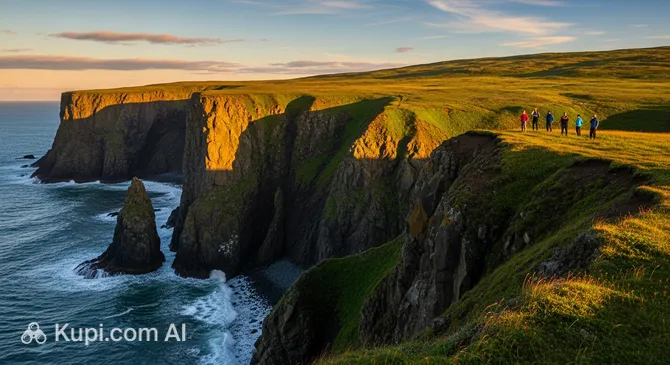
Cape Newenham is a rugged and spectacular headland located on the southwest coast of Alaska. Far removed from the hustle and bustle of urban life, this remote destination offers an unparalleled glimpse into the wild beauty of the United States. It serves as a critical habitat for marine wildlife and seabirds, making it a significant spot for nature enthusiasts and researchers alike.

Cape Newenham. Source: Kupi.Binoculars

Geographically, the cape marks the separation point between Bristol Bay and Kuskokwim Bay. The area is characterized by steep cliffs and tundra landscapes, often shrouded in the dramatic mists typical of the Bering Sea coast. While not a traditional city with a large permanent population, the area is known for its strategic importance and the nearby Long Range Radar Station. You can learn more about the discovery and past of this fascinating region by exploring the history of Cape Newenham.

Visitors who venture to this isolated corner of the world are treated to some of the most impressive wildlife spectacles in Alaska. The cliffs are home to massive colonies of nesting seabirds, including kittiwakes and murres, while the waters below often teem with walruses and seals. For those seeking true solitude and a connection with pristine nature, Cape Newenham offers a unique and unforgettable adventure.

Weather Overview

The climate in Cape Newenham is typical of the rugged Alaskan coast, characterized by cold winters and cool, fresh summers. January is generally the coldest month, with average temperatures dropping to -6.9°C, while August brings the warmest weather, averaging around 11.5°C. Travelers should generally expect cool conditions throughout the year, with temperatures rarely exceeding 13°C even during the peak of summer.

Precipitation in the region is frequent but usually light in volume, with monthly totals typically staying between 2mm and 5mm. However, the number of wet days is quite high, peaking in October with approximately 21 days of precipitation. To help you pack appropriate gear for these conditions, it is recommended to check the specific weather in Cape Newenham before your journey.

Interesting Facts

Beyond the dramatic scenery and wildlife, Cape Newenham holds intriguing historical and ecological distinctions that few visitors are aware of. From its connections to legendary explorers to its role in strategic defense, this headland tells a story far bigger than its remote location suggests.

  • A Captain Cook Discovery: The cape was named by the renowned explorer Captain James Cook on July 16, 1778. He bestowed the name to honor Sir Edward Newenham, a prominent Irish politician of the time, marking the area on Western maps for the first time during his search for the Northwest Passage.

  • A National Natural Landmark: In 1980, Cape Newenham was designated as a National Natural Landmark, a prestigious title that highlights its biological importance. It is recognized for supporting one of the largest nesting colonies of seabirds on the mainland of the United States, with populations often exceeding one million birds.

  • Cold War Sentinel: The area has a significant military history, hosting a Long Range Radar Station established in the early 1950s. It was a key site in the White Alice Communications System, a network of tropospheric scatter links built to ensure communication across Alaska during the Cold War era.

How to Get There

Reaching Cape Newenham requires careful planning due to its remote location on the Alaskan coast. This destination is far from major urban centers, and travelers should be prepared for a journey that typically involves multiple stages of transport. For a detailed breakdown of routes and logistics, you can read more about how to get to Cape Newenham.

The area does not have its own commercial airport, but you can fly into Bethel Airport (BET) in the city of Bethel, which is the primary regional hub for this part of Alaska. It is located approximately 238 km from Cape Newenham. Another significant option is Dillingham Airport (DLG) in Dillingham, situated about 216 km away. It is important to note that there are no roads connecting these airports to the cape. Consequently, travel from these hubs generally requires arranging specialized charter flights or boat transfers to navigate the rugged terrain and coastal waters.

For clarity, here is a summary of the main airports in the wider region:

Airport Name City Passenger Traffic Distance (km)
Bethel Airport Bethel Medium 238.0
Dillingham Airport Dillingham Small 215.8
Kwigillingok Airport Kwigillingok Small 148.3
Egegik Airport Egegik Small 285.0
Kongiganak Airport Kongiganak Small 151.7

Cape Newenham is not accessible by rail, as there are no railway lines extending to this remote part of the United States. Visitors relying on public transport will find that air travel to the nearest regional hubs, followed by pre-arranged local charters, is the only practical way to reach the area. It is highly recommended to organize all connections well in advance to ensure a smooth journey.

Main Attractions

Cape Newenham is a destination defined by its raw, untouched wilderness rather than urban landmarks. The primary draw for visitors is the Cape Newenham State Game Refuge, a protected area established to preserve the region's rich biological diversity. This refuge is a haven for wildlife enthusiasts, offering a chance to observe nature in its most primitive state. It encompasses a variety of habitats, from rocky coastal cliffs to rolling tundra, providing critical sanctuary for numerous species that thrive in this remote environment.

One of the most spectacular features of the area is its massive seabird colonies. The steep, rugged cliffs of the cape serve as nesting grounds for more than a million marine birds, making it one of the largest colonies on the mainland of the United States. During the summer months, the air is filled with the calls of kittiwakes, murres, and puffins, creating a mesmerizing natural spectacle. For birdwatchers and photographers, the sight of thousands of birds clinging to the precipitous rock faces is an unforgettable experience.

Adjacent to the cape lies the vast Togiak National Wildlife Refuge, which offers broader opportunities for exploration. This expansive wilderness is renowned for its dramatic landscapes, including the Ahklun Mountains and pristine river systems. Visitors who venture into this area can experience world-class fishing for salmon and trout, or simply hike through a terrain that has remained largely unchanged for centuries. The refuge also supports a healthy population of brown bears, caribou, and wolves, adding to the thrill of a backcountry adventure.

Another significant point of interest is Chagvan Bay, located just north of the cape. This shallow estuary is known for its extensive eelgrass beds, which attract large numbers of waterfowl and shorebirds. The name "Chagvan" translates to "briskly flowing water" in the local Yup'ik language, referring to the strong tidal currents that shape the bay. It is an excellent spot for observing marine life and understanding the complex coastal ecosystems of the Bering Sea.

Finally, the coastal waters surrounding Cape Newenham are a prime location for marine wildlife viewing. The beaches and rocky outcrops often serve as haul-out sites for Pacific walruses and harbor seals. Seeing these massive marine mammals in their natural habitat is a highlight for many visitors. Whether observing from a boat or a safe distance on land, the abundance of marine life underscores the ecological importance of this unique Alaskan headland.

Local Cuisine

Because Cape Newenham is a remote wilderness area and a protected wildlife refuge rather than a developed city, you will not find a bustling culinary scene with restaurants, cafes, or street food markets here. The "dining experience" in this rugged part of Alaska is defined by expedition-style eating, where food is often strictly functional, or by the incredible freshness of locally sourced ingredients prepared at wilderness lodges or campsites. For visitors, the culinary highlight is undoubtedly the opportunity to taste the pristine bounty of the Bering Sea and the surrounding tundra.

The undisputed star of the regional diet is Wild Alaskan Salmon. The nearby waters of Bristol Bay and the Togiak River support some of the world's largest salmon runs. Whether it is rich Sockeye (Red) or the massive Chinook (King), salmon here is often enjoyed fresh-caught and grilled over an open fire, or prepared as smoked salmon strips, a chewy, savory snack that is perfect for long days of hiking. Another local staple in the wider region is Halibut, a white fish prized for its firm texture and mild flavor, often served battered or simply pan-seared.

For a taste of indigenous culture, adventurous eaters might encounter Akutaq, also known as "Eskimo Ice Cream." This traditional dish is not ice cream in the dairy sense but a high-energy mixture of whipped fat (traditionally seal or reindeer fat, though modern versions often use vegetable shortening) mixed with sugar and an abundance of local berries like cloudberries (aqpik) or blueberries. It is a testament to the resourcefulness of the local people and provides the necessary calories to withstand the cold climate.

When it comes to beverages, the focus is on staying warm. Hot coffee and strong tea are the drinks of choice for anyone navigating the misty cliffs and cool winds of the cape. While there are no bars on the headland, travelers passing through regional hubs like Dillingham or Bethel might sample Alaskan craft beers, which are popular throughout the state. Amber ales and stouts are particularly favored for their hearty character. Ultimately, the food culture here is one of self-sufficiency and connection to the land, where a meal is often a reward earned after a day of exploration.

Travel Tips

Planning a trip to Cape Newenham requires preparation far beyond the standard vacation checklist, as this remote Alaskan headland offers a true wilderness experience without the conveniences of modern urban life. To help you navigate this rugged and isolated terrain safely and comfortably, here are some essential practical tips for your expedition.

  1. Clothing and Gear: The weather on the Bering Sea coast is unpredictable and often harsh, so dressing in layers is non-negotiable. Base layers should be wool or synthetic (never cotton), followed by insulating fleece and a high-quality, waterproof and windproof shell. Sturdy, waterproof hiking boots are essential for the uneven tundra and rocky cliffs. Don't forget a warm hat and gloves, even in summer, and bring binoculars to fully appreciate the vast seabird colonies.
  2. Transportation: There are no roads, taxis, or public transport systems leading to or within Cape Newenham. Access is exclusively via small bush planes or boat charters from regional hubs like Bethel or Dillingham. You must arrange all travel logistics well in advance with specialized air taxi operators. Be prepared for delays due to weather, as flights into this region are highly dependent on visibility and wind conditions.
  3. Finances: Once you leave the hub cities, the concept of commerce effectively disappears; there are no shops, ATMs, or card terminals on the cape. You should carry sufficient US Dollars in cash to cover expenses in the gateway towns before your departure. Ensure all your charter flights and guide fees are fully paid or arranged beforehand, as you will be completely off the financial grid upon arrival.
  4. Health and Safety: You will be miles from the nearest hospital or pharmacy, so self-sufficiency is critical. Bring a comprehensive first aid kit and an ample supply of any personal medications. Since this is bear country, carrying bear spray and knowing how to use it is mandatory for your safety. It is also highly recommended to purchase medical evacuation insurance in case of emergencies.
  5. Communication: Do not expect any cellular service or Wi-Fi access in Cape Newenham. The only reliable way to communicate with the outside world is via satellite phone or a satellite messenger device (like an inReach or SPOT). These are vital for coordinating pickups with your pilot or calling for help in an emergency. Download offline maps and GPS data before you leave civilization.
  6. Local Etiquette: The primary rule here is "Leave No Trace." You are a guest in a pristine ecosystem; pack out absolutely all trash and waste. When observing wildlife, especially the massive walrus haul-outs and nesting seabirds, maintain a respectful distance to avoid causing stress or stampedes. Silence and patience are the best ways to interact with nature here.
  7. What to Avoid: Avoid underestimating the rapid changes in weather. A sunny morning can turn into a dense, freezing fog in minutes, disorienting hikers. Never venture far from your camp or landing zone without navigation tools and survival gear. Additionally, avoid walking near the edge of unstable cliffs, as the rock can be loose and the drop-offs are severe.
  8. Permits and Regulations: Since much of the area falls within the Togiak National Wildlife Refuge and the Cape Newenham State Game Refuge, specific permits may be required for camping or commercial photography. Check with the United States Fish and Wildlife Service or local authorities before your trip to ensure you are compliant with all regulations regarding land use and access.

Visiting Cape Newenham is a serious undertaking that rewards the adventurous with sights few others will ever see. By packing the right gear, respecting the extreme environment, and planning for total self-reliance, you ensure that your journey to this wild edge of the continent remains a safe and awe-inspiring memory.

Entertainment & Nightlife

Entertainment and nightlife in Cape Newenham are defined not by bustling streets or neon-lit clubs, but by the profound silence and majestic light shows of the natural world. Since this is a remote, uninhabited wilderness area with no commercial infrastructure, you will not find any bars, nightclubs, or concert venues here. There are no nightlife districts or paved streets; the "evening crowd" consists of colonies of seabirds returning to the cliffs and marine mammals hauling out on the rocky shores.

The true "nightlife" in this part of Alaska is atmospheric in the most literal sense. During the late autumn and winter months, the dark skies become a canvas for the Aurora Borealis (Northern Lights). Watching these emerald and violet ribbons dance across the starry expanse is a mesmerizing experience that rivals any urban light show. Conversely, in the height of summer, the phenomenon of the Midnight Sun means the sun barely sets, allowing for "evening" activities like hiking or wildlife photography to continue well into the early morning hours under a twilight glow.

For visitors camping in the region, entertainment revolves around the campfire (where permitted) and the camaraderie of your expedition group. The atmosphere is one of rugged isolation and tranquility. Practical advice for enjoying the evenings here includes dressing in heavy thermal layers, as temperatures drop significantly at night, and keeping a strict "clean camp" to ensure safety in bear country. Since there are no taxis or public transport, your ability to "get around" at night is limited to how far you can safely walk with a headlamp and GPS from your tent.

While there are no traditional cultural institutions like theaters or amusement parks, the landscape itself serves as a living museum. Daytime entertainment is purely expeditionary: exploring the Cape Newenham State Game Refuge offers a front-row seat to one of nature's greatest dramas, while the adjacent Togiak National Wildlife Refuge provides endless opportunities for trekking and fishing. For travelers seeking a drink or a warm meal in a social setting, the nearest options are hundreds of kilometers away in the regional hubs of Bethel or Dillingham, which serve as the jumping-off points for these wilderness adventures.

Parks & Museums

Cape Newenham is not a traditional city with manicured public gardens or brick-and-mortar cultural institutions; rather, it is a pristine wilderness area where the "parks" are vast, federally protected refuges and the "museums" are the living landscapes of the Bering Sea coast. For visitors, the appeal lies entirely in exploring these untouched natural spaces and witnessing the historical remnants of human activity in an otherwise wild environment.

The crown jewel of the area is the Cape Newenham State Game Refuge. Established to protect the massive wildlife populations that congregate here, this refuge is one of the most significant natural areas in Alaska. It encompasses the rugged peninsula itself, featuring dramatic cliffs that rise sharply from the ocean. These cliffs serve as a critical habitat for over a million nesting seabirds, offering a natural spectacle that rivals any biological exhibit. Visitors here can observe the raw power of nature, from the crashing waves below to the dense colonies of kittiwakes and murres above.

Adjoining the cape is the expansive Togiak National Wildlife Refuge, a breathtaking expanse of mountains, rivers, and tundra that stretches far inland. While not a park in the urban sense, it offers an unparalleled "green space" for hiking, river floating, and wildlife photography. The refuge is home to brown bears, caribou, and wolves, providing a window into the ecosystems that have dominated this region for millennia. The terrain ranges from the jagged peaks of the Ahklun Mountains to coastal lagoons, making it a diverse area for exploration.

Regarding cultural institutions, travelers should be aware that there are no museums or art galleries located within Cape Newenham itself. The area is uninhabited and lacks the infrastructure for such facilities. The nearest cultural centers, which showcase the rich heritage of the Yup'ik people and the history of the region, are located in the gateway hub of Bethel, hundreds of kilometers away. In Cape Newenham, the culture is embedded in the land and the traditional subsistence practices that continue in the wider region.

Despite the lack of museums, the area possesses significant historical intrigue, most notably the Cape Newenham Long Range Radar Station. Built during the Cold War as part of the White Alice Communications System, this facility stands as a silent sentinel on the landscape. While it is not a tourist attraction open for guided tours, its presence is a stark reminder of the area's strategic importance in global history. The stark contrast between the industrial radar domes and the surrounding wilderness creates a unique "open-air museum" atmosphere for those interested in military history.

For a truly authentic experience, treat the coastline itself as a gallery of geology and biology. An insider tip for visitors is to focus on the intertidal zones at low tide. Here, the receding waters reveal a vibrant world of sea stars, anemones, and other marine life in the rock pools—a natural exhibition that changes with every tide cycle and offers an intimate look at the biodiversity of the North Pacific.

Getting Around

Travelers planning a visit to Cape Newenham must adjust their expectations regarding mobility, as this is a remote wilderness area rather than a developed city. Consequently, there is absolutely no public transport system available. You will not find buses, trams, metros, or trolleybuses here, nor are there any paved roads connecting the area to the rest of the region. Movement within the area is almost exclusively done on foot, hiking across the tundra and rugged coastline.

Since there is no municipal transport network, there are no travel passes, transport cards, or mobile ticketing apps to worry about. The concept of a "ticket" here applies only to the charter flights or boat transfers arranged from regional hubs like Bethel or Dillingham. Payment for these services is typically handled in advance via credit card or bank transfer with the charter operator. It is crucial to settle all financial logistics before departing the gateway cities, as there are no payment terminals or facilities on the cape itself.

Regarding alternatives such as taxis, ride-sharing apps, or car rentals, none of these services exist in Cape Newenham. The terrain is unsuitable for standard vehicles, and there is no local population to support a taxi fleet. Visitors must be completely self-sufficient. If you require transport to a specific site within the refuge that is too far to walk, your only option is to arrange a "drop-off and pick-up" service with your air taxi pilot or boat captain, often utilizing beaches or gravel bars as makeshift landing zones.

Practical advice for navigating this landscape revolves around physical preparation rather than deciphering timetables. "Operating hours" are dictated entirely by daylight and weather conditions. Dense fog or high winds can ground aircraft and make boat travel dangerous instantly. Always carry a satellite communication device to coordinate with your transport provider, as mobile phone signals are non-existent. In this wild environment, your own two feet are the primary and most reliable mode of transportation.

Accommodation

Travelers planning a visit to Cape Newenham must be aware that this is a remote wilderness destination and not a developed city with a standard hospitality sector. There are no hotels, hostels, resorts, or vacation rentals located directly on the cape. The area is uninhabited and protected as part of the Togiak National Wildlife Refuge and the State Game Refuge. Consequently, the concept of "accommodation" here is strictly defined by wilderness camping and self-reliance.

For the vast majority of visitors, the only way to stay overnight in the area is primitive camping. This is an experience suited for seasoned outdoorspeople who are comfortable with total isolation. There are no designated campsites, restrooms, or facilities of any kind. You will pitch your tent on the tundra or near a beach, surrounded entirely by nature. Because this is bear country and the weather can be severe, having high-quality, four-season camping gear and bear-resistant food containers is mandatory for a safe stay.

Since there are no lodges on the headland itself, most logistics involve staying in the regional gateway hubs before and after your expedition. The cities of Bethel and Dillingham serve as the primary jumping-off points. In these towns, you can find a limited selection of small hotels, bed and breakfasts, and guest houses. It is standard practice to book a room in one of these hubs for the nights immediately preceding and following your charter flight to the cape, allowing a buffer for potential weather delays.

In the wider Bristol Bay and Togiak region, there are some remote fishing and wilderness lodges. These are typically all-inclusive, high-end establishments accessible only by floatplane. While they are not located at Cape Newenham, some may offer day trips or overflight tours to the area as part of a broader package. These lodges provide a comfortable alternative to camping but come with a premium price tag and must be booked months, sometimes a year, in advance.

Booking Tips: If you plan to camp, no reservation is needed for the land itself, but you must check permit requirements with the U.S. Fish and Wildlife Service. The most critical "booking" you will make is your air charter. Ensure your pilot knows exactly when to pick you up and have a contingency plan. If you are looking for comfort, secure your accommodation in Bethel or Dillingham as early as possible, as rooms are scarce and fill up quickly during the summer season.

Nearby Cities

Cape Newenham is situated in a remote and sparsely populated region of Alaska, far from major metropolitan areas. The surrounding landscape is defined by vast wilderness, meaning that the nearest settlements are primarily small communities and regional hubs essential for logistics in this isolated part of the country. Below is a list of the closest cities and towns, ordered by their distance from the cape.

City Population Distance (km)
Togiak 800 113
Quinhagak 700 124
Dillingham 2,300 218
Bethel 20,287 240
Kwethluk 800 244

Shopping & Souvenirs

Shopping in Cape Newenham is fundamentally different from a typical tourist experience, primarily because there are absolutely no commercial establishments on the headland. As a protected wilderness area and wildlife refuge, the region is devoid of retail infrastructure, meaning you will not find any boutiques, convenience stores, or souvenir shops. Visitors must understand that this is a destination for nature and solitude, where the only things to "acquire" are memories and photographs of the stunning Alaskan landscape.

Because there are no streets, let alone shopping districts, the concept of a "main shopping area" does not apply to Cape Newenham itself. Travelers must complete all necessary shopping in the gateway cities of Bethel, Dillingham, or Anchorage before boarding their charter flights. These regional hubs are the last points of civilization where you can purchase essential gear, food supplies, and camping equipment. Once you arrive at the cape, you must be entirely self-sufficient with everything you need for the duration of your stay.

There are no shopping malls or department stores in this remote part of the United States. The nearest large-scale retail centers are hundreds of kilometers away. Similarly, you will not find any local markets, flea markets, or grocery stands. The closest thing to "local produce" is the abundance of wild berries found on the tundra during late summer, though foraging should be done with knowledge and respect for the ecosystem.

When it comes to souvenirs, you cannot buy trinkets or postcards on the cape. The most valuable mementos to bring back are high-quality photos of the seabird colonies and the rugged coastline. For those seeking physical keepsakes, it is recommended to look for authentic Native Alaskan crafts, such as ivory carvings, woven baskets, or beadwork, in the gift shops and galleries of Bethel or Dillingham on your return journey. These items support local artisans and reflect the rich cultural heritage of the Yup'ik people who inhabit the wider region.

Since there are no stores, there are no opening hours to worry about, and credit cards are useless on the cape itself. The economy of Cape Newenham is non-commercial. However, for your time in the gateway towns, be aware that smaller shops may have limited hours, often closing early in the evening or on Sundays. While credit cards are widely accepted in the hubs, it is always wise to carry some cash (US Dollars) for small purchases or tips before you head out into the wild.

A notable benefit for travelers shopping for gear in Alaska is the tax situation. The state does not have a statewide sales tax, which can make purchasing high-end outdoor equipment, cameras, or binoculars in cities like Anchorage slightly more affordable compared to other parts of the country. However, be aware that individual municipalities, such as Bethel and Dillingham, may impose their own local sales taxes, so it is worth checking receipts if you are making significant purchases before your expedition.
Reached the end of the page?

That means the route is fully explored