Support

Platinum

About

Platinum is a unique and remote village located on the rugged coast of the Bering Sea in Alaska. As its name suggests, this small community owes its existence to the discovery of precious metal deposits in the area, specifically platinum, which once made it a bustling hub of mining activity. Today, Platinum offers a quiet, authentic glimpse into life on the edge of the North American continent, surrounded by the raw and untouched beauty of the tundra. It is a destination for those who seek solitude, history, and the stark, majestic landscapes that define this part of the world.

Geographically, the village is situated on the south spit of Goodnews Bay, nestled below the distinctively rust-colored Red Mountain. The climate here is maritime, characterized by cool summers and cold, windy winters, typical of the coastal regions of the United States. With a population of fewer than 100 residents, Platinum is a tight-knit community where the pace of life is dictated by the seasons and the sea. The isolation is part of its charm, as the village is accessible primarily by air, adding to the sense of adventure for any traveler making the journey.

The origins of the settlement are deeply intertwined with the mining boom of the 1930s. The discovery of "white gold" transformed a quiet coastal area into a significant industrial site that played a crucial role during World War II. For a deeper dive into how this precious metal shaped the region, you can explore the history of Platinum, which details the rise of the mining operations and their lasting legacy on the local culture and landscape.
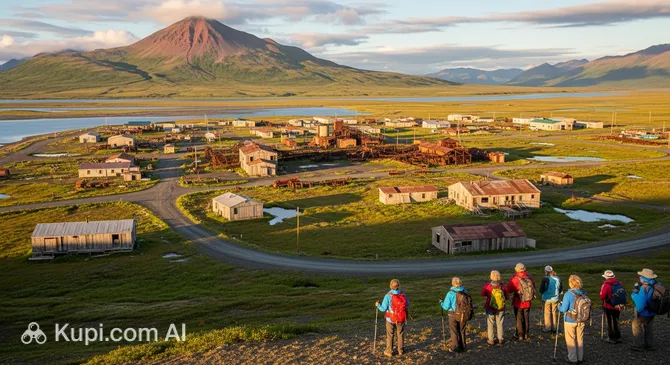
Platinum. Source: Kupi.Binoculars

For visitors, the primary allure of Platinum lies in its stunning natural surroundings. Goodnews Bay provides a breathtaking backdrop for hiking and photography, offering sweeping views of the water and the rolling tundra. The nearby Red Mountain is not only a geological landmark but also a reminder of the area's mineral wealth, rising dramatically from the landscape. Additionally, the village serves as a gateway to the vast Togiak National Wildlife Refuge, a haven for birdwatchers and nature enthusiasts hoping to spot seabirds, marine mammals, and other wildlife in their natural habitat.

If you are a traveler who appreciates off-the-beaten-path destinations and the serene beauty of the far north, Platinum awaits you. It is a place to disconnect from the noise of the modern world and experience the enduring spirit of rural Alaska.

Weather Overview

Travelers heading to this remote Alaskan outpost should be prepared for a subarctic maritime climate. The weather in Platinum is defined by cool, breezy summers and freezing winters, heavily influenced by its proximity to the Bering Sea. Understanding these seasonal patterns is key to packing the right gear for your journey.

Winter dominates much of the year, with temperatures in January dropping to an average of -9.1°C and lows reaching -11.4°C. It is a season for resilience, as the area experiences frequent precipitation and short daylight hours. By contrast, the summer months of July and August offer the most comfortable conditions, with average temperatures hovering around 11.8°C and highs occasionally reaching 13.5°C.

Regardless of when you visit, be ready for damp conditions. Expect cool summers with frequent chances of rain and cold winters with consistent snow, as the region sees between 12 and 20 wet days per month throughout the year.

Interesting Facts

Beyond the main attractions, Platinum holds many fascinating secrets rooted in its geological fortune. This remote community was once a bustling industrial center with a legacy that sets it apart from other Alaskan villages.

  • The "White Gold" Rush: Unlike the more famous gold rushes that shaped much of the region's history, this area experienced a unique "platinum rush." The village was officially established in the 1930s specifically to support the mining operations after the discovery of the precious metal in the nearby river deltas.

  • A Rare Source: For roughly half a century, the mine at Platinum was the primary producer of raw platinum in the United States. At its peak, the local operations were among the most significant of their kind in the Western Hemisphere, supplying a critical resource that is rarely found in such concentrations.

  • The Red Mountain: The landscape offers a visual clue to its mineral wealth. The prominent Red Mountain, located near the village, is the geological source of the platinum deposits and owes its striking, rust-like color to the oxidation of the iron-rich dunite rock that comprises it.

How to Get There

Reaching this remote community on the Bering Sea coast requires careful planning, as the village is isolated from the state's main road system. Most travelers will need to arrange a combination of flights to reach the destination. You can find more detailed information about how to get to Platinum and the specific logistics involved in planning your journey to this unique part of Alaska.

The city of Platinum does not have its own major airport, but you can fly into Bethel Airport (IATA: BET) in the city of Bethel, which is about 196.8 km from Platinum. This is the primary regional hub for Western Alaska, handling a significant volume of passengers annually. While a theoretical journey by land would take approximately 5 hours and 15 minutes based on the distance, travel in this region is typically conducted via connecting bush planes due to the lack of connecting roads.

Another option for accessing the wider region is Dillingham Airport (IATA: DLG), located in the city of Dillingham. It is situated approximately 190.1 km from Platinum. Similar to Bethel, the distance corresponds to a travel time of about 5 hours by ground transport, but visitors should expect to rely on air taxis or charter flights to cover the final leg of the trip.

For clarity, here is a summary of the main airports in the vicinity:

Airport Name City Passenger Traffic Km from City
Bethel Airport Bethel Large Regional 196.8
Dillingham Airport Dillingham Medium 190.1
Kwigillingok Airport Kwigillingok Small 123.2
Egegik Airport Egegik Small 274.4
Kongiganak Airport Kongiganak Small 121.7

Since there are no railway stations serving Platinum or the surrounding area, air travel remains the most practical and common method for arrival. Visitors are advised to check with local air carriers for schedules and availability, as flights can be weather-dependent.

Main Attractions

While Platinum is a small and remote village, its primary appeal lies in the spectacular wilderness that surrounds it. The attractions here are not museums or shopping centers, but rather the raw, untouched landscapes of Alaska. Visitors come to experience the solitude of the tundra, the abundance of wildlife, and the unique geological features that define this corner of the United States.

Togiak National Wildlife Refuge is undoubtedly the most significant natural asset in the region. Spanning over 4 million acres, this vast protected area offers a true wilderness experience for adventurous travelers. The refuge is a landscape of diverse terrain, ranging from steep cliffs and mountain peaks to coastal lagoons. It is a premier destination for wildlife viewing, where patient observers may spot brown bears, caribou, wolves, and wolverines roaming their natural habitat. For birdwatchers, the coastal cliffs provide nesting grounds for millions of seabirds, making it a spectacular site during migration seasons.

For those interested in world-class angling, the Goodnews River is a legendary destination. Flowing into the bay near the village, this river is renowned for its pristine waters and abundant fish populations. It is one of the few places where anglers can target all five species of Pacific salmon—King, Silver, Sockeye, Pink, and Chum—along with leopard rainbow trout and Dolly Varden. The lack of fishing pressure compared to more accessible Alaskan rivers makes it a paradise for sport fishermen seeking a quiet and productive day on the water.

Red Mountain stands as the area's most distinct landmark and a visual reminder of the town's history. Dominating the skyline behind the village, this rust-colored ridge is composed of dunite and is the source of the platinum deposits that gave the community its name. For photographers and geology enthusiasts, the mountain offers a striking contrast against the green tundra and the blue waters of the Bering Sea. Hiking in the vicinity provides sweeping panoramic views of the bay and the vast, treeless landscape that stretches to the horizon.

Finally, the Bering Sea Coast itself serves as a mesmerizing attraction for those who appreciate the power of the ocean. The beaches around Platinum are rugged and wild, often piled with driftwood carried from distant shores. Walking along the coastline offers a sense of isolation and peace that is hard to find elsewhere. It is an excellent spot for beachcombing, watching storms roll in across the water, or simply absorbing the stark beauty of the subarctic environment.

Local Cuisine

The culinary experience in Platinum is defined not by five-star restaurants or bustling food markets, but by the incredible freshness of its ingredients and the subsistence lifestyle of its residents. In this remote corner of Alaska, "farm-to-table" is replaced by "sea-to-table," where the food is often caught or gathered mere hours before it reaches your plate. Visitors should expect a rustic and authentic diet centered heavily on the bounty of the Bering Sea and the surrounding tundra.

Unsurprisingly, seafood is the undisputed star of the local diet. With the Goodnews River and the ocean right at the doorstep, Pacific salmon—including King, Silver, and Sockeye—is a staple that appears in many forms. You might taste it grilled fresh over an open fire, cured as gravlax, or, most commonly, smoked into savory strips known as "squaw candy," which serves as a high-energy snack for locals and visitors alike. Halibut is another prize catch, often served pan-seared or battered, offering a delicate, flaky texture that is unmatched when eaten this fresh.

Beyond seafood, the local food culture is deeply rooted in traditional Yup'ik practices. A unique delicacy worth trying if you have the opportunity is Akutaq, often called "Eskimo ice cream." This traditional dish is a whipped mixture of animal fat (historically seal oil or reindeer fat, though vegetable shortening is often used today), sugar, and wild berries such as cloudberries, blueberries, or cranberries gathered from the tundra. It is a rich, high-energy food designed to sustain people through the cold winters.

Regarding drinks, there are no local breweries or distilleries in this tiny village. The beverage of choice is often practical: steaming mugs of hot coffee or tea to ward off the chill of the coastal winds. Travelers should be aware that many rural Alaskan communities have complex regulations regarding alcohol, ranging from "damp" to "dry," so it is wise to check current local rules before planning to consume alcoholic beverages.

It is important for tourists to understand that Platinum does not have a commercial dining scene in the traditional sense. There are no street food stalls or standalone restaurants for walk-in customers. Instead, dining is typically centered around fishing lodges where meals are prepared for guests, often showcasing the catch of the day. Independent travelers should plan to be self-sufficient, bringing their own supplies or purchasing basics at the small local general store, embracing the self-reliant spirit that defines life in the village.

Travel Tips

Visiting Platinum is a true adventure into the Alaskan wild, but its isolation requires careful planning and self-sufficiency. To ensure your trip to this remote Bering Sea community is safe and enjoyable, here are some essential practical tips to keep in mind.

  1. Clothing and Gear: The weather here is unpredictable and often damp, so the "layering system" is essential. Pack waterproof outer layers (rain jacket and pants) and sturdy, water-resistant hiking boots to handle mud and rocky terrain. Even in summer, temperatures are cool, so bring warm wool or synthetic base layers; avoid cotton, which offers poor insulation when wet.
  2. Transportation: Inside the village, there is no public transport, metro, or taxi service. The community is small enough to navigate on foot, which is the best way to soak in the atmosphere. While locals frequently use ATVs or snowmachines depending on the season, visitors should expect to walk unless their fishing lodge provides specific transfers.
  3. Finances: The currency is the US Dollar (USD). It is critical to bring enough cash for your entire stay, as credit card processing can be unreliable due to internet connectivity, and there are no ATMs in the village. Be aware that prices for goods at the local store will be significantly higher than on the mainland due to freight costs.
  4. Health and Safety: Medical facilities are extremely limited, typically consisting of a small village clinic with restricted hours. Bring a fully stocked personal first-aid kit and a sufficient supply of any necessary prescription medications. When hiking near Red Mountain or the coast, always carry bear spray and practice "bear awareness," as you are sharing the land with wildlife.
  5. Communication: English is the primary language, though you may hear Yup'ik spoken by local residents. Mobile phone coverage is often limited to specific regional carriers and can be spotty or non-existent for international providers. Wi-Fi is generally satellite-based and slow, so it is best to download offline maps and important documents before you arrive.
  6. Local Etiquette: Platinum is a tight-knit residential community, not a commercial tourist hub. Always be respectful and friendly; a wave to passersby is a common courtesy. Ask for permission before taking photographs of locals, their homes, or their subsistence equipment (such as drying racks or fishing nets).
  7. What to Avoid: Do not trespass on private property or lands owned by the local Native corporation without a permit. Additionally, strictly avoid leaving any trash or food waste outdoors, as this attracts bears and other wildlife into the village, creating safety hazards for everyone.
  8. Supply Planning: Since there are no pharmacies or large supermarkets, you must arrive fully prepared. Pack all your toiletries, camera batteries, and specific snacks. Treat the small local general store as a place for emergency basics rather than a source for your primary travel supplies.

With the right preparation, a visit to Platinum offers an unparalleled connection to nature and a refreshing disconnect from the modern world. Respect the land and the local lifestyle, and you will be rewarded with the unforgettable serenity of Alaska's rugged frontier.

Entertainment & Nightlife

Travelers hoping to find bustling nightclubs, neon-lit bars, or vibrant entertainment districts in Platinum will find a very different reality. In this remote village of fewer than 100 residents, "nightlife" is not defined by commercial venues or loud music, but by the profound silence and the spectacular natural displays of the Alaskan sky. There are no pubs, dance floors, or cinemas here; instead, the evening entertainment is entirely centered around the wilderness, relaxation, and the unique celestial phenomena of the high north.

The concept of a "night out" changes drastically depending on the season. During the long winter months, the primary attraction is the Aurora Borealis. With zero light pollution, the skies above Platinum offer a front-row seat to the Northern Lights, where ribbons of green and violet dance over the Bering Sea. In the summer, the sun barely sets, creating the "Midnight Sun" phenomenon. This allows visitors to enjoy outdoor activities like beachcombing or photography well into the early morning hours, blurring the line between day and night.

For those staying at local fishing lodges, the evening atmosphere is warm and communal but low-key. Socializing typically takes place in the main lodge dining areas, where guests gather after a day on the water to share stories, play cards, or read by the fire. The dress code is strictly functional and casual—wool socks and fleece layers replace evening wear. It is important to remember that many rural Alaskan communities have strict regulations regarding alcohol; Platinum is no exception, and visitors should verify current local laws regarding the possession and consumption of alcoholic beverages before arrival.

Safety during the evening hours requires a different mindset than in a city. There are no streetlights illuminating the gravel paths, so a high-quality headlamp or flashlight is essential for navigating the village after dark. The most significant concern for night walkers is not crime, but wildlife. Bears and foxes can venture near the settlement, especially when it is quiet, so it is advisable to remain vigilant, make noise, and avoid walking alone in unlit areas on the outskirts of the village.

During the daylight hours, entertainment remains grounded in the outdoors. While there are no museums, amusement parks, or shopping malls, the cultural and natural landscape provides plenty to do. Visitors can explore the rugged coastline, watch for migrating birds, or observe the daily rhythms of a traditional subsistence lifestyle. The "attractions" here are the wind, the waves, and the tundra, offering a peaceful retreat for those looking to escape the noise of modern urban life.

Parks & Museums

In the remote village of Platinum, the concept of "parks and museums" is redefined by the vast, untamed wilderness and the rich industrial legacy etched into the landscape. Visitors will not find manicured botanical gardens or ticketed art galleries here. Instead, the entire region functions as a massive, open-air nature reserve, and the history of the area is preserved not in glass cases, but in the rusted relics of the mining era and the living traditions of the local community.

Togiak National Wildlife Refuge serves as the region's ultimate natural playground, effectively surrounding the village with millions of acres of protected land. Unlike an urban park with paved paths, this refuge offers a raw backcountry experience where the "trails" are game paths made by caribou and bears. It is a place of dramatic transition, where the rocky coastline meets the rolling tundra and jagged mountain peaks. For hikers and nature lovers, this is a sanctuary of solitude, offering unparalleled opportunities to observe subarctic flora and fauna in their undisturbed habitat.

The South Spit and the shores of Goodnews Bay act as the community's primary recreational "green" spaces, though the palette is more often dominated by the greys of the ocean, the gold of dried grass, and the rust of the earth. These coastal areas are perfect for long, contemplative walks where the rhythm of the waves sets the pace. The beaches here are wild and unmaintained, often scattered with driftwood carried from distant continents, making them ideal for beachcombing and observing the powerful tides of the Bering Sea.

As for cultural institutions, Platinum does not possess formal museums or art galleries. The village's history is inextricably linked to the Platinum Mining District, which operates as a de facto historical site. Evidence of the "white gold" rush that birthed the town is visible in the altered landscape and the remnants of mining operations near the base of Red Mountain. These industrial artifacts stand as silent monuments to the mid-20th-century boom that made this small spot on the map a strategic asset for the United States.

The architectural landscape is purely functional, reflecting the harsh realities of subarctic living rather than aesthetic movements. However, the Old Platinum Post Office and the weathered structures of the original townsite offer a glimpse into the past. For those interested in engineering history, the traces of the large-scale dredging operations that once scoured the local riverbeds provide a fascinating look at the sheer effort required to extract wealth from such an unforgiving environment.

For a truly authentic experience, look down rather than up. The beaches and riverbanks around Platinum are excellent places to hunt for agates and jasper, semi-precious stones often polished by the glacial waters. Finding a colorful stone among the grey gravel is a favorite local pastime and offers a tangible connection to the geological forces that shaped this unique corner of Alaska.

Getting Around

Navigating Platinum is a unique experience that differs significantly from exploring a typical modern city. Due to its extremely small population and remote location, there is no formal public transport system in the village. Visitors will not find buses, trams, metros, or trolleybuses operating here. The local infrastructure is minimal and functional, designed to support a tight-knit community living in a rugged environment rather than to facilitate mass transit.

Because there are no scheduled transport routes, there is no need for tourists to worry about purchasing travel passes, validating tickets, or downloading mobile transport apps. The complex payment systems and fare zones found in larger urban centers do not exist here. Transportation is entirely informal, and no currency exchange or smart cards are required to get from one side of the village to the other.

For the majority of visitors, the most practical and common way to get around is simply walking. The village is compact, and the distances between the airstrip, the local store, and the coastline are short enough to be covered comfortably on foot. However, practical advice for pedestrians includes wearing sturdy, waterproof hiking boots. The roads are unpaved gravel or dirt, which can become muddy in summer and icy in winter, so proper footwear is your best asset for "commuting" in Platinum.

Regarding alternatives to walking, the "taxis" of this region are quite distinct from standard city cabs. Locals rely heavily on All-Terrain Vehicles (ATVs) or "four-wheelers" during the warmer months and snowmachines (snowmobiles) during the winter to navigate the rough terrain. While there are no official car-sharing services, bike rentals, or taxi companies, these off-road vehicles are the heartbeat of local mobility. You will likely see them parked outside homes and the general store instead of cars.

For tourists staying at fishing lodges, transportation is typically arranged privately. Most lodges provide shuttle services for their guests using vans or off-road vehicles to transfer them between the airstrip, the lodge, and the river. If you are an independent traveler, you should be prepared to be self-reliant. Hitchhiking is not a standard practice due to the low volume of traffic, so planning your movements based on walking distances is the most reliable strategy.

Accommodation

Finding a place to stay in Platinum is an exercise in planning and managing expectations. Unlike typical tourist destinations, this remote village does not offer a standard range of accommodation options such as budget hostels, chain hotels, or online vacation rentals. The infrastructure here is minimal, catering primarily to the specific needs of the community and the seasonal influx of sport fishermen. Visitors should be aware that lodging options are extremely limited and often require arrangements to be made months in advance.

The most prominent type of accommodation in the area consists of wilderness fishing lodges. These facilities are designed almost exclusively for anglers coming to fish the Goodnews River and are typically all-inclusive, providing meals, guides, and equipment along with a bed. These lodges offer a comfortable, albeit rustic, experience that focuses on immersion in nature rather than luxury amenities. They are often situated slightly outside the main village or along the riverbanks to provide immediate access to the water.

For independent travelers who are not part of a fishing package, finding a place to sleep can be challenging. There are no formal hotels or motels within the village limits. Occasionally, it may be possible to find informal lodging by renting a room in a local resident's home, but such arrangements are rare and cannot be booked through standard travel websites. Camping is a theoretical option for the adventurous, but given the harsh weather, high winds, and presence of bears, it requires professional-grade gear and significant wilderness experience.

Booking Tip: If you plan to visit a fishing lodge, you must book your stay well in advance, often six months to a year ahead of time. The season is short—typically running only from June to September—and spaces fill up quickly with returning guests. For non-fishing visitors, it is crucial to contact the village council or local contacts before arrival to ensure you have a guaranteed roof over your head, as arriving without a reservation is not advisable.

Regarding costs, travelers should expect a high price range. The logistics of operating in such a remote location drive up the cost of everything, from fuel to food. Fishing lodges generally charge premium rates that cover the entire experience, often costing thousands of dollars per week. Booking is almost exclusively done directly through the lodge's own website or by phone. There are no "last-minute deals" or budget aggregators for Platinum; securing accommodation here is a deliberate and significant part of the travel planning process.

Nearby Cities

For those looking to explore the surroundings, Platinum serves as an excellent base for day trips to several interesting nearby locations. While the village is isolated by the lack of connecting roads, short flights via bush plane or air taxi open up the wider region of Southwestern Alaska, allowing visitors to experience the unique culture and geography of the area.

Bethel is the primary hub for the Yukon-Kuskokwim Delta and serves as a vital center for trade and transportation in the region. A visit here offers a deeper insight into the modern Yup'ik way of life, blending traditional subsistence practices with the amenities of a larger town. It is home to the Yupiit Piciryarait Cultural Center, which features a museum and library dedicated to preserving the rich heritage of the indigenous people. Travelers can also witness the Kuskokwim 300 sled dog race if visiting in winter, or explore the bustling riverfront during the summer fishing season.

Located on the edge of Bristol Bay, Dillingham is another significant destination within reach. Known as a world-class fishing capital, it attracts anglers and nature lovers from around the globe. The town serves as the gateway to the spectacular Wood-Tikchik State Park, the largest state park in the nation, characterized by its intricate system of lakes and rivers. A trip to Dillingham offers opportunities to see the commercial fishing fleet in action and to explore a landscape that transitions from coastal tundra to boreal forest.

Closer to Platinum lies the village of Togiak, situated at the head of Togiak Bay. This community provides an authentic look at coastal village life and is deeply connected to the Togiak National Wildlife Refuge. It is an excellent spot for those interested in native crafts, such as grass basket weaving, and for outdoor enthusiasts looking to access the Togiak River for fishing or floating adventures. The proximity makes it one of the more accessible neighbors for a glimpse into the daily rhythms of the region.

City Population Distance (km)
Bethel 20287 198
Dillingham 2300 193
Togiak 800 83
Kwethluk 800 201
Kipnuk 700 162

These nearby destinations offer a glimpse into the diverse culture and landscapes of the region, showcasing the resilience and beauty of life in rural Alaska.

Shopping & Souvenirs

Shopping in Platinum is a strictly functional experience, reflecting the village's status as a remote outpost on the Bering Sea. Visitors should adjust their expectations immediately: this is not a destination for retail therapy, fashion browsing, or window shopping. The retail scene is designed solely to support the subsistence lifestyle of the local residents and the basic needs of the community. For travelers, "shopping" here essentially means picking up emergency supplies or perhaps finding a rare, handmade local treasure directly from an artisan.

There are no shopping districts, promenades, or commercial high streets in Platinum. The village layout is simple, consisting of a few gravel roads connecting homes to the airstrip and the waterfront. The primary—and effectively only—retail establishment is the local general store. This single building serves as the community's grocery store, hardware supplier, and convenience stop all in one. It carries a limited selection of shelf-stable foods, basic household goods, and essential outdoor gear. Stock levels depend entirely on the arrival of freight barges and cargo planes, so variety can be sparse.

It goes without saying that there are no shopping malls, department stores, or chain retailers in this village of fewer than 100 people. The nearest shopping centers are hundreds of miles away in Anchorage or, to a much lesser extent, in the regional hub of Bethel. Travelers visiting Platinum should arrive fully equipped with all necessary clothing, electronics, and personal items, as replacing them locally is virtually impossible.

Formal markets, such as flea markets or farmers' markets, do not exist here due to the small population and the climate. However, the concept of a "market" is replaced by informal community trade. Fresh food is rarely bought; it is caught, hunted, or gathered. While you won't find stalls selling produce, you might witness the distribution of a fresh catch among neighbors, which highlights the non-commercial nature of the local economy.

despite the lack of souvenir shops, visitors may still find unique mementos to take home. The region is home to skilled Yup'ik artisans who create beautiful traditional crafts. While there is no dedicated gallery, it is sometimes possible to purchase items such as hand-woven grass baskets, beaded jewelry, or skin-sewn clothing directly from local makers. Additionally, guests staying at fishing lodges might find a small selection of branded merchandise, such as hats or t-shirts, which serve as proof of their adventure in this remote corner of the United States.

When it comes to practicalities, cash is the absolute rule. The local store may have credit card capabilities, but connectivity issues often render electronic payment systems useless. There are no ATMs in the village, so visitors must bring sufficient US Dollars to cover any potential purchases. Opening hours are generally limited and can be unpredictable, often pausing for lunch or closing early depending on the season and the staff's availability.

One financial benefit for visitors to Alaska is the lack of a state sales tax. While local municipalities can impose their own taxes, the overall cost of "shopping" here is driven not by tax, but by the incredibly high cost of freight. Be prepared for prices on basic goods—like milk, soda, or batteries—to be significantly higher than what you would pay on the mainland, reflecting the complex logistics required to bring them to the edge of the continent.

Reached the end of the page?

That means the route is fully explored