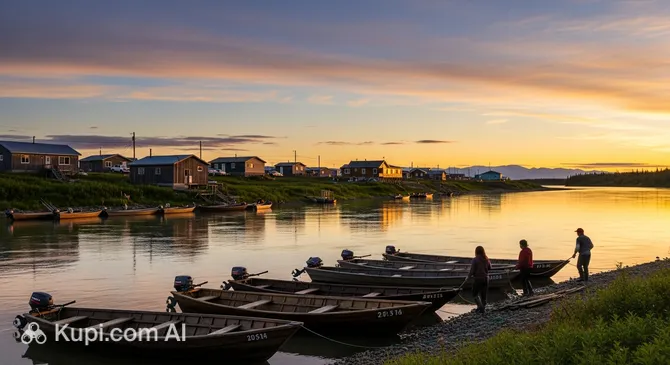
When planning a trip to Akiachak, it is essential to understand that the village operates without any standard public transportation infrastructure. There are no buses, trams, metros, or trolleybuses serving the community, and the familiar sights of public transit stops or schedules are entirely absent. The village is small, remote, and self-contained, meaning the "system" of transport relies almost exclusively on private vehicles suited for the rugged terrain and the changing seasons.
Because there is no municipal transport network, there is no need to worry about purchasing travel passes, validating tickets, or downloading transit apps. Concepts like travel zones, smart cards, or conductor inspections do not apply here. Transportation is informal and personal; residents own their own means of getting around, and there is no commercial entity selling rides within the village limits.
The primary modes of transport change drastically depending on the time of year. During the summer months, the muddy and unpaved paths are dominated by all-terrain vehicles (ATVs), commonly known as four-wheelers. These are the workhorses of the village, used for hauling cargo and carrying passengers. In the winter, when the ground is covered in snow and ice, snowmachines (snowmobiles) replace ATVs as the standard way to travel. For visitors, however, the most reliable and common way to navigate the village is simply walking, as the distances between buildings are short.
Travelers looking for alternatives like taxis, car-sharing services, or ride-hailing apps such as Uber or Lyft will not find them in Akiachak. There are no car rental agencies in the village, and "hiring a driver" is generally not a service offered commercially. If you have heavy luggage or need to move supplies, you may be able to arrange an informal ride with a local resident, but this is based on courtesy rather than a structured business transaction.
A unique and special feature of transport in this region is the seasonal ice road. In the depths of winter, the Kuskokwim River freezes thick enough to support vehicle traffic. A plowed road is maintained on the river ice, connecting Akiachak to the regional hub of Bethel and other nearby villages. This temporary "highway" allows for car and truck travel that is impossible during the summer, offering a distinctively Alaskan driving experience that serves as a lifeline for the community.
For a tourist, the best practical advice is to come prepared with the right gear for self-propulsion. Since you will likely be walking everywhere, high-quality, waterproof boots are mandatory in summer to handle the mud, while insulated, heavy-duty winter boots are crucial in the colder months. Be mindful that there are no sidewalks; pedestrians share the dirt paths with ATVs, so stay alert to vehicle traffic. The village is compact, and you can walk from one end to the other in a relatively short time, allowing you to absorb the local atmosphere at a slow, respectful pace.