Support

Kongiganak

About

Kongiganak is a remote and fascinating community located in the Bethel Census Area of Alaska, in the United States. Situated on the west shore of Kuskokwim Bay, this small village offers an authentic glimpse into the traditional lifestyle of the region. With a population of approximately 230 residents, it is a tight-knit community where daily life is closely tied to the rhythms of nature and the vast Alaskan tundra.
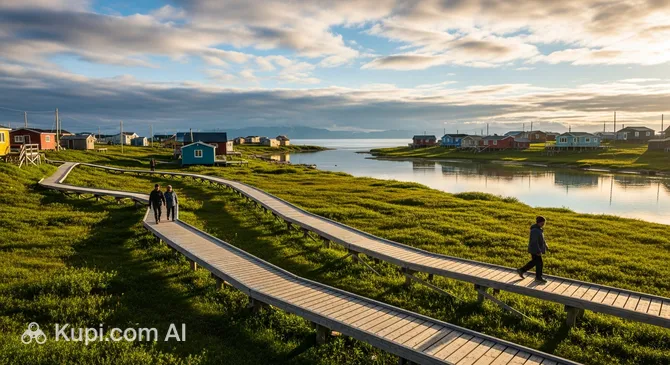
Kongiganak. Source: Kupi.Binoculars

The village is deeply rooted in its indigenous heritage. Visitors interested in the history of Kongiganak will discover a settlement that was formally established in the 1960s, though the area has been inhabited by Yup'ik people for generations. The local culture is a significant highlight, with many residents continuing to practice a subsistence lifestyle centered around fishing, hunting, and gathering, preserving customs that have defined this coastal region for centuries.

Travelers to Kongiganak can expect a unique landscape characterized by flat wetlands and open horizons. Due to the marshy ground, the village utilizes an extensive system of elevated boardwalks to connect homes and community buildings, which is a distinctive and necessary architectural feature. Nature enthusiasts will appreciate the serene environment, which offers excellent opportunities for birdwatching and viewing marine wildlife along the coast of the bay.

If you are seeking an off-the-beaten-path destination that offers a true sense of solitude and cultural richness, Kongiganak is a remarkable place to explore. It is a destination that invites you to slow down and appreciate the quiet resilience and warmth of rural Alaska.

Weather Overview

The climate in this region is defined by its subarctic coastal location, bringing freezing winters and mild, cool summers. January is typically the coldest month with an average temperature of -11.3°C, while the summer season peaks in July with averages around 13.0°C. For those planning outdoor activities or travel logistics, checking the detailed weather in Kongiganak is recommended.

Precipitation in the village is characterized by low volume but high frequency. While monthly accumulation stays consistently low at around 2mm to 3mm, "wet days" are common throughout the year, with August seeing precipitation on approximately 17 days. Generally, you can expect mild summers with frequent light moisture and cold winters with consistent freezing temperatures.

Interesting Facts

Several unique aspects define the local culture and infrastructure of Kongiganak. From its specific dialect and history to modern adaptations, the village demonstrates a balance between tradition and innovation.

  • The community operates a smart microgrid system to harness wind energy. Excess power from wind turbines is diverted to thermal stoves in homes, significantly reducing the village's reliance on imported diesel fuel for heating.
  • The name Kongiganak translates from the Central Yup'ik language as "Dead People" or "The Graveyard." This refers to a large, ancient burial mound located nearby, which serves as a prominent landmark in the flat tundra landscape.
  • The modern village was established in the 1960s. Families relocated from the nearby settlement of Kwigillingok to this site to escape severe coastal erosion and flooding.
  • Kongiganak is designated as a "dry" community under state law. Residents have voted to ban the sale and importation of alcohol to prioritize social health and traditional values.

How to Get There

Reaching the remote village of Kongiganak requires planning, as the community is primarily accessible by air due to the lack of connecting roads in this part of Alaska. The most direct point of entry is the local Kongiganak Airport (KKH), which is conveniently located just 0.7 km from the center of the settlement. Small bush planes land here regularly, serving as the main lifeline for residents and visitors alike. To see all available routes and travel details, you can read more about how to get to Kongiganak.

Since the local airstrip is small, most travelers first fly into the regional hub, Bethel Airport (BET), located in the city of Bethel approximately 108 km away. Bethel is the primary transportation center for the Yukon-Kuskokwim Delta, handling a significant volume of passengers annually. From Bethel, you must catch a connecting flight on a smaller aircraft to reach Kongiganak, a scenic journey over the tundra that typically takes about 45 minutes to an hour depending on weather and stops.

Another nearby facility is Kwigillingok Airport (KWK), situated in the neighboring village of Kwigillingok, roughly 18 km from Kongiganak. While geographically close, travel between these two villages is usually conducted by boat in the summer or snowmachine in the winter rather than by direct flights. Visitors generally do not use this airport as a primary transit point unless visiting both communities.

For clarity, here is a summary of the main airports:

Airport Name City Passenger Traffic Km from City
Bethel Airport Bethel Large 108.2
Saint Mary's Airport St Marys Small 235.0
Chevak Airport Chevak Small 229.7
Kwigillingok Airport Kwigillingok Small 18.1
Kongiganak Airport Kongiganak Small 0.7

There are no railway stations in Kongiganak or the surrounding region. The vast, marshy terrain of the Yukon-Kuskokwim Delta makes rail infrastructure impractical. Consequently, travel is almost exclusively conducted by light aircraft, boat, or snowmachine depending on the season.

Main Attractions

Kongiganak is not a destination filled with commercial tourist sites or bustling museums; rather, its appeal lies in the raw beauty of the Alaskan wilderness and the authentic culture of its people. Visitors here come to witness a way of life that has adapted to the subarctic environment, offering a profound connection to nature and history. The attractions are the land itself and the unique structures that allow life to thrive in this remote corner of the world.

One of the most striking features of the village is the Elevated Boardwalk System. Due to the marshy tundra ground that becomes soft in summer and frozen in winter, the entire community is connected by miles of wooden walkways. Walking these paths offers a distinct perspective on village life, allowing you to traverse the settlement while observing the unique challenges and solutions of Arctic infrastructure. It is also an excellent vantage point for photography, capturing the contrast between the wooden structures and the vast, open horizon.

The shores of Kuskokwim Bay provide a serene and powerful backdrop to the village. This coastal area is the heartbeat of the community, where visitors can observe local fishermen heading out for their daily catch, a practice central to the subsistence lifestyle. In the warmer months, the bay is a prime spot for spotting marine wildlife and observing the dramatic tides of the region. The interplay of light on the water during the long summer days makes it a peaceful location for contemplation and nature viewing.

Surrounding the village is the vast Tundra Wilderness, a landscape that changes dramatically with the seasons. In summer and early autumn, the tundra comes alive with wildflowers and berries, attracting a variety of migratory birds. Birdwatching enthusiasts will find this area rewarding, as the wetlands serve as a habitat for numerous species of waterfowl and shorebirds. In winter, the snow-covered plains offer a stark, minimalist beauty that defines the Arctic experience.

For those interested in the history behind the village's name, the nearby Ancient Burial Mound serves as a significant cultural landmark. The name "Kongiganak" refers to this site, which translates to "The Graveyard." While it is a place of deep historical and spiritual resonance, it is also a physical landmark in the generally flat terrain. Visitors should approach such sites with the utmost respect, viewing them as a testament to the generations of Yup'ik people who have inhabited this land for centuries.

Local Cuisine

The culinary landscape of Kongiganak is defined not by commercial restaurants but by the subsistence lifestyle that sustains its people. In this remote Yup'ik community, food is harvested directly from the land and sea, following the seasons. Visitors will not find menus or fine dining; instead, the local cuisine offers a rare opportunity to taste traditional foods that have nourished the indigenous population for thousands of years, centered heavily on fish, game, and gathered plants.

The most iconic staple of the local diet is salmon, which is prepared in various ways to last through the long winter. You are likely to encounter it smoked, dried into strips (often referred to as "salmon candy" or simply dry fish), or frozen. Another unique delicacy is Akutaq, widely known as "Eskimo Ice Cream." Unlike dairy-based ice cream, this traditional dish is made by whipping fat—traditionally reindeer fat or seal oil, though vegetable shortening is often used today—with berries such as cloudberries or blueberries, and sometimes mixed with fish or sugar. It is a high-energy food perfect for the cold climate.

Condiments and side dishes also reflect the maritime environment. Seal oil is a ubiquitous part of the meal, used primarily as a dipping sauce for dried fish, meat, or even cooked vegetables. It is rich in nutrients and considered essential for staying warm and healthy in the Arctic. Homemade fry bread is another common comfort food found in many households, often served alongside soups or stews made from moose, caribou, or waterfowl.

When it comes to beverages, travelers must be aware that Kongiganak is a designated "dry" community. The sale, importation, and possession of alcohol are strictly prohibited by local law. Consequently, there are no bars or pubs. The most common social drinks are hot tea and coffee, which are consumed throughout the day to keep warm. Sharing a pot of tea is a standard gesture of hospitality when visiting a local home.

For tourists, the "dining scene" is essentially non-existent in the traditional sense. There are no restaurants, cafes, or street food vendors in the village. Visitors should plan to bring their own food supplies or purchase basic groceries at the local general store, which stocks imported shelf-stable goods. However, the true flavor of Kongiganak is found in community gatherings or if you are fortunate enough to be invited to a meal by a local family, where the sharing of the catch is a deeply ingrained cultural value.

Travel Tips

Visiting Kongiganak is a true adventure into the heart of the Yukon-Kuskokwim Delta, offering an experience vastly different from standard tourist destinations. Because of its remote location and unique cultural setting, a trip here requires careful preparation and a respectful mindset to ensure a safe and memorable journey.

  1. Dress for the Elements: The weather can change rapidly, so packing layers is essential. Even in summer, temperatures can be cool, and rain is frequent. Bring a high-quality waterproof and windproof jacket. Most importantly, wear sturdy, waterproof boots (often called "break-up boots" or rubber boots in Alaska); the boardwalks can be slippery when wet, and stepping off them often means stepping directly into marshy tundra.
  2. Transportation Logistics: Within the village, there is no public transport like buses or taxis, and car rental is non-existent. The primary way to get around is by walking on the elevated boardwalk system. Locals use ATVs (four-wheelers) in the summer and snowmachines in the winter. Unless you have arranged transport with a local host, be prepared to walk everywhere.
  3. Financial Preparation: The currency is the US Dollar (USD). While the local general store may accept credit cards, telecommunication outages can happen, rendering card machines useless. It is highly recommended to bring enough cash to cover your entire stay. Be aware that prices for groceries and goods are significantly higher than in the contiguous United States due to freight costs.
  4. Health and Safety: There is a local clinic for basic care, but it is not a full-service hospital. Serious medical emergencies require a medevac flight to Bethel or Anchorage, which is weather-dependent. Bring an ample supply of any prescription medications you need, as there is no pharmacy to fill prescriptions on demand. Always be aware of weather conditions before heading out on the tundra.
  5. Communication and Connectivity: English is widely spoken, though Central Yup'ik is the primary language for many residents. Mobile coverage can be spotty; GCI is the main provider in rural Alaska, and other carriers may not have service. Wi-Fi is generally slow or unavailable for visitors, so download any maps or documents you need before you arrive.
  6. Local Etiquette: Kongiganak is a close-knit traditional community. Always ask for permission before taking photographs of people, their homes, or their subsistence activities (like drying fish). It is polite to greet elders when you pass them on the boardwalks. Removing your shoes when entering a home is a standard custom.
  7. What to Avoid: Strictly avoid bringing any alcohol or drugs into the village. Kongiganak is a "dry" community, meaning the importation, sale, and possession of alcohol are banned. Violating this law is a serious offense and disrespectful to the community's values.
  8. Food and Dining: Since there are no restaurants or cafes in the village, you must plan your meals in advance. Visitors should bring non-perishable food items with them or be prepared to cook with ingredients purchased at the local store. If you have dietary restrictions, bringing your own supplies is mandatory.

By packing the right gear and respecting the local laws and traditions, you will find the community of Kongiganak to be a welcoming place rich in culture. Embracing the slower pace of village life allows you to truly appreciate the stunning starkness of the landscape and the resilience of the people who call it home.

Entertainment & Nightlife

Travelers planning a visit to Kongiganak should be aware that the concept of "nightlife" here is vastly different from what one might expect in a city or even a larger town. As a small, traditional, and strictly "dry" community, there are absolutely no bars, nightclubs, or cocktail lounges in the village. The sale and consumption of alcohol are prohibited by local law, and there are no commercial entertainment districts. Instead, the evenings are defined by a profound quiet and a slow pace of life that revolves around the home and family.

For visitors, the most spectacular evening entertainment is provided by nature itself. During the long, dark winter nights, Kongiganak is an exceptional location for viewing the Aurora Borealis (Northern Lights). With virtually no light pollution from streetlamps or neon signs, the sky offers a pristine canvas for the dancing green and violet lights. Stargazing is equally impressive here; simply stepping out onto the boardwalk on a clear night can provide a breathtaking view of the cosmos that is impossible to see in more populated areas.

Social life in the village is community-centered rather than commercial. While there are no ticketed concert venues or night markets, the Community Hall or the local school gymnasium often serve as the hubs for social gatherings. Depending on the time of year, you might stumble upon a community bingo night, a traditional Yup'ik dance festival, or a school basketball game, which are the main events that bring residents together in the evenings. These gatherings are family-friendly, informal, and offer a warm, authentic insight into village culture, though they do not follow a set tourist schedule.

When venturing out after dark, safety and preparation are key. There are no taxis or public transport services; getting around at night means walking on the elevated boardwalks. It is essential to carry a bright flashlight or headlamp, as the village is not brightly lit, and stepping off the boardwalks can result in stumbling into wet, marshy ground or deep snow. The atmosphere is generally very safe regarding crime, but the extreme cold and the potential presence of stray dogs or wildlife require vigilance. Dress warmly and always let your host know where you are going.

Regarding daytime entertainment, the focus remains on the outdoors and cultural immersion. There are no movie theaters, amusement parks, or shopping malls. Instead, visitors spend their days exploring the surrounding tundra, birdwatching near the wetlands, or observing daily life along the river. A visit to the local general store acts as a casual social experience, but for the most part, entertainment in Kongiganak is what you make of it: a book by the fire, a conversation with a local, or a quiet walk along the bay.

Parks & Museums

In the remote village of Kongiganak, the concept of parks and museums is defined not by manicured lawns or curated glass cases, but by the boundless wilderness and the living history of the Yup'ik people. Visitors will not find city squares or ticketed galleries here; instead, the entire region serves as an immense natural preserve, and the daily life of the community offers a profound, immersive cultural experience.

The Tundra Wilderness acts as the community's vast, open-air park. Stretching endlessly from the edge of the village, this natural expanse is a carpet of moss, lichens, and wildflowers during the summer months. It is not a park with benches and paths, but a wild landscape perfect for those who appreciate raw nature. In late summer and early autumn, this area becomes a popular destination for berry picking, where locals harvest cloudberries (salmonberries) and blueberries, an activity that visitors can observe or participate in with local guidance.

Kuskokwim Bay Coastline offers a rugged, scenic alternative to a traditional beach park. While you won't find sun loungers, the shoreline is a dynamic natural area governed by the tides and the seasons. It is a prime location for observing marine wildlife and watching the subsistence fishing activities that are central to the village's economy. The interplay of water and sky here provides a serene, meditative environment, particularly during the endless daylight of the Arctic summer.

While there are no formal museums in Kongiganak, the village itself functions as a "Living Museum" of Yup'ik culture. The sights of salmon drying on wooden racks, the construction of traditional skin boats or sleds, and the intricate design of the elevated boardwalks all tell the story of a people adapted to their environment. The preservation of the Central Yup'ik language, spoken fluently by residents of all ages, is a testament to a heritage that is vibrant and active rather than relegated to history books.

The Community Hall often serves as the cultural heart of the village, effectively taking the place of a gallery or performance center. During community gatherings, festivals, or school events, this venue showcases the region's artistic traditions, including spirited drumming and Yup'ik dancing. While it is not a museum open for daily tours, it is the space where the community's artistic expression—from hand-sewn kuspuks (tunics) to carved ivory—is most visibly celebrated.

For a touch of history, the Ancient Burial Mound remains the most significant historical landmark in the vicinity. As noted in local lore, this site is the origin of the village's name and stands as a silent monument to the ancestors who inhabited this land long before the modern settlement was established. It is a solemn site that connects the present community to its deep roots in the region.

Insider Tip: If you visit during the berry season, ask a local for advice on the best spots to find "akutaq" ingredients on the tundra. However, always remain within sight of the village or go with a guide, as the flat landscape can be disorienting, and the weather can shift rapidly.

Getting Around

Travelers planning a visit to Kongiganak must adjust their expectations regarding urban mobility. As a small, remote village with a population of roughly 230 residents, there is absolutely no public transport system in the traditional sense. You will not find buses, metros, trams, or fixed-route taxis here. The infrastructure is designed for a subsistence lifestyle in a subarctic environment, rather than for mass transit.

The primary "network" for getting around the village is the extensive system of elevated wooden boardwalks. Because the ground consists of marshy tundra that is soft in summer and frozen in winter, paved roads are non-existent. These boardwalks serve as the sidewalks, streets, and highways of the community. For visitors, walking is the most reliable and common mode of transport. The village is compact enough that most destinations, including the general store, school, and clinic, are within a reasonable walking distance.

For locals, the main alternatives to walking are All-Terrain Vehicles (ATVs) during the warmer months and snowmachines (snowmobiles) during the winter. These vehicles are essential for hauling supplies, hunting, and traveling across the tundra. While there are no commercial rental agencies for these vehicles, visitors staying with local hosts may sometimes be transported via ATV or snowmachine sled, particularly when arriving with luggage.

Since there is no public transport, there is no ticketing system, travel cards, or transport apps. You do not need to worry about zones, validation, or operating hours. If you are fortunate enough to arrange a ride with a local resident—for instance, from the airstrip to your accommodation—it is usually an informal arrangement. While there are no taximeters or fixed fares, it is polite to offer a contribution for fuel or a small tip as a gesture of gratitude.

Airport transfers are equally informal. The local airstrip is located less than a kilometer from the village center. Many visitors simply walk from the plane to the village using the boardwalks. If you have heavy gear or supplies, it is highly recommended to coordinate with your host or the entity you are visiting in advance so they can meet you with a motorized vehicle/sled.

Practical Advice for Tourists: The most important "transport ticket" you can buy is a pair of high-quality, waterproof boots. The boardwalks can be slippery when wet or icy, and stepping off them often means sinking into mud or snow. Always stay on the designated wooden paths to respect local property and ensure your safety. In winter, visibility can drop quickly, so carrying a headlamp is essential for navigating the walkways during the dark hours.

Accommodation

Finding accommodation in Kongiganak requires managing expectations, as the village does not have a conventional tourism industry. There are no commercial hotels, luxury resorts, or budget hostels available. Lodging options are extremely limited and are primarily intended for visiting professionals, such as government workers or contractors, rather than vacationers. The available facilities are functional and basic, focusing on providing a warm, safe environment rather than leisure amenities.

Since the community is compact and linked by a boardwalk system, location is rarely a deciding factor. Any lodging you secure will be within walking distance of the airstrip, the general store, and the central community buildings. Staying here offers an authentic immersion into village life, but it lacks the privacy and services found in standard accommodations.

Booking Tip: Do not expect to find Kongiganak accommodation listed on major online booking sites. Arrangements must be made well in advance by directly contacting the local authorities. The most reliable method is to call the Kongiganak Traditional Council or the local Native corporation to inquire about guest housing availability. Attempting to visit without a confirmed reservation is strongly discouraged.

Prices for guest rooms, when available, are typically fixed at a flat nightly rate. Be prepared for costs that may seem high relative to the amenities provided, which is due to the high operational costs in remote Alaska. Cash is the preferred method of payment, and visitors should bring enough currency to cover their entire stay, as credit card processing is often unavailable.

Nearby Cities

Nearby Cities:

Kongiganak is located in the expansive Yukon-Kuskokwim Delta, a region where communities are separated by vast stretches of tundra and waterways rather than connected by a road network. The "nearby" cities and villages are distinct settlements that function independently, often accessible only by light aircraft, boat, or snowmachine depending on the season. This isolation fosters a strong sense of community within each village while maintaining essential links to the regional hub.

The most important neighbor for logistical and economic purposes is Bethel. Situated approximately 112 km to the north, it serves as the transportation and commercial center for the entire delta. While Kongiganak is a small village, Bethel is significantly larger and provides access to a hospital, larger grocery stores, and connecting flights to Anchorage. Other closer communities include Quinhagak and Kipnuk, which share similar subsistence lifestyles and cultural heritage with Kongiganak.

The following table lists the closest cities and settlements, providing an overview of the regional population distribution and distances:

City Name Population Distance (km)
Quinhagak 700 60
Kipnuk 700 64
Bethel 20,287 112
Kwethluk 800 125
Akiachak 627 133

Travelers should note that the distances listed are direct linear measurements. Due to the winding nature of the rivers and the lack of direct roads, actual travel time can vary significantly based on the mode of transport and weather conditions.

Shopping & Souvenirs

Shopping in Kongiganak is a strictly functional experience rather than a recreational one. As a small, remote village in the Alaskan tundra with a population of just over 200 people, there are no retail districts, fashion boutiques, or souvenir shops. The local economy is driven by subsistence living, and commercial activity is limited to providing essential supplies such as groceries, fuel, and basic hardware. Visitors should come prepared with all necessary gear and specialty items, as options for purchasing goods on-site are minimal.

There are no shopping streets or commercial districts in the village. The "main area" for any transaction is simply the central part of the community connected by the elevated boardwalk system. Here, you will find the General Store (often a branch of the Alaska Commercial Company or a locally owned Native store), which serves as the lifeline for the community. This single store stocks everything from canned food and fresh produce to winter boots and snowmachine oil.

Travelers looking for shopping malls will find none in Kongiganak. The nearest retail centers are in the city of Bethel or, more realistically, in Anchorage, hundreds of miles away. The village infrastructure is designed solely for the needs of its residents, and large-scale commercial developments are non-existent in this region of the Yukon-Kuskokwim Delta.

Similarly, there are no formal markets such as flea markets or farmers' markets. The "market" here is the land itself, from which locals harvest fish, berries, and game. Occasionally, community fundraising events at the school or community hall may feature bake sales or tables selling homemade goods, but these are sporadic and not geared toward tourists.

Despite the lack of souvenir shops, visitors may have the unique opportunity to purchase authentic Alaska Native crafts directly from local artisans. Kongiganak is home to talented craftspeople known for skills passed down through generations. If you ask around respectfully, you may find residents selling hand-sewn kuspuks (traditional tunics), intricate beadwork, woven grass baskets, or carvings made from walrus ivory or bone. These items are not mass-produced and represent a genuine piece of Yup'ik culture.

Opening hours for the general store are typically limited, often operating from late morning until early evening, roughly 10:00 AM to 6:00 PM, though these times can fluctuate. The store may be closed or have reduced hours on Sundays. Regarding payment, cash is the most reliable method. While the store may accept credit cards, telecommunication systems in rural Alaska can be unreliable due to weather or technical issues. It is highly recommended to bring enough US Dollars to cover your expenses.

Regarding tax-free shopping, the state of Alaska does not have a statewide sales tax, which is a benefit for travelers. However, local municipalities often levy their own sales tax to fund community services. In remote villages like Kongiganak, there is no "tax refund" system for tourists similar to those found in Europe. The price you see is the price you pay, and given the high cost of freight to fly goods into the village, expect prices to be significantly higher than in the contiguous United States.

Reached the end of the page?

That means the route is fully explored