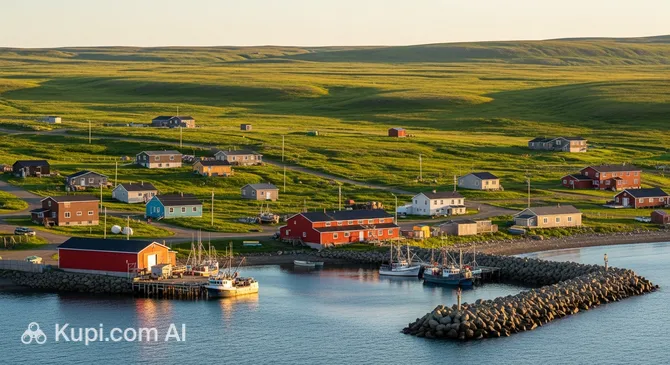
General Overview: Shopping in Mekoryuk is a strictly utilitarian experience rather than a recreational pastime. As a small, remote subsistence village with a population of approximately 200 people, the community does not have boutiques, fashion outlets, or souvenir shops in the traditional sense. For visitors, the "shopping" experience is primarily focused on acquiring basic necessities at the village's single general store or arranging private purchases of local artwork directly from artisans. The lack of commercialism is part of the island's charm, offering a stark contrast to the consumer-driven culture of the mainland.
Main Shopping Areas: There are no shopping districts or commercial streets in Mekoryuk. The village layout is compact, and the retail scene is entirely centralized around the Mekoryuk Native Store (or the local general store). This establishment serves as the lifeline for the community, stocking everything from groceries and hardware to cold-weather gear and fuel. For a tourist, a visit here is less about retail therapy and more about witnessing the logistics of island life, where a single shelf might hold both canned goods and ammunition.
Shopping Malls: It is important for travelers to manage their expectations: there are absolutely no shopping malls, department stores, or large retail complexes on Nunivak Island. The infrastructure is designed solely to support the essential needs of the residents. Those accustomed to browsing expansive plazas will find the retail environment here to be modest and purely functional.
Markets: Mekoryuk does not host formal flea markets, food markets, or craft fairs on a regular schedule. The concept of a "market" here is much more informal and personal. Occasionally, community gatherings or fundraisers at the school or bingo hall may feature tables with homemade baked goods or local crafts, but these are sporadic. The true marketplace is the community itself, where word-of-mouth leads you to the homes of skilled creators.
Souvenirs: While standard shops are absent, Mekoryuk offers one of the most exclusive shopping opportunities in Alaska: authentic Cup'ig art. The village is world-renowned for its traditional wood masks, which are distinct from mainland Yup'ik styles and often feature intricate, surreal designs representing animal spirits. Visitors may also find hand-woven grass baskets, ivory or bone carvings, and items made from qiviut (the ultra-soft underwool of the muskox). To purchase these, you typically need to ask around and be invited to an artist's home/workshop to buy directly from them.
Opening Hours and Payment: The local general store typically operates with limited hours, often closing for a lunch break and shutting down in the early evening and on Sundays. Hours can be unpredictable and may change based on staff availability or weather. Cash is the preferred method of payment for almost all transactions. While the store may accept credit cards when the internet connection is stable, outages are common. If you plan to buy artwork from locals, you must have cash, as private individuals do not have card terminals.
Tax-Free: The United States does not have a national VAT refund system for international tourists like many European countries. While the state of Alaska does not impose a state-level sales tax, local municipalities often levy their own sales taxes. In a remote village like Mekoryuk, you should not expect any tax-free shopping facilities or refund counters.