Support

Sheldon Point

About

Welcome to Sheldon Point, a remote and culturally rich community located in the vast wilderness of Alaska. Often referred to by its traditional Yup'ik name, Nunam Iqua, which translates to "the end of the land," this small village offers a truly authentic glimpse into life in the far north. Situated on a south fork of the majestic Yukon River, roughly 18 miles southwest of Alakanuk, the settlement is defined by its deep connection to the surrounding tundra and waterways.
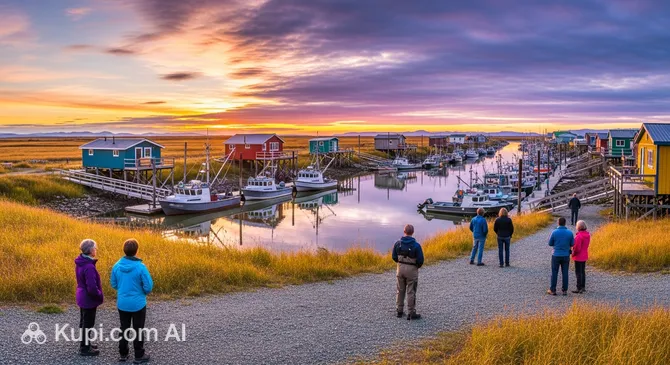
Sheldon Point. Source: Kupi.Binoculars

Geographically, Sheldon Point is part of the United States, yet it feels worlds away from the hustle and bustle of major cities. The climate here is subarctic, characterized by long, cold winters and short, mild summers that bring the landscape to life. With a population of approximately 160 residents, the community is tight-knit and primarily composed of Yup'ik Eskimos who maintain a subsistence lifestyle centered on fishing, hunting, and gathering.

The history of Sheldon Point is deeply intertwined with the traditions of its indigenous people. Originally a summer fish camp, it eventually developed into a permanent settlement. Visitors interested in cultural heritage will appreciate the enduring customs practiced here, from traditional dance to the preparation of local foods like salmon and seal oil.

For adventurous travelers, the area serves as a gateway to the pristine Yukon Delta National Wildlife Refuge. This expansive region is a haven for birdwatchers, as it hosts millions of migratory birds during the warmer months. The river itself is a focal point for activities, offering opportunities for boating and observing the unique riverine ecosystem of the Yukon Delta.

If you are seeking a destination that is off the beaten path and offers a serene, untouched environment, Sheldon Point is a remarkable place to explore. It invites you to disconnect from the modern world and experience the quiet beauty and resilience of rural Alaska.

Weather Overview

Travelers visiting this remote Alaskan community should prepare for a subarctic climate where the elements play a significant role in daily life. The weather in Sheldon Point is defined by long, freezing winters and short, cool summers. January is typically the coldest month, with average temperatures hovering around -13.1°C and dropping as low as -15.6°C.

The summer months bring milder conditions, making it the most accessible time for visitors. July is usually the warmest time of year, with average temperatures of 12.8°C and highs reaching approximately 15.3°C. While the total precipitation volume is surprisingly low, often ranging between 1mm and 3mm per month, damp conditions are common. You can expect cool summers with frequent days of light precipitation and cold, dry winters.

Interesting Facts

Beyond its quiet exterior and remote location, Sheldon Point holds fascinating stories of cultural reclamation and geographic extremes that define its character. Here are some intriguing details about this unique Alaskan community:
  • A Historic Name Change: While often found on maps as Sheldon Point, the community officially changed its name to Nunam Iqua in 1999. The original English name came from a man named Sheldon who operated a fish saltery nearby in the late 1930s, but residents voted to restore the traditional name to honor their heritage.

  • Poetic Geography: The traditional name, Nunam Iqua, is deeply descriptive. In the Central Yup'ik language, it translates to "The End of the Land," a fitting title for a village situated on a flat projection of tundra reaching out toward the vast Bering Sea.

  • The Ice Highway: There are no roads connecting the village to the rest of the state. However, during the long winter months, the frozen Yukon River transforms into a natural "ice highway," allowing locals to travel by snowmachine to neighboring communities like Alakanuk and Emmonak.

  • From Camp to Village: Before developing into a permanent year-round settlement, the site was exclusively used as a summer fish camp. For generations, families would migrate here seasonally solely to harvest the abundant salmon runs, a rhythm of life that eventually led to the village's establishment.

How to Get There

Reaching the remote community of Sheldon Point (Nunam Iqua) is a unique journey into the Alaskan wilderness. Since the village is not connected to the state road system, travel logistics require careful planning, typically involving a combination of regional flights and local transport. You can read more about how to get to Sheldon Point to better understand the specific routes and seasonal options available.

The city of Sheldon Point does not have its own major airport capable of handling large commercial jets. Instead, visitors typically fly into a regional hub and transfer to a smaller bush plane. The most significant hub for the area is Bethel Airport (BET), located in the city of Bethel, approximately 252 km from Sheldon Point. As a key transport center with medium passenger traffic, it connects the Yukon-Kuskokwim Delta to major cities like Anchorage. From Bethel, travelers must arrange a commuter flight or charter to reach the village.

Another option closer to the settlement is Saint Mary's Airport (KSM) in St Marys, situated about 96 km away. While it handles significantly less traffic than Bethel, it serves as another vital link in the region. It is important to note that there are no roads connecting these airports to Sheldon Point, so standard taxi or bus travel is not possible. The "travel time" is entirely dependent on flight schedules and weather conditions rather than driving distance.

For clarity, here is a summary of the main airports in the wider region:

Airport Name City Passenger Traffic Km from City
Bethel Airport Bethel Medium 252.1
Nome Airport Nome Medium 222.7
Saint Mary's Airport St Marys Small 96.2
Unalakleet Airport Unalakleet Small 253.7
Chevak Airport Chevak Small 117.6

The city of Sheldon Point does not have a railway station, and there is no railway infrastructure in this part of Alaska. The vast tundra landscape and complex network of waterways make train travel impossible. Visitors rely exclusively on air travel or, during summer months, boat travel along the Yukon River to reach the community.

Main Attractions

Travelers venturing to Sheldon Point (Nunam Iqua) will not find typical tourist amusements like theme parks or sprawling museums. Instead, the attractions here are deeply rooted in the raw beauty of the Alaskan wilderness and the enduring spirit of the Yup'ik culture. The primary draw for visitors is the immersive experience of life at the edge of the continent, where the land meets the sea and nature dictates the rhythm of the day.

Yukon Delta National Wildlife Refuge surrounds the village, offering an unparalleled opportunity for nature lovers and birdwatchers. As one of the largest refuges in the country, this vast expanse of wetlands and tundra serves as a critical breeding ground for millions of shorebirds and waterfowl. During the warmer months, the air is filled with the calls of migratory birds, making it a spectacular location for observation and photography in a pristine, untouched environment.

The South Fork of the Yukon River is the lifeline of the community and a central attraction for any visitor. In the summer, the river bustles with activity as local families engage in subsistence fishing, a tradition that has sustained them for generations. Visitors can witness the impressive harvest of salmon and enjoy boating along the waterways, which offer unique perspectives of the flat, expansive horizon and the chance to spot local wildlife such as seals and otters.

For those interested in cultural immersion, the Village of Nunam Iqua itself is a living exhibit of resilience and tradition. Walking through the settlement, you will see rows of fish drying on wooden racks and observe the daily practices of a community that lives off the land. The local architecture and layout reflect the necessities of subarctic living, and engaging with respectful curiosity can provide deep insights into the contemporary life of the Yup'ik people.

Finally, the surrounding Tundra Landscape offers its own subtle beauty, particularly in late summer. The vast, treeless plains turn vibrant shades of gold and red, and the ground becomes dotted with cloudberries and salmonberries. Hiking across the spongy tundra—often best done with a local guide—provides a sense of solitude and peace that is difficult to find elsewhere, reinforcing the feeling of standing at "the end of the land."

Local Cuisine

The culinary landscape of Sheldon Point (Nunam Iqua) is defined not by restaurants or cafes, but by the subsistence lifestyle of its Yup'ik residents. There are no commercial dining establishments, street food stalls, or bars in this small community. Instead, the local "cuisine" is a direct reflection of the land and river, centered on wild-harvested foods that are prepared using traditional methods passed down through generations.

The most iconic staple of the local diet is salmon, harvested fresh from the Yukon River. During the summer months, families work tirelessly to catch and preserve fish for the long winter. You will often see salmon drying on wooden racks throughout the village. It is typically eaten as dried fish strips, smoked to perfection, or boiled fresh. Another delicacy is Akutaq, often called "Eskimo ice cream." This unique dish is a blend of fats—traditionally reindeer fat or seal oil, though commercial shortening is sometimes used today—whipped together with sweeteners and an abundance of locally gathered berries like cloudberries (salmonberries) or blueberries.

Seal oil plays a crucial role in the local gastronomy, acting as both a condiment and a primary source of energy in the cold climate. It is commonly used as a dipping sauce for dried fish, meat, and even edible plants gathered from the tundra. While alcohol is generally restricted or banned in many rural Alaskan communities (Nunam Iqua is a "damp" or "dry" community depending on current local laws, so travelers should verify regulations before bringing any), the most common social beverage is hot tea or coffee, shared warmly in homes to combat the subarctic chill.

For visitors, experiencing the food culture here means being invited into a home or participating in community gatherings, as there is no "eating out" scene. The "market" in Sheldon Point is the surrounding wilderness—the river for fish and the tundra for berries and greens. Travelers planning a trip here must be self-sufficient and bring their own provisions, but those who are fortunate enough to taste the local subsistence foods will experience some of the freshest, most nutrient-dense ingredients in the world.

Travel Tips

Visiting Sheldon Point (Nunam Iqua) is a true expedition into the Alaskan wilderness, far removed from standard tourist infrastructure. To ensure your trip to this remote community is safe, respectful, and enjoyable, it is crucial to arrive fully prepared for the unique challenges of life in the Yukon Delta.

  1. Clothing and Gear: The weather here dictates your wardrobe. Even in summer, bring waterproof layers and high-quality rain gear, as conditions can change rapidly. Xtratuf boots (or similar knee-high rubber boots) are essential for navigating muddy boardwalks and tundra. If visiting in winter, extreme cold-weather gear, including a heavy parka, insulated pants, and wind protection, is mandatory. In summer, a high-quality head net and strong insect repellent are vital to protect against the intense swarms of mosquitoes and gnats.

  2. Transportation: Forget about car rentals, taxis, or ride-hailing apps; there are no paved roads connecting Sheldon Point to the outside world or within the village itself. Getting around is done primarily on foot via wooden boardwalks that sit above the tundra. Locals use ATVs (four-wheelers) in the summer and snowmachines in the winter. As a visitor, you will likely walk everywhere, so comfortable, durable footwear is your most important mode of transport.

  3. Finances: You must bring enough cash to cover your entire stay. There are no banks or ATMs in the village. While the small local store may accept credit cards for basic supplies, systems can go down due to connectivity issues. Prices for goods are significantly higher than in the contiguous US due to freight costs, so budget accordingly. Tipping is not a standard practice here in the same way it is in cities, but offering to pay for fuel or sharing fresh food is a culturally appropriate way to show gratitude for a ride or help.

  4. Health and Safety: Medical facilities are limited to a small local clinic staffed by health aides, with serious emergencies requiring a weather-dependent flight to Bethel. Ensure you have comprehensive travel insurance that covers medical evacuation. Bring a full supply of any personal medications, as there is no pharmacy. Be "bear aware" if you venture outside the village perimeter, and always boil or filter water if you are not drinking from a verified safe source.

  5. Communication: English is widely spoken, though many residents also speak Central Yup'ik. Learning a few local words, like Camai (hello/welcome), is a great icebreaker. Mobile coverage is often limited to specific carriers (typically GCI in rural Alaska), and data speeds can be slow or non-existent. Do not rely on finding public Wi-Fi; download offline maps and essential documents before you leave the hub city of Bethel.

  6. Local Etiquette: The community is built on subsistence traditions and respect for elders. Always ask for explicit permission before photographing residents, their homes, or their subsistence activities (such as drying fish or processing game). Be aware that Sheldon Point (Nunam Iqua) may have strict laws regarding alcohol; many rural villages are "dry" (banning possession) or "damp" (limiting possession). It is safest to assume it is a dry village and strictly avoid bringing any alcohol or drugs.

  7. What to Avoid: Never wander onto private property or touch fishing nets, racks, or boats without permission. These are not decorative exhibits; they are the livelihood of local families. Additionally, avoid walking on river ice during the shoulder seasons (spring and fall) without a local guide, as the ice thickness can be deceptive and dangerous.

  8. Logistics Tip: Since there are no hotels, accommodation must be arranged well in advance, often through the tribal council or school. A highly appreciated gesture is to bring fresh fruit or vegetables as a gift for your hosts or new friends, as fresh produce is rare and expensive in the village.

By packing the right gear and approaching the community with an open heart and respect for its traditions, your visit to Sheldon Point will be a deeply rewarding experience. Embracing the slower, nature-driven pace of life here is the key to understanding the resilience and beauty of this unique corner of Alaska.

Entertainment & Nightlife

Travelers arriving in Sheldon Point (Nunam Iqua) expecting a vibrant nightlife scene with pulsing clubs, cocktail bars, or late-night discos will find a vastly different reality. This small, traditional Yup'ik community is not a destination for partying in the conventional sense. There are no nightclubs, bars, pubs, or movie theaters in the village. Furthermore, visitors must be acutely aware that Nunam Iqua is typically a "dry" or "damp" community, meaning the sale, importation, and possession of alcohol are strictly prohibited or heavily regulated. The local atmosphere is defined by peace, quiet, and family-oriented living rather than commercial entertainment.

The true "nightlife" in Sheldon Point is provided by nature itself. During the long, dark winter months, the lack of light pollution makes the village a world-class destination for viewing the Aurora Borealis. Stepping out onto the boardwalks on a clear night offers a dazzling display of green and violet lights dancing across the sky, a spectacle that far rivals any laser show. Conversely, in the summer, the sun barely sets, creating the phenomenon of the Midnight Sun. This allows for "nighttime" activities that are actually bathed in daylight, such as late-evening boating on the Yukon River or fishing under the glow of a sun that refuses to sleep.

Social life in the village does not revolve around commercial districts but rather centers on community hubs. The Nunam Iqua School is often the heartbeat of the village in the evenings, particularly during basketball season. High school basketball is incredibly popular in rural Alaska, and games are major community events where the gym is packed with cheering residents. Another key gathering spot is the Community Hall (often associated with the Tribal Council), which occasionally hosts community bingo nights, potlucks, or traditional dance practices. These events are warm, welcoming, and alcohol-free, offering visitors a chance to witness the genuine community spirit of the region.

When it comes to practical advice for the evening, safety and preparation are paramount. There are no taxis or ride-sharing services; getting around is done entirely on foot or by snowmachine in winter. If you are walking at night during the winter, a high-quality flashlight or headlamp is essential, as street lighting is minimal. You must also be "bear aware" at all times, as wildlife can wander near the village perimeter. The dress code is strictly functional: heavy, insulated winter gear is required for any outdoor activity at night. For daytime entertainment, do not look for amusement parks or museums; instead, the "entertainment" lies in walking the tundra, birdwatching, and observing the traditional subsistence lifestyle that has sustained the Yup'ik people for generations.

Parks & Museums

Visitors to Sheldon Point (Nunam Iqua) will quickly discover that the concept of "parks and museums" here differs vastly from that of a typical city. There are no manicured botanical gardens, ticketed art galleries, or enclosed history museums. Instead, the entire region functions as a boundless natural park, and the village itself serves as a living museum of Yup'ik culture and subsistence traditions. The "exhibits" are the drying fish on the racks and the "green spaces" are the endless expanses of tundra.

Yukon Delta National Wildlife Refuge is effectively the community's backyard and the most significant natural area for any traveler. Encompassing millions of acres, this federally protected landscape surrounds the village and offers a pristine environment that rivals any national park. It is a world-class destination for birdwatching, particularly during the spring and fall migrations when millions of waterfowl and shorebirds converge on the wetlands. For the visitor, the refuge offers unscripted opportunities to observe nature in its wildest form, from the shifting waterways to the local wildlife.

The Banks of the Yukon River serve as the community's primary recreational space and scenic promenade. In the absence of formal urban parks, the riverfront is where life happens. During the summer, it is a hive of activity with boats launching and families processing the day's catch. Walking along the shore offers a peaceful connection to the water, with sweeping views of the horizon that are particularly striking under the midnight sun. It is a place to sit, reflect, and watch the powerful flow of one of North America's greatest rivers.

While there is no building labeled "museum," the Nunam Iqua School often acts as a cultural repository for the community. In many rural Alaskan villages, the school is the heart of cultural preservation, where students learn and display traditional arts such as skin sewing, mask making, and Yup'ik dance. Visitors who are fortunate enough to be invited during a community event or celebration may see these living traditions in action, which offer a far more authentic experience than observing artifacts behind glass.

The Village Boardwalk System can be viewed as an open-air gallery of local life. As you navigate the wooden walkways that connect homes and buildings above the marshy ground, you are walking through the history and daily reality of the settlement. You will see traditional smokehouses, sleds prepared for winter, and the specialized gear used for subsistence living. This "living museum" requires no admission fee, but it demands the utmost respect for the privacy and property of the residents who call this unique place home.

For a truly authentic insight, look for the Tundra Berry Patches in late summer. While not a designated garden, the tundra transforms into a vibrant landscape dotted with cloudberries (salmonberries) and blueberries. Joining a local host for berry picking—if invited—provides a hands-on lesson in the local flora and the critical importance of gathering food from the land, an experience that connects you deeply to the environment and the culture.

Getting Around

Travelers planning a visit to Sheldon Point (Nunam Iqua) must adjust their expectations regarding urban mobility, as the city does not possess a public transport system in the conventional sense. There are no subways, buses, trams, or fixed-route trolleybuses serving the community. The village is small, remote, and disconnected from the state's road network, meaning the standard infrastructure found in larger cities simply does not exist here.

Because there is no formal public transportation, there are no tickets, travel cards, or mobile apps for fare payment. You will not find ticket vending machines or validators. The concept of a "transport schedule" applies only to the arrival and departure of bush planes or barges, not to movement within the village itself. Visitors do not need to worry about zoning or peak-hour fares; the local economy of movement is based entirely on personal ownership of vehicles and walking.

The primary means of getting around Sheldon Point is on foot. The village infrastructure consists mainly of elevated wooden boardwalks built over the tundra to protect the permafrost and keep pedestrians above the mud and wetlands. For a tourist, walking is the most reliable and practical way to navigate the settlement. The distances are short, and the boardwalks connect the airstrip, the school, the store, and local homes.

In terms of alternatives to walking, the "vehicles" of choice are All-Terrain Vehicles (ATVs or "four-wheelers") in the summer and snowmachines (snowmobiles) in the winter. While there are no official taxi companies or car-sharing services, locals rely heavily on these machines. If you have heavy luggage or need to travel a longer distance, you may be able to arrange an informal ride with a resident. In such cases, there is no meter; a polite offer of cash to cover the high cost of fuel is the standard and appreciated way to "pay" for the service.

Practical advice for navigating Sheldon Point centers on your gear rather than ticket validation. Since you will be walking outdoors on boardwalks that can be slippery or covered in snow, high-quality, weather-appropriate footwear is essential. In summer, waterproof boots are recommended due to the marshy surroundings, while insulated boots with good grip are mandatory in winter. Always be prepared for the elements, as there are no sheltered bus stops or heated stations to wait in while moving through the village.

Accommodation

Finding accommodation in Sheldon Point (Nunam Iqua) requires a significant adjustment in expectations for the average traveler. This is a remote subsistence village with a population of fewer than 200 people, and as such, there is no commercial tourism infrastructure. You will not find hotels, motels, bed and breakfasts, or vacation rentals listed on major booking platforms. The concept of a "check-in desk" or "room service" does not exist here.

For the few visitors who venture to this isolated community—typically contractors, government workers, or adventurous travelers—lodging options are extremely limited and informal. The most common arrangement involves contacting the Traditional Council (the local tribal government) well in advance of your trip. They may have a designated building or a "transient unit" available for visitors, which usually consists of a simple room with basic amenities like a bed and access to a shared kitchen and bathroom.

In some cases, if you are traveling as part of a larger group or for educational purposes, the local school may permit visitors to sleep on the floor of the gymnasium or in a classroom, provided you bring your own sleeping bag and gear. This is a common practice in rural Alaska but is strictly at the discretion of the school principal and district administration. Another possibility is a homestay, where a local family agrees to host a visitor, offering a bed and meals for a fee. This offers a deeply immersive cultural experience but relies entirely on personal connections or prior arrangements made through the tribal office.

Booking and Payment Tips: You cannot book accommodation online. The only way to secure a place to stay is to call the Native Village of Nunam Iqua tribal office directly by phone weeks or months before your arrival. Do not simply show up expecting to find a room, as you may be left without shelter in a harsh climate. Be prepared to pay in cash, as credit card processing is often unavailable, and there are no ATMs. Prices can be surprisingly high for the basic standard of living due to the extreme cost of utilities and maintenance in the bush, so confirm the rate when you call.

Nearby Cities

For those looking to explore the surroundings, Sheldon Point serves as an excellent base for day trips to several interesting nearby locations. While the lack of roads limits traditional travel, the network of waterways and winter trails connects the village to unique neighbors that offer a broader perspective of life in the Yukon Delta. One of the most accessible destinations is Emmonak, located just a short distance away. As a regional hub for the lower Yukon River, it is significantly busier than Sheldon Point and offers a look into the commercial fishing industry that drives the local economy. Visitors can witness the activity at the processing plants or simply enjoy a boat ride between the two communities during the summer. Further afield is Bethel, the primary transportation and service center for the entire Yukon-Kuskokwim Delta. Although it requires a flight to reach, it is home to the Yupiit Piciryarait Cultural Center, where travelers can delve deep into the art, history, and traditions of the Yup'ik people.
City Population Distance (km)
Bethel 20287 253
Nome 3697 221
Hooper Bay 1300 130
Chevak 1000 118
Emmonak 800 32
These nearby destinations offer a glimpse into the diverse culture and landscapes of the region, ranging from quiet fishing camps to bustling regional hubs.

Shopping & Souvenirs

Shopping in Sheldon Point (Nunam Iqua) is a strictly utilitarian experience designed to meet the basic survival needs of its residents rather than the leisure desires of tourists. As a remote village with no road connection to the outside world, the community relies on air and barge shipments for supplies. Visitors will not find boutiques, fashion outlets, or department stores here. Instead, the retail scene is limited to a single general store that stocks essential groceries, hardware, and fuel.

Given the small size of the settlement, there are no designated shopping districts or commercial streets. The "shopping area" is effectively the location of the local general store, which serves as the central hub for all commerce. This store is typically accessible via the village's wooden boardwalk system. For a visitor, finding the store is simple: it is usually one of the larger buildings in the village and a primary gathering spot for locals picking up their mail or daily provisions.

There are absolutely no shopping malls, shopping centers, or large retail complexes in Sheldon Point. The infrastructure simply does not support such developments. Travelers accustomed to browsing sprawling malls in the United States will find the contrast striking, as commerce here is conducted on the smallest possible scale.

The village does not host formal public markets like flea markets or farmers' markets found in larger cities. The closest equivalent to a "market" is the informal exchange of subsistence goods among families, which is not typically open to tourists. However, you may occasionally see flyers or notices at the tribal council office or the post office advertising local fundraisers where homemade food or baked goods are sold to support community events.

While there are no souvenir shops, Sheldon Point is an excellent place to acquire authentic, high-quality Yup'ik arts and crafts directly from the artists. Local artisans are known for their skill in skin sewing, beadwork, and carving using materials like ivory, bone, or wood. Items such as hand-sewn slippers, fur hats, or intricate jewelry make for meaningful keepsakes. To purchase these, you should respectfully inquire at the tribal council office or ask a local host if they know of anyone selling their work, as transactions usually take place in private homes.

The local general store typically operates with limited hours, often closing in the early evening and potentially having reduced hours or being closed on Sundays. It is critical for visitors to carry cash, as it is the most reliable form of payment. While the store may accept credit cards, telecommunication outages can render card machines useless. There are no ATMs in the village, so you should bring enough currency to cover any potential purchases or payments to local artists.

The state of Alaska does not impose a state-level sales tax, which is a benefit for travelers. However, you should not expect a formal "tax-free shopping" refund system like those found in international airports. In a small village like Sheldon Point, the financial focus for a visitor should be on the high cost of goods due to freight charges rather than taxes. You should expect prices for everyday items to be significantly higher than in the contiguous US.

Reached the end of the page?

That means the route is fully explored