Support

Alakanuk

About

Welcome to Alakanuk, a remote and fascinating village that offers a genuine glimpse into the rural lifestyle of the Far North. Located in the vast Yukon-Kuskokwim Delta region of Alaska, this small community is situated at the entrance of the Alakanuk Pass, a major branch of the mighty Yukon River. While it is part of the United States, life here moves at a different pace, dictated by the seasons and the river.
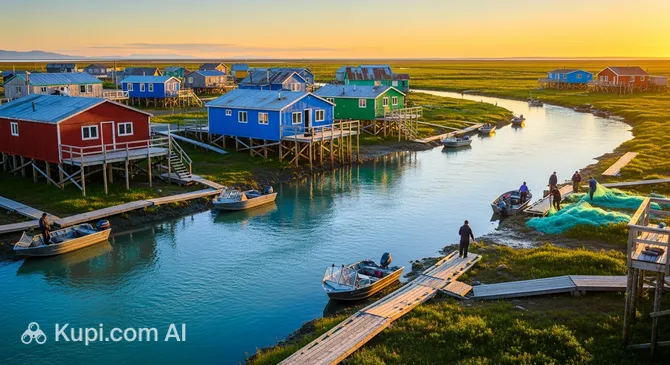
Alakanuk. Source: Kupi.Binoculars

With a population of approximately 700 residents, Alakanuk is a tight-knit community predominantly inhabited by Yup'ik people. The village is accessible only by air and water, making it a true wilderness destination. The local climate is subarctic, featuring long, cold winters perfect for snow machining and cool, brief summers when the river teems with activity. The history of Alakanuk is rich with indigenous tradition; its name reportedly translates to "wrong way," referring to a slough that travelers would often mistakenly take, yet today it is exactly the right place for those seeking authentic cultural immersion.

Visitors to Alakanuk are treated to the stunning, flat expanse of the delta, which is a haven for wildlife viewing and birdwatching. The river itself is the heart of the village, providing opportunities to witness or participate in subsistence fishing, a vital part of the local economy and culture. Exploring the surrounding waterways by boat offers an unparalleled perspective on the rugged beauty of the Alaskan landscape.

If you are looking for an adventure far removed from the bustling tourist trails, Alakanuk invites you to experience its unique atmosphere and warm hospitality. It is a destination that promises a deep appreciation for the resilience of nature and the enduring spirit of the North.

Weather Overview

The climate in Alakanuk is subarctic, defined by long, frigid winters and short, cool summers. January is typically the coldest month, with average temperatures hovering around -13.3°C and lows reaching -15.9°C. In contrast, the summer season offers milder conditions, with July being the warmest month, where average temperatures rise to approximately 13.0°C.

Precipitation is generally light in volume throughout the year, though cloudy and damp days are common. The late summer and early autumn months, particularly August and September, tend to see the most frequent moisture, with up to 16 wet days per month. For a more comprehensive breakdown of what to expect during your visit, you can view the detailed weather in Alakanuk. Overall, visitors should expect cool, mild summers with frequent light rain and very cold, relatively dry winters.

Interesting Facts

Beyond the scenic river views and quiet atmosphere, Alakanuk holds several fascinating secrets that reveal the ingenuity and deep traditions of its people. Life here is shaped by unique adaptations to the environment that remain largely unknown to the outside world.

  • The Winter Ice Highways: While the village is isolated by water in the summer, the freezing winter temperatures transform the Yukon River into a bustling thoroughfare. Locals create "ice roads" on the frozen river surface, marking safe paths with spruce trees or willow branches stuck into the snow. This temporary network allows residents to drive snowmachines or trucks to neighboring communities like Emmonak, creating a vital link that disappears with the spring thaw.

  • The Social Hub of the Maqii: In Alakanuk, the traditional Yup'ik steam bath, known as a maqii, is far more than just a place for bathing. It serves as a cornerstone of social interaction and spiritual wellness, functioning similarly to a town square. Villagers, particularly the men, often gather here in the evenings to discuss community news, tell stories, and maintain a cleansing ritual that has been practiced in the region for centuries.

  • A Subsistence Lifestyle: Due to its location near the mouth of the Yukon River and just 15 miles from the Bering Sea, the community relies heavily on the land and water for survival. The seasons dictate a rhythm of harvesting wild foods, with families working together to catch salmon, sheefish, and whitefish during the warmer months. The proximity to the coast also brings unique wildlife to the area, including beluga whales and seals, which are integral to the local diet and culture.

How to Get There

Reaching this remote community in the Yukon-Kuskokwim Delta requires careful planning, as it is completely isolated from the state's main road system. There are no highways connecting the village to the rest of Alaska, so travel is primarily conducted by air or water. For a detailed overview of travel logistics, you can read more about how to get to Alakanuk in our dedicated guide.

Since Alakanuk does not have a major airport capable of handling large commercial jets, visitors typically fly into a regional hub before taking a smaller connecting flight or air taxi. The most significant gateway is Bethel Airport (BET), located in the city of Bethel. It handles a large volume of passenger traffic and serves as the primary distribution point for villages in the delta. Although Bethel is situated approximately 259 km away, it acts as the vital link for reaching the village via small bush planes.

Another important transit point is Saint Mary's Airport (KSM), located in St Marys, roughly 99 km from Alakanuk. While it sees less traffic than Bethel, its proximity makes it a convenient hub for connecting flights. Travelers should be aware that ground transport is not an option between these airports and Alakanuk; the distance must be covered by air or, in specific seasons, by boat along the river systems.

For clarity, here is a summary of the main airports in the wider region that serve as transit hubs:

Airport Name City Passenger Traffic Km from City
Bethel Airport Bethel Large 259.0
Nome Airport Nome Medium 207.4
Saint Mary's Airport St Marys Small 98.7
Unalakleet Airport Unalakleet Small 235.0
Chevak Airport Chevak Small 137.3

Main Attractions

Alakanuk is a destination defined not by monuments or museums, but by the raw beauty of the Alaskan wilderness and the authentic lifestyle of its people. Visitors here will find that the primary attractions are the landscape itself and the daily rhythm of life in the Yukon-Kuskokwim Delta. Below are the key highlights to experience during a visit to this remote village.

The Yukon River is the undeniable heart of Alakanuk. As the village sits near the mouth of this mighty waterway, the river serves as the main thoroughfare for travel and the primary source of food. For tourists, a boat trip along the river offers an intimate look at the delta's ecosystem. In the summer, the water is alive with activity as families head to fish camps, and the sunsets over the wide, flat expanse of the river are truly spectacular, offering photographers unobstructed views of the horizon.

One of the most prominent structures in the community is St. Ignatius Catholic Church. Like many villages in rural Alaska, the church serves as a central pillar for the community, reflecting the historical influence of missionaries in the region. While modest in architecture compared to urban cathedrals, it stands as a significant gathering place for residents. Visitors are often welcomed to attend services, providing a warm opportunity to meet locals and understand the spiritual fabric of the village.

For nature enthusiasts, the surrounding Delta Wetlands offer a world-class opportunity for birdwatching and wildlife observation. The vast, treeless tundra surrounding the village is a nesting ground for numerous migratory bird species during the warmer months. Walking the outskirts of the village allows visitors to experience the unique silence of the tundra, spot waterfowl, and, in late summer, pick wild berries such as salmonberries and blueberries, which are a staple of the local diet.

Finally, a walk through the village to observe Traditional Fish Drying Racks is a cultural "attraction" in its own right. During the fishing season, you will see rows of salmon hanging to dry and smoke in the open air or in smokehouses. This ancient preservation method is visually striking and central to the Yup'ik way of life. It offers a tangible connection to the subsistence culture that has sustained the people of Alakanuk for generations.

Local Cuisine

The culinary landscape of Alakanuk is deeply rooted in the subsistence lifestyle of the Yup'ik people. You will not find fine dining establishments or trendy cafes here; instead, the local cuisine is defined by the seasons and the bounty of the Yukon River and surrounding tundra. Food in this village is a direct reflection of the environment, emphasizing freshness, preservation, and communal sharing rather than commercial preparation.

The cornerstone of the local diet is fish, particularly salmon, whitefish, and sheefish. During the summer runs, salmon is caught in abundance and prepared in various ways. A signature delicacy worth trying is smoked salmon strips or dried fish, locally known as neqa. These are cured to last through the long winter and offer a rich, savory flavor that is distinct to the region. Another traditional staple is stinkheads (fermented fish heads), though this is an acquired taste reserved for the most adventurous culinary explorers and is deeply significant to local culture.

For a sweet treat that is unique to Alaska, visitors should look for Akutaq, often called "Eskimo Ice Cream." This high-energy dish was traditionally made with whipped animal fat (such as seal oil or reindeer fat) and snow, mixed with wild berries gathered from the tundra, such as cloudberries (salmonberries) or blueberries. Today, it is often prepared with vegetable shortening and sugar, sometimes incorporating flaked fish, creating a fluffy, nutrient-dense dessert that powers locals through the cold weather.

When it comes to beverages, the culture in Alakanuk revolves around staying warm. Hot tea and coffee are consumed throughout the day and are a staple of social visits and breaks during hunting or fishing trips. It is important to note that Alakanuk, like many rural Alaskan villages, often has strict regulations regarding the sale and importation of alcohol. Travelers should not expect to find bars or liquor stores; the social scene is focused more on community gatherings, school events, and steam baths rather than nightlife.

Regarding where to eat, there are no standard restaurants in Alakanuk. Visitors typically rely on self-catering with supplies purchased from the local general store, which may offer a small selection of deli items or snacks. However, the true food culture is found in the homes of residents. Hospitality is a core value, and guests are often invited to share a meal of moose soup, roasted waterfowl, or fresh fish, providing an authentic taste of life in the Yukon-Kuskokwim Delta.

Travel Tips

Preparing for a trip to Alakanuk means packing for the wilderness and respecting the traditions of a close-knit village. Since this is not a commercial tourist hub, self-sufficiency and cultural awareness are your best travel companions.

  1. Clothing and Gear: Dress in layers regardless of the season to adapt to rapidly changing weather. In winter, heavy parkas and insulated boots are mandatory; in summer, waterproof jackets and knee-high rubber boots (often called "Alaskan sneakers") are essential due to the muddy terrain. Don't forget high-quality insect repellent and a head net, as mosquitoes can be intense during the warmer months.
  2. Transportation: There are no paved roads connecting Alakanuk to the rest of Alaska, nor are there rental car agencies or taxi services. Within the village, locals travel by ATV (four-wheeler) in the summer and snowmachine in the winter. As a visitor, you will mostly get around by walking, as the village layout is linear along the river, or by arranging a ride with a local host.
  3. Finances: Bring enough cash to cover your entire stay. While the local general store usually accepts credit cards, telecommunication systems can go down due to weather, rendering card readers useless. There are no commercial banks, and relying on finding an ATM is risky. Be prepared for significantly higher prices on groceries and supplies compared to the mainland, as everything is flown or barged in.
  4. Health and Safety: The village is served by a local health clinic for basic care, but it is not a full-service hospital and does not have a retail pharmacy. You must bring a full supply of any necessary prescription medications and a basic first-aid kit. In terms of safety, always be "bear aware" if you venture to the outskirts of town and dress warmly to prevent hypothermia, even on cool summer evenings.
  5. Communication: English is widely spoken, though Yup'ik is the first language for many elders and is frequently heard in daily life. Cell phone coverage is limited; GCI is the primary provider in rural Alaska, and other major carriers often have no signal. Wi-Fi is rare and speeds are slow, so download any necessary maps or documents before you arrive.
  6. Local Etiquette: The community values respect and humility. Always ask for permission before photographing residents, their homes, or their subsistence activities like fish drying racks. It is polite to greet elders when you pass them and to remove your shoes immediately when entering a local home.
  7. What to Avoid: Do not bring alcohol into the village. Alakanuk is a "dry" community, meaning the importation, sale, and possession of alcohol are strictly prohibited by local option laws. Violating this rule is considered highly disrespectful to the community's efforts to maintain wellness and can lead to legal consequences.
  8. Additional Tip: Pack some non-perishable snacks and food items in your luggage. Since store hours can be limited and stock depends entirely on freight deliveries, having your own supply of granola bars, dried fruit, or instant meals can be a lifesaver if the local shelves are temporarily empty.

By traveling with an open heart and a well-prepared bag, you will find your time in Alakanuk to be a deeply rewarding experience. Respecting the local ways ensures that you are not just a visitor, but a welcomed guest in this unique corner of the North.

Entertainment & Nightlife

Travelers accustomed to vibrant city lights and bustling entertainment districts will find a completely different definition of "nightlife" in Alakanuk. As a designated "dry" community under local option laws, the sale, importation, and possession of alcohol are strictly prohibited. Consequently, there are no bars, nightclubs, or liquor stores in the village. The evening atmosphere here is one of profound tranquility, shaped by the vast wilderness and the close-knit nature of the community.

Instead of hopping between clubs, evening entertainment in Alakanuk is dictated by the seasons. During the dark winter months, the night sky transforms into the world's greatest stage. With absolutely no light pollution from neighboring cities, the village is a prime location for viewing the Aurora Borealis (Northern Lights). Visitors often spend their evenings bundled up in heavy parkas, watching the green and purple ribbons dance across the horizon, a mesmerizing experience that far surpasses any man-made light show.

Social life after dark revolves entirely around community events and family gatherings. The Alakanuk School serves as a central hub for entertainment, particularly during the basketball season. High school basketball is incredibly popular in rural Alaska, and on game nights, the school gym is packed with cheering residents, offering a spirited and welcoming atmosphere for visitors to join in. Additionally, Community Bingo nights at the tribal hall or community center are frequent and beloved social occasions where locals catch up and unwind.

For those visiting in the summer, the concept of "nightlife" disappears entirely under the Midnight Sun. With daylight lasting nearly 24 hours, evening activities often blend into the day, with locals continuing to fish on the Yukon River or work on their boats well past midnight. If you plan to walk around the village "at night," be aware that while crime is generally low, the local wildlife is a serious consideration. Always be vigilant for bears or moose that may wander near the village outskirts, and it is advisable to walk with a companion.

Practical advice for evenings in Alakanuk focuses on preparation and respect. Since there are no late-night diners or 24-hour convenience stores, ensure you have any necessary food or supplies before the general store closes. Getting around is done primarily by walking, though you may see locals on ATVs or snowmachines. Above all, visitors should respect the quiet, alcohol-free environment; the "nightlife" here is about connecting with nature and the peaceful pace of the Yukon-Kuskokwim Delta.

Parks & Museums

In Alakanuk, you will not find manicured city parks with fountains or glass-walled museums housing ancient artifacts. Instead, the entire village and its surroundings serve as an open-air sanctuary of nature and a living museum of Yup'ik culture. The "green spaces" here are the vast, untamed wetlands of the delta, and the history is kept alive not in display cases, but in the stories of the elders and the daily practices of the community.

Parks and Natural Areas

The village is situated within the immense Yukon Delta National Wildlife Refuge, which effectively acts as the region's "park" on a grand scale. Spanning millions of acres, this refuge is one of the premier waterbird nesting areas in the world. Visitors in Alakanuk are essentially standing in the middle of this protected wilderness. It is a paradise for birdwatchers, where you can spot spectacled eiders, emperor geese, and tundra swans in their natural habitat without needing to pay an entrance fee or follow a marked trail.

Closer to the community, the Riverbanks of the Yukon serve the function of a local park. In the summer, the grassy banks and sandy stretches along the river become the primary recreational space for families. Children play by the water, and residents gather to prepare their boats or process their catch. Walking along the river's edge offers a peaceful retreat and a front-row seat to the ebb and flow of the delta's powerful waters.

Museums and Cultural Venues

There are no formal museums or art galleries within Alakanuk itself. The village is a place where culture is practiced rather than exhibited. The artistic heritage of the community is best seen in the handmade crafts produced by locals, such as intricate grass baskets, skin sewing, and beaded jewelry. These items are often created in private homes, and visitors interested in local art should respectfully inquire at the tribal office or general store if there are any local artisans selling their work.

For those seeking a structured museum experience regarding the region's history, the nearest facility is the Yupiit Piciryarait Cultural Center located in Bethel, the regional hub where most travelers transit. While not in Alakanuk, it is the primary repository for the Yukon-Kuskokwim Delta's history, housing exhibits on traditional masks, clothing, and the prehistoric lifestyle of the Yup'ik people. Travelers often visit this center during their layover in Bethel before flying out to the smaller villages.

Historical Landmarks

While the St. Ignatius Catholic Church is the most visible architectural landmark, the Alakanuk Cemetery is a site of deep historical and spiritual significance. Located on the outskirts of the village, the cemetery features a mix of Christian crosses and traditional spirit houses (small structures placed over graves). It offers a quiet place to reflect on the generations who have lived and died on this land, illustrating the syncretism of traditional beliefs and Western religion.

Insider Tip

For a truly authentic "park" experience, take a walk along the elevated boardwalks that connect the village. Since the ground is often spongy tundra or marshland, these wooden paths are the village's arteries. A stroll here in the evening provides a unique vantage point to see the community's layout, greet locals, and watch the sun dip below the endless horizon of the tundra.

Getting Around

Visitors planning a trip to Alakanuk must adjust their expectations regarding public transportation. As a small, remote village with a population of approximately 700 people, there is no conventional public transport system such as buses, metros, trams, or trolleybuses. The infrastructure is not designed for large-scale transit; instead, it relies on a network of wooden boardwalks and dirt trails suited for the unique subarctic environment.

The primary mode of getting around the village for most visitors is simply walking. The community is compact, and most key locations—such as the school, the general store, and the clinic—are accessible on foot via the elevated boardwalks. These wooden paths are essential for keeping pedestrians above the marshy tundra ground, especially during the muddy summer months. For longer distances or transporting goods, locals rely almost exclusively on all-terrain vehicles (ATVs or "four-wheelers") in the summer and snowmachines (snowmobiles) in the winter.

Regarding payment and tickets, there are no travel passes, transport cards, or mobile apps to worry about. Since there is no formal transit authority, the concept of ticket validation does not apply. If you require a ride—for instance, from the airstrip to the village center with heavy luggage—transport is typically arranged informally. You may find a local resident operating a private vehicle as an unofficial taxi service. In these cases, cash is the only accepted form of payment, and prices are usually a flat rate negotiated on the spot, often ranging from $5 to $10 per person depending on the distance and load.

Travelers looking for alternatives like car-sharing or bike rentals will not find them here. Standard rental cars are nonexistent because the village is not connected to any road system. However, in the winter, the frozen river becomes an "ice highway," and snowmachine travel is the standard way to visit neighboring communities. If you are visiting during this season and need to travel between villages, you would typically hire a local guide or charter a driver rather than renting a machine yourself due to the hazards of navigating the ice.

A unique feature of transport in Alakanuk is the use of boats as a daily utility. During the open-water season, the Yukon River functions as the main highway. Skiffs are used for everything from grocery shopping to visiting relatives in nearby fish camps. While there is no scheduled "water taxi" service, the river is the lifeblood of the community's movement. Tourists should be prepared for a pedestrian-focused experience within the village and should always dress in layers and sturdy, waterproof boots to navigate the boardwalks and trails comfortably.

Accommodation

Accommodation options in Alakanuk are extremely limited and differ significantly from what travelers might expect in more developed tourist destinations. As a remote subsistence village in the Yukon-Kuskokwim Delta, there are no commercial hotels, motels, or resorts. The infrastructure is designed primarily for residents and visiting officials rather than leisure tourists. Visitors should not expect standard amenities such as room service, private bathrooms, or Wi-Fi in their lodging.

For those planning a visit, accommodation is typically arranged on an informal basis. The primary options usually involve staying at a city-run facility or arranging a homestay with a local family. In some cases, official visitors or small groups may be housed in facilities associated with the local school or tribal council, depending on availability. Because the village is small and linear, any lodging you secure will likely be within walking distance of the river and the airstrip, which serves as the community's main transport hub.

Booking Advice: It is critical to secure your accommodation before you travel. You cannot simply arrive in Alakanuk and hope to find a room, as there is no front desk to walk up to. The best approach is to contact the City of Alakanuk or the Native Village of Alakanuk (Tribal Council) well in advance of your trip. They can provide current information on availability and help facilitate a place to stay.

Regarding costs and payment, travelers should be prepared for prices that reflect the high cost of living in rural Alaska. Even basic lodging can be surprisingly expensive compared to mainland standards. Furthermore, credit card processing may not be available due to limited internet connectivity. It is highly recommended to bring sufficient cash to cover your entire stay, as this is often the only accepted method of payment for lodging and incidental expenses.

Nearby Cities

Due to the remote location of Alakanuk in the Yukon-Kuskokwim Delta, exploring the surrounding region requires logistical planning rather than spontaneous travel. With no roads connecting these communities, moving between villages is done primarily by boat on the Yukon River during the summer, by snowmachine over frozen waterways in the winter, or by small bush plane. The neighboring settlements offer a broader perspective on life in rural Alaska, ranging from regional hubs to traditional coastal villages.

The most accessible neighbor is Emmonak, located just downriver near the mouth of the Yukon. As a sub-regional center, it is a bustling hub for the commercial fishing industry and serves as a key transit point for goods entering the delta. The close proximity allows for cultural and economic ties between the two communities, with residents often traveling back and forth for festivals or subsistence activities, making it the most familiar destination for those in Alakanuk.

For a glimpse into a different era of Alaskan history, Nome lies further to the north. Famous for its Gold Rush heritage and as the finish line of the Iditarod Trail Sled Dog Race, this city is significantly larger and offers amenities not found in the smaller villages. Reaching Nome requires air travel, but it provides a fascinating look at a community shaped by mining and its position on the Bering Sea coast, contrasting with the river-centric lifestyle of the delta.

Another culturally significant community in the wider area is Hooper Bay. Situated directly on the coast, it is known for having some of the largest sand dunes in Alaska and a strong tradition of intricate grass basket weaving. While it shares the Yup'ik heritage found in Alakanuk, its coastal location shapes a lifestyle focused more on sea mammals and the unique geography of the Bering Sea shoreline.

City Population Distance (km)
Nome 3697 206
Hooper Bay 1300 150
Chevak 1000 138
Emmonak 800 12
Unalakleet 700 235

These destinations highlight the diversity of the Yukon-Kuskokwim region and beyond, where each community adapts uniquely to the challenges and beauty of the subarctic environment.

Shopping & Souvenirs

Shopping in Alakanuk is a unique experience defined by the village's remote location and subsistence lifestyle. Unlike in larger cities, you will not find shopping malls, boutiques, or souvenir stores here. Retail is limited to the essentials required for daily life in the Yukon-Kuskokwim Delta, making self-sufficiency a key part of any visit.

The primary retail establishment in the village is the Alakanuk Native Store. This general store serves as the lifeline for the community, stocking a variety of goods ranging from groceries and fresh produce to hardware, clothing, and outdoor gear. It is the place to go if you need to replenish basic food supplies or pick up household items. Visitors should be aware that the selection can vary greatly depending on when the last freight delivery arrived, and shelves may be emptier than expected during bad weather spells.

For those interested in authentic souvenirs, Alakanuk offers a chance to purchase genuine Yup'ik handicrafts, though not through a formal storefront. Local artisans are known for their exceptional skill in creating intricate beadwork, skin sewing (such as traditional slippers or mittens), and woven grass baskets. The best way to find these items is to inquire at the tribal council office or ask your local host. Purchasing directly from the artists not only provides you with a unique keepsake but also supports the local economy and cultural preservation.

Travelers should be prepared for the economic reality of rural Alaska. Prices for all goods are significantly higher than on the mainland due to the high cost of air freight and barge transport. A gallon of milk or fresh vegetables can cost double or triple what you might pay elsewhere in the United States. Additionally, it is highly recommended to carry sufficient cash for all purchases. While the store may accept credit cards, internet outages are common and can render electronic payment systems useless, leaving cash as the only viable option.

Reached the end of the page?

That means the route is fully explored