Support

Emmonak

About

Emmonak is a fascinating settlement located in the vast wilderness of **Alaska**, serving as a vital hub for the lower Yukon River area. While it is a small community with a population of approximately **800 residents**, it offers an immersive experience into the rugged beauty of the north. This remote village provides a unique window into authentic rural life, far removed from the typical tourist trails.

Situated near the mouth of the mighty Yukon River, this village is part of the United States that few travelers get to see. The geography is dominated by the flat, marshy tundra of the **Yukon-Kuskokwim Delta**, a landscape that transforms dramatically with the seasons. Visitors should be prepared for a subarctic climate, where winters are long and snowy, and summers bring the phenomenon of the midnight sun.
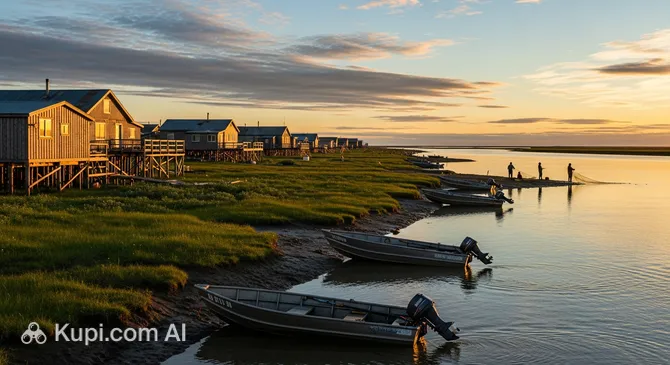
Emmonak. Source: Kupi.Binoculars

The local culture is a significant draw, with strong ties to traditional **Yup'ik heritage**. Subsistence living, particularly fishing and hunting, remains central to the community's way of life. Exploring the history of Emmonak reveals how this location has served as a gathering place and trading post for generations, evolving while maintaining deep respect for the land and river.

For nature enthusiasts, the surrounding area is a paradise. The region is renowned for its **world-class fishing**, particularly for King and Chum salmon during the summer runs. Birdwatchers will appreciate the proximity to the **Yukon Delta National Wildlife Refuge**, a critical habitat for millions of waterfowl. In the darker months, the lack of light pollution makes it an excellent spot to view the mesmerizing **Northern Lights**.

If you are looking for an off-the-beaten-path adventure that combines raw natural beauty with rich cultural traditions, Emmonak welcomes you. It is a place to disconnect from the bustle of modern cities and truly connect with the rhythm of the river.

Weather Overview

Emmonak experiences a subarctic climate defined by long, freezing winters and short, mild summers. The coldest time of the year is typically **January**, when average temperatures drop to around **-13.1°C**, with lows dipping as far as **-15.6°C**. Conversely, the warmest month is **July**, seeing average temperatures of **12.9°C** and highs reaching roughly **15.4°C**, making it the most comfortable time for outdoor activities.

While the actual volume of precipitation is quite low, ranging from **1mm to 3mm** monthly, the frequency of precipitation events is notable. August is often the dampest month in terms of wet days, with precipitation occurring on up to 17 days. Generally, you can expect cool summers with occasional light rain and cold, dry winters. Before heading out to this remote Alaskan village, it is wise to consult the detailed weather in Emmonak to ensure you are fully prepared for the elements.

Interesting Facts

Beyond the main attractions, Emmonak holds fascinating details about life on the edge of the Bering Sea that often go unnoticed. This remote community is defined by its resilience and deep connection to the shifting landscape of the delta.

  • A Village on the Move: Emmonak was not always located at its current site. It was originally established as a settlement called Kwiguk, meaning "hollow," located about 1.4 miles away. The community relocated to its present location in the mid-20th century due to severe erosion and flooding from the Yukon River, demonstrating the adaptability required to live in this region.

  • Meaning Behind the Name: The name "Emmonak" is derived from the Central Yup'ik word Imangaq, which refers to the blackfish. This hardy fish is a traditional food source and symbolizes the vital importance of subsistence fishing to the local culture and survival in the subarctic environment.

  • Winter Highways: Since there are no roads connecting the village to the rest of the state, winter transforms the local infrastructure dramatically. When the Yukon River freezes solid, it becomes a vital ice road, allowing residents to travel by snowmachine to neighboring villages like Alakanuk and Nunam Iqua for social gatherings and basketball tournaments.

  • A Global Delta: Emmonak sits within the Yukon-Kuskokwim Delta, which is one of the largest river deltas in the world. This massive wetland ecosystem is roughly the size of the state of Louisiana and serves as a critical nesting ground for millions of birds that migrate here from as far away as New Zealand and Antarctica.

How to Get There

Reaching this remote community in the Yukon-Kuskokwim Delta requires careful planning, as it is not connected to the state's main road system. Most visitors arrive by small aircraft from regional hubs. For a detailed guide on logistics and routes, you can read more about how to get to Emmonak.

The city of Emmonak does not have its own major airport listed in the regional network, but you can fly into Bethel Airport (BET) in the city of Bethel, which is about 264 km from Emmonak. This is a primary regional hub with substantial passenger traffic, serving as a vital gateway for the area. Since there are no roads connecting these locations, travelers typically transfer here to a smaller regional carrier or bush plane to complete the journey to the village.

Another option is Saint Mary's Airport (KSM) located in St Marys, which is significantly closer at about 102 km from Emmonak. This smaller airport handles regional connections and serves as another potential transit point. As with other hubs in the delta, the final leg of the trip from here is made via air travel rather than ground transport.

For clarity, here is a summary of the main airports in the wider region:

Airport Name City Passenger Traffic Km from City
Bethel Airport Bethel Large 264.0
Nome Airport Nome Medium 198.5
Saint Mary's Airport St Marys Small 102.3
Unalakleet Airport Unalakleet Small 224.1
Chevak Airport Chevak Small 149.1

Emmonak is not accessible by rail, and there are no railway stations in the vicinity or within the wider region. The rugged terrain and waterways of the delta make air and water travel the primary means of transportation for both locals and visitors.

Main Attractions

Yukon Delta National Wildlife Refuge is undoubtedly the most significant natural feature surrounding the city. As Emmonak is situated within this massive protected area, visitors have immediate access to one of the world's premier birdwatching destinations. The refuge protects a vast coastal plain that serves as a nesting ground for millions of waterfowl and shorebirds. In the spring and summer, the wetlands come alive with the sights and sounds of migrating geese, swans, and cranes, offering nature enthusiasts an unparalleled opportunity to observe wildlife in its pristine, undisturbed habitat.

The Yukon River itself is a central attraction and the lifeblood of the community. Standing on the banks of this mighty waterway, you can witness the sheer power of one of North America's longest rivers as it nears the Bering Sea. During the warmer months, the river is a hive of activity, with local skiffs and barges navigating the currents. For tourists, boat tours or simple riverside walks provide a chance to appreciate the scale of the delta and perhaps spot seals or beluga whales that occasionally venture upriver from the coast.

For a glimpse into the local economy and daily life, the Emmonak Fishing Docks are a fascinating stop. As a hub for the region's commercial fishing industry, this area bustles with energy during the salmon season. Visitors can observe the unloading of the day's catch and see the traditional and modern methods used to process fish. It is an authentic look at the subsistence lifestyle that defines the region, where the harvest of King and Chum salmon is not just a job but a cultural cornerstone.

While there are no large museums, the Village of Emmonak itself serves as a living cultural exhibit. Walking through the community offers a rare connection to traditional Yup'ik culture. You may see racks of fish drying in the open air, a time-honored method of preservation, or encounter locals traveling by ATV in summer and snowmachine in winter. The warm hospitality of the residents often turns a simple stroll into an educational experience, where stories of the land and ancestors are shared freely with respectful travelers.

In the winter months, the dark skies over Emmonak transform into a canvas for the Northern Lights (Aurora Borealis). Far from the light pollution of major cities, the village offers front-row seats to this celestial spectacle. The dancing ribbons of green and violet light are a frequent sight on clear nights, making the biting cold of the subarctic winter well worth enduring for photographers and dreamers alike.

Local Cuisine

The culinary landscape of Emmonak is defined not by Michelin-starred restaurants, but by the rhythms of the seasons and the bounty of the Yukon River. In this remote corner of the United States, food is a vital part of the subsistence lifestyle that has sustained the Yup'ik people for thousands of years. Visitors here will discover a diet centered on fresh, wild-harvested ingredients, offering an authentic taste of the subarctic wilderness that is impossible to replicate elsewhere.

The undisputed king of the local table is salmon. During the summer runs, King (Chinook) and Chum salmon are harvested in abundance. You will likely encounter it prepared in traditional ways: smoked strips are a savory, chewy snack perfect for energy in the cold, while fresh fillets might be baked or grilled. Another local staple is dried fish, preserved by the wind and sun on open-air racks, a method that intensifies the flavor and allows the catch to be stored for the long winter. For the adventurous eater, there is quaq—fish or meat eaten frozen and raw, often dipped in seal oil.

No culinary exploration of the region is complete without trying Akutaq, widely known as "Eskimo ice cream." This traditional dessert is a high-energy mixture traditionally made from whipped fat (such as seal oil or reindeer fat) and snow, blended with an abundance of local berries like cloudberries (salmonberries) or blueberries. Modern versions may use vegetable shortening and sugar, but the tart explosion of fresh tundra berries remains the highlight of the dish.

When it comes to beverages, the focus is on warmth and comfort. Hot coffee and tea are the drinks of choice, consumed throughout the day to ward off the chill of the delta. Travelers should be aware that Emmonak, like many rural Alaskan villages, has strict regulations regarding alcohol. It is often a "damp" or "dry" community where the sale of alcohol is restricted or prohibited; therefore, there are no bars or pubs in the conventional sense. Socializing typically happens over a steaming cup of tea in a community hall or a private home.

The "dining scene" in Emmonak is modest and functional. You will not find street food stalls or a district of eateries. Instead, the local food culture is centered around home kitchens and community gatherings. There is typically a main general store, such as the AC Value Center, which serves as the primary source for groceries and sometimes offers hot deli items or quick meals. For tourists, the most memorable meals often come from the hospitality of locals or guesthouses, where the simple preparation of incredibly fresh fish and game takes center stage.

Travel Tips

Visiting Emmonak offers a rare and rewarding glimpse into rural Alaskan life, but this remote setting requires careful preparation to ensure a comfortable journey. To help you navigate the unique logistics and cultural landscape of this Yukon River community, here are some essential practical tips for your trip.

  1. Clothing and Gear: The terrain in the river delta is often wet and muddy, so waterproof footwear is non-negotiable; knee-high rubber boots (often called "Alaskan sneakers") are the best choice for walking around town. Dress in layers to adapt to the shifting subarctic weather. In winter, heavy parkas, insulated pants, and face protection are vital, while in summer, a high-quality rain jacket and a head net to protect against mosquitoes are essential.

  2. Transportation: There is no public transit, metro, or car rental service in Emmonak. The village is small enough to be walkable, but locals primarily get around using ATVs (four-wheelers) in the summer and snowmachines (snowmobiles) in the winter. If you need to transport luggage or travel further, you may be able to arrange a ride with a local resident or your lodging host, as ride-hailing apps like Uber do not operate here.

  3. Finances: Cash is king in rural Alaska. While the main general store (AC Value Center) usually accepts credit cards, internet outages can occur, rendering card machines useless. Furthermore, if you plan to buy authentic handicrafts from local artisans or pay for an informal ride, you will need US dollars. It is highly advisable to withdraw sufficient cash in a major hub like Bethel or Anchorage before flying into the village, as ATM access can be unreliable.

  4. Health and Safety: The village is served by a local clinic for basic medical needs, but serious emergencies require a medical evacuation flight to a larger hospital, which is weather-dependent and expensive. It is strongly recommended to have travel insurance that covers medevac. Additionally, be "bear aware" if you venture to the outskirts of town, and always respect the extreme cold in winter by not staying out too long without proper gear.

  5. Communication: English is widely spoken, though you will hear locals speaking Yup'ik, the traditional language; learning a greeting like "Cama-i" (Hello) is a great icebreaker. Cell phone coverage can be limited depending on your carrier, with GCI being the primary provider in the region; other major carriers may roam or have no signal. Wi-Fi is available in some public buildings but is often slow and data-capped.

  6. Local Etiquette: The community values respect and modesty. Always ask for permission before taking photographs of people, their children, or their property—including fish drying racks and boats. If you are invited into a home, it is customary to remove your shoes at the door. Listen more than you speak, and show deference to Elders, who hold a high status in the community.

  7. What to Avoid: Do not bring alcohol or drugs into the community without strictly verifying the current local laws. Emmonak has historically had strict regulations regarding the possession and sale of alcohol (often being a "damp" or "dry" village), and violating these laws can lead to severe legal trouble and is considered highly disrespectful to the community's efforts to maintain wellness.

  8. Insect Protection: If you are visiting between June and August, do not underestimate the insects. The tundra breeds massive swarms of mosquitoes and biting gnats (no-see-ums). Bring high-concentration DEET repellent and wear long sleeves and pants even on warmer days to keep yourself comfortable.

By packing the right gear and approaching your visit with an open and respectful mind, you will find Emmonak to be a welcoming place rich in tradition. Enjoy the incredible silence of the tundra, the hospitality of the people, and the raw beauty of the Yukon Delta.

Entertainment & Nightlife

Travelers accustomed to the neon lights and pulsing beats of urban nightlife will find a completely different rhythm in Emmonak. As a small, remote community in rural Alaska, the village does not have a commercial nightlife district, nightclubs, or cocktail bars. In fact, Emmonak is often a "damp" or "dry" community, meaning the sale and importation of alcohol are strictly regulated or prohibited. Consequently, you will not find any pubs or taverns here. Instead, evening entertainment is deeply rooted in community gatherings, school sports, and the raw beauty of the natural world.

The social heartbeat of the village after dark is often the Emmonak School gymnasium. In rural Alaska, high school basketball is more than just a sport; it is a major community event that draws nearly everyone in town. During the season, the gym is packed with cheering locals, making a game night the closest thing to a "bustling" evening you will experience. The atmosphere is incredibly high-energy, warm, and welcoming to respectful visitors. The dress code is strictly casual and practical—think hoodies, jeans, and warm boots.

Another popular form of evening entertainment is community bingo, frequently held at the Emmonak Community Hall or similar local venues. These games are serious social affairs and a primary way for residents to catch up with one another. It offers a unique window into local culture that few tourists get to see. If you decide to participate, bring cash, be respectful of the local pace, and enjoy the chance to interact with residents in a relaxed setting.

For those who prefer nature over social gatherings, the "nightlife" is provided by the sky itself. During the winter months, the lack of light pollution makes Emmonak a prime location for viewing the Northern Lights. The banks of the Yukon River offer an unobstructed view of the horizon. Walking here at night requires caution due to the extreme cold and potential presence of wildlife, but the silence and the spectacle of the aurora borealis provide a meditative experience that rivals any city entertainment.

When planning an evening out, keep in mind that "opening hours" for events are often determined by the community calendar rather than set business times. Prices for bingo or entry to sports games are modest, usually requiring small amounts of cash. Getting around is done primarily by walking or, if you have access to one, a snowmachine or ATV. There are no taxis or ride-share services, so you must be self-sufficient.

Safety is paramount during the evening. While the crime rate in terms of theft against tourists is generally not a primary concern, the environment poses real risks. Temperatures drop drastically at night, and venturing to the outskirts of the village can put you in the path of bears or moose. It is best to stay within the lighted areas of the village center and always let your host know where you are going.

During the daylight hours, entertainment is equally low-key and culturally focused. While there are no amusement parks or large theaters, visitors can spend time at the fishing docks observing the daily catch or visiting the general store, which serves as a casual meeting point. The true attraction is the lifestyle itself, observing how a modern village thrives on the edge of the wilderness.

Parks & Museums

In a remote village like Emmonak, the concepts of "parks" and "museums" take on a different meaning than in a typical city. You will not find manicured botanical gardens or ticketed art galleries here. Instead, the entire region functions as a vast, open-air park of untouched wilderness, and the culture is preserved not in glass cases, but in the daily lives, stories, and craftsmanship of the Yup'ik people who call this land home.

The most significant natural area is the Yukon Delta National Wildlife Refuge, which essentially serves as the community's backyard. Spanning millions of acres, this is one of the largest protected conservation areas in the United States. For visitors, it offers a "park" experience defined by wild tundra, wetlands, and winding sloughs rather than paved paths. It is a world-class destination for observing migratory birds, where you can walk along the marshy edges to spot species that travel from across the globe to nest in these nutrient-rich waters.

Closer to the settlement, the banks of the Yukon River act as the primary recreational space for locals and visitors alike. In the absence of formal urban parks, the riverfront is where the community connects with nature. During the summer, the gravel bars and grassy banks provide a place to watch the sunset over the water, observe the busy boat traffic, and breathe in the fresh, cool air of the delta. It is a raw, unconstructed space that changes daily with the tides and the seasons.

Regarding cultural institutions, Emmonak does not have a dedicated museum building. However, the living heritage of the village is accessible through its community hubs. The Emmonak Tribal Council and local community halls often serve as venues where culture is displayed during gatherings and festivals. During traditional celebrations, such as a potlatch, these spaces transform into vibrant cultural centers filled with drumming, dancing, and the sharing of stories that have been passed down for generations.

While there are no commercial art galleries, the village is home to many talented local artisans. The "galleries" here are the homes and workshops of residents who create exquisite traditional crafts. You can often find intricate ivory carvings, hand-sewn skin boots (mukluks), and beautifully woven grass baskets. Engaging respectfully with locals is the best way to discover this art; many artists sell their work directly, offering a personal connection to the history and meaning behind each piece that a museum plaque could never convey.

For an insider experience, keep an eye out for the fish drying racks scattered throughout the village during the summer. While not a formal exhibit, these structures are a testament to the engineering and subsistence history of the region. Seeing the salmon hung with precision to catch the wind is a visual lesson in the ingenuity required to thrive in this subarctic environment, offering a genuine glimpse into the heart of Yup'ik culture.

Getting Around

Public transport in Emmonak is virtually non-existent in the conventional sense. As a small, remote village with a population of fewer than 1,000 residents, there are no public buses, trams, metros, or trolleybuses. The infrastructure is not designed for mass transit systems found in larger cities. Instead, the "transport network" consists of a mix of personal vehicles adapted to the rugged terrain and informal arrangements among locals.

For visitors, the primary mode of getting around the village itself is walking. The settlement is compact enough that most key locations, such as the general store, the school, and the airstrip, are accessible on foot. However, the unpaved roads can be muddy in summer and icy in winter, so the "ticket" to a comfortable journey is a pair of high-quality, waterproof boots rather than a travel card. There are no schedules, routes, or stops to memorize.

Regarding payment and access, since there is no formal transit authority, there are no travel passes, mobile apps, or ticket machines. If you need to travel a distance that is too far to walk—such as transporting heavy luggage from the airstrip—you will rely on informal "bush taxi" services. These are typically local residents using their personal vehicles to offer rides. Payment for these services is strictly cash only. You should agree on a price before getting in, which is usually a flat rate of a few dollars per trip.

The true "alternatives" to standard transport here are All-Terrain Vehicles (ATVs) and snowmachines (snowmobiles). In the summer months, the roar of ATVs is the soundtrack of the village, as they are the most practical way to navigate the gravel and dirt roads. In winter, when the ground is covered in snow and ice, snowmachines become the lifeline of the community. While there are no official rental agencies for these vehicles targeting tourists, some lodges or local guides may provide transport as part of a tour package.

A unique feature of the local transport landscape appears in winter: the ice road. When the Yukon River freezes thick enough, it transforms into a natural highway connecting Emmonak to neighboring villages like Alakanuk. This "seasonal infrastructure" allows for travel by snowmachine or truck between communities that are otherwise isolated by water in the summer. It is a fascinating, albeit strictly functional, aspect of travel in the delta that replaces the need for bridges or ferries during the coldest months.

Practical advice for tourists is simple: be self-sufficient and flexible. Do not expect to hail a cab on the street corner or use a ride-sharing app like Uber or Lyft, as they do not operate here. If you are staying at a local guesthouse, your host is often your best resource for arranging transportation. Always carry small bills in US currency for informal rides, and dress for the weather, as you will likely spend more time walking outdoors than sitting in a vehicle.

Accommodation

Accommodation in Emmonak is extremely limited and primarily functional, reflecting the remote nature of this rural Alaskan community. Visitors should not expect luxury resorts, major hotel chains, or extensive amenities. The available lodging options are designed largely to accommodate visiting officials, seasonal workers, and contractors rather than leisure tourists. Consequently, the standards are typically basic, offering clean and warm shelter without the frills found in larger cities.

Most lodging facilities are located centrally within the village, often within walking distance of the airstrip, the general store, and the riverfront. Given the small size of the settlement, "location" is rarely a deciding factor, as almost any accommodation will place you close to the heart of the community. Staying in the village center allows for easy access to the few local services available, which is crucial in a place with no public transport.

Since there are no standard online booking engines for properties in Emmonak, securing a room requires a different approach. It is highly recommended to book well in advance by calling the lodging providers directly. Capacity is very low, and during peak fishing seasons or community events, rooms can be completely sold out to industry workers. Do not rely on finding a place to stay upon arrival; you must have a confirmed reservation before flying in.

Regarding costs, travelers should be prepared for higher prices than the quality of accommodation might suggest. Due to the high cost of energy and logistics in the bush, even budget-style rooms can fall into a mid-range price bracket compared to the "Lower 48" states. Payment methods can vary, so while some places may accept credit cards, it is wise to confirm this over the phone and carry sufficient cash as a backup.

Nearby Cities

For those looking to explore the surroundings, Emmonak serves as an excellent base for day trips to several interesting nearby locations. While the region is remote and lacks a standard road network, the unique geography of the Yukon-Kuskokwim Delta allows for travel by boat in the summer and snowmachine or ice road in the winter to neighboring communities.

One of the most accessible destinations is Alakanuk, located just a short distance down the Yukon River. Due to its proximity, it is frequently visited by locals for social gatherings and basketball tournaments. A trip here offers a deeper insight into the interconnected nature of these river villages, where the waterway serves as the main highway. Like Emmonak, it is a traditional Yup'ik community centered around subsistence fishing, offering visitors a chance to see daily life in the delta from a slightly different perspective.

For a more ambitious excursion, travelers might consider Nome. Although it requires air travel to reach, it is the most famous hub in Western Alaska. Known for its rich Gold Rush history and as the finish line of the legendary Iditarod Trail Sled Dog Race, the town offers a distinct contrast to the smaller villages. Visitors can explore the Bering Land Bridge National Preserve or simply walk the historic Front Street, imagining the days when prospectors flocked to its shores.

Another notable community in the region is Unalakleet, situated on the coast of Norton Sound. Famous for its silver salmon runs and its role as a major checkpoint on the Iditarod trail, it is a vibrant village known for its hospitality. The name means "place where the east wind blows," and a visit here provides stunning coastal views and a chance to experience the convergence of Inupiat and Yup'ik cultures.

City Population Distance (km)
Nome 3697 197
Hooper Bay 1300 162
Chevak 1000 150
Alakanuk 700 12
Unalakleet 700 224

These nearby destinations offer a glimpse into the diverse culture and landscapes of the region, ranging from quiet river settlements to historic gold rush towns.

Shopping & Souvenirs

Shopping in Emmonak is a strictly functional affair, designed to meet the subsistence and daily needs of a remote Alaskan community rather than the leisure desires of tourists. Visitors will not find designer boutiques, sprawling department stores, or souvenir shops lining the streets. Instead, the retail experience here offers a glimpse into the logistics of life in the bush, where getting essential goods is a triumph of supply chain management. The "shopping scene" is limited to a few general stores that stock everything from groceries and hardware to winter clothing.

There are no designated shopping districts or promenades in the city. The commercial activity is concentrated in the heart of the village, typically near the river or the airstrip. The primary retail hub is the AC Value Center (Alaska Commercial Company), which serves as the lifeline for the community. Here, you can find a mix of supermarket items, outdoor gear, and household necessities. It is less of a shopping destination and more of a community meeting point where residents gather to pick up supplies arriving by barge or cargo plane.

Travelers should be aware that there are no shopping malls in Emmonak. The infrastructure does not support large-scale retail complexes. The nearest shopping mall is hundreds of miles away in Anchorage. In this village, a "large store" is simply one that has more than two aisles. The focus is entirely on utility, providing the tools and food necessary to survive the subarctic climate.

While there are no formal flea markets or food bazaars, the local trading culture is vibrant but informal. You won't find a market square with stalls; instead, commerce often happens via community bulletin boards at the Post Office or the tribal hall, or through word-of-mouth. Occasionally, during community festivals or gatherings, local bakers and cooks may sell homemade goods, such as fry bread or dried fish, offering a delicious taste of local flavor that you cannot buy in a store.

Despite the lack of conventional shops, Emmonak is an excellent place to acquire authentic Native Alaskan handicrafts. The village is home to skilled Yup'ik artisans known for their exquisite workmanship. The best souvenirs to look for include hand-woven grass baskets, intricate beadwork, and traditional skin sewing, such as warm fur hats or mukluks (boots). Ivory carvings are also a specialty of the region; however, if you plan to purchase ivory, ensure it is authentic and comes with the proper documentation, especially if you are traveling internationally.

When it comes to purchasing these local treasures, transactions are often personal. You might buy directly from an artist's home or a small display in a community building. Because of this, cash is essential. While the main general store accepts credit cards, local artisans and smaller vendors typically deal only in US dollars. Opening hours for the main store are generally standard (roughly 9:00 AM to 6:00 PM or 7:00 PM), but they can fluctuate based on staffing and weather. On Sundays, hours may be reduced.

Regarding taxes, Alaska is unique in that it has no state sales tax. However, local municipalities like Emmonak often levy their own local sales tax to fund city services. There is no tax-free refund system for tourists in the United States similar to the VAT refunds found in Europe. Therefore, the price you see (plus the local tax added at the register) is the final price you pay.

Reached the end of the page?

That means the route is fully explored