Support

Scammon Bay

About

Scammon Bay is a captivating destination located in the vast wilderness of Alaska, within the United States. Nestled at the foot of the majestic Askinuk Mountains, this small community offers a unique window into the traditional lifestyle of the region. Known locally as Marayaaq, the village is situated on the south bank of the Kun River, just a short distance from the Bering Sea coast, providing a stunning backdrop of rugged natural beauty.

With a population of approximately 500 residents, Scammon Bay maintains a close-knit atmosphere where the rhythm of life is dictated by the seasons and the land. The climate here is subarctic, characterized by maritime influences that create a landscape defined by rolling tundra and scenic waterways. It is a place where visitors can witness the authentic daily life of rural Alaska, far removed from the bustle of major cities.
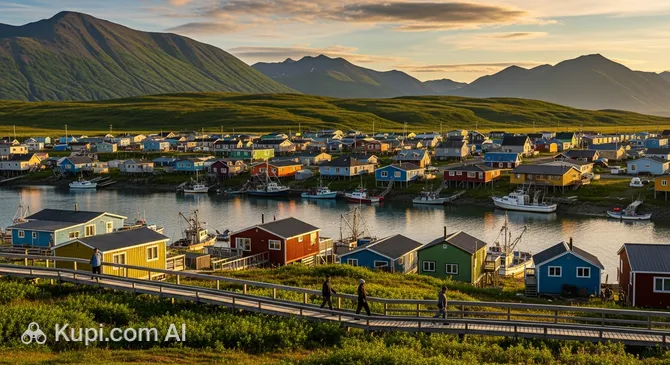
Scammon Bay. Source: Kupi.Binoculars

The area is steeped in cultural significance. Those wishing to understand the deep roots of this community should explore the history of Scammon Bay, which is intimately connected to the heritage of the Yup'ik people. The village has long served as a vital hub for subsistence living, with fishing and hunting remaining central to the local identity and economy.

For nature enthusiasts, the Askinuk Mountains are a primary highlight, rising abruptly from the flat delta to offer dramatic views and hiking opportunities. The surrounding wetlands are also a paradise for birdwatchers, teeming with waterfowl and migratory birds during the warmer months. Whether you are watching the sunset over the Bering Sea or observing the rich wildlife, the pristine environment is truly memorable.

If you are seeking an off-the-beaten-path adventure, Scammon Bay invites you to experience its serene atmosphere and the warm hospitality of its people. It is an ideal stop for travelers looking to connect with nature and experience the quiet resilience of the Alaskan spirit.

Weather Overview

Travelers visiting this remote Alaskan community should be prepared for a climate defined by distinct seasonal contrasts. The weather in Scammon Bay is generally cold, featuring long, freezing winters and short, cool summers. January is typically the coldest month, with average temperatures dropping to -12.7°C, while the warmest conditions occur in July, when averages reach a mild 12.1°C.

Precipitation in the region is relatively light in terms of volume, usually ranging between 1mm and 3mm per month, but damp conditions are common. You can expect cool summers with frequent wet days, particularly in August, and cold winters where snow and ice dominate the landscape.

Interesting Facts

Beyond the main attractions and scenic views, Scammon Bay holds several fascinating secrets that highlight its unique place in Alaskan history and culture.
  • The village is named after Captain Charles Melville Scammon, a 19th-century whaling captain and naturalist. Interestingly, Scammon served as the marine chief for the Western Union Telegraph Expedition, a bold project in the 1860s that aimed to connect America and Europe via a telegraph line across the Bering Strait.

  • In the local Central Yup'ik language, the village is known as Marayaaq, which translates to "muddy beach" or "little mud." This name perfectly describes the extensive tidal flats that characterize the shoreline where the Kun River meets the sea, a vital area for the community's subsistence fishing.

  • Scammon Bay sits at the base of the Askinuk Mountains, which rise to approximately 2,300 feet. This is a significant geographical anomaly, as these mountains are the highest points in the entire Yukon-Kuskokwim Delta, standing in stark contrast to the thousands of square miles of flat wetlands surrounding them.

  • There is a local culinary curiosity often associated with the name: a dish simply called "Scammon." It typically consists of a mixture of salmon and scrambled eggs. While some might assume the dish's name is a play on "scrambled salmon," it is actually named after the town itself, celebrating the abundance of fish in the local waters.

How to Get There

Reaching this remote Alaskan community is an adventure in itself, primarily involving air travel due to the lack of connecting roads. Visitors typically fly into regional hubs before taking smaller aircraft to the village. For a comprehensive guide on planning your journey, you can read more about how to get to Scammon Bay and the various transport options available.

The city of Scammon Bay does not have its own major commercial airport listed here, but the primary regional gateway is Bethel Airport (BET), located in the city of Bethel. It serves as a crucial hub for the Yukon-Kuskokwim Delta and is approximately 232.8 km from Scammon Bay. Since there is no road network linking the two, travelers must rely on connecting flights to reach the village. With annual traffic of around 290,000 passengers, the airport offers regular connections to major Alaskan cities.

For those connecting through other nearby communities, Saint Mary's Airport (KSM) in St Marys is another option, situated about 122.2 km away. Additionally, the closest listed facility is Chevak Airport (VAK) in Chevak, just 34.1 km from Scammon Bay. Travel between these locations is strictly by air or, in specific seasons, by boat or snowmachine, as overland travel by car is impossible. You can find more details about these facilities to help plan your connection.

For clarity, here is a summary of the main airports:

Airport Name City Passenger Traffic Km from City
Bethel AirportBethelMedium232.8
Saint Mary's AirportSt MarysSmall122.2
Chevak AirportChevakSmall34.1
Kwigillingok AirportKwigillingokSmall254.9
Kongiganak AirportKongiganakSmall255.5

Scammon Bay is not accessible by rail, as there are no railway lines extending to this part of western Alaska. The rugged terrain and vast wetlands make train travel impossible. Visitors should rely on the established network of air taxis and boats during the summer months to reach the village.

Main Attractions

Scammon Bay is a destination defined by its raw, untouched wilderness rather than commercial tourism. Visitors to this remote village are treated to an authentic slice of rural Alaskan life, where the attractions are the land, the water, and the vibrant culture of the Yup'ik people. The experiences here revolve around the great outdoors, offering a peaceful retreat for those looking to disconnect and immerse themselves in nature.

Askinuk Mountains are undoubtedly the most striking natural feature in the area. Rising abruptly from the flat wetlands of the Yukon-Kuskokwim Delta, these mountains reach elevations of over 2,300 feet and serve as a dramatic backdrop to the village. For hikers and outdoor enthusiasts, the mountains offer challenging terrain and the reward of breathtaking panoramic views. From the ridges, you can gaze out over the vast tundra and the shimmering waters of the Bering Sea, a vista that is particularly magical during the long days of the midnight sun.

The lifeblood of the community is the Kun River, which flows directly past the village. This waterway is not only a vital transportation route but also a premier spot for fishing, which is central to the local lifestyle. During the summer months, the river teems with various species of salmon, providing an excellent opportunity for sport fishing and boating. Watching the local fishermen ply these waters offers a glimpse into the subsistence traditions that have sustained the region for generations.

Just a short distance away lies the Bering Sea Coast, where the river meets the ocean. The coastal wetlands and tidal flats are a haven for wildlife, particularly migratory birds. Birdwatchers will find this area fascinating, as it serves as a nesting ground for numerous species of waterfowl and shorebirds. The stark beauty of the coastline, with its wide horizons and shifting tides, provides a serene setting for photography and wildlife observation.

While not a traditional museum, the village itself serves as a living cultural attraction. Walking through Scammon Bay allows visitors to observe the daily rhythms of a traditional Yup'ik community. You may see racks of fish drying in the open air, a practice essential for winter food stocks, or witness the crafting of traditional tools and garments. The warmth and hospitality of the residents make exploring the village a memorable part of any visit to this unique corner of Alaska.

Local Cuisine

The culinary landscape of Scammon Bay is deeply rooted in the subsistence lifestyle of the Yup'ik people, where the land and waters provide the primary sources of nourishment. Gastronomy here is not about fine dining restaurants but rather the freshness of wild-harvested ingredients. The diet revolves heavily around the seasons, with Pacific salmon being the undisputed staple. Whether it is King, Silver, or Red salmon, you will often find it prepared in various traditional ways: dried into strips, smoked to preserve it for winter, or baked fresh from the Kun River.

One specific dish that visitors might encounter is a hearty local breakfast known simply as "Scammon." As the name suggests, it is a signature favorite in the village, consisting of a savory mix of flaked salmon and scrambled eggs. This protein-rich meal is a perfect example of how local ingredients are adapted into comforting, everyday food that fuels the residents for days spent outdoors in the challenging subarctic climate.

For a taste of something truly traditional, you must try Akutaq, often referred to as "Eskimo Ice Cream." This unique delicacy is a whipped mixture traditionally made from reindeer fat or seal oil, snow, and an abundance of wild berries gathered from the tundra, such as cloudberries (salmonberries) or blueberries. Modern versions often use shortening and sugar, creating a fluffy, sweet treat that is a fixture at community gatherings and celebrations.

When it comes to beverages, hot drinks are essential for staying warm. Coffee and tea are consumed throughout the day and are central to social interactions. It is important for travelers to note that Scammon Bay, like many rural Alaskan communities, often restricts the sale and possession of alcohol. Consequently, there is no nightlife or bar culture; instead, social life revolves around school events, community halls, and private homes where tea is always brewing.

Travelers should be aware that there are no standard commercial restaurants or cafes in Scammon Bay. The dining scene is entirely domestic. Visitors usually rely on the local general store for groceries and snacks or are hosted by local families where they might share a home-cooked meal. This lack of commercial eateries offers a rare opportunity to experience food as a communal and survival-based activity, rather than a mere transaction.

Travel Tips

Visiting a remote community like Scammon Bay requires a different level of preparation than a standard tourist destination, as the wilderness dictates the rules here. To ensure your trip to this unique corner of Alaska is safe, respectful, and enjoyable, here are some essential practical tips to keep in mind.

  1. Clothing and Gear: The weather in the Yukon-Kuskokwim Delta can be unpredictable and harsh. Dress in layers, starting with thermal base layers and finishing with a windproof and waterproof outer shell. Since the village name Marayaaq translates to "muddy beach," sturdy, waterproof rubber boots (often called "Alaskan sneakers") are an absolute necessity for navigating the unpaved and often muddy paths. If you visit in winter, parka-grade insulation and heavy mittens are mandatory.

  2. Transportation: Forget about car rentals or ride-hailing apps; there are no paved roads connecting Scammon Bay to the rest of Alaska, nor are there standard taxi services within the village. The community is small and walkable, so your own two feet will be your primary mode of transport. Locals typically use ATVs (four-wheelers) in the summer and snowmachines in the winter. If you need to move heavy gear, you may be able to arrange a ride with a local resident for a small fee.

  3. Finances: The local currency is the US Dollar. While there is a general store that likely accepts credit cards, systems can go down due to internet connectivity issues. It is highly recommended to bring enough cash to cover your entire stay, including food and potential lodging costs. ATMs are not reliable or may be entirely unavailable, so do not count on withdrawing money upon arrival.

  4. Health and Safety: The village is served by a local health clinic staffed by health aides, but resources are limited to basic care and stabilization. For any serious medical emergency, a medevac flight to Bethel or Anchorage is required, which is weather-dependent. Ensure you bring an ample supply of any personal prescription medications. Also, bear safety is relevant here; be aware of your surroundings when walking on the outskirts of the village.

  5. Communication: English is widely spoken, but you will hear the Central Yup'ik language used frequently among locals, especially elders. A friendly "Cama-i" (hello/how are you) is a great way to break the ice. Mobile coverage is generally limited to specific regional carriers like GCI; major national carriers often have no signal in rural Alaska. Wi-Fi is scarce and slow, so prepare to be disconnected from high-speed internet during your visit.

  6. Local Etiquette: The community is close-knit and values respect, particularly toward elders. Always ask for permission before taking photographs of residents, their homes, or their subsistence activities (such as drying fish). It is polite to remove your shoes when entering a home or the school. Life here moves at a different pace, often dictated by the weather and tides, so patience is a virtue.

  7. What to Avoid: Do not bring alcohol or drugs into the village without explicitly checking current local laws. Many rural Alaskan communities have voted to be "dry" (banning the sale and importation of alcohol) or "damp" (strictly limiting possession). Violating these local option laws is a serious offense and is culturally insensitive.

  8. Flexibility is Key: Travel in rural Alaska is notoriously subject to "weather holds." Flights into and out of Scammon Bay are frequently delayed or canceled due to fog, wind, or snow. Always pack a few days' worth of extra supplies and keep your return schedule flexible, as you might get stuck in the village longer than planned.

By packing the right gear and approaching your visit with an open mind and a respectful attitude, you will be well-equipped to experience the genuine warmth of Scammon Bay. Embrace the slower pace of village life, and you will find that the challenges of travel are far outweighed by the beauty of the landscape and the culture.

Entertainment & Nightlife

Travelers expecting a bustling scene of nightclubs, cocktail bars, or late-night discos will find a very different kind of evening experience in Scammon Bay. As a small, traditional Yup'ik community, the village does not have a commercial nightlife sector. There are no pubs, dance clubs, or districts dedicated to evening entertainment. Instead, the "nightlife" here is dictated by the rhythms of nature and the close-knit community spirit.

The most spectacular evening show in Scammon Bay is provided by the sky itself. During the long, dark winter months, the lack of light pollution makes the village a prime location for viewing the Aurora Borealis (Northern Lights). Visitors willing to brave the cold can witness mesmerizing displays of green and violet dancing over the Askinuk Mountains and the frozen Kun River. This natural phenomenon offers a serene and awe-inspiring alternative to the noise of a city night out.

Social life in the evenings revolves almost entirely around community gatherings rather than commercial venues. The Scammon Bay School often serves as the central hub for entertainment, particularly during the basketball season. In rural Alaska, high school basketball is incredibly popular, and games draw nearly the entire village for an evening of cheering and socializing. Additionally, community bingo nights are frequent and serve as a major social activity where locals catch up with one another.

Since the sale and importation of alcohol are typically restricted or banned under local option laws, the atmosphere is dry and family-oriented. You will not find places to buy drinks or party late into the night. The dress code for any evening activity is purely functional: heavy winter gear, insulated boots, and warm layers are essential, regardless of where you are going. The vibe is casual, welcoming, and quiet.

For daytime entertainment, the options are equally focused on the outdoors and culture rather than built attractions like theaters or amusement parks. Entertainment here means hiking the ridges of the Askinuk Mountains for panoramic views or observing the rich birdlife along the wetlands. Visitors might also spend time at the local general store, which acts as an informal meeting place, or watching local artisans work on traditional crafts. The experience is about immersing oneself in the lifestyle of the delta rather than visiting ticketed attractions.

Safety is a critical consideration for any night walks. While the village is generally safe from crime, the surrounding wilderness poses real risks. Bears and other wildlife can venture close to the village, especially after dark. It is advisable to stay within the lighted areas of the community and avoid wandering onto the tundra alone at night. There are no taxi services, so getting around is done on foot or, if you are lucky, by catching a ride on a local’s snowmachine or ATV.

Parks & Museums

In Scammon Bay, the concept of parks and museums is redefined by the vastness of the Alaskan wilderness and the richness of living tradition. There are no manicured city gardens or ticketed art galleries here; instead, the entire surrounding landscape serves as a grand national park, and the village itself acts as a living museum where ancient Yup'ik customs are practiced daily.

Yukon Delta National Wildlife Refuge is effectively the colossal "park" that encompasses the region. As one of the largest wildlife refuges in the world, it surrounds Scammon Bay with millions of acres of wetlands, tundra, and rivers. This area is a globally significant habitat for waterfowl and shorebirds. For visitors, it offers an unparalleled opportunity to observe nature in its most primitive state, with the endless horizon providing a sense of solitude and scale that few other places on Earth can match.

The Slopes of the Askinuk Mountains serve as the community's primary recreational green space. While not a park in the traditional sense, these slopes offer accessible hiking directly from the village. In the summer, the tundra here transforms into a lush carpet of wildflowers and berries, functioning as a communal garden where families gather to harvest cloudberries and blueberries. The elevation provides a natural vantage point for viewing the intricate maze of waterways below, making it a favorite spot for both locals and adventurous travelers.

Regarding cultural institutions, the "Living Museum" of the Village is the most poignant cultural experience available. Rather than viewing artifacts behind glass, visitors can walk the unpaved paths to see traditional life in action. You will likely observe racks of salmon drying in the wind—a preservation method used for thousands of years—and see handmade drift nets and skin boats (kayaks) being maintained. Every corner of the village offers a glimpse into the ingenuity required to thrive in this subarctic environment.

The Scammon Bay School often functions as the cultural heart of the community, filling the role of a gallery or cultural center. It is here that the traditions of Yup'ik dance and drumming are passed down to the younger generation. During community festivals or special events, the school gymnasium transforms into a venue for storytelling and performance art, showcasing the vibrant oral history and artistic expression of the residents.

Among the architectural landmarks, the Covenant Church stands out as a focal point of the village's built environment. Its white steeple is often the first thing visible when approaching by air or river. The church represents the historical intersection of traditional beliefs and Western influence in the region. It serves not only as a place of worship but as a gathering space that anchors the community's social structure.

For an authentic insider experience, ask a local about the best spots for berry picking on the tundra behind the village. It is a meditative and rewarding activity that allows you to connect with the land exactly as the locals do. Just remember that these patches are vital food sources for families, so always harvest respectfully and with permission if you are near private camps.

Getting Around

Visitors planning a trip to Scammon Bay should be aware that the city does not possess a public transport system in the traditional sense. Due to its small population and remote location, you will not find public buses, metros, trams, or trolleybuses here. The infrastructure is designed for a small, close-knit community rather than for mass transit, meaning the familiar networks found in larger urban centers are entirely absent.

The primary mode of transportation within the village is walking. The community is compact, and most facilities, including the general store, school, and clinic, are accessible on foot. For locals, the main forms of motorized transport are All-Terrain Vehicles (ATVs) or "four-wheelers" during the summer months and snowmachines (snowmobiles) during the winter. These vehicles are essential for navigating the unpaved roads, boardwalks, and the surrounding tundra.

There is no formal payment system, ticketing machine, or transport app to worry about. Since there are no scheduled public transport routes, there are no travel passes or travel cards to purchase. If you require a ride to carry heavy luggage from the airstrip or to move across the village, you will not be able to use a credit card or a mobile wallet. The economy of transport here, to the extent that it exists for visitors, operates strictly on cash or social reciprocity.

Regarding alternatives like taxis or car-sharing, there are no licensed taxi companies or services like Uber and Lyft. However, an informal "bush taxi" system often operates where locals may offer rides in their trucks or on their ATVs for a small cash fee, usually ranging from $5 to $10 per trip. It is best to ask at the airline agent's office or the general store if anyone is available to provide a lift. Car rentals are also non-existent, as there are no roads connecting the village to the outside world.

A unique feature of the local infrastructure is the network of wooden boardwalks that serve as sidewalks. These are crucial for keeping pedestrians above the mud and wetlands. Tourists should be advised to walk carefully on these boardwalks, especially when they are wet or icy, and to step aside for motorized traffic. In winter, the frozen river effectively becomes a highway for snowmachines, extending the travel network far beyond the village limits.

Accommodation

Finding accommodation in Scammon Bay requires a different approach than booking a stay in a standard tourist destination. Due to the village's remote location and small population, there are no commercial hotels, motels, or resorts. The hospitality infrastructure is minimal, reflecting the subsistence lifestyle of the community. Visitors should not expect luxury amenities or major hotel chains; instead, lodging options are typically functional, basic, and often integrated into community facilities.

The primary option for travelers is usually arranged through the local tribal council or the city office. These entities often manage limited lodging facilities designed for visiting workers, government officials, or the occasional traveler. These accommodations are generally simple, offering a warm place to sleep and access to shared bathrooms and kitchen facilities. In some cases, if official lodging is full, visitors may need to rely on homestays with local families, which offers a unique but informal way to experience village life.

Since the village is compact, location is rarely an issue. Any accommodation you secure will be within walking distance of the airstrip, the general store, and the river. The entire community acts as the "center," so staying anywhere in the village places you close to the essential services and the natural beauty of the surrounding tundra.

Booking Tip: You cannot book accommodation in Scammon Bay via major online travel agencies or apps. Planning requires direct communication. It is essential to call the City of Scammon Bay or the Traditional Council well in advance of your trip to inquire about availability and reserve a spot. Do not arrive without a confirmed place to stay, as capacity is extremely limited.

Regarding costs, travelers should be prepared for prices that might seem high relative to the amenities provided. The cost of maintaining facilities in rural Alaska is significant, and nightly rates often reflect this, typically falling into a mid-range to high price bracket. Payment methods can be limited; while some offices may take checks or credit cards, it is highly advisable to bring sufficient cash to cover your lodging expenses just in case electronic systems are down.

Nearby Cities

Nearby Cities:

Scammon Bay is situated in one of the most remote and sparsely populated regions of the United States. In this vast expanse of the Alaskan tundra, the concept of a "neighboring city" is unique; communities are separated not by highways, but by miles of wetlands, rivers, and wilderness. While there are no roads connecting these settlements, they share a close cultural bond and a similar way of life centered around the Yukon-Kuskokwim Delta.

The closest community to Scammon Bay is Chevak, located approximately 35 km to the east. Known for its Cup'ik heritage, it is often the most accessible neighbor via snowmachine in the winter or boat in the summer. Just slightly further to the west lies Hooper Bay, a coastal village about 45 km away, sitting directly on the Bering Sea. These three villages—Scammon Bay, Chevak, and Hooper Bay—form a triangle of communities that frequently interact for school sports and traditional gatherings.

Further afield lies the regional hub of Bethel, situated roughly 235 km southeast. As the largest city in western Alaska, Bethel serves as the primary logistical, medical, and commercial center for all the surrounding villages. Other notable communities in the wider region include Alakanuk and Emmonak, both located near the mouth of the Yukon River, over 100 km to the north.

The following table provides an overview of these nearby locations, including their distance from Scammon Bay and population size:

City Name Population Distance (km)
Chevak 1,000 35
Hooper Bay 1,300 45
Alakanuk 700 106
Emmonak 800 118
Bethel 20,287 235

Travelers should remember that the distances listed represent a straight line (air distance). Due to the lack of road infrastructure, actual travel time between these points depends entirely on weather conditions and the mode of transport, whether it be a small bush plane, a boat navigating winding rivers, or an overland trek on winter trails.

Shopping & Souvenirs

Shopping in Scammon Bay is a strictly utilitarian experience, reflecting the practical needs of a remote community in the United States. Visitors will not find shopping malls, fashion boutiques, or souvenir stores here. Instead, the retail landscape is limited to the essentials required for survival in the subarctic wilderness, with commerce centered around a single primary location.

The village is served by a local general store, which acts as the community's logistical hub. This establishment functions as a catch-all retailer, stocking everything from groceries and shelf-stable foods to hardware, outdoor gear, and basic clothing. Travelers should be prepared for "bush prices"—costs are significantly higher than on the mainland due to the complex logistics of flying or barging goods into the region. Fresh produce and perishable items can be expensive and are subject to availability based on weather conditions and flight schedules.

For those seeking unique mementos, the real shopping highlights are the authentic arts and crafts produced by local artisans. Scammon Bay is culturally rich, and its residents are known for preserving traditional Yup'ik skills. The village is particularly renowned for its exquisite grass baskets, woven tightly from local beach grass. Visitors may also find intricate beadwork, skin sewing, and carvings made from bone or ivory. These items are rarely sold in a formal shop; instead, purchases are typically made directly from the artists in their homes. Inquiring at the city office or the school is the best way to connect with local craftspeople.

When planning any purchases, cash is the most reliable method of payment. While the general store usually accepts credit cards, internet connectivity in rural Alaska can be sporadic, causing electronic payment systems to fail. Furthermore, transactions with local artists for crafts are almost exclusively conducted in cash. It is highly recommended to bring sufficient currency in smaller denominations, as banking facilities are non-existent and finding change can sometimes be difficult.

Reached the end of the page?

That means the route is fully explored