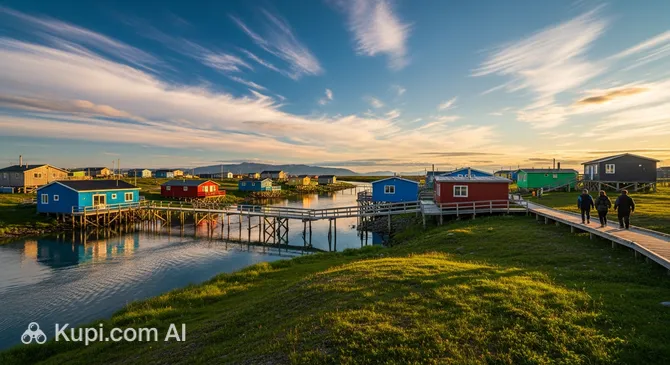
In Chefornak, the concept of public spaces and cultural venues is defined by the wilderness and the community's way of life rather than by formal institutions. You will not find manicured city parks with playgrounds or ticketed museums here. Instead, the entire village is surrounded by a vast, living nature reserve, and the rich heritage of the Central Yup'ik people is woven into the daily activities of its residents, making the settlement itself a destination for cultural immersion.
Key Parks and Green Spaces
The Yukon-Kuskokwim Delta Wetlands serve as the region's primary "park," offering an endless expanse of tundra that begins right where the village boardwalks end. This natural area is a paradise for those who appreciate raw, untouched landscapes. In the summer, the wetlands transform into a vibrant tapestry of wildflowers, mosses, and sedges. It is an exceptional location for hiking and birdwatching, as the delta is a critical habitat for millions of migratory waterfowl. Visitors can experience the profound silence of the Arctic, broken only by the call of birds and the wind.
The Kinia River Banks function as the village's waterfront and social hub. While not a park in the traditional sense, the river's edge is where the community connects with nature and each other. During the ice-free months, this area is bustling with activity as locals prepare their boats and process their catch. For a visitor, a walk along the river offers a peaceful setting to watch the water flow into the Etolin Strait and to observe the subsistence lifestyle that has sustained the people here for generations.
Museums and Galleries
There are no formal museums or art galleries in Chefornak; the village itself is often described as a Living Museum. The culture here is not stored behind glass cases but is practiced daily. Visitors can observe the artistry of the Yup'ik people through their tools, clothing, and crafts. You might see locals carving ivory or wood, sewing traditional skin boots (mukluks), or drying fish on wooden racks. These everyday scenes offer a more authentic glimpse into the history and artistry of the region than any static exhibit could providing.
Historical and Architectural Sites
The most significant architectural landmark is the St. Catherine of Siena Catholic Church. Standing out against the low profile of the village homes, this church is a focal point for the community's spiritual life. Its construction is a testament to the ingenuity required to build on the permafrost, and it houses the collective memory of the village's modern history. The simple yet striking structure serves as a gathering place and a symbol of the community's resilience in a harsh climate.
Another unique engineering feature that serves as a historical marker is the Boardwalk Network. Because the ground is often wet and unstable due to permafrost, the entire village is connected by miles of elevated wooden walkways. These boardwalks are not just paths; they are the village's "streets" and a distinct architectural response to the environment. Walking them provides a tactile connection to the reality of life in the delta and offers elevated views of the settlement and the surrounding tundra.
Authentic Experiences
For a truly local experience, visit during late summer to witness the berry picking season. The tundra fills with families gathering cloudberries (aqpik) and blueberries, a tradition that is vital for the winter food supply. If you are respectful and curious, you may learn about the different types of berries and their importance in making akutaq. Additionally, keep an eye on the horizon towards the south to spot Tern Mountain, a distant volcanic landmark that offers a rare break in the flat landscape and serves as a natural compass point for the locals.