Support

Napakiak

About

Immerse yourself in the authentic atmosphere of the Far North by visiting Napakiak, a small and traditional village located in the vast wilderness of Alaska. This unique community offers travelers a rare glimpse into the rural lifestyle of the United States, far removed from the hustle and bustle of major metropolitan areas. Situated on the north bank of the Kuskokwim River, Napakiak is a place where the rhythms of nature dictate daily life, providing a serene and introspective backdrop for adventurous visitors.
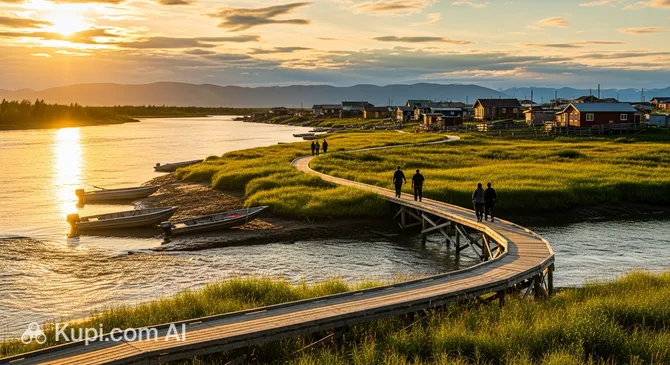
Napakiak. Source: Kupi.Binoculars

Geographically, the village is nestled in the Yukon-Kuskokwim Delta, a region known for its flat, marshy tundra and intricate waterways. With a population of approximately 400 residents, the community is tight-knit and welcoming, though it remains a remote destination accessible primarily by air or water. The climate here is subarctic, characterized by long, cold winters and short, mild summers, which shapes the stunning, stark beauty of the surrounding landscape.

The village is predominantly inhabited by Yup'ik Eskimos, maintaining a culture that has thrived in this region for generations. Exploring the history of Napakiak reveals a deep connection to the land and the river, with traditions centered around subsistence fishing and hunting. Visitors interested in cultural heritage will appreciate the opportunity to observe a way of life that honors ancestral customs while adapting to the modern world.

For those who venture to this remote corner of Alaska, the main attractions are the Kuskokwim River and the pristine wilderness that surrounds it. It is an excellent location for birdwatching, photography, and experiencing the quiet majesty of the Alaskan tundra. Whether you are looking to witness the midnight sun or simply wish to disconnect and experience the raw beauty of the north, Napakiak offers a memorable and grounding travel experience.

Weather Overview

Napakiak features a subarctic climate defined by long, freezing winters and short, mild summers. When preparing for your journey, it is helpful to review the current weather in Napakiak to pack appropriately for the conditions. The region generally sees substantial temperature fluctuations between seasons, requiring reliable layers to stay comfortable throughout your visit.

The winter months are harsh, with January being the coldest time of the year, averaging -12.8°C and dipping as low as -15.7°C. Conversely, the summer offers much more agreeable conditions for outdoor activities; July is typically the warmest month, with average temperatures around 13.9°C and highs reaching 17.1°C.

Despite the low volume of precipitation, which rarely exceeds 3mm per month, the area experiences a high number of wet days throughout the year. August, September, and February are among the dampest months in terms of frequency, often seeing up to 16 wet days. Travelers should expect mild summers with frequent light moisture and cold winters that transform the landscape into a frozen expanse.

Interesting Facts

Beyond the scenic river views and quiet atmosphere, Napakiak holds several compelling features that illustrate the resilience of life in the Alaskan bush. This small community is defined by its unique relationship with the environment and its strong adherence to tradition.

  • Battling the River: Napakiak is well-known for its ongoing struggle with the powerful Kuskokwim River. The riverbank erodes at an alarming rate, sometimes claiming significant stretches of land in a single year. This natural phenomenon has forced the community to continually move homes and vital infrastructure, including the local school, further inland to prevent them from being washed away.

  • The Winter Ice Highway: While the village has no permanent roads connecting it to the rest of the United States, winter transforms the local geography. When the river freezes solid, it becomes a maintained ice road, allowing residents to drive vehicles directly to the regional hub of Bethel for supplies—a convenience that is impossible during the warmer months.

  • A "Dry" Community: To preserve the well-being of its residents, Napakiak enforces a strict ban on the sale and importation of alcohol. This local law reflects the community's commitment to maintaining a safe, peaceful, and traditional lifestyle within the village.

  • Living Language: The village remains a vital stronghold for the Central Alaskan Yup'ik language. Unlike many regions where indigenous dialects are fading, a significant portion of Napakiak's residents speak Yup'ik fluently, keeping their ancestral oral histories and cultural nuances alive in daily conversation.

How to Get There

Reaching this remote community in the Yukon-Kuskokwim Delta requires some planning, as it is strictly off the main road system. For a detailed breakdown of routes and logistics, you can read more about how to get to Napakiak. Most travelers must first arrive at a regional hub before making the final leg of the journey to the village.

The village does not have a major airport listed in international systems, but you can fly into Bethel Airport (BET) in the city of Bethel, which is approximately 12.1 km from Napakiak. As the primary gateway for the area, Bethel serves as the essential transfer point for visitors. Unlike standard destinations, there is no permanent road connecting the airport to the village. Instead, transfers are typically conducted by boat along the Kuskokwim River during open water months, by small bush plane, or via a seasonal ice road that forms during the winter.

Other facilities in the wider region include Saint Mary's Airport (KSM) in St Marys and Kongiganak Airport (KKH) in Kongiganak. However, these are situated significantly further away, at approximately 167.5 km and 95.6 km respectively. Since Napakiak is not connected to the state road network, arriving at these locations would still require arranging complex air travel to reach the village. Consequently, routing your trip through Bethel is the most practical choice.

For clarity, here is a summary of the main airports in the region:

Airport Name City Passenger Traffic Km from City
Bethel Airport Bethel Medium 12.1
Saint Mary's Airport St Marys Small 167.5
Chevak Airport Chevak Small 216.7
Kwigillingok Airport Kwigillingok Small 112.3
Kongiganak Airport Kongiganak Small 95.6

Napakiak is not accessible by rail, and there are no railway stations in the vicinity. The marshy, rugged terrain of the delta precludes train infrastructure. Visitors should plan to arrive by air to the nearest hub and arrange local transport via water or air from there.

Main Attractions

Napakiak is a destination defined not by commercial landmarks, but by its raw, natural beauty and the enduring spirit of its community. For visitors making the journey to this remote village, the attractions are experiential, rooted in the landscape and the traditional Yup'ik way of life that has thrived here for centuries.

The Kuskokwim River is the undeniable heart of the region and the primary point of interest for any traveler. In the summer, the river bustles with activity as local families travel by skiff to fish and visit neighboring communities. Visitors can witness the sheer scale of this waterway, which serves as a vital artery for transportation and subsistence. During the winter months, the frozen river transforms into a massive ice highway, offering a unique opportunity to walk or drive on the ice—a quintessential Alaskan experience that highlights the adaptability of life in the north.

Walking through the village, you will encounter the sight of traditional Fish Drying Racks and Smokehouses. These structures are central to the local culture and food security, used to preserve salmon and other catch for the long winter. While these are private functional spaces rather than museums, they offer a respectful observer a fascinating look into the subsistence lifestyle. The aroma of smoking fish and the sight of the catch hanging in the open air provide a sensory connection to the heritage of the Yukon-Kuskokwim Delta.

Surrounding the village is the vast, open expanse of the Alaskan Tundra. This treeless landscape is hauntingly beautiful, especially during the long days of summer when the midnight sun illuminates the wildflowers and marshlands. It is an excellent setting for birdwatching, as the delta is a haven for migratory waterfowl. In late summer, the tundra becomes a rich ground for berry picking, where visitors might see locals harvesting cloudberries and crowberries, a cherished seasonal tradition.

Local Cuisine

The culinary landscape of Napakiak is defined by the subsistence lifestyle of the Yukon-Kuskokwim Delta rather than commercial dining establishments. Visitors should not expect to find restaurants, cafes, or street food vendors in this small village. Instead, the local cuisine revolves entirely around the harvest from the land and the Kuskokwim River, emphasizing fresh, organic ingredients prepared according to generations of Yup'ik tradition.

One of the most iconic traditional foods is Akutaq, widely known as "Eskimo Ice Cream." This high-energy dish is traditionally made by whipping fat (such as seal oil or reindeer fat, though modern recipes often use shortening) with wild berries like cloudberries or blueberries, and sometimes mild fish or sugar. Another dietary staple is dried or smoked salmon, which is prepared in the smokehouses visible throughout the village. Cured to last through the long winter, this fish offers a rich, savory, and smoky flavor that is distinct to rural Alaska.

Regarding beverages, travelers must remember that Napakiak is a "dry" community, meaning the sale and importation of alcohol are strictly prohibited by local law. Consequently, there are no bars or pubs. The most common drinks are hot coffee and tea, which are staples in every household to help residents stay warm in the subarctic climate. During the berry-picking season, you might also encounter refreshing juices made from the abundant local harvest.

Since there are no commercial eateries, the food culture is centered entirely within the home. Most residents rely on hunting, fishing, and gathering for their daily meals. Visitors typically need to arrange their own provisions before arriving or purchase basic groceries and snacks at the small local general store. However, the community is known for its hospitality; if you are invited to a local gathering or a resident's home, you may be treated to authentic dishes featuring moose, seal oil, or fresh catch, offering a genuine taste of life in the Alaskan bush.

Travel Tips

Visiting Napakiak offers a unique opportunity to experience a remote village in the United States, but this isolated setting requires careful preparation to ensure a safe and respectful trip. To help you navigate the logistics of the Alaskan bush, here are some essential practical tips for your journey.

  1. Clothing and Gear: The weather in the Yukon-Kuskokwim Delta can be unforgiving. In summer, the tundra is wet and teeming with insects, so waterproof knee-high boots and a high-quality mosquito head net are absolute necessities. In winter, you must bring heavy-duty thermal layers, an insulated parka, and windproof outer shells to survive the subarctic cold.

  2. Transportation: There are no paved roads, car rentals, or taxi services in the village. Napakiak is a boardwalk community, meaning you will get around primarily by walking on elevated wooden paths that connect buildings. While locals use ATVs and snowmachines, visitors should be prepared to walk everywhere within the village.

  3. Finances: Cash is essential. While there is a small general store that may accept cards, connectivity issues often render electronic payment systems useless. There are no banks, and ATMs are unreliable or non-existent, so bring enough US Dollars from a major hub like Bethel to cover your entire stay.

  4. Health and Safety: Medical facilities are limited to a local clinic staffed by health aides for basic care; serious emergencies require an air evacuation to Bethel. Pack a comprehensive first-aid kit and all necessary prescription medications. Be mindful of wildlife, such as moose and bears, which can occasionally wander near the village.

  5. Communication: English is widely spoken, though Yup'ik is the first language for many elders. Cell phone coverage is spotty and often limited to specific regional carriers like GCI; do not expect reliable data or public Wi-Fi. It is best to inform family of your itinerary beforehand, as you may be out of touch.

  6. Local Etiquette: The community is traditional and values privacy. Always ask for explicit permission before taking photos of residents, their children, or their property, including fish drying racks. Greeting people with a friendly smile and showing deference to elders will go a long way in establishing a good rapport.

  7. What to Avoid: Strictly avoid bringing alcohol or drugs into the village. Napakiak is a "dry" community, meaning the possession, sale, and importation of alcohol are prohibited by law. Violating this rule is not only illegal but is also considered deeply disrespectful to the community's values.

  8. Stay on the Boardwalks: The ground surrounding the village is often marshy, fragile tundra. Stepping off the designated wooden boardwalks can damage the vegetation and leave you stuck in deep mud. For your safety and to protect the landscape, stick to the established paths.

By packing the right gear and respecting local customs, you will be well-equipped to appreciate the quiet resilience of this riverside community. Enjoy the authentic hospitality and the stunning, stark beauty of the wilderness during your visit to Napakiak.

Entertainment & Nightlife

Travelers planning a visit to Napakiak should be aware that the concept of "nightlife" here is vastly different from what one might expect in a city or even a standard tourist town. As a small, traditional village with a population of around 400 people, there are no nightclubs, bars, pubs, or discos. Furthermore, Napakiak is a "dry" community, meaning the sale, importation, and possession of alcohol are strictly prohibited. Consequently, the evening atmosphere is not defined by parties or music, but by profound tranquility and the rhythms of nature.

Instead of bustling entertainment districts, the "nightlife" in Napakiak revolves around the spectacular natural environment. During the winter months, when darkness dominates, the village becomes a prime location for viewing the Aurora Borealis (Northern Lights). With zero light pollution from skyscrapers or streetlights, the dancing green and violet lights can often be seen right from the boardwalks. Visitors typically spend their evenings outdoors, wrapped in heavy layers, gazing at the sky—a serene and awe-inspiring experience that far outweighs a night at a club.

In the summer, the dynamic shifts completely due to the phenomenon of the Midnight Sun. From late May to July, the sun barely sets, creating a surreal twilight that extends through the night. "Evening" entertainment during this season often involves the same activities as the day: fishing on the Kuskokwim River, berry picking on the tundra, or simply walking along the wooden boardwalks. The lack of darkness energizes the community, and you will often see children playing outside and families socializing well past midnight.

Social life in the village is community-centered rather than commercial. The hub of activity is often the local school gymnasium or the community hall. In rural Alaska, high school basketball is incredibly popular, and on game nights, the entire village may gather to cheer on the local team. Another common pastime is community bingo, which serves as a major social event for residents. While these are not tourist attractions in the traditional sense, respectful visitors invited to watch a game or participate in an event will experience the genuine warmth and spirit of the Yup'ik culture.

Regarding safety and logistics, navigating Napakiak at night requires caution. There are no taxi services or public transport; getting around is done entirely on foot. In winter, temperatures can drop to dangerous lows, so extreme cold-weather gear is essential even for short walks. Additionally, wildlife such as moose or stray dogs can be active at night. It is advisable to carry a flashlight (or use a headlamp) and stay on the designated boardwalks to avoid tripping on uneven ground or stepping into marshland.

For daytime entertainment, options remain low-key and outdoorsy. There are no movie theaters, amusement parks, or formal museums within the village. Visitors spend their days observing the traditional lifestyle, such as the preparation of fish, or exploring the surrounding wilderness. For a more conventional cultural experience, one would need to travel to the regional hub of Bethel, but in Napakiak, the land and the people themselves are the primary interest.

Parks & Museums

In the remote village of Napakiak, you will not find manicured city parks or sprawling museum complexes. Instead, the entire region serves as a vast, open-air sanctuary of nature, and the community itself acts as a living guardian of Yup'ik heritage. The "parks" here are the endless wild lands that surround the settlement, and the "museums" are found in the daily traditions practiced by the residents rather than in glass display cases.

The most significant natural feature, functioning as the community's central recreational and vital space, is the Kuskokwim River. In the summer, its banks are bustling with activity as families launch skiffs for subsistence fishing, offering visitors a chance to observe the deep connection between the people and the water. During the winter months, the frozen river transforms into a massive thoroughfare and playground, where locals travel by snowmachine and ice road. It is an ever-changing landscape that offers unparalleled views of the raw Alaskan wilderness.

Surrounding the village is the expansive Alaskan Tundra, a unique ecosystem that rivals any botanical garden in its stark beauty. This treeless, marshy terrain is carpeted with mosses, lichens, and wildflowers during the short summer season. It serves as a prime location for birdwatching, as the wetlands of the Yukon-Kuskokwim Delta attract thousands of migratory waterfowl. Walking the edge of the tundra offers a peaceful, immersive experience in one of the most untouched environments in the United States.

While there are no formal art galleries or history museums within Napakiak, St. Innocent Mission plays a central role in the spiritual life of the village. This local Russian Orthodox church represents the enduring blend of indigenous spirituality and Orthodox traditions that characterizes the region. It serves as a gathering place for the community and stands as a modest but significant landmark. Visitors should approach the site with respect, viewing it not as a tourist attraction, but as an active center of worship and a testament to the village's living culture.

For those seeking a more traditional museum experience, the Yugtarvik Regional Museum is located just a short flight or boat ride away in the nearby hub of Bethel. Since Napakiak does not have its own facility, this regional museum is the primary destination for viewing curated exhibits of Yup'ik clothing, tools, and intricate handicrafts. It provides the necessary historical context to help visitors understand the lifestyle and customs they observe in villages like Napakiak.

An authentic way to experience the local culture is simply to walk the network of Wooden Boardwalks that connect the village homes and buildings. Since the ground is often wet and marshy, these elevated paths act as the village's streets and sidewalks. Strolling along them offers an intimate look at village life, from the fish drying on racks to the innovative ways residents adapt to the challenging environment. It is a "living museum" tour where the resilience and ingenuity of the community are on full display.

Getting Around

Travelers accustomed to the extensive transit networks of major metropolitan areas will find the public transport system in Napakiak to be virtually non-existent. There are no metros, trams, public buses, or trolleybuses serving this small community. Due to its remote location and small population, the village does not support a municipal transit authority, and there are no fixed-route services or schedules to follow. The infrastructure is unique to the region, relying on a network of elevated wooden boardwalks rather than paved asphalt roads.

For visitors, the primary mode of transportation within the village is walking. The boardwalks connect homes, the school, the general store, and other community buildings, keeping pedestrians above the marshy tundra ground. Because the village is compact, most destinations are reachable on foot within a few minutes. While locals frequently use All-Terrain Vehicles (ATVs) in the summer and snowmachines (snowmobiles) in the winter to haul goods and travel quickly, there are no rental agencies for these vehicles, and they do not operate as public taxis.

Since there is no formal public transport system, there are no tickets, travel passes, smart cards, or mobile transport apps to worry about. You cannot buy a "day pass" for transport here. If you need to transport heavy luggage or travel a distance that is difficult to walk, you may be able to arrange an informal ride with a local resident, but this is done on a case-by-case basis. In such rare instances, cash is the only accepted form of payment, and prices are negotiated on the spot rather than set by a meter or tariff.

The closest equivalent to "public transport" connects Napakiak to the regional hub of Bethel rather than operating within the village itself. Small bush planes serve the community with scheduled flights, acting as the primary link to the outside world. Additionally, local boat operators may offer transit along the Kuskokwim River during the open-water season. These services are commercial but operate differently from city transit; flight tickets must be booked in advance through local air carriers, usually via their websites or by phone, and boat rides are often arranged personally.

A unique feature of the local transport landscape appears during the winter months when the Kuskokwim River freezes thick enough to support vehicle traffic. An "ice road" is plowed and maintained on the river, creating a temporary highway that connects Napakiak to Bethel and surrounding villages. During this season, residents can drive trucks and cars to the city for supplies. While there is no public bus running on this ice road, it opens up the possibility of using taxi services based in Bethel that may be willing to drive out to the village for a significant fare.

Practical advice for tourists is simple: come prepared to walk and dress for the elements. Since you will be exposed to the weather while moving between buildings, high-quality waterproof boots are essential in summer to handle muddy sections, and insulated gear is critical in winter. Do not rely on ride-sharing apps like Uber or Lyft, as they are completely unavailable in this region. Your mobility in Napakiak depends entirely on your own two feet and the weather conditions.

Accommodation

Travelers planning a visit to Napakiak must manage their expectations regarding accommodation, as the village does not have a commercial tourism infrastructure. There are no hotels, motels, hostels, or bed and breakfasts located directly within the community. As a small, traditional village of approximately 400 residents, the housing is strictly residential, and the concept of a "tourist stay" is virtually non-existent in the local economy.

Due to the lack of facilities, the vast majority of visitors base themselves in the nearby regional hub of Bethel, which is located about 12 kilometers away. Bethel offers a small selection of hotels and guest houses that provide standard amenities such as Wi-Fi and warm showers. From there, tourists can arrange day trips to Napakiak by boat in the summer or by ice road in the winter, returning to the comfort of their hotel in Bethel for the night.

For those who absolutely must stay overnight in the village—typically for official business, cultural exchange, or school events—accommodation is almost exclusively arranged through private homestays or institutional hosting. For example, visiting sports teams or officials often sleep in the local school classrooms or gymnasium. These arrangements are not open to the general public and must be organized well in advance through personal contacts or the hosting organization.

Booking Tip: Do not arrive in Napakiak expecting to find a place to sleep upon arrival. If you plan to stay in the region, book your hotel in Bethel weeks or even months ahead of time, especially during peak summer months or during major regional festivals. Accommodation in rural Alaska is limited and tends to be significantly more expensive than in the contiguous United States, falling into a mid-to-high price range due to the high cost of operations in the bush.

If you are invited to stay with a local family, it is customary to offer a contribution to the household, such as buying groceries or bringing fresh supplies from Bethel, rather than a direct cash payment for a "room." This reflects the subsistence culture and hospitality of the Yup'ik people, where sharing resources is a core value.

Nearby Cities

For those looking to explore the surroundings, Napakiak serves as an excellent base for day trips to several interesting nearby locations:

City Population Distance (km)
Bethel 20,287 16
Kwethluk 800 33
Akiachak 627 38
Quinhagak 700 105
Kipnuk 700 142

Bethel is the most prominent destination for a day trip, located just a short boat or snowmachine ride away. As the primary regional hub for the Yukon-Kuskokwim Delta, it offers amenities that are unavailable in smaller villages, including restaurants and grocery stores. Visitors can explore the Yugtarvik Regional Museum to see an impressive collection of Yup'ik artifacts, traditional clothing, and crafts, providing a deeper understanding of the indigenous culture that shapes the entire region.

Another fascinating community to visit is Kwethluk, situated approximately 33 kilometers upriver. Known as the "River of the Real People," it is one of the longest-continuously occupied villages in the area. A visit here offers a peaceful immersion into rural Alaskan life, where traditional subsistence practices like fishing and berry picking remain central to the community's identity. It provides a quieter, more intimate perspective compared to the busier hub of Bethel.

Akiachak offers another accessible glimpse into the local lifestyle, located about 38 kilometers from Napakiak. This village is deeply rooted in the traditions of the Kuskokwim River, with a strong emphasis on community and subsistence living. In the winter, the journey itself becomes an adventure, as travelers can traverse the frozen river "ice highway" to reach these neighboring settlements, witnessing the vast, snowy landscapes along the way.

These nearby destinations offer a glimpse into the diverse culture and landscapes of the region.

Shopping & Souvenirs

Shopping in Napakiak is a strictly functional experience driven by the needs of a remote subsistence community rather than tourism. Visitors will not find fashion boutiques, souvenir shops, or expansive retail outlets here. instead, the village relies on a single general store that stocks essential groceries, hardware, and fuel. For travelers, this means that any "shopping" will likely be limited to purchasing basic snacks or supplies that were forgotten before the trip.

There are no designated shopping districts or commercial streets in the village. The retail activity is concentrated entirely around the local general store, which serves as a central meeting point for residents. Accessible via the network of wooden boardwalks that act as the village's streets, this store is the lifeline for the community, providing goods that cannot be harvested from the land or river.

Travelers looking for a shopping mall will not find one in Napakiak. The village infrastructure does not support large-scale commercial centers. The nearest location with a broader selection of stores and services is the regional hub of Bethel, accessible by plane or boat. Consequently, visitors are strongly advised to purchase all specialized gear, clothing, and significant provisions in the United States or in Bethel before arriving in the village.

Unlike many tourist destinations, Napakiak does not have a public market or a farmer's market. The local economy is based on subsistence, meaning families hunt, fish, and gather berries for their own consumption rather than selling produce at a stall. Occasionally, there may be small community bazaars or fundraisers held at the school or community hall, where homemade baked goods or small items are sold, but these are irregular events.

Despite the lack of souvenir shops, the village is home to talented artisans who continue traditional Yup'ik crafts. The best "shopping" opportunity for a visitor is to inquire locally about purchasing handmade items directly from the makers. Authentic souvenirs might include intricate grass baskets, hand-sewn skin boots (mukluks), beadwork, or carvings made from local natural materials. Buying these items supports the local economy and provides a genuine connection to the culture.

Store opening hours in the village can be limited and may change without notice. The general store typically operates during standard daytime hours but may close for lunch or on Sundays. Regarding payment, cash is the absolute rule. While the store may technically have card processing capabilities, the internet connection in rural Alaska is notoriously unreliable, often rendering electronic payments impossible. Visitors should bring enough small-denomination bills to cover all potential purchases.

Alaska is one of the few states with no state-level sales tax, which can be a benefit for travelers. However, local municipalities often levy their own sales taxes to fund community services. In a small village like Napakiak, there is no formal tax refund system for tourists. The price you see is the price you pay, and any local tax collected goes directly into maintaining the village's essential infrastructure.

Reached the end of the page?

That means the route is fully explored