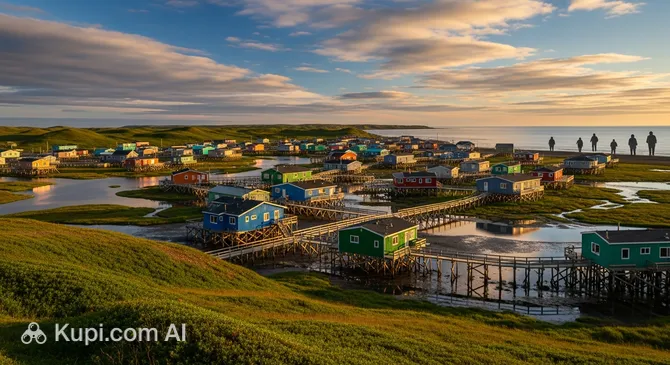
In Hooper Bay, you will not find manicured city gardens or ticketed museums with glass display cases. Instead, the "parks" are the boundless expanses of the Alaskan tundra and the Bering Sea coast, while the "museums" are the living traditions, stories, and unmatched craftsmanship of the Yup'ik people. The cultural heritage here is woven into daily life rather than exhibited in a building, offering visitors an immersive experience in one of the most authentic settings in North America.
Key Parks and Green Spaces
The most significant natural area surrounding the village is the Yukon Delta National Wildlife Refuge. This massive protected area effectively serves as the community's backyard and is a dream destination for nature lovers. Unlike a traditional park with paths and benches, this is a raw, wild landscape of wetlands and waterways. It is one of the premier bird-watching destinations on the planet, hosting millions of waterfowl and shorebirds during migration. For a tourist, the appeal lies in the profound silence and the chance to observe wildlife in a completely undisturbed habitat.
Closer to the settlement, the Hooper Bay Sand Dunes act as a natural recreational hub for the locals. These geological formations are among the tallest dunes in Alaska and provide a stunning contrast to the flat tundra. In the summer, they offer challenging terrain for hikers seeking panoramic views of the ocean and the village. In the winter, they transform into a community playground for sledding and snow machining. The dunes are a must-see for their sheer scale and the unique photographic opportunities they present against the arctic sky.
Museums and Galleries
There are no formal museums or commercial art galleries in Hooper Bay. However, the village is renowned for its traditional arts and crafts, particularly the exquisite coiled grass baskets that are famous throughout Alaska. The "gallery" experience here is personal; it often involves meeting artisans in their homes or at community gatherings. The intricate weaving techniques have been passed down for generations, and seeing a basket being made is like watching history come to life. These items are not just souvenirs but museum-quality pieces of cultural heritage.
The Hooper Bay School often functions as a temporary cultural center, displaying student art and hosting events that celebrate Yup'ik heritage. During festivals or community wellness gatherings, the school gymnasium may showcase traditional dance fans, masks, and handmade fur clothing. For a visitor, these events provide a deeper understanding of the local identity than any static exhibit could, highlighting the vibrancy of a culture that continues to thrive in the modern world.
Historical and Architectural Sites
Architecturally, the village is defined by its extensive network of wooden boardwalks. Because the tundra ground is often wet, spongy, or frozen, these raised paths are the arteries of the town, connecting homes and buildings. Walking along them offers a unique perspective on village engineering and daily life. They are a historical necessity that has become a defining visual characteristic of the community, allowing life to function above the shifting permafrost.
The local churches, such as the Little Flower Catholic Church and the Covenant Church, stand as prominent landmarks in the village. These structures are not only places of worship but also historical community hubs where residents have gathered for decades. Their simple, sturdy architecture reflects the resilience required to maintain large structures in such a harsh climate. They often serve as navigation points and centers for social support, reflecting the strong spiritual life of the residents.
Authentic Experiences/Insider Tips
For a truly unique experience, ask locals if there are any opportunities to learn about qiviut (muskox wool) or skin sewing. Some elders and artisans are happy to show their work to respectful visitors. Additionally, keep an eye out for the driftwood sculptures and structures along the beach; often, locals build temporary shelters or drying racks that are masterpieces of functional improvisation, using whatever the sea provides.