Support

Chevak

About

Welcome to Chevak, a fascinating and remote destination situated in the vast wilderness of the Yukon-Kuskokwim Delta. Known locally as "Cev'aq," this small city offers a rare glimpse into the authentic lifestyle of rural Alaska. Located in the United States, Chevak is a place where traditional values meet modern living against a backdrop of sweeping tundra landscapes.

With a population of approximately 1,000 residents, Chevak is a tight-knit community predominantly inhabited by the Cup'ik people. The climate here is subarctic, characterized by long, snowy winters and short, mild summers. Its isolation is part of its charm, as the city is not connected by road to the rest of the state, making the journey here an adventure in itself, usually undertaken by small plane or boat.
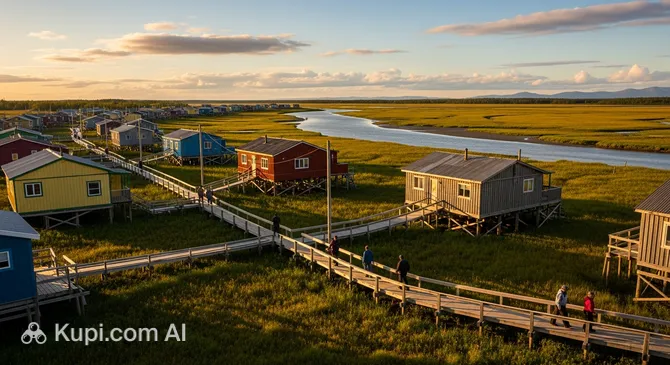
Chevak. Source: Kupi.Binoculars

The rich history of Chevak is deeply intertwined with the heritage of the Kashunamiut people and their distinct Cup'ik culture. Unlike many other communities in the region, the people of Chevak maintain a unique dialect and strong cultural identity. Visitors interested in indigenous traditions will find the local way of life—centered around subsistence fishing, hunting, and gathering—both educational and inspiring.

For nature enthusiasts, the surrounding delta provides incredible opportunities for wildlife viewing, particularly for migratory birds in the spring and summer. During the darker winter months, the skies often light up with the mesmerizing Aurora Borealis, offering a spectacular natural light show. The vast, open terrain is also perfect for experiencing the profound solitude and raw beauty of the Alaskan wilderness.

Whether you are drawn by the unique cultural heritage or the pristine natural environment, Chevak promises an unforgettable experience for the intrepid traveler. We invite you to explore this hidden gem and discover the warmth of its people amidst the rugged beauty of the north.

Weather Overview

The climate in this region is defined by its subarctic location, resulting in long, cold winters and short, cool summers. Travelers visiting during the peak of winter in January should be prepared for freezing conditions, with average temperatures around -12.8°C and lows frequently dropping to -15.4°C. The cold season extends well into spring, with temperatures remaining below freezing through April.

Summer offers a distinct change of pace, bringing milder weather that is more suitable for exploring the outdoors. July is typically the warmest month, featuring an average temperature of 12.1°C and daily highs reaching approximately 14.5°C. Despite the warmer days, the air remains crisp, so packing layers is advisable even during the sunniest months.

Precipitation is a regular occurrence throughout the year, often manifesting as light rain or snow. The late summer and early autumn months, particularly August and September, tend to see the most frequent precipitation with up to 16 wet days each. To help you pack appropriate clothing for your trip, we recommend checking the detailed guide to the weather in Chevak.

Interesting Facts

Beyond the main attractions, Chevak holds many fascinating secrets that highlight its resilience and unique cultural identity. Here are some intriguing details that make this remote community truly special.

  • The current city is actually the second iteration of the settlement, often distinguished as "New Chevak." The original village, located nearby, was abandoned in the 1950s due to severe flooding and erosion, prompting the entire community to relocate to higher ground to ensure their safety.

  • While often grouped with the broader Yup'ik culture, the residents of Chevak identify specifically as Cup'ik. They refer to themselves as the Kashunamiut, which translates to the "people of the high tide" or "people of the current," emphasizing their distinct dialect and heritage.

  • During the freezing winter months, the region's waterways transform into essential travel routes known as "ice roads." These frozen rivers allow locals to travel by snowmachine to neighboring villages, creating a temporary highway system that completely disappears with the spring thaw.

How to Get There

Reaching the remote community of Chevak is an adventure in itself, as the city is not connected to the rest of Alaska by road. The journey typically involves a combination of commercial flights to a regional hub followed by a smaller bush plane to the village. For a complete guide on planning your trip, you can read more about how to get to Chevak and the available transport options.

The most direct entry point is Chevak Airport (IATA: VAK), which is conveniently located just 1.3 km from the center of the settlement. Upon landing, the travel time to the heart of the village is minimal, taking just a few minutes by local taxi or transfer. Since this is a small local airstrip, flights here usually originate from larger regional hubs.

Most travelers first fly into Bethel Airport (IATA: BET), located in the city of Bethel, about 218 km away from Chevak. As a key transportation node for the Yukon-Kuskokwim Delta, it handles significant passenger traffic and connects to major cities like Anchorage. From Bethel, you can catch a connecting flight to Chevak. Another regional option is Saint Mary's Airport (IATA: KSM) in St Marys, situated approximately 134 km away, which also serves as a transit point for the area.

For clarity, here is a summary of the main airports:

Airport Name City Passenger Traffic Km from City
Bethel Airport Bethel High 218.5
Saint Mary's Airport St Marys Medium 134.6
Chevak Airport Chevak Small 1.3
Kwigillingok Airport Kwigillingok Small 226.2
Kongiganak Airport Kongiganak Small 228.5

There are no railway services available in Chevak or the surrounding region of western Alaska. The terrain and permafrost conditions make rail infrastructure impractical. Consequently, air travel remains the primary method of transportation for both locals and visitors. During the winter months, travel between nearby villages is sometimes possible via snowmachine over frozen waterways, while boats are used on the river during the short summer season.

Main Attractions

While Chevak is a remote village rather than a typical tourist hub, its primary allure lies in its pristine surroundings and deep cultural roots. One of the most significant natural features is the Yukon Delta National Wildlife Refuge. As the city is situated within this massive protected area, visitors have immediate access to one of the world's premier bird-watching destinations. The refuge is a critical habitat for millions of migratory birds, including geese, swans, and cranes, making it a paradise for ornithologists and nature photographers seeking to observe wildlife in an undisturbed ecosystem.

For those interested in history and archaeology, the site of Old Chevak offers a poignant glimpse into the community's past. Located approximately nine miles from the current settlement, this original village site was abandoned in the 1950s due to severe flooding. Today, it serves as a historic landmark where travelers can learn about the resilience of the Kashunamiut people and the environmental challenges that necessitated their relocation. The journey to the old site, often taken by boat or snowmachine depending on the season, is an adventure that connects visitors with the land's history.

The heart of the local experience is the vibrant Cup'ik Cultural Heritage. Unlike many neighboring communities that identify as Yup'ik, Chevak is home to the Cup'ik people, who have a distinct dialect and unique traditions. Visitors can immerse themselves in this living culture through interactions with local artisans known for their intricate grass basket weaving and skin sewing. Community gatherings often feature traditional drumming and dancing, providing a powerful display of the village's enduring spirit and identity.

The surrounding Tundra and Waterways serve as an endless playground for outdoor enthusiasts. The network of rivers, including the Niglikfak and Kashunuk, provides excellent opportunities for subsistence-style fishing and boating during the summer months. In winter, the frozen landscape transforms into a vast expanse perfect for snowmachining and cross-country travel. Exploring these "ice roads" offers a rare perspective on how locals navigate and thrive in one of the most rugged environments on Earth.

Local Cuisine

The culinary landscape of Chevak is deeply rooted in the subsistence lifestyle of the Cup'ik people, offering a taste of tradition that is entirely unique to this region of Alaska. Unlike typical tourist destinations filled with restaurants and cafes, the food culture here revolves around what can be harvested from the land, rivers, and sea. For visitors, dining in Chevak is less about reading a menu and more about experiencing the profound connection between the community and the wilderness that sustains it.

One of the most iconic dishes you must try if given the opportunity is Akutaq, often referred to as "Eskimo ice cream." This traditional treat is made by whipping fat—traditionally reindeer or seal fat, though vegetable shortening is often used today—with sugar and an abundance of local berries such as cloudberries (salmonberries) or blueberries. It is sometimes mixed with flaked fish for a savory version. Another staple is dried or smoked fish, usually salmon or whitefish, which is prepared during the summer months and serves as a vital, protein-rich snack throughout the long winter.

Seafood and wild game form the backbone of the local diet. You might encounter dishes featuring seal, walrus, or migratory birds like geese and ducks, often prepared in hearty soups or stews to provide warmth and nutrition. Seal oil is a ubiquitous condiment on the table, used much like olive oil or butter, for dipping dried fish and meat. Its distinct flavor is an acquired taste for many visitors but is cherished locally for its high energy content and cultural significance.

When it comes to beverages, hot tea is the undisputed favorite, serving as a central element of social interaction and hospitality. Whether visiting a home or taking a break from outdoor activities, a steaming cup of tea is almost always offered. In terms of alcoholic drinks, it is important for travelers to know that Chevak is a "dry" community. The sale and importation of alcohol are prohibited, so you will not find bars or liquor stores here. Instead, the focus is on warm, non-alcoholic drinks that comfort against the chill.

Tourists should not expect to find standard restaurants or fast-food chains in Chevak. The "dining scene" is informal and community-oriented. Visitors typically purchase supplies at the local general store, which stocks imported grocery items, or are invited to share a meal in a local home. This hospitality is a cornerstone of Cup'ik culture; sharing the catch is a way of life, and being invited to a family dinner or a community potlatch is the best way to experience the authentic flavors of the region.

Travel Tips

Visiting a remote community like Chevak requires careful preparation to ensure a safe and respectful experience. These practical tips will help you navigate the unique logistics of rural Alaska and make the most of your time among the Cup'ik people.

  1. Dress for the Elements: The weather in the Yukon-Kuskokwim Delta can be unpredictable and harsh. Regardless of the season, layering is essential. Bring thermal base layers, insulating wool or fleece, and a high-quality windproof and waterproof outer shell. In summer, sturdy waterproof rubber boots are indispensable for navigating muddy boardwalks and tundra, while extreme cold-weather gear is mandatory for winter visits.
  2. Transportation Logistics: Do not expect standard public transport, car rentals, or ride-hailing apps. Chevak is a small, walkable community connected by boardwalks. Locals get around using ATVs (four-wheelers) in the summer and snowmachines in the winter. As a visitor, you will mostly be walking, so comfortable footwear is key. If you need to transport heavy gear, you may be able to arrange a ride with a local, but this is informal and not a guaranteed service.
  3. Financial Preparedness: While the local general store may accept credit cards, cash is still king in rural Alaska. It is highly recommended to bring enough US Dollars to cover your expenses, especially if you plan to purchase arts and crafts directly from local artisans. ATMs are scarce and can be unreliable due to connectivity issues, so do not rely on them as your primary source of funds.
  4. Health and Safety: There is a local clinic in Chevak that provides basic medical care, but serious emergencies require a medical evacuation by plane to Bethel or Anchorage, which is weather-dependent. Always carry a personal supply of essential medications. Be aware that you are in bear country; carrying bear spray and knowing how to use it is wise if you venture outside the village perimeter.
  5. Staying Connected: Mobile coverage in rural Alaska is often limited to specific carriers (GCI is the primary provider in the region). Check with your provider beforehand, but be prepared for spotty service or no signal at all. Wi-Fi is rarely available in public spaces, and internet speeds can be slow. View this as an opportunity to disconnect and immerse yourself in the surroundings. English is widely spoken, though learning the local greeting "Cama-i" (Hello/Welcome) is a nice gesture.
  6. Respect Local Etiquette: Chevak is a tight-knit community with strong traditional values. Always ask for permission before taking photographs of people, their homes, or their subsistence activities (such as drying fish). Respect for elders is paramount in Cup'ik culture; allow them to speak first and listen attentively.
  7. Strictly Alcohol-Free: Chevak is a "dry" community, meaning the importation, sale, and possession of alcohol are strictly prohibited by local law. Attempting to bring alcohol into the village is a serious offense that can result in fines and confiscation. Respect this law completely during your stay.
  8. Be Prepared for High Costs: Due to the high cost of air freight, groceries and everyday items at the village store are significantly more expensive than in the contiguous United States. It is a smart "life hack" to pack your own snacks, toiletries, and specialized dietary items to manage your budget and ensure you have what you need.

By packing the right gear and approaching your visit with an open mind and respect for local customs, you will find Chevak to be a welcoming and deeply enriching destination. Enjoy the incredible landscapes and the warm hospitality of the Kashunamiut!

Entertainment & Nightlife

Nightlife in Chevak is a world away from the neon lights and bustling clubs of a typical city. As a designated "dry" community where the sale and possession of alcohol are prohibited by law, you will not find any bars, pubs, or cocktail lounges here. Instead, evening entertainment is wholesome, community-driven, and deeply rooted in the local culture. The atmosphere is incredibly warm and welcoming, focused on social connection and family rather than partying, offering a rare chance to disconnect and experience the authentic rhythm of rural Alaskan life.

The social heartbeat of the village after dark often centers around the Chevak School. In many rural Alaskan communities, high school sports are the premier entertainment, and Chevak is no exception. Basketball games featuring the local team, the Comets, are major events that frequently draw the entire village to the gymnasium. Attending a game is the best way to immerse yourself in the local spirit, where the crowd is energetic and the sense of community is palpable. Another popular evening pastime is Community Bingo, often held at the tribal council building or community hall. These games are lively social gatherings where elders and youth come together, and visitors are generally welcomed to join in the fun.

For a spectacular late-night show, you simply need to step outside. During the long, dark winter months, Chevak offers front-row seats to the mesmerizing Aurora Borealis. With virtually no light pollution, the "nightlife district" here is the vast, open sky itself. The dancing green and violet lights are often visible right from the village boardwalks. The dress code for this exclusive show is strictly practical: wear your heaviest parka, insulated boots, and thermal layers, as temperatures drop significantly at night.

When venturing out in the evening, safety is less about avoiding crime and more about respecting the environment. The village is generally very safe for walking, but it is crucial to carry a flashlight and stay aware of your surroundings, as loose dogs or occasional wildlife can be present near the outskirts. While local transfer services may be available for airport arrivals, there is no formal public transport system or roaming night taxi service for general travel. Getting around typically involves walking on the boardwalks or, during winter, potentially catching a ride on a snowmachine. Since commercial venues are non-existent, evenings are best spent enjoying the quiet solitude or sharing stories with locals.

Daytime entertainment is equally low-key and lacks the commercial amusement parks or theaters found in larger cities. The "museums" here are living ones: the tundra and the river. Visitors spend their days observing traditional subsistence activities, such as ice fishing or the crafting of intricate grass baskets, before settling in for a peaceful, community-focused evening.

Parks & Museums

Unlike bustling metropolitan areas filled with manicured gardens and grand exhibition halls, Chevak offers a different kind of cultural and natural immersion. Here, the "parks" are vast, untouched wildernesses that stretch as far as the eye can see, and the "museums" are the living traditions of the Cup'ik people and the historical sites etched into the land itself. Visitors come here not to view artifacts behind glass, but to step directly into a landscape that has sustained a unique way of life for thousands of years.

The most significant natural area surrounding the city is the Yukon Delta National Wildlife Refuge. Chevak is situated right in the heart of this massive protected area, which is one of the largest wildlife refuges in the United States. It is a world-class destination for birdwatchers and nature enthusiasts, serving as a critical breeding ground for millions of migratory birds, including emperor geese, tundra swans, and sandhill cranes. The refuge is not a fenced park but a boundless expanse of wetlands, rivers, and tundra that offers unparalleled opportunities for observing wildlife in its natural habitat.

Closer to the daily life of the residents, the Village Boardwalks and Tundra serve as the community's recreational space. In the absence of paved roads and city squares, the elevated wooden boardwalks connect the village and provide a unique walking experience above the marshy ground. Just steps from the boardwalks, the open tundra acts as a communal garden where locals engage in the seasonal tradition of berry picking. In late summer, the landscape is dotted with families harvesting cloudberries (salmonberries) and blueberries, turning the wilderness into a vibrant, interactive green space.

While there is no dedicated indoor museum building in Chevak, the site of Old Chevak serves as a profound historical landmark. Located approximately nine miles from the current village, this abandoned settlement offers a poignant look into the past. It was the original home of the community before flooding forced a relocation in the 1950s. Today, it stands as a testament to the resilience of the Kashunamiut people. Visiting the site, often accessible by boat in summer or snowmachine in winter, allows travelers to see the remnants of the old sod houses and connect with the history of the region in a deeply personal way.

For those seeking a more formal museum experience while traveling to the region, the Yupik Piciryarait Cultural Center in the nearby hub of Bethel is a key cultural venue. Since most visitors fly through Bethel to reach Chevak, this center is an excellent stopover to gain context before arriving in the village. It features permanent and traveling exhibits that showcase the art, history, and lifestyle of the Yup'ik and Cup'ik peoples of the Yukon-Kuskokwim Delta. The center plays a vital role in preserving regional heritage, displaying intricate grass baskets, skin sewing, and traditional tools similar to those still used in Chevak today.

For a truly authentic experience, look out for the traditional drift lines along the riverbanks during fishing season. These are not formal exhibits, but they are living galleries of the subsistence lifestyle. You will see racks of salmon and whitefish drying in the open air, a practice that has remained unchanged for generations. Observing this process and perhaps chatting with a local elder about the techniques used provides a cultural insight far richer than any guidebook description.

Getting Around

Travelers planning a visit to Chevak should be aware that the city does not have a conventional public transport system found in larger urban centers. There are no buses, trams, metros, or scheduled trolleybus services operating within the community. Due to its remote location and small size, the transportation infrastructure is unique and adapted to the rugged tundra environment, relying heavily on specific local methods rather than mass transit networks.

The primary infrastructure for getting around the village consists of an extensive network of wooden boardwalks. Because the ground is often marshy or frozen permafrost, paved roads are virtually non-existent for standard city vehicles. For visitors, walking is the most common and practical way to navigate the settlement. The village is compact, and most key locations, such as the general store, school, and clinic, are within a reasonable walking distance of one another.

Instead of taxis or car rentals, the "traffic" in Chevak is dominated by all-terrain vehicles. In the summer months, locals use ATVs (four-wheelers) to travel along the boardwalks and surrounding trails. During the long winter, these are replaced by snowmachines (snowmobiles), which are essential for crossing the frozen landscape and traveling to nearby subsistence areas. While there are no official rental agencies for these vehicles for tourists, they represent the heartbeat of local mobility.

For transport of luggage or travel from the airport, informal taxi services are often available. These are typically local residents using their personal trucks or vans to shuttle visitors and goods. There is no central dispatch office or mobile app to book a ride; arrangements are usually made by calling a local number posted at the airport or asking around upon arrival. Payment for these services is strictly cash-based. There are no travel cards, passes, or tap-to-pay systems, so it is crucial to carry small denominations of US dollars.

Tourists should be prepared for the specific challenges of this transport environment. Since walking is the main option, high-quality, waterproof footwear is mandatory. In summer, the boardwalks can be slick with rain or mud, and stepping off them often means sinking into wet tundra. In winter, insulated boots with good traction are vital to prevent slipping on icy wood. Always remain alert while walking, as boardwalks are shared with motorized ATVs and snowmachines, and pedestrians should step aside to let vehicles pass safely.

Accommodation

Finding accommodation in Chevak is a unique experience that reflects the remote and non-commercial nature of the village. Travelers should be aware that lodging options are extremely limited. Unlike larger tourist destinations, there are no international hotel chains, luxury resorts, or hostels here. The accommodation landscape typically consists of a single small inn or corporate-run facility designed primarily to house visiting workers, government officials, and contractors rather than leisure tourists.

Because the village is compact and connected by boardwalks, location is rarely an issue. Any accommodation you find will be centrally located, within walking distance of the Chevak Airport, the general store, and the school. Staying here offers a functional and immersive experience, placing you right in the heart of the community where daily life unfolds.

For those planning a visit, the most critical piece of advice is to book well in advance. You cannot rely on last-minute availability, as the few rooms available can be fully booked by visiting construction crews or medical staff for weeks at a time. It is highly recommended to arrange your lodging weeks or even months before your trip.

Regarding the booking process and cost, do not expect to find these properties listed on major online travel aggregators. Reservations are almost exclusively handled via direct phone calls. Prices tend to be higher than one might expect for the level of amenities provided, reflecting the high cost of operations in rural Alaska. Travelers should generally anticipate mid-range to high prices for basic, clean, and warm rooms. While credit cards may be accepted, it is always wise to confirm payment methods over the phone and carry sufficient cash as a backup.

Nearby Cities

Nearby Cities:

Exploring the region around Chevak reveals a network of remote communities scattered across the vast, water-rich landscape of the Yukon-Kuskokwim Delta. In this part of the United States, the concept of a "neighboring city" is unique; with no connecting road system, these settlements are linked primarily by small aircraft, and seasonally by boat or snowmachine. Each community offers a distinct perspective on rural Alaskan life and Cup'ik or Yup'ik culture.

The closest neighbor to Chevak is Hooper Bay, located just 28 km to the west on the Bering Sea coast. With a population of around 1,300, it is slightly larger than Chevak and shares close cultural and family ties with the city. The short distance makes travel between the two relatively common, especially during the winter months when the frozen tundra allows for snowmachine travel.

The most significant regional hub is Bethel, situated approximately 221 km southeast of Chevak. As the largest city in western Alaska, it serves as the vital logistical and commercial center for dozens of surrounding villages. Travelers usually pass through Bethel to reach Chevak, making it a key point of connection for healthcare, shopping, and transit.

To the north, near the mouth of the Yukon River, lie the communities of Alakanuk and Emmonak. These villages are deeply connected to the river's ecosystem, relying heavily on salmon fishing. Further south, the village of Kipnuk is another traditional community that dots the coastal wetlands, accessible only by air or water.

Here is an overview of the nearby cities and their distances from Chevak:

City Population Distance (km)
Hooper Bay 1,300 28
Alakanuk 700 138
Emmonak 800 150
Kipnuk 700 196
Bethel 20,287 221

Shopping & Souvenirs

Shopping in Chevak is a strictly utilitarian affair, far removed from the commercial retail experiences of larger cities. As a remote village in rural Alaska, the community relies on a subsistence lifestyle, and "shopping" is generally limited to purchasing essential groceries, hardware, and household supplies. Visitors should not expect boutiques, fashion outlets, or souvenir shops. Instead, the retail environment offers a fascinating glimpse into the logistics of life in the bush, where every item on the shelf has been flown in by air cargo.

There are no shopping districts or bustling high streets in the city. The commercial heart of Chevak consists of a single primary General Store, typically operated by the local village corporation. This store serves as a one-stop-shop for the entire community, stocking everything from fresh produce and canned goods to snowmachine parts, clothing, and ammunition. For tourists, a visit here is an eye-opening lesson in the economics of remote living, particularly when observing the high prices caused by air freight costs.

Travelers looking for shopping malls or department stores will not find them here. The infrastructure simply does not support large-scale retail. The village is compact and walkable, and the concept of recreational shopping does not exist in the traditional sense. If you need specialized gear or specific brands, it is highly recommended to purchase them in Anchorage or Bethel before flying into the village.

While there are no permanent markets, the informal economy of Chevak is vibrant and culturally rich. Occasionally, community bazaars or craft fairs are held at the school gymnasium or the community hall, especially during holidays or festivals. These events are the closest equivalent to a market, where locals sell homemade baked goods, traditional foods, and handmade items. Keep an eye on bulletin boards at the Post Office or the the General Store for announcements about such gatherings.

The true treasure of shopping in Chevak lies in its souvenirs, which are authentic works of art rather than mass-produced trinkets. The Cup'ik people are renowned for their incredible craftsmanship. The most prized items are the intricate grass baskets, woven from local beach grass and often featuring complex geometric patterns or animal figures. Other unique local goods include hand-sewn skin boots (mukluks), fur hats, and the traditional Qaspeq (kuspuk)—a hooded tunic worn by both men and women. These items are usually purchased directly from the artisans in their homes, so asking a local for a recommendation is the best way to find them.

Opening hours for the general store are typically standard, opening around 9:00 or 10:00 AM and closing in the evening, though hours may be reduced on weekends. When it comes to payment, the general store usually accepts credit and debit cards. However, if you plan to buy arts and crafts directly from local elders or artists, cash is essential. ATMs can be unreliable or out of service, so bringing sufficient US dollars with you is a crucial travel tip.

Regarding taxes, the state of Alaska does not impose a state-level sales tax, which is a benefit for visitors. However, local municipalities often levy their own sales tax to fund community services. While there is no "Tax-Free" refund system for tourists similar to international VAT refunds, the overall cost of goods will likely be the primary financial consideration due to the shipping premiums added to prices.

Reached the end of the page?

That means the route is fully explored