Support

Sparrevohn

About

Sparrevohn is a truly unique and remote destination located deep within the rugged wilderness of the United States. Unlike a bustling tourist metropolis, this location is defined by its isolation, dramatic landscapes, and its significant role in aviation and military history. Situated in the Bethel Census Area of Alaska, Sparrevohn is primarily known for its Long Range Radar Station, which sits atop the imposing Cairn Mountain. For those fascinated by the far reaches of the North, this outpost represents the sheer determination required to operate in one of the most challenging environments on Earth.

Geographically, Sparrevohn is positioned approximately 200 miles west of Anchorage and 20 miles south of the tiny settlement of Lime Village. The area is characterized by steep, mountainous terrain and vast stretches of untouched nature. The climate here is subarctic, featuring long, frigid winters and short, cool summers. Snow cover is persistent for much of the year, often lasting from September through May, shaping a landscape that is as beautiful as it is unforgiving. While it does not have a permanent residential population in the traditional sense, it is staffed by a small team of contractors who maintain the facilities year-round.
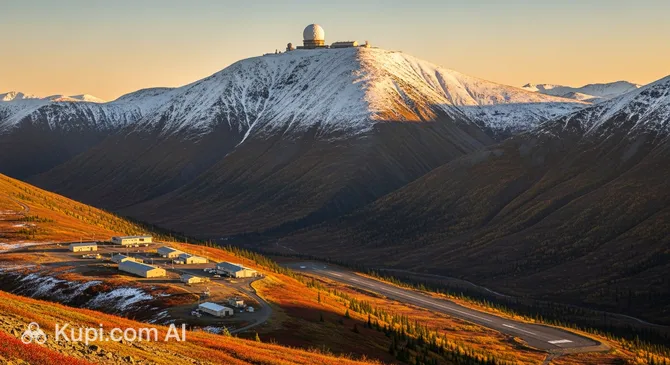
Sparrevohn. Source: Kupi.Binoculars

The history of Sparrevohn is deeply intertwined with the Cold War era and the development of North American defense systems. Established in the early 1950s, the site was chosen for its strategic vantage point, leading to the construction of a radar station and an airstrip in incredibly difficult conditions. Today, visitors intrigued by this heritage can appreciate the engineering marvel of the facility, which once included a treacherous switchback road up the mountain and a tramway system. The site serves as a silent monument to the era of the "White Alice" communications system and the early days of radar surveillance in the Arctic.

One of the most striking features of Sparrevohn is the breathtaking natural scenery that surrounds it. The location offers panoramic views of the Alaska Range and the pristine wilderness that stretches for miles in every direction. The contrast between the industrial structure of the radar dome and the wild, organic lines of the snow-capped peaks creates a surreal and photogenic atmosphere that captures the essence of remote Alaska.

Another key aspect of the area is its importance to aviation. The Sparrevohn LRRS Airport, with its gravel runway carved into the landscape, is a critical lifeline in this roadless region. For aviation enthusiasts, the approach to Sparrevohn is legendary due to the challenging terrain and unpredictable weather, making it a place of respect among bush pilots. While access is restricted and primarily for official use, the site remains a fascinating point of reference on the map of Alaskan aviation.

Although Sparrevohn is not a typical vacation spot with hotels and restaurants, it stands as a fascinating example of life on the edge of the habitable world. It invites the imagination to explore the stories of those who built and maintain this outpost against the elements. For the adventurous soul or the history buff, learning about Sparrevohn offers a glimpse into the hidden corners of Alaska that few ever get to see.

Weather Overview

The climate in this remote Alaskan outpost is defined by significant contrasts between the frozen winter months and the milder, yet brief, summer season. Travelers researching the weather in Sparrevohn should prepare for subarctic conditions where warmth is a fleeting luxury and proper gear is essential year-round.

Winter dominates a large portion of the calendar, with January standing out as the coldest month. During this time, average temperatures hover around -14.6°C, with lows frequently dropping to -17.8°C. The cold remains persistent well into spring; even in March, the average temperature stays around -6.0°C, requiring heavy insulation for anyone working or traveling in the area.

Summer brings a welcome shift, offering the most comfortable conditions for outdoor activity. July is typically the warmest month, featuring average temperatures of 14.3°C and daily highs that can reach 18.2°C. However, the season is short, as temperatures begin to dip back down to single digits by September and return to freezing levels by October.

Precipitation patterns here are somewhat unique; while the total volume of rain and snow is recorded as quite low—often just a few millimeters per month—the frequency of precipitation events is high. August, for instance, sees approximately 20 wet days despite low accumulation. Overall, you can expect cool summers with frequent light precipitation and very cold winters that are relatively dry in terms of snowfall volume.

Interesting Facts

Beyond its strategic importance, Sparrevohn possesses a collection of unique characteristics and historical footnotes that set it apart from typical destinations. These details reveal the extreme engineering and logistical feats required to maintain a human presence in such an isolated corner of Alaska.

  • Namesake Legacy: The station was named in memory of Captain Frederic Sparrevohn, a pioneering Air Force pilot who was instrumental in developing arctic air routes. His contributions to northern aviation are permanently honored by this remote site, serving as a tribute to the aviators who first charted these dangerous skies.

  • A "Landlocked Aircraft Carrier": Aviation enthusiasts often compare the local airstrip to an aircraft carrier deck due to its challenging nature and the precipitous terrain surrounding it. Pilots are required to land uphill to utilize gravity for braking and take off downhill to gain necessary speed, a high-stakes maneuver that demands specialized skill and nerves of steel.

  • Vertical Logistics: The facility is divided into two distinct zones known as "Top Camp" and "Bottom Camp," separated by a dramatic difference in elevation. In the early years of operation, a dedicated tramway system was used to haul heavy supplies and personnel up the steep mountainside to the radar dome, illustrating the immense difficulty of building on Cairn Mountain.

  • Tropospheric Giants: During the peak of the Cold War, the skyline of Sparrevohn was dominated by massive, billboard-like antennas associated with the White Alice Communications System. These enormous structures used tropospheric scatter technology to bounce radio signals over the horizon, acting as a critical voice and data link long before modern satellite communication became available.

How to Get There

Reaching this remote destination requires careful planning due to its isolated location in the Alaskan wilderness. While there are no direct commercial flights landing right at the radar station for the general public, travelers can fly into regional hubs and then arrange further transport. For detailed information on logistics and routes, you can read more about how to get to Sparrevohn.

The settlement does not have a commercial terminal for standard passenger airlines. The closest facility is Iliamna Airport (ILI) in Iliamna, located approximately 155 km from Sparrevohn. It is important to note that there are no roads connecting Iliamna—or any other airport—to Sparrevohn. Consequently, ground transport is not an option. Another regional point is McGrath Airport (MCG), situated about 206 km away. For those looking for a larger hub with more frequent connections, Kenai Municipal Airport (ENA) in Kenai is roughly 243 km away. From any of these locations, the only way to reach the destination is by arranging a specialized charter flight or bush plane.

For clarity, here is a summary of the main regional airports:

Airport Name City Passenger Traffic Km from City
Kenai Municipal Airport Kenai Medium 242.9
King Salmon Airport King Salmon Medium 276.9
Homer Airport Homer Medium 278.4
Iliamna Airport Iliamna Small 154.9
McGrath Airport McGrath Small 206.2

Sparrevohn is not accessible by train, as there is no railway infrastructure in this part of Alaska. The rugged terrain and remote nature of the settlement mean that rail travel is not an option. Since no road network extends to the area, visitors must rely entirely on air travel, typically utilizing charter services to navigate the final leg of the journey into the Alaskan interior.

Main Attractions

Sparrevohn is far removed from the typical tourist circuit, offering no museums, shopping districts, or manicured parks. Instead, the attractions here are raw, industrial, and deeply connected to the rugged Alaskan wilderness. Visitors who find themselves in this remote outpost are usually drawn by a specific interest in military history, extreme aviation, or the sheer beauty of the untouched subarctic landscape. The points of interest listed below reflect this unique character, appealing to those who appreciate engineering marvels and nature in its wildest form.

The most dominant feature of the area is Cairn Mountain, the imposing peak that anchors the entire settlement. Rising sharply from the surrounding terrain, the mountain is home to the "Top Camp" facilities. For those with access, the summit offers unparalleled, 360-degree views of the Alaska Range and the vast, empty tundra stretching toward the horizon. The sight of the radar dome perched precariously on the ridge against a backdrop of endless sky is a powerful image of human persistence in an unforgiving environment.

For aviation enthusiasts, the Sparrevohn Runway itself is a major attraction, albeit one that demands respect. Often cited as one of the most difficult airstrips in Alaska, it is carved directly into the side of a hill. Viewing the runway gives one a visceral appreciation for the skill required to navigate it; the slope is visibly steep, designed to help aircraft slow down upon landing and gain speed for takeoff. It stands as a remarkable piece of engineering, demonstrating how infrastructure is adapted to meet the demands of extreme geography.

Surrounding the station is the pristine wilderness of the Bethel Census Area. Without designated trails or guardrails, the area offers a true backcountry experience for those prepared for it. In the summer months, the slopes are covered in hardy alpine vegetation and wildflowers, providing a stark contrast to the industrial grey of the station's buildings. Wildlife sightings are common in the valleys below, where the lack of human development allows nature to thrive undisturbed, offering excellent opportunities for photography and observation from a safe distance.

Finally, the Cold War Infrastructure scattered throughout the site serves as an open-air museum for history buffs. While much of the original "White Alice" system has been dismantled or upgraded, the layout of the camp and the remaining structures tell the story of the Distant Early Warning Line era. Walking among these buildings evokes a sense of time travel to the 1950s, highlighting the strategic importance this lonely mountain once held for national defense.

Local Cuisine

Due to the unique nature of Sparrevohn as a remote Long Range Radar Station and military outpost, the local "cuisine" differs significantly from a standard tourist destination. There are no commercial restaurants, street food stalls, or public bars in this settlement. Instead, the food culture here is defined by logistics, survival, and the communal dining hall that serves the contractors and personnel stationed at the site. For the rare visitor, the culinary experience is a glimpse into the life of a remote Alaskan work camp.

The diet in Sparrevohn relies heavily on supply flights. Fresh produce and perishables are flown in regularly, but when weather conditions ground aircraft, the menu shifts towards non-perishable staples, frozen goods, and canned items. Despite these limitations, station cooks are known for preparing hearty, calorie-dense meals designed to fuel crews working in subarctic conditions. You might encounter classic American comfort foods, heavily influenced by whatever ingredients are available in the pantry that week.

While there are no local specialties unique to the station itself, the broader Alaskan influence is often present. Personnel may occasionally prepare dishes featuring regional ingredients if they engage in authorized recreational activities like fishing. In the surrounding wilderness, Alaskan staples such as wild salmon and halibut are prized. During the short summer, the tundra around the station is dotted with wild berries, including blueberries and cloudberries, which might find their way into desserts or jams.

Beverages in Sparrevohn are purely functional and centered around keeping warm. Hot coffee is the lifeblood of the station, consumed in large quantities throughout the long, dark winter days. Hot chocolate and tea are also staples. It is important to note that military and contractor outposts often have strict regulations regarding alcohol, so the "local bar" culture found in other Alaskan towns does not exist here. The social scene revolves around the mess hall, where meal times serve as the main opportunity for community interaction.

For anyone planning a trip to this rugged part of the Bethel Census Area, it is essential to understand that you must be self-sufficient or have prior authorization to eat at the station's facilities. There are no supermarkets or convenience stores. The "gastronomic feature" of Sparrevohn is not a signature dish, but rather the impressive logistical feat of providing hot, nutritious meals in one of the most isolated locations in the United States.

Travel Tips

Visiting Sparrevohn is an expedition rather than a typical vacation, requiring a high degree of self-reliance and preparation. As this is a remote military and contractor outpost surrounded by wilderness, standard tourist amenities do not exist, so these practical tips are essential for your safety and logistical success.

  1. Clothing and Gear: The subarctic climate demands professional-grade equipment. In winter, bring heavy thermal layers, a parka rated for extreme negative temperatures, and insulated, waterproof boots. Even in summer, the weather can turn cold and wet rapidly, so rain gear is mandatory. Crucially, summer visitors must pack high-quality insect repellent and head nets, as the Alaskan mosquito population can be overwhelming.
  2. Transportation: There is no public transport, taxi service, or car rental agency here. Your arrival and departure will be via charter aircraft or bush planes utilizing the gravel airstrip. Once on the ground, travel is strictly on foot. Ensure your return flights are confirmed and weather-dependent buffers are built into your schedule, as planes often cannot land during storms.
  3. Finances: The local currency is the US Dollar (USD), but there is nowhere to spend it. Sparrevohn has no banks, ATMs, shops, or restaurants. You must bring absolutely every supply you need with you. It is wise to carry some cash for emergency payments to pilots or logistical facilitators in regional hubs like Iliamna or Anchorage before you fly out.
  4. Health and Safety: There are no pharmacies or public hospitals in Sparrevohn. You must carry a comprehensive first-aid kit and any personal medications you require. Medical evacuation insurance is strongly recommended, as an emergency flight out can be incredibly expensive. Be aware that you are in bear country; carrying bear spray and knowing how to use it is non-negotiable for safety outside the camp perimeter.
  5. Communication: English is the primary language spoken by the station crew. However, do not expect standard cellular service or public Wi-Fi. The area is largely off the grid. For safety, it is advisable to travel with a satellite phone or a satellite messenger device (like a Garmin inReach) to maintain contact with the outside world in case of emergencies.
  6. Local Etiquette: Remember that Sparrevohn is primarily a working facility, not a tourist town. The "locals" are contractors maintaining critical infrastructure. Be respectful of their workspace and privacy. Follow the Leave No Trace principles strictly; whatever you bring into the wilderness, you must pack out, including all trash and waste.
  7. What to Avoid: Strictly avoid entering any restricted areas or climbing onto operational machinery without explicit permission. The radar station operates on sensitive schedules, and wandering into prohibited zones can cause serious security or safety issues.
  8. Logistical Tip: Before planning a trip, verify the current access status. As a military-affiliated site, access can be restricted, and you may need specific clearance or a sponsor to land at the airstrip. Always coordinate with your charter pilot to ensure all permissions are in place before takeoff.

A trip to Sparrevohn is a journey into the heart of the Alaskan wild, offering a rare glimpse into life at the edge of the map. With the right gear and a respectful mindset, you will be well-prepared to experience the raw beauty and solitude of this unique destination in the United States.

Entertainment & Nightlife

Travelers hoping to find a vibrant nightlife scene in Sparrevohn will find themselves in a place that redefines the concept entirely. As a remote military and contractor outpost with no permanent residential population, there are absolutely no nightclubs, bars, cocktail lounges, or concert venues here. The "nightlife districts" are nonexistent, replaced by the quiet, industrial hum of the radar station and the vast, silent wilderness of the Alaskan interior. The entertainment here is not commercial; it is elemental, driven by the unique location and the camaraderie of the small crew stationed on site.

The closest thing to a social hub is the station's dining hall or recreation room, which serves as the heart of community life for the personnel. Evenings are typically spent in a low-key atmosphere where people gather to play cards, watch movies, or share stories over coffee. The "dress code" is strictly functional—thermal layers and work boots—and the opening hours are dictated by the work shifts rather than a closing time. For a visitor, this offers a rare chance to disconnect from the digital noise of the modern world and engage in genuine, face-to-face conversation.

While there are no neon lights, the night sky over Sparrevohn offers a spectacular show that rivals any club lighting rig. During the winter months, this location is a prime spot for viewing the Aurora Borealis (Northern Lights). Far from any city light pollution, the dancing green and purple waves are incredibly vivid. Stargazing is another popular nocturnal activity; on clear nights, the Milky Way is visible with startling clarity. The "best time to go" for this natural entertainment is between late September and March, when the nights are longest and darkest.

Daytime entertainment is equally rugged and nature-focused. There are no museums, theaters, or amusement parks. Instead, the area offers unparalleled opportunities for photography and wildlife observation. The juxtaposition of the massive radar infrastructure against the pristine mountains provides a unique subject for photographers. For those with permission to explore the immediate vicinity, short hikes offer breathtaking views of the Alaska Range, though one must always be mindful of the terrain.

Regarding safety and logistics at night, the rules are simple but critical. There are no taxis or rideshare services; you get around by walking, and you should never walk far from the main buildings alone at night. The primary danger after dark is not crime, but wildlife. Bears and moose are active in the area and can be dangerous if startled. It is essential to carry a flashlight and bear spray if you step outside the lit perimeter of the camp. In Sparrevohn, a "safe night out" means staying warm, staying visible, and enjoying the profound silence of the Arctic night.

Parks & Museums

Unlike traditional tourist destinations in the United States, Sparrevohn does not possess manicured city parks, botanical gardens, or ticketed art galleries. Instead, the "green spaces" here are vast, untamed expanses of subarctic wilderness, and the "cultural heritage" is embedded in the industrial history of the Cold War rather than in glass display cases. For the visitor, the entire region serves as an open-air reserve of nature and engineering history.

The Great Alaskan Wilderness serves as the primary natural attraction surrounding the settlement. While not a designated city park, the millions of acres of the Bethel Census Area function as a limitless playground for nature lovers. The landscape is a dramatic tapestry of alpine tundra, rolling hills, and steep valleys that remain green and blooming with wildflowers during the short summer. Without designated trails or picnic areas, this is nature in its rawest form, offering solitude and pristine beauty that far exceeds what one might find in a standard urban park.

Cairn Mountain is the defining natural landmark of the area, looming over the radar station. While it is not a park with gates and hours, it is the focal point for any outdoor activity in Sparrevohn. The slopes of the mountain offer challenging terrain for hiking and scrambling, rewarding those who make the ascent with sweeping panoramic views of the Alaska Range. It is a rugged environment where the "amenities" are the fresh mountain air and the chance to spot eagles soaring at eye level.

Regarding museums and galleries, travelers should be aware that there are no formal institutions in Sparrevohn. You will not find art exhibitions or historical collections housed in buildings open to the public. However, the Sparrevohn Long Range Radar Station itself acts as a living museum of military history. Walking among the facilities offers a tangible connection to the 1950s and the strategic efforts to monitor the skies during the Cold War. The utilitarian architecture and the remnants of the old "White Alice" communications infrastructure tell a powerful story of human ingenuity in harsh climates.

A significant historical and architectural landmark is the Sparrevohn Runway. Carved directly into the side of the mountain with a significant slope, it is an engineering marvel revered by aviators. It stands as a monument to the logistical determination required to build and maintain this outpost. Watching a plane land uphill or take off downhill is a cultural experience in itself, highlighting the unique bush pilot culture that is essential to life in remote Alaska.

For an authentic experience, treat the surrounding landscape as a gallery of natural art. The interplay of light on the snowy peaks during winter or the vibrant colors of the tundra in autumn provides a visual feast for photographers. The lack of light pollution turns the night sky into a celestial exhibit, where the Aurora Borealis frequently displays moving art across the heavens, offering a spectacle no city museum could ever replicate.

Getting Around

Navigating Sparrevohn requires a complete shift in expectations, as this remote location operates without any of the public transport infrastructure found in standard cities. Visitors will not find a metro system, public bus network, trams, or trolleybuses here. The settlement is a specialized military and contractor outpost rather than a residential town, meaning there are no scheduled routes, no public stops, and no transit authorities managing traffic.

Since there is no public transportation, there is no need to worry about purchasing travel passes, travel cards, or downloading mobile apps for tickets. The concepts of zones, ticket validation, and fare evasion fines simply do not apply in this environment. The local "payment system" is non-existent because movement within the station and its immediate surroundings is not a commercial service provided to the public.

For the few travelers who find themselves in this isolated part of the world, the primary alternative to public transport is walking. The footprint of the main camp is compact enough to be navigable on foot, though the terrain can be steep and uneven. There are no taxi services, car-sharing platforms, or bike rental stations available. Private vehicles are strictly limited to the trucks and utility machinery used by the station personnel for maintenance work, and these are not available for hire.

A notable historical feature regarding transport in Sparrevohn was the tramway system used during the construction and early operation of the site. Due to the extreme vertical distance between the "Bottom Camp" (airstrip and living quarters) and the "Top Camp" (radar domes), a cable tram was originally utilized to haul heavy cargo and personnel up the mountainside. While this is no longer a mode of public transit, it remains a fascinating example of the specialized engineering required to solve logistical challenges in such rugged terrain.

The most practical advice for getting around is to come prepared with high-quality footwear. Since walking is the only reliable way to move between buildings or explore the permitted perimeter, sturdy, waterproof boots with good traction are essential. In winter, ice cleats are highly recommended. Tourists should not plan on hailing a ride; self-sufficiency and physical mobility are key to navigating the landscape of Sparrevohn.

Accommodation

Travelers planning a visit to Sparrevohn must adjust their expectations regarding accommodation. As a remote Long Range Radar Station located deep in the wilderness of the United States, there are absolutely no commercial hotels, hostels, guesthouses, or vacation rentals available. The infrastructure here is strictly functional, designed solely to support the military and contractor personnel who operate the facility, rather than to host tourists.

The only living quarters on-site consist of dormitory-style housing and barracks reserved exclusively for the station's crew. These facilities are maintained by the Air Force and its contractors and are not open to the general public. There is no front desk, no booking system, and no possibility of reserving a room. Access to these buildings is strictly controlled and requires prior official authorization, security clearance, or a specific work contract.

For those attempting to visit the region, the most practical strategy is to base yourself in a larger Alaskan hub. Visitors typically secure lodging in cities like Anchorage or regional centers such as Iliamna before arranging a charter flight into the area. In these locations, you can find a full range of options, from standard hotels to rustic lodges. A trip to Sparrevohn is almost exclusively a logistical stopover or a day trip, necessitating a return to your base for the night.

For extreme adventurers, camping in the surrounding wilderness of the Bethel Census Area might be a theoretical possibility, but it involves significant risks and strict regulations. This is rugged bear country with rapidly changing weather conditions. Furthermore, the land immediately surrounding the airstrip and radar station is restricted property. Anyone considering camping must be entirely self-sufficient, possess the appropriate survival gear, obtain necessary land use permits for the surrounding public lands, and ensure they do not encroach on the active military installation.

Ultimately, you cannot "stay" in Sparrevohn in the traditional sense. Your accommodation plans must focus on the nearest civilian airports or be part of a specialized logistical arrangement if you are traveling for official business. It is essential to have your return transport and overnight arrangements fully confirmed before departing for this isolated outpost.

Nearby Cities

Given the extreme isolation of Sparrevohn and its lack of tourist amenities, travelers exploring this sector of Alaska typically center their journeys around more accessible regional hubs. While Sparrevohn stands alone in the wilderness, the wider region connects to several vibrant communities that define the character of Southcentral and Southwestern Alaska. These cities and villages serve as key destinations for those seeking world-class outdoor activities, rich local history, and the true Alaskan experience.

One of the most significant hubs in the broader area is Kenai. Located at the mouth of the Kenai River, this city is a major destination for visitors drawn by exceptional salmon fishing and stunning views of the active volcanoes across the Cook Inlet. It offers a blend of cultural heritage and nature, where visitors can explore the historic Old Town, featuring a beautiful Russian Orthodox church, or stroll along sandy beaches to spot wildlife such as eagles and caribou.

Nearby, Soldotna serves as another essential stop, often considered the heart of the Kenai Peninsula. It is widely renowned as a premier destination for anglers chasing king salmon and offers a variety of nature trails and boardwalks along the river. The Soldotna Creek Park provides a lovely setting for a relaxing afternoon, while the nearby wildlife refuge offers excellent opportunities to learn about the local ecosystem and observe the region's diverse fauna.

For those interested in a smaller, more scenic community, Ninilchik is a fascinating location to visit within the wider region. This historic village combines deep Russian heritage with a spectacular coastal setting. It is well-known for its clam digging on the beaches and the iconic view of its hilltop church set against a dramatic backdrop of mountains and sea, making it a favorite stop for photographers and history enthusiasts alike.

City Population Distance (km)
Kenai 8000 243
Soldotna 4500 255
New Stuyahok 1012 208
Ninilchik 800 245
Aniak 500 219

These destinations offer a glimpse into the diverse culture and landscapes that make this part of the United States so unique, providing the infrastructure and hospitality that the remote outpost of Sparrevohn cannot.

Shopping & Souvenirs

General Overview: Travelers planning a trip to Sparrevohn must be aware that the shopping scene in this remote destination is nonexistent. As a dedicated Long Range Radar Station and military outpost located in the Alaskan wilderness, the settlement has no commercial infrastructure whatsoever. There are no retail stores, convenience shops, boutiques, or grocery outlets. Visitors are expected to be entirely self-sufficient, bringing all necessary supplies, food, and equipment with them from larger regional hubs before arriving.

Main Shopping Areas/Streets: Unlike typical towns where tourists can stroll down a high street to browse local wares, Sparrevohn has no shopping districts. The "streets" here are functional gravel roads designed for military vehicles and heavy machinery, connecting the airstrip to the radar facilities. You will not find any storefronts, window displays, or pedestrian promenades in this strictly industrial environment.

Shopping Malls: There are no shopping malls, department stores, or shopping centers in Sparrevohn. The nearest facilities that could be classified as general stores are hundreds of miles away in cities like Kenai or Anchorage. The infrastructure here is built solely for the operational needs of the radar station and the survival of its crew, leaving no room for commercial retail space.

Markets: The concept of a market—whether for food, fleas, or souvenirs—does not exist in this location. There are no farmers' markets or craft fairs. All food and supplies are flown in via cargo charters for the station's personnel. Visitors hoping to experience Alaskan market culture should explore the markets in Anchorage or the Kenai Peninsula before embarking on their journey to this isolated outpost.

Souvenirs: Since there are no gift shops, you cannot purchase typical souvenirs like postcards, keychains, or branded clothing in Sparrevohn. The only "souvenirs" to be found here are the photographs you take and the memories of the stark, breathtaking landscape. If you wish to bring back physical mementos of your Alaskan adventure, it is best to purchase authentic Native Alaskan crafts or local art in the gateway cities you pass through en route.

Opening Hours and Payment: Because there are no shops, there are no opening hours to consider. The local economy does not operate on commercial transactions, and there are no cash registers or card terminals. While the United States Dollar (USD) is the official currency, it has no utility here. Travelers should ensure they have prepaid for all logistics and charters, as there is no opportunity to spend money once on the ground.

Tax-Free: While the state of Alaska is known for having no state sales tax—a benefit for shoppers in cities like Anchorage or Fairbanks—this is irrelevant in Sparrevohn due to the complete lack of retail opportunities. The tax-free advantage can only be enjoyed in the commercial hubs where you purchase your gear and supplies prior to your arrival.

Reached the end of the page?

That means the route is fully explored