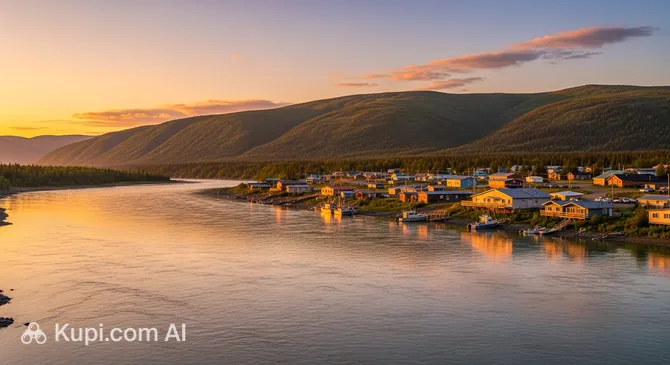
Nulato is not a destination characterized by manicured city parks or grand exhibition halls. Instead, the entire region serves as a vast, open-air nature reserve, and its cultural heritage is preserved not in glass cases, but in the daily lives and traditions of its people. For visitors, the "parks" are the boundless wilderness surrounding the village, and the "museums" are the historic sites and community gathering places that tell the story of the Koyukon Athabascan people and the early trading era.
The Nulato Hills
Acting as the community's backyard, the Nulato Hills offer a rugged and authentic alternative to traditional urban parks. This expansive natural area separates the Yukon River from the Norton Sound and provides endless opportunities for hiking, berry picking, and wildlife observation. There are no paved paths or signposts here; it is a true wilderness experience where the terrain shifts from boreal forest to alpine tundra. In late summer and early autumn, the hillsides turn a vibrant red and gold, attracting locals who harvest blueberries and cranberries, making it a perfect spot for visitors to witness the land's bounty.
Yukon Riverbanks and Sandbars
During the warmer months, the banks of the Yukon River function as the village's primary recreational space. When the water levels are favorable, large sandbars emerge, creating natural "beaches" where families gather for picnics, swimming, and fishing. These areas are bustling with activity during the salmon run. For a tourist, walking along the riverbank offers a peaceful retreat and a front-row seat to the majestic flow of one of North America's most important waterways, all while surrounded by the dense greenery of the Alaskan Interior.
Historical Significance of "Old Nulato"
While there is no dedicated museum building in the village, the site known as "Old Nulato" holds immense historical weight. Located a few miles from the current village site, this area was the location of the original Russian trading post established in 1839. Although few physical structures remain, the site is a poignant place for history enthusiasts to reflect on the complex past of the fur trade and the tragic Nulato Massacre of 1851. It serves as an archaeological and spiritual landmark, connecting the present community to its ancestors and the early contact period.
The Living Museum of Tradition
In the absence of a formal gallery, the culture of Nulato is best experienced as a "living museum" through its community centers and events. The local school and the Community Hall often display student art and cultural projects that reflect Athabascan heritage, such as beadwork or snowshoe making. Visitors fortunate enough to be invited to a community gathering may see traditional regalia and hear stories passed down through oral tradition, which serves as the primary repository of the village's history and knowledge.
Our Lady of Snows Cemetery
For those interested in genealogy and local history, the cemetery adjacent to the historic Catholic church acts as a quiet archive of the community. The markers and gravesites trace the lineage of Nulato's families and the influence of early missionaries. It is a solemn and respectful place that offers insight into the generations who have lived, worked, and survived in this harsh yet beautiful environment.
Insider Tip: If you visit during the summer, ask respectfully about the location of the active fish camps along the river. While these are private family work sites and not public attractions, observing them from a distance (or up close if invited) provides the most authentic look at Nulato's culture. Seeing the racks of salmon drying in the sun and the smokehouses in operation is a visual and olfactory experience that defines the essence of life on the Yukon.